Phantump and Trevenant

Phantump.

Ghost/Grass – another of those never-before-seen combinations that always make me so excited.  What’s more, we get not one but two interpretations of it – Pumpkaboo and Gourgeist, whom we’ll probably be looking at next time, and today’s Pokémon, Phantump and Trevenant.  These two Pokémon go for ‘sinister,’ and boy, do they nail it (I… immediately regret using the expression ‘nail it’ to describe a vengeful Pokémon made of wood).  Ghost Pokémon get to play with some of the most evocative ideas in the book, balancing between life and death, on the edge of the great unknown – let’s see where Phantump and Trevenant can take that.

As far as I know, these Pokémon aren’t based on any specific folkloric creatures (though Trevenant’s body shape and English name do seem to reference the treants of modern fantasy), just on more general ideas, fears and superstitions about old, dark forests.  How many fairy tales centre around dark and dangerous creatures that lurk in the deepest part of the woods?  The theme is a particular fixture of northern and eastern European tradition – Red Riding Hood, Hansel and Gretel, Baba Yaga, to name a few – but is far from unique to that region.  Phantump aren’t really dangerous as far as we know, but their origins are pretty sinister and sound a lot like the bad ending we’re supposed to be scared of in some of those dark forest fairy tales.  Like Yamask, these Pokémon are explicitly believed to have once been human (raising all kinds of questions even more thorny than usual about the ethical position their trainers are in) – Phantump are said to be born from rotten tree stumps possessed by the spirits of children who died lost in the forest.  In fact, Phantump’s spiritual form, a thin black wisp, does look a lot like poor, haunted Yamask, as well as giving it a somewhat childlike appearance, helped by those wide, staring eyes.  As with all Ghost Pokémon, it may be worth questioning how seriously we’re supposed to take the ideas in the Pokédex – which is not above reporting myth and folklore as fact – but whichever way you slice it, Phantump is pretty creepy.  I see it quoted everywhere that Phantump can imitate the sound of a child’s voice, although I can’t figure out where that information is supposed to come from (no, internet, “[Source: Bulbapedia]” is not helpful); it’s not in the Pokédex, and Phantump hasn’t appeared in the anime yet.  It certainly sounds plausible, though, and it would explain how, rightly or wrongly, people came to believe that they were the spirits of lost children – if a mysterious creature with spiritual powers lives in the forest where your kid got lost and never came home, and sounds exactly like him or her, a grieving parent isn’t going to have a lot of time for scepticism.  The more worrying question is why Phantump have this ability.  Are they really just lost souls calling out for help, are they malicious spirits luring others to their deaths in the dark heart of the forest, or are they just pranksters looking to have a little fun?  None of these options, on the surface, strikes me as particularly implausible.

 There is one tree in this picture.

When they mature, Trevenant take on the role of protectors and avengers of the forest, and fill that role with a much more frightening tone than Phantump.  Where Phantump is maybe a little cute if you look at it in a certain light – or at the very worst, pitiable – Trevenant is like something out of a nightmare; crawling spider-legs, long, grasping claws, a single glaring red eye, and darkness obscuring the inside of its rotting wooden body.  They can curse people who harm the forest and cause them to become trapped there forever… which, as a reader pointed out to me a while ago, could potentially mesh with Phantump’s origins in a slightly horrifying way: this is how they reproduce.  Phantump are the spiritual remains of children who did something to attract the ire of powerful Trevenant.  Well, okay, they are a gendered species, so we know they can also produce eggs, but there’s no reason both couldn’t be possible, and this way is much cooler; besides, it’s not like anyone has ever claimed that the basic concept of Pokémon breeding makes a whole lot of sense.  If it’s true, it lends a lot of weight to a more malicious interpretation of Phantump.  There’s a lighter side to these Pokémon, though.  Trevenant also possess the ability to control the trees in its forest by connecting to them with its roots.  At a glance, this is just a really cool power that explains how it can trap people in the forest; by controlling trees, it can rearrange and obscure pathways at will, weaving branches together to block safe routes while creating appealing trails that just lead you spiralling into a thicket.  Perhaps even cooler though, it also sounds like it could be a reference to colony-trees like Pando in southern Utah – things that look like huge forests made up of hundreds or thousands of trees, but are actually single organisms, genetically identical and connected by enormous interlinked root systems.  These colonies are among the largest and oldest living things on the planet, and a potent symbol of the interconnectedness of all life.  Like Torterra, Trevenant is also said to provide homes to smaller Pokémon that live in its leaves, branches and hollows, and is supposedly very kind to them despite its fearsome exterior.  Trevenant are deadly when called upon to protect their homes, but as always in Pokémon, we shouldn’t necessarily take their actions towards humans as the whole picture.  Powerful Grass Pokémon are often portrayed as mediators of the balance of nature, and even rot is just another form of life.
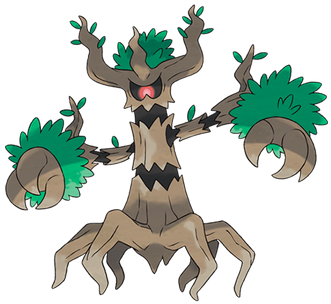
 Trevenant.

On the face of it, Trevenant looks like it should be a fairly lacklustre Pokémon to use, because it seems to be basically a slow, fairly tough physical attacker.  Its Ghost/Grass typing comes with some nasty common weaknesses, but useful resistances and immunities too (including the new Grass-type immunities to things like Sleep Powder), so it’s not terrible.  The problem with being a Ghost-type is that physical Ghost attacks remain few and relatively poor – their new attack, Phantom Force, which is effectively a powered-down version of Giratina’s Shadow Force, has decent power behind it and is perfectly fine for fighting AI opponents, but because it takes two turns to use (even if you are invulnerable on the first turn), it means giving a human opponent a turn when they know exactly what you are going to do, without question, and that is rarely a good idea in this game.  Unfortunately, the next alternative, Shadow Claw, is almost unacceptably weak; pick your poison.  Wood Hammer, its strongest Grass attack, is much more powerful, but on the other hand it’s, y’know, a Grass attack.  Trevenant’s physical coverage options aren’t great either – Earthquake is always nice to have, but beyond that… well, Rock Slide is relatively weak, X-Scissor has quite a bit of redundancy with Grass attacks, and Poison Jab is Poison Jab.  It’s not really good at being a physical attacker – Grass-types usually aren’t.  This brings us to Trevenant’s real niche, though: again like many Grass-types, it can actually put together very nice support-oriented sets.  Will’o’Wisp makes Trevenant much more difficult and dangerous for physical attackers to take down by threatening to burn and cripple them.  Leech Seed is a Grass-type staple that needs no introduction.  Horn Leech isn’t a powerful attack, but it adds nicely to Trevenant’s survivability.  Reflect is an option, though Will’o’Wisp will usually be a better choice for dampening physical attackers since you don’t have to keep setting it up again and again.  Trevenant is also capable of using Trick Room, which is unusual enough to be worth consideration, and benefits from it quite a bit too since it’s quite slow.  It’s not an incredibly tough Pokémon, though Will’o’Wisp helps a lot and allows you to focus on its special defence.  Its poor speed is also detrimental.  It’s not an amazing Pokémon, but it’s certainly not bad either, if you stick to what it’s good at.

The real draw to Trevenant is that it has two fairly rare and rather lovely defensive abilities, both of which can make it a lot harder to kill.  Natural Cure heals a Pokémon’s status problems when it switches out, which is just generally useful since it means you don’t care about Will’o’Wisp, Thunder Wave, Toxic and the like, and also adds Rest to Trevenant’s list of usable healing options.  The other one is Harvest, which is Trevenant’s hidden ability and worth mentioning mainly because so few Pokémon get it – it’s shared only by Tropius and Exeggutor.  What it does is give Trevenant a 50% chance every turn (100% under Sunny Day) to regenerate a berry that it has previously used during the battle – the most obvious applications are self-replacing Sitrus Berries for extra healing or self-replacing Lum Berries for instant Rests and status recovery.  There are probably weirder options out there to explore, involving things like resistance berries and stat boost berries, but for the most part you probably want to go with something that increases your survivability, since Trevenant is giving up Natural Cure for this.  The fact that Knock Off got a huge damage buff in Generation VI (with an extra bonus for hitting an item!), and is also strong against Ghost-types like Trevenant, also makes Harvest a little more iffy since you can swat Trevenant’s berry and deal horrible damage in one move, but it’s still not like everything uses that.  Phantump and Trevenant, like many of X and Y’s Pokémon, also come with one more thing worth talking about: a nifty little signature move called Forest’s Curse.  Like Pumpkaboo and Gourgeist’s signature move, Trick or Treat, this thing works by adding an extra type to its target, namely Grass, until that Pokémon switches out.  The target keeps its original type, and in fact will be treated as having three types at once if it was a dual-type already.  Unfortunately, while it’s fairly easy to see how Trick or Treat can be useful – Ghost-types are weak to Ghost attacks, which of course Gourgeist uses – the only things Trevenant has that can take advantage of giving a Pokémon Grass-type traits are X-Scissor and Poison Jab.  Turning something into a Grass-type also confers Leech Seed immunity (it won’t remove an existing seed, though).  This is another one of those moves that has its greatest potential in doubles, where you can easily set up a partner to take advantage of its effects; in a single battle I’d stay away from it.

I love these two.  They hit all the right notes and are some of the creepiest Pokémon we’ve seen yet, with stunningly eerie design, chilling backstory, and potential for a complex portrayal with strong positive and negative aspects.  Their battling abilities are kind of niche, but they have an interesting combination of skills, and I’m curious to see whether anyone’s been able to make anything clever out of Forest’s Curse.  All in all, they’re definitely among my favourites from X and Y (and no, I’m not just saying that because they’re Grass-types.  Well… okay, maybe a little bit).
How would you feel if in a new generation, Game Freak allowed Pokemon to have more than 2 types? (i.e. Water/Flying/Dragon Gyarados). What are some Pokemon who you could see as having more than two types thematically?

Eh.  I feel like dual-types are already stronger than single-types; the extra weaknesses are more often than not balanced by extra resistances, and dual-typed Pokémon generally have more powerful and versatile offensive skills because they have STAB on two elements.  Provided you avoid any triple-weaknesses (which wouldn’t be that common; hell, against 1/3 of all attacking types it wouldn’t even be possible), I think triple-typed Pokémon would in general have an unfair advantage – unless you changed some of the games’ other underlying assumptions about type; you could do away with single-typed Pokémon altogether, for instance, adding a second type to all of them, or you could reduce STAB from +50% to (for example) +35% for dual-types and +20% for triple-types.  That might make things interesting.

In terms of the idea of it, apart from the mechanics, well, I’d go for it if I thought the two-type limit was a constraint on the designers’ freedom, but I don’t, really.  Giving a Pokémon abilities like Levitate or Swift Swim can already convey an affinity for or link with a particular type without having to actually add the type itself.  I don’t think we lose anything by not having that option.

Having said that, you did ask, so… Gyarados as Water/Flying/Dragon would make sense, switching to Water/Dark/Dragon upon mega evolution; Flygon could become Dragon/Ground/Flying and swap out Levitate for something else (watch out for those x8 Ice attacks, though); Jirachi I think would make sense as Steel/Psychic/Fairy; Stunfisk really should be Ground/Electric/Water; Yanmega maybe could go to Bug/Flying/Dragon (‘cause, y’know, dragonfly); Dragalge could be Dragon/Poison/Water… there’s probably a few more I’m not thinking of.

hello! this is my first time asking or saying anything to you, I’ve to say everything you write is pretty awesome! please keep’ em coming! I wanted to ask about your thoughts on shiny pokemon, I’ve read almost all your entries and I can’t recall ever reading about it. In game or in anime, any thoughts? What about Ash’s Noctowl? I stopped watching the anime so I’m not sure if there are more than one shiny variation, as opposed to the games.

I feel like this has come up before, probably in a question someone asked me… yeah, here it is.  They’re not something I find terribly interesting in themselves – mostly I figure it’s just a rare recessive gene that happens to be prized by collectors, although it would be interesting to see how communities of wild Pokémon react to the trait.  I suspect they do not generally view it positively, or you would expect it to become more common.  As far as the games are concerned it doesn’t alter their abilities at all; Ash’s Noctowl was also very small and unusually intelligent even for a Noctowl, but as far as I know no other shiny Pokémon in the anime have exhibited special properties.  They don’t really turn up often enough to see any particular patterns in their behaviour or status.

I am a fan of Rapidash, but its not as powerful as some other Fire Types. It’s thing is that it runs really fast, which would make me think it has one of the highest speed stats in the game, but it’s not even the fastest Fire Type.. So I wanted to share my idea for a signature ability and have your opinion. “Fast Burn” – All Fire moves have Priority 1 and will go before any attack (including Extremespeed).

Well, minor point of description, what you’re actually saying is “all Fire moves have priority +3” – the reason Gale Wings doesn’t beat Extremespeed is because Extremespeed has +2 priority rather than just +1 like Quick Attack et al.  +3 would mean that Rapidash automatically outruns Extremespeed, Feint, Follow Me and Rage Powder, and can potentially outrun Fake Out, Endure, Wide Guard, Quick Guard, Crafty Shield and King’s Shield, but still loses to Protect. [EDIT: At the time of writing, Bulbapedia listed King’s Shield as +3. This is incorrect; it’s actually +4, which means you can ignore the rest of this paragraph.]  The big deal here is King’s Shield, because +3 priority on Fire moves would mean that Rapidash absolutely murders Aegislash (who’s not going to outrun her on a priority tie).  If you’re okay with that, fine – Aegislash could stand to be taken down a peg or two – if not, make it +2 and Rapidash can still outrun slower Pokémon using Extremespeed and faster Pokémon using lesser priority attacks.

Anyway.  What we’re getting here is the Fire equivalent to Talonflame’s priority Brave Bird, in the form of Flare Blitz, so it makes sense to compare the two (priority Will’o’Wisp is not nothing, but I feel like Flare Blitz is the big draw here).  Rapidash’s physical attack stat is significantly higher than Talonflame’s, though, which is worrying when you consider what a dangerous Pokémon Talonflame is, largely on the back of Gale Wings.  Their defences are similar, and Rapidash has less trouble with Stealth Rock but doesn’t get Earthquake immunity.  The main disadvantages are that Rapidash doesn’t have a second STAB attack, can only heal herself with Morning Sun, doesn’t have set-up moves (although Hypnosis could be interesting), and doesn’t have U-Turn.  She does have marginally better coverage with Megahorn, Wild Charge and potentially Drill Run through the Black and White 2 move tutors.  Another point is that Fire, unlike Flying, has no shortage of good special attacks, and while Rapidash prefers physical, her special attack stat is actually very similar to Talonflame’s attack, which means that bunging in Overheat to murder physical walls is a very real possibility.  I don’t think it really ruins any of the Pokémon that would otherwise counter you, but it will certainly make life more difficult for them.  Overall… it makes perfect sense in terms of Rapidash’s flavour that she should be the fastest of the Fire-types; she’s supposed to be a speed demon, and this certainly gives her that. She would certainly be dangerous, and I’m just generally wary of handing out anything that compares favourably, by any metric, to Talonflame’s Gale Wings, but she lacks some of the little extra tricks that help Talonflame to really shine like Swords Dance and priority Roost, so I don’t think we’re getting into broken territory here.

Was the Trojan War Really a Thing?

Apologies again for my absence, which has gone on a bit longer than I’d hoped, but I should hopefully be back semi-regular soon enough.  In the mean time, let’s take a look at the question that has been consuming me and my free time during my absence: Was the Trojan War Really a Thing?

We all know the story.

Helen, the queen of Sparta and the most beautiful woman in the world, was abducted from Sparta by Paris, a prince of Troy – or perhaps they fell in love and eloped, or perhaps a goddess stole her away and sent an image of her to Troy instead; the details, as always with these things, are hazy.  Helen’s husband Menelaus, with the help of his powerful brother Agamemnon, the king of Mycenae, raised a mighty army and an enormous fleet from all the great kingdoms of Greece.  For ten years the Greeks besieged the walls of Troy, and for ten years the walls held as heroes of both sides fought and died on the battlefield.  Even the gods took sides – Hera, Athena and Poseidon supporting the Greeks, while Aphrodite, Ares and Apollo helped the Trojans.  Finally, with both sides’ greatest warriors – Achilles, the leader of the Myrmidons, and Hector, the eldest prince of Troy – dead, the cunning Ithacan king Odysseus and the architect Epeius came up with a plan to end the war once and for all.  They crafted a huge wooden horse, claiming that it was an offering to appease the gods, left it outside the gates of Troy and sailed away with the rest of the Greek army, apparently in defeat and surrender.  The ‘victorious’ Trojans brought the horse into the city and took it to the temple of Athena before spending the night in a drunken celebration of the war’s end.  But the horse was not all it seemed – it was hollow, and a small contingent of the Greeks’ most elite warriors was hidden inside.  In the dead of night, they slipped out of the horse, slaughtered dozens of the sleeping Trojan warriors, took control of Troy’s gates, and opened them wide for the returning Greek army.  A few hours later, every member of the Trojan royal family was dead or in chains, Helen was back with her husband, the city was in flames, and the war was over.  Yes, we all know the story.

But did any of it actually happen?

The common sense answer is “no.”  We have, in the modern world, a very clear distinction between fiction and non-fiction, between myth and history.  The battles of Alexander the Great are history, the sacrifice of the three hundred Spartans at Thermopylae, likewise – as solid and real as the conquests of Napoleon, or the Second World War.  The Trojan War is a myth, an imagining of a great creative mind, captivating and important as a work of literature, but no more ‘real’ than the Titanomachy, the great war between the Olympians and the Titans at the beginning of time.  Throughout the 18th century and for much of the 19th, it was broadly accepted that ‘Homer,’ the poetic genius of the Iliad and the Odyssey, whoever he really was, had made the whole thing up.  A siege ten years in length – impossible!  Gods and demigods running this way and that – pure fantasy!  The fanciful ruse of the wooden horse – ridiculous!  The ancient Greeks may have been deceived by their own patriotic spirit, but we moderns are cleverer than that.  Obviously the whole thing belongs to the realm of fiction.

To the ancient Greeks themselves, though, myth and history were not so different.  Myth was their way of recording the distant past and the deeds of their remote ancestors, and it held the authority of tradition and community, while history itself was a form of storytelling too, an art meant to convey moral lessons and uplift the human soul through exposure to great ideas.  Even the most sceptical of them, the Athenian general and historian Thucydides, believed without question that the Trojan War had really happened.  Perhaps the poet had been guilty of much elaboration and exaggeration, and perhaps some of the details had eluded him – after all, he lived hundreds of years after the war had ended – but surely some essential core of the narrative had truth to it.  After all, it was the first and oldest story of their shared culture, known, told and repeated everywhere in Greece – how could they all be wrong?

The question suddenly became very interesting in the 1860s when we actually found Troy.

There is a place on the northwest coast of Anatolia, right at the west end of the Dardanelles, called Hisarlık.  In the 1860s, the area was owned by Frank Calvert, an English diplomat who worked in the Ottoman Empire.  Calvert, based on the descriptions given in the Iliad of the local geography of Troy, became convinced that Hisarlık was the location of the ancient city, buried beneath one of the huge mounds of earth that often cover ancient settlements.  He attracted the attention of Heinrich Schliemann, a German archaeologist – though some archaeologists today would probably be uncomfortable sharing the title with him; professional archaeologists didn’t really exist in the 19th century, and archaeological work in that period was often… haphazard (in fact, Schliemann… kinda ruined the Iron Age strata of Troy a little bit; I mean, the Hellenistic Greek builders had already done that to some extent when they cleared the citadel to lay foundations for their new temples, but Schliemann certainly didn’t help).  Schliemann conducted several excavations at the site between 1868 and his death in 1891, finding the remains of a Roman city, and the remains of a Hellenistic Greek city beneath that, and more and more the deeper he went.  This was all to be expected; we already knew that there was a Classical Greek city which claimed, based on Homer’s descriptions, to have been built on the site of Troy, and that it widely and successfully publicised this idea as a source of cultural power.  Where the story gets interesting is that seven layers of the city predated any sort of ‘historical’ record of ancient Greek civilisation.  When he reached the second city from the bottom, Schliemann hit the jackpot: this period of the city had left behind all kinds of fantastic golden treasures.  This, he thought, must surely be the fabled wealth of Troy’s legendary king, Priam.  Finding the treasure only fuelled his obsession with Greece’s mythic past, and in 1878 he found and excavated the ancient city of Mycenae, the city the Greeks had linked with the great king Agamemnon – which, like Hisarlık, proved to have occupation layers that went back well before the dawn of recorded history.  Today, we now know that almost all of the locations that are prominent in Homer – places like Mycenae, Pylos, Argos, the island of Crete – though many of them were relatively insignificant in the classical period, were in the Bronze Age the sites of huge stone buildings we call ‘palaces,’ the centres of powerful states with complex administrative practices and carefully regulated economies.  We now call this proto-Greek civilisation “Mycenaean,” after the first site, though we don’t know what they called themselves, or even whether they considered themselves a single cultural group at all.  Something of the political situation Homer described in the Iliad seemed, at last, to be grounded in reality – could the epic truly be a distorted memory of a Mycenaean assault on Troy?

The work of other scholars in subsequent decades curbed the initial wave of enthusiasm created by Schliemann somewhat – in particular, when we figured out how old the different levels of Troy were.  It’s easy to tell in archaeology when one thing is older than another, because it will normally be buried deeper, but figuring out exactly how old an object is in calendar years is another matter entirely – until the advent of radiometric dating in the second half of the 20th century, the only way to do it was by the stylistic qualities of artefacts, particularly pottery.  Styles and fashions change and develop over time, and if you have enough artefacts of a similar type, you can take note of the similarities and differences, and construct sequences from old to young.  Finding two extremely similar artefacts at two different sites means that the levels you found them in are probably similar in age – and if an artefact manages to make it as far as Egypt or Mesopotamia, where we actually have historical records and inscriptions going all the way back to 3000 BC, you can connect that style of artefact with a calendar year (…more or less; personally I tend to place greater value on the more direct results we can get from radiometric dating, though it’s worth mentioning that these come with difficulties and pitfalls of their own).  The point is, the Greeks of the classical period believed that the Trojan War had occurred some time between 1050 and 1200 BC.  However, when Schliemann’s successor at Troy, Wilhelm Dörpfeld, actually sat down, put all the pottery in order and tried to figure out how old it all was, he realised that the second city on the site, the one with all the magnificent golden treasure – the level we now call Troy II – was more than a thousand years too old to have anything to do with Priam, Homer, or the Trojan War.  The great Mycenaean cities of the Greek mainland were barely-civilised backwaters during Troy’s ‘golden age.’  The levels corresponding to the end of the Bronze Age when the Mycenaeans were powerful, the years in which the Greeks placed the war, were the sixth and seventh levels of the city – the levels Schliemann had dug straight through because they just weren’t impressive enough.  Even in the 21st century there are still debates about whether Troy was really an important city during the Late Bronze Age or not.  Given its position, though, it almost seems like it must have been – Troy controls the entrance to the Dardanelles and the Sea of Marmara; any trade routes through to the Black Sea have to pass through Troy’s territory.  What’s more, the Dardanelles are unforgiving, and the wind and currents are strong – sailors hoping to reach the Black Sea might have had to wait for weeks at a time in order to obtain favourable conditions… in Troy’s harbours, paying Troy’s taxes.

The Mycenaeans themselves are silent on the matter.  They spoke an ancestral dialect of Greek, and knew how to write in a script we call Linear B, which was deciphered in the 1950s, but precious little of their writing is preserved for us.  Parchment and papyrus decay, so although they may have used these materials to write stuff down, we just don’t know.  The Mycenaeans kept extensive administrative records – the palaces seem to have designated certain towns for the production of certain resources and goods, then collected everything together and redistributed all these goods on a regular basis according to what the different towns needed, and every step of the process was meticulously recorded by the palace scribes.  This was apparently done on clay tablets, which could be smoothed over and reused (possibly when the records were transferred to another medium like parchment) – but, very occasionally, if a palace burned down, a collection of these tablets would be caught in the fire and baked hard, accidentally preserving these normally temporary records for us to read thousands of years later.  They are… a bit of a dry read, to be honest.  The information they contain – names and locations of Mycenaean towns, the goods they produced and consumed, the names and titles of various officials and servants, even the resources allocated for things like religious ceremonies (this last is how we know that they worshipped several of the Olympian gods) – is extremely valuable, but there is no hint of anything we would consider literature.  If they wrote down the story of an expedition to Troy, it’s long gone now.  They did write down the names they gave some of their slaves, and in many cases those names basically mean “man/woman from [place]” – including a number of locations in western Anatolia, so it seems likely, in theory, that they were capable of conducting raids against settlements in that region, but we learn little more than that.

Fortunately, there is another civilisation whose writing furnishes us with slightly more promising hints: the Hittite Empire.  The Hittites were a central Anatolian people who were among the first civilisations in the world to smelt iron.  During the Middle Bronze Age they built a large, powerful state in the regions that are now Turkey and Syria, and were regarded as an equal power by Egypt, with whom they fought several major wars.  Like the Egyptian kings, the Hittite rulers often wrote official correspondance to other major leaders in the region like the kings of Assyria and Babylonia, and these letters were recorded by Hittite scribes on stone tablets, along with treaties and other documents of diplomatic import.  Many of these documents describe places in the Hittite Empire or within their sphere of influence, and because place names are one of the things most likely to remain relatively constant between languages and across centuries, we can sometimes identify what these places are: Millawanda, for instance, is probably the same place as classical Greek city of Miletus, and Apasa is likely Ephesus.  This is of interest to us because some of the names Homer uses for people and places in the Iliad sound suspiciously like certain names from the Hittite texts.  For instance, he often calls the Greeks Achaioi and their homeland Achaia, a name which, so say the linguists (for reasons I won’t get into), is descended from an earlier form Achaiwia and may be related to a group of people called the Ahhiyawa whom the Hittites regarded as a persistent thorn in their side.  Paris, the prince of Troy, is often called Alexander – which sounds awfully like Alaksandu, the name of a ruler allied with the Hittites in the 13th century BC.  An Ahhiyawa commander who invaded Anatolia with a large chariot force in the 15th century was named Attarisiya, which could be a Hittite spelling of Atreus (the father of Menelaus and Agamemnon).  “Troy” in Greek is Troia, which sounds a bit like a place the Hittites call Taruisa, but Homer actually more often calls the city Ilion, which comes from an older name Wilion or Wilios – and that, in turn, sounds like Wilusa, the name of the minor kingdom ruled by the aforementioned Alaksandu.  The relationship between Wilusa and Taruisa (which seem to be two different things) has yet to be satisfactorily explained; if you want them to be Ilion and Troy, you can say that Wilusa is the kingdom and Taruisa is the city, but there isn’t actually a whole lot in the texts to support that.  Anyway.  The Ahhiyawa, according to the Hittite documents, lived across the sea but were particularly powerful in the area around Millawanda (which, if it really is Miletus, does look extremely Mycenaean in the archaeological record of the Late Bronze Age).  Wilusa was a particular point of contention between the two powers – something that intrigues many people.

So, on to the practicalities.  Troy VI was destroyed in the 13th century BC, possibly by an earthquake – the damage to the city’s buildings seems to have been particularly severe, and the area is known to be seismically active.  At one point someone had the bright idea that the Trojan Horse might have been a distorted memory of “Poseidon destroying the city,” since Poseidon was a) god of both earthquakes and horses, and b) on the Greeks’ side in Homer’s Trojan War – essentially, a terrible earthquake leaves the city open to major Mycenaean raids.  This explanation always struck most people as a bit fanciful though, especially since, although we know that some of the Olympian gods (including Poseidon) were worshipped in the Late Bronze Age, we don’t really know a whole lot about the nature and powers of their Bronze Age incarnations.  Not everyone is convinced by the earthquake interpretation now anyway – it might have been destroyed in a battle after all.  Even so, there’s no way to prove ‘Greek’ (that is, Mycenaean) involvement.  The kicker is that Troy VII doesn’t quite fit either.  That city was destroyed by fire in the early 12th century, which could easily have happened during a sack, and seemed to have been stockpiling food in the period immediately before that, as though preparing for a siege – the problem is that this happened shortly after the mysterious and still-unexplained total collapse of Mycenaean civilisation.  The reason for the fall of the Mycenaean palaces is a whole debate of its own that would take just as long to explain as this one.  Suffice to say that the entire eastern Mediterranean fell into total disarray at the end of the Bronze Age – the Hittite capital at Hattuşa was destroyed and their empire collapsed, the Egyptian New Kingdom lost control of its foreign territories, was wracked by internal conflicts and went into decline, and the Mycenaean citadels were all destroyed and abandoned within the space of a few decades.  The chaos is often blamed on a group of marauders the Egyptians call ‘the Sea Peoples,’ but no one really knows who the Sea Peoples are – it’s actually been suggested more than once that they were Mycenaean refugees escaping the fall of their own civilisation, which leaves us just as mystified about what happened to them in the first place.  It seems likely that the destruction of Troy VII had something to do with all this, and if the Sea Peoples really were Mycenaean then we do have another candidate for the Trojan War after all – but, again, we have no idea who was responsible for the city’s fall.

None of this really comes anything close to historical evidence for The Trojan War, as it is described in Homer’s Iliad and other works of Greek poetry, but it does start to look quite plausible that there was A Trojan War (possibly even more than one), and that its major players may have had a few things in common with some of Homer’s characters.  Unfortunately, this doesn’t mean we can start taking the Iliad as a historical source – it would be really nice if we could; the trouble is that we can tell from his poems that Homer himself lived no earlier than the 10th century BC and probably much later, and that he was telling a story for people of his own time in a setting that blended elements of the present and the ancient past (the ‘Homeric Question’ – who ‘Homer’ really was and when he lived – is something I could spend another three or four paragraphs on, but I’ll spare you).  Still, for people today reading the Iliad, imagining its world, and retelling the story for others – through prose, poetry, art, cinema, you name it – it’s pretty cool, and opens up a whole new world of inspiration that people who are only familiar with the standard fictional mish-mash of Classical Greece and Rome never get to hear much about.  The knowledge that the whole thing is ‘based on a true story’ also has a certain allure in itself, as it certainly did for the Greeks.  So, you know what?  Go out there and tell those stories.  Homer would have wanted it that way.

TOO MUCH $#!T TO DO

Taking a break; if you’re lucky I’ll tell you some time this week about whether or not the Trojan War really happened (the correct answer, of course, is “I don’t f#$%ing know but I still have to write an essay about it”).

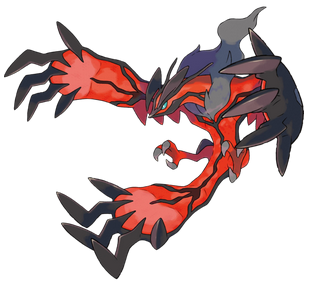
Xerneas and Yveltal

Xerneas.

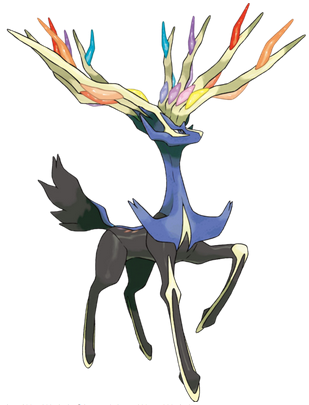
To my amazement, we’re already coming quite close to the end.  Only a handful of Pokémon from eastern Kalos remain, then I’ll have to think of something else to pass the time until I pick up Alpha Sapphire or Omega Ruby (at the moment it’s looking like I’ll finally do that series on the rival characters that I’ve been putting off forever).  Meanwhile, my unfathomable whims decree that now is the time to take on the flagship Pokémon of X and Y: the divine guardian of life and the terrifying shadow of death, Xerneas and Yveltal.  I’m not even going to bother talking about stats or moves or any of that nonsense; I know I usually do, but you really don’t need me to tell you that these things are godlike, right?  Stick some attacks on them and go commit brutal murder; whatever.  I’mma talk about themes and stuff.

I will admit, I was not terribly inspired by these two when they first appeared in the teaser trailer for X and Y last year.  “Wait, so they’re… based on the letters X and Y?” I asked myself.  “What?  Why would you- what does that add?  What is the point of that?”  I’m still not really sold on the alphabet thing, and only partly because it led to that ridiculous line where Professor Sycamore says the only thing he knows about Xerneas is that it “resembles the letter X.”  No, it doesn’t; it resembles a massive f#%$ing stag.  I suppose there doesn’t really need to be any point to it, though – there was no reason for Palkia to associated with pearls and Dialga with diamonds, and Xerneas and Yveltal have plenty of other significance to them.  It’s just rather strange, after the previous generation used the titles Black and White to tie in with the Yin-Yang ideas and the themes of balance and duality that those games were so insistently pushing, that the best anyone can come up with for X and Y is that Game Freak and Nintendo were just really proud of their 3D graphics.  It wouldn’t exactly surprise me, and it even makes some sort of sense with Y conventionally representing the vertical dimension (Yveltal can fly) while X and Z are the two horizontal dimensions (Xerneas and Zygarde have two different modes of earthbound movement), but it’s not really a satisfying conclusion.  Maybe it was just coincidence that the titles and associated legendary mascot themes of Black and White worked so well – or maybe there’s something tremendously dramatic planned for Alpha Sapphire and Omega Ruby (which, of course, also include letters of… well, an alphabet) that will make sense of everything; I don’t know.  In any case, that’s not what I most want to talk about here, and again, I don’t think it matters.  Their curious alphabetic structures do nothing to detract from Xerneas’ obvious majesty or Yveltal’s palpable malice.  These are Pokémon who know which notes they want to strike, and do so quite effectively.  What I really want to do with this entry, for the most part, is take apart the Norse mythology interpretation of Xerneas and Yveltal that seems to have so thoroughly convinced the internet.

 Yveltal.

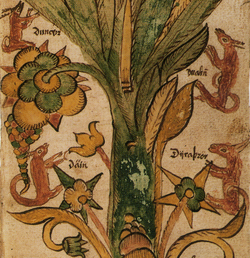
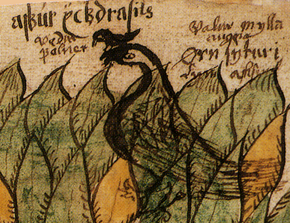
At some point shortly after that first trailer, someone latched onto a variety of figures from Scandinavian myth, primarily inhabitants of the great ash Yggdrasil, as the most likely source of inspiration for Xerneas and Yveltal’s designs, and I think everyone’s just had trouble letting go of that idea – sometimes to the exclusion of all common sense.  Personally I struggle to find much merit in the interpretation.  It sounds really clever when you take it as a whole because it gives you an eagle, a stag and a snake that all have something in common (a tie to Yggdrasil), but the individual identifications make little to no sense.  The original argument seems to have wanted Xerneas to be based on a quartet of stags who live in the branches of the World Tree and feed on its leaves.  They are described in the Grimnismal (Sayings of Grimnir), one of the poems that make up the Poetic Edda, the major surviving body of pre-Christian Norse myth.  Nothing else is known about them aside from their names: Dain, “the Dead One,” Dvalin, “the Slumberer,” Duneyr, whose name’s exact meaning is uncertain but possibly something like “Murmur,” and Durathror, who is again obscure but perhaps means “Delay.”  These, of course, all make such perfect sense for a Pokémon whose raison d’être is to invigorate life, particularly “the Dead One,” that it’s hard to believe anyone could doubt there is a connection.  The idea also seems to have circulated that each stag had a different coloured gem in its horns – red, yellow, blue and purple, the colours of the glowing projections in Xerneas’ horns – but as far as I can find there’s actually… like… no evidence for that… anywhere… so yeah.  Yveltal, similarly, is linked to an eagle who roosts at the top of Yggdrasil, a figure to whom the Eddas do not even give a name, and spends his days insulting the dragon Nidhoggr (who lives at the bottom of the tree and gnaws on its roots), by way of a squirrel messenger named Ratatoskr.  Like the four stags, the eagle forms part of the scenery of the World Tree but is otherwise not a terribly important figure, and, also like the four stags, seems to be the subject of an erroneous detail that seems to have been concocted to make the whole concept seem more likely – namely, someone seems to have put it about at some point that the mythical eagle was blind (…it wasn’t) and suggested this as an explanation for Yveltal’s unsettling blue eyes.  Finally, again like the four stags, it’s difficult to see what the Yggdrasil eagle could have given to Yveltal other than simply being a mythical bird of prey.  He’s not really linked with death or destruction, any more than the stags are linked with life.

Bulbapedia offers related alternatives to each, which do little to improve my estimation of the idea.  Yveltal, in their view, might be based on Hraesvelgr, a giant who takes the form of an eagle and lives at the edge of the world; I think the main attraction is his badass name, which means ‘Corpse-Swallower.’  This guy is a seriously obscure character.  He’s attested in a poem called the Vafthrudnismal (or Sayings of Vafthrudnir), another part of the Poetic Edda, which is basically about Odin asking the giant Vafthrudnir stupid questions.  Odin’s ninth question is “where does wind come from?” and Vafthrudnir answers “there’s a huge f#$%ing eagle-giant at the edge of the world who flaps his wings really hard” (that is, of course, my own literal translation from the Old Norse, or whatever this stuff is supposed to be written in).  The later Prose Edda quotes this passage word-for-word, and that is the sum total of what Hraesvelgr does in the extant Norse texts; how he got his sinister name is never touched on.  You may as well just say Yveltal is based on a really big eagle.  Similarly tenuous links are drawn from Xerneas to the great stag Eikthyrnir, who stands on the roof of Valhalla chewing branches of Yggdrasil and distilling the sap into the water that supplies the world’s rivers.  This one, I will grant you, actually does make some degree of sense because Eikthyrnir, like Xerneas, is a sort of wellspring of life, in the form of fresh water, though I would rather expect Xerneas to have water-related powers if that were the case – I mean, it’s not like you need a lot of justification to put something in a legendary Pokémon’s movepool, and this is literally the only thing we know about the character being identified as the inspiration for Xerneas.

 The four stags, Dain, Dvalin, Duneyr and Durathror.

All of this was discussed ad nauseam before X and Y were ever actually released.  People thus inferred that the third legendary Pokémon, whom we now know as Zygarde, would be based on Nidhoggr, and successfully predicted that it would therefore be serpentine (seriously, though, it had to have a Z-shaped body; what else could it possibly have been?).  In some ways this is the most appealing identification to me because a terrible serpent who lives underground certainly sounds like Nidhoggr, and the –garde termination could well be a reference to Asgard and Midgard (though it could equally just refer to Zygarde’s position as, well, a guardian).  In other ways it actually makes the least sense of the lot because, rather than simply being generally nondescript like most of the other beings we’ve talked about, Nidhoggr has enough of a personality to be strongly opposed to the role Game Freak appear to have in mind for Zygarde.  He’s described as “the Order Pokémon” and is supposed to be a guardian of balance in Kalos’ ecosystem, which sounds as though he’s supposed to fill a Rayquaza-like role in checking the excesses of both Xerneas and Yveltal (since overabundant life and unchecked destruction could both devastate an ecosystem; the way his ability relates to theirs reinforces this idea).  Nidhoggr, by contrast, is a far more malevolent character than any of the minor figures suggested as an inspiration for Yveltal; he spends his time chewing on the corpses of the dishonoured dead in Hel, and seems to be one of the figures on the side of evil and chaos in Ragnarok, the Norse apocalypse.  If Zygarde is based on Nidhoggr, why isn’t he the Pokémon who symbolises death instead of Yveltal?  Similar attempts to locate Zygarde’s origins with the World Serpent Jormungandr – the arch-enemy of the universally loved and admired Thor, and a major player in bringing about the end of the world – are, if anything, even worse.  In any case, there will be more on Zygarde when he gets his own entry.

Finally, just to cap it all off, people point at Xerneas’ dormant form – a white tree – and say “ooh, look, it’s clearly a reference to Yggdrasil.”  Xerneas is a stag, for heaven’s sake; stags being associated with trees and forests is really nothing unusual; it’s certainly not specific to Norse myth.  Besides, where does that leave Yveltal’s cocoon?  There’s no reason Yveltal couldn’t have lain dormant as a black tree, and if Yggdrasil were really as important a unifier as this concept makes out, it would have made a great deal of sense, whereas a cocoon doesn’t give you anything to work with.

The Yggdrasil eagle, along with the hawk that inexplicably roosts between its eyes (the hawk, evidently, was important enough to be given a name - Vedrfolnir.).


So, now that I’ve spent all this time picking apart why I don’t think the currently popular mythological identifications work, am I now going to present something much cleverer that explains Xerneas and Yveltal perfectly?  No, actually, I’m not.  I’m really not sure there is one.  Legendary Pokémon are not usually based on specific mythological characters in this way; with a few notable exceptions, they more often tend to be the Pokémon world’s expression of generalised archetypes.  They may very well relate to mythological characters, but in most cases (again, with notable exceptions) I don’t think trying to pin them on specific characters from specific mythologies is a productive exercise.  In fact, you can count on one hand the number of specific mythological figures who are clearly identifiable in the designs of legendary Pokémon: the phoenix (Ho-oh), and the Japanese gods Fujin, Raijin and Inari (Tornadus, Thundurus and Landorus).  I suppose you can also argue the nine Muses for Meloetta, Nike for Victini, or the golem of Prague for Regigigas and friends, but I don’t think those are nearly as solid.  We don’t actually need an answer to this question.  There’s nothing that should lead us to expect that there is one.  If we have to find a mythological antecedent for them, I rather prefer the idea that the forces represented by Xerneas, Zygarde and Yveltal correspond to the three deities of the Hindu Trimurti, Brahma, Vishnu and Shiva – or, more accurately, not to the deities themselves but to the forces they represent, creation, preservation and destruction.The idea that Yveltal is a reference to the Black Death, I’m also fairly partial to; first of all, it’s got ‘death’ in the name, and although Game Freak shied away from actually calling Yveltal “the Death Pokémon” (going for “Destruction” instead), it’s pretty clear that that’s what it is, in opposition to Xerneas, “the Life Pokémon.”  The Black Death is generally understood to have been caused by the bacterium Yersinia pestis – starts with a Y, which is apparently one of Yveltal’s defining features.  Like Yveltal, the Black Death appeared mysteriously to ravage a huge region centuries ago, then vanished just as mysteriously (and, if certain current ideas about the Justinian Plague of 6th century Byzantium are to be believed, it had already done so once before).  Locating such a Pokémon in a European region would also make sense.  The physical designs of Xerneas and Yveltal, though, I think were dictated partly by the X/Y theme and partly by the general feeling the designers wanted to get across.  Stags appear in a lot of fiction as guardians and avatars of nature – look no further than the stag-like forest spirit from Princess Mononoke, whom I would accept as a possible influence on Xerneas far more readily than Eikthyrnir – and Xerneas’ rainbow horns evoke the vibrancy and diversity of life.  Birds of prey can descend from the sky to snatch life away without warning, an unsettling trait that is reflected in stories found around the world of giant birds that can prey on people, like the Roc and the Thunderbird.  Xerneas and Yveltal are best seen as the Pokémon universe’s take on these broader ideas, not as attempts to ape specific mythological animals whose stories don’t even fit them.

That isn’t exactly the way I envisioned this entry going; I suppose dissecting these mythological identifications was more important to me than I realised, and in fact I’m coming to realise I haven’t actually said much about Xerneas and Yveltal themselves.  A quick assessment to finish, then.  Life and death were bold choices, and I feel there’s a lot more room to play with this story than we saw in X and Y – Zygarde will doubtless complicate the relationship between these forces a great deal.  The designs are perhaps a little over-the-top, even in comparison to previous legendary Pokémon – I mean, Xerneas is almost literally “rainbow crystal stag Jesus” – but they certainly work.  They also led to the creation of an interesting kind of threat in Team Flare and Lysandre, although I’m on the record as believing that Lysandre isn’t nearly as morally ambiguous as the game seems to think he is.  In short – if you ask me, these Pokémon work.

RandomAccess asks:

There’s something I’ve been wondering about lately, and I want to get your opinion. Do you think the Flygon line are reptiles with an insect motiff, or insects with a reptillian edge? I myself lean toward the former, but I’m very much interested in your input.

Does it matter?  Trapinch is basically an insect – it’s supposed to be an antlion or something – and Flygon looks basically like a reptilian western dragon, with Vibrava being somewhere in between (and, appropriately enough, a dragonfly).  Since they’re in the Bug breeding group, I’m inclined to say that they’re biologically more like insects, despite Flygon’s appearance.

Anonymous asks:

Some Pokemon like Eevee have evolutions that act like an actual evolution, some creature adapting to certain living conditions. However, most Pokemon don’t actually evolve, they just grow up; hence baby Pokemon. Bulbasaur isn’t adapting to a new environment or anything it’s just getting older, thus the bud on its back blooms and its body grows. Does this bother you at all, or do you not mind it?

Well, Pokémon evolution is sufficiently different to real-world evolution anyway that details like whether it’s ‘adaptation’ or not kind of go over my head.  Darwinian evolution has no effect on individuals.  Organisms cannot ‘evolve’ within their own lifetimes.  Only populations can evolve.  What Pokémon are doing – dramatic change within the lifetime of a single creature – is really metamorphosis; it makes more sense to compare Bulbasaur to, say, what a cicada or dragonfly does.  Evolution is a bit of a silly thing to call it, I suppose, but I think I’ve been desensitised to it over the sixteen years I’ve been playing Pokémon.