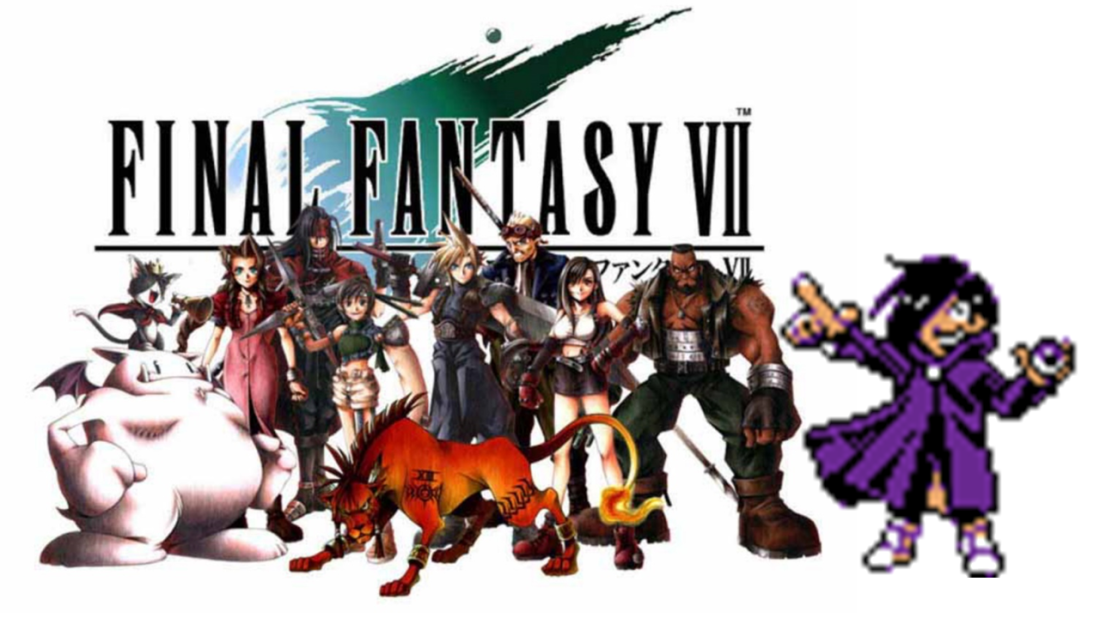
Can’t say I’ve ever heard of it before now, no. It looks kind of interesting, but I don’t really have the spare time to look into it right now.
Hi. This is a mechanics question about abilities and things. If Game Freak, for some unfathomable Game Freak reason, decided to make a Pokémon literally 100% unbeatable (Except against itself) How do you think they would do it? Wonder guard Spiritomb for example, or Sheer Cold + No Guard + fast Pokémon?
Hmm.
Well, neither of those would actually do it; not quite. Wonder Guard isn’t impenetrable; it can be bypassed by weather damage, entry hazards and, critically, poison damage (so Toxic will still put an end to you pretty quickly if you don’t have Rest or Refresh) – all these things are the real reason Shedinja seems interesting on paper but just doesn’t hold up in reality. Pokémon with Mold Breaker or its equivalents can also hit you. Sheer Cold with No Guard doesn’t work either, because even with No Guard some Pokémon like Gigalith and Skarmory are just flat-out immune thanks to Sturdy, and you can still be hurt and perhaps beaten by priority attacks. Either method can also be stopped by Gastro Acid.
Honestly, I’m not sure anything would do it. You can obviate the need for Wonder Guard by just giving the Pokémon epic defensive stats and Recover or something, but you’d still need Sturdy so that people can’t one-shot you, and Magic Guard to keep them from wearing you down – you can’t have both (sure, if you have Rest, you can deal with Toxic and other indirect damage pretty easily… but without Magic Guard you’re still vulnerable to Darkrai). Even then, Gastro Acid, Entrainment and Simple Beam can still deny you your ability, and you’re still vulnerable to Counter and Mirror Coat, so you’ll need to be careful to kill things very slowly. You can keep Struggle from ruining your day, at least, if your Pokémon can use Recycle, by continually reusing a Leppa Berry.
Obviously there are loads of ways to make a Pokémon that is unbeatable for all intents and purposes, but I don’t think the game mechanics as they stand actually allow for anything completely airtight.
Well, short of giving a Pokémon an ability that says “this Pokémon is immune to all damage and 1-hit-KO moves.” But really, come on.
Do a detailed review of Pokémon Origins, mein square.
I think it’s going up on the Pokémon website in a couple of weeks; I’ll watch it then – of course, I should have X by that point, so there may be competition for my time.
How do you feel about combat in Pokemon vs combat in Final Fantasy? Both are entirely different but they are both turn-taking RPGs. Are there elements either could benefit with taking from the other?
Disclaimer: The most recent Final Fantasy game I have played is X (I think they’re up to, what, fourteen or something now?) so I am partially speaking from ignorance here.
Hmm. I’m not sure there’s anything that would help, particularly. Most of each game’s distinctive features have counterparts in the other that work differently but serve the same purpose. Materia, for instance, provides essentially the same gameplay function as TMs – offering a broad base of powers that can be used by most or all characters. Limit Breaks, as far as FF VII goes, give the individual characters their own special powers, which is something Pokémon already has quite a lot of. Their item systems work in essentially the same way, and so do their status effect systems – Final Fantasy has a lot more status effects than Pokémon does, but I’m not sure there’d be an particular benefit to bringing that over. I suppose one feature of Final Fantasy games I’ve always found interesting is the way the turn system works – not one-for-one, but based on a character’s speed, so very fast characters can potentially take more turns than slower ones as well as simply taking them first. It’s interesting, but shifting that across to Pokémon would be a balance nightmare – it’s not like speed isn’t already an important stat! As for going the other way… well, the same objections apply; Final Fantasy wouldn’t have much use for TMs, there’s no particular reason to simplify the way speed works in those games or reduce the number of different status effects, and Pokémon’s expansive and complicated type chart would sort of be a waste of time in a game with fewer than ten different player characters – Final Fantasy’s simpler elemental system makes a lot more sense for the needs of the game. I can’t really think of anything else…
It might be interesting to see the whole idea of Pokémon adapted to a Final Fantasy game, with a sort of ‘beast master’ type character who can tame and raise monsters to fight for the party. In terms of gameplay, though, a similar niche is already filled by Final Fantasy’s ‘Blue Mage’ character archetype, which can absorb and learn the techniques of the monsters it fights, so… eh.
Thoughts on Genesect and the Legend Awakened and the whole “Newtwo” debacle?
Haven’t seen it.
Dear Sir, I asked the question almost a week ago. I am sorry to you and Random Access for any confusion. Yes, it was mainly about pokemon, perhaps the confusion was why your answer was very short. For example Ash Ketchum was accused of such, such as when his pokemon protected him from the cold in the Snow in the cave, few thought of it as slaves or Stockholm syndrome but to me it seemed a very poor simplified misunderstanding. Hence why I asked on simplified judgments such as on those two topics
Yeah, it… sometimes takes me a while to get around to answering these, especially if I’m not sure what to say immediately… eheh…
Okay, so, what you’re actually saying is that you think ‘consent’ should not automatically prevent us from labelling Pokémon training as slavery? That is an interesting point. As I said, I don’t think slavery actually precludes consent if you go by a dictionary definition; I just can’t think of any real-world examples of consensual slavery (well, except for people who are born into slavery and simply never think to challenge it, but that’s sort of a different issue – that happens in Pokémon training too, when trainers hatch eggs, but I think here we’re mainly considering cases where there is an actual moment of capture). If you look at it from a strictly definitional or legal perspective, then it depends on whether you consider a Pokémon a person (I suspect the laws and governments of the Pokémon world do not) and on whether trainers actually own their Pokémon in a legally binding sense (and I suspect that they do, although unsurprisingly I don’t think the question has ever come up). If we say “yes, Pokémon are people too” (which is something I’m reasonably comfortable doing, for the sake of argument) and assume that there is legal ownership involved, then that would mean that Pokémon training is, in fact, slavery – the difficulty is that it would be slavery of a kind that has never actually existed in the real world (as far as I know – if anyone knows of a real culture that practised consensual slavery, please do speak up!), which gives the word an extremely limited heuristic value. Would we actually consider slavery a bad thing if it were almost always consensual and strictly regulated to ensure slaves’ wellbeing? I don’t think you can easily answer that question, since (again, as far as I know) it’s never happened. We’re kind of going off the deep end of cultural relativism there.
What I said about Stockholm syndrome the first time stands, I think. I mean, I’m not a psychologist, so perhaps I don’t understand the phenomenon as well as I should, but I’m pretty sure that Stockholm syndrome is, by definition, something experienced by prisoners, and is normally used to describe victims in a hostage situation. I would say that, if there is consent involved from the beginning, especially if the subordinate party is free to leave (as I do believe Pokémon are), it’s not Stockholm – just plain old friendship.
P.S. You really don’t need to call me ‘sir’. I’m not exactly an authority figure here. 🙂
EDIT: Actually, there’s another point I hadn’t thought of – slaves are commodities. There is a market (in the abstract, economic sense) for slaves in societies that have them; slaves are bought and sold regularly for prices dictated by market forces. Do people buy and sell Pokémon? The only example I can think of is the game corner, which is problematic, firstly because the original game corner in Red and Blue was a Team Rocket operation, so using it as our standard for legitimacy is clearly suspect, and secondly because later iterations of the game corner stopped offering Pokémon and started dealing only in rare items (which suggests to me that the designers may have been aware of the incongruity and deliberately chosen to remove it). Pokémon can be traded; they can be exchanged for other Pokémon, but not for money, or indeed anything else, as far as I know. Can anyone else think of any other situation in which Pokémon are bought and sold legitimately? If not, then that would suggest that Pokémon trainers do not have total freedom to do as they wish with their Pokémon (or, at the very least, that Pokémon are considered uniquely valuable in a way which would make traditional chattel slavery difficult to accommodate).
Dear Sir, I have been deeply interested in ethics, discovered video game’s. GTA and CoD being most famous of these things and I discovered your article and read it. Also I have read opinions of others. I concluded that people easily can make simplified yet incorrect of judgments. Am I wrong? Also, is it slavery consent or not? Same with Stockholm syndrome. From me, I think its a case of what has some similarities but not specifically. However, people generalize on the surface. Y/N? Thank You Sir
Okay, I admit I’m not… totally sure exactly what you’re asking, but let’s see… You asked ‘yes or no?’ so…
Can people easily make simplified yet incorrect judgements?
Well, yes. All the time, unfortunately, especially about subjects that aren’t matters of measurable, objective fact, like ethics. That probably includes me, much as I might try to avoid it.
Is it still slavery if there is consent?
…hmm. You know, I’m not sure. If you look at a dictionary definition of slavery, I don’t think it matters – slavery is simply the state of being owned by someone, regardless of how you came to be in that state, and I suppose in theory you could become a slave willingly, if you lived in a society that permitted it, by selling yourself. I don’t think that’s common, though, and I suspect that in practice we’d be more likely to consider that indentured servitude rather than slavery. I think slavery is generally understood to imply lack of consent.
EDIT: I suppose there’s debt-bondage, where a person who cannot pay a large enough debt is automatically enslaved to the creditor, but I don’t know if I’d call that consent, as such, even in a society where debt-bondage is accepted as the natural consequence of defaulting on a loan.
Stockholm syndrome?
Well, Stockholm syndrome refers to developing sympathetic feelings for one’s captor, and you can’t really call someone your captor if you’re consenting, can you? I’d say that one is a contradiction in terms.
Okay, just one more on Final Fantasy VII: Character analysis
You’re probably getting sick of this by now, but since I still don’t have Pokémon X yet, I might as well do one more. Let’s talk about the characters of Final Fantasy VII. In no particular order…
Cloud
One of the big themes running through this story is Cloud becoming less of a jerk. Personally, I have something of an enduring fondness for Depressed Bastard Cloud, since he’s what makes the story interesting. Cloud is great at killing things, sure; on paper he’s pretty much the strongest member of the team. In terms of anything that doesn’t need killing, though, like his enduring miasma of depression or his glaring lack of social skills, he’s as helpless as any old average Joe. Cloud’s problem, undoubtedly, is that for a good chunk of the story he doesn’t actually know who he is – he thinks he’s an unbelievably badass super warrior who doesn’t need anything or anybody to get by (and… to be honest it’s kind of hard to fault him on that), an attitude which leaves him with something of a gaping hole where his sense of meaning in life would normally go. He has entirely forgotten that he’s actually a fairly average kid who really does need friends around him like anyone else. It’s Aeris, I think, who manages to hammer that point through his skull – she does this, initially, by being totally unashamed to ask for his help and totally insistent on helping him in return (also by forcing him to wear a dress). After Aeris dies, he just heads straight back into his old comfortable spiral of self-destruction, but Tifa helps him get back on track, and I like to think he’s in a good place after seeing Aeris at peace in the lifestream.
Aeris
I can see why people like Aeris; she’s pretty much the nicest person on the planet, which is quite an achievement considering that she’s the last living member of her race and grew up in a city made of garbage, but her inherent Cetra ability to invigorate life probably helps – she literally brings fertility and happiness with her wherever she goes. Aeris consistently denies that she’s anything special, and I don’t think she wants to be either, but on some level she clearly does feel that her powers come with a duty to serve life, especially once she gets to visit the Temple of the Ancients and commune with the spirits of the other Cetra. That sense of duty is ultimately her undoing, since it prompts her to try to stop Sephiroth on her own, something which is clearly beyond anyone. Still, even though Holy doesn’t work as advertised when push comes to shove, things turn out pretty well for her in the end – I remain convinced that the ‘Promised Land’ of Cetra myth really is just a metaphor for death at the end of a good life, and suspect that Aeris took ‘rejoining the lifestream’ to a whole new level. So I suppose ultimately she’s a pretty cool chick.
Tifa
Oh, Tifa… even when Aeris is dead Cloud’s more interested in her. I really feel like Tifa got the short end of the stick in this story. To an extent she does bring it on herself by being so adamant in the early part of the story that her feelings for Cloud are completely platonic, and by the time she manages to admit to herself that there’s something else going on there, Cloud has well and truly fallen for Aeris. Meanwhile, Tifa’s own developing friendship with Aeris is too important to her to be sacrificed over their love triangle. It’s a shame, because Tifa’s own relationship with Cloud is really something quite profound, as we can see when she enters his subconscious in the lifestream. It’s unfair to Tifa to talk about her solely in terms of her relationship with Cloud, though, because she’s pretty neat in her own right as well. She’s good with people, and isn’t above using that to get what she needs. She’s pretty self-sufficient when she has to be, and steps into a leadership role in Cloud’s absence without any difficulty (contrast, for instance, Barrett’s unease at filling her shoes when she decides to stay with Cloud through his illness – something which, incidentally, I think would have taken significant emotional fortitude). She also, at the ripe old age of 15, basically declared war on the most powerful organisation in the world and tried to stab Sephiroth with his own sword. Girl’s got serious guts.
Cait Sith
People don’t like Cait Sith, I think, which I can sort of understand – I mean, the whole ‘traitor’ angle doesn’t really do him any favours, obviously, and his whole introduction and character concept are pretty silly. His ‘death’ scene in the Temple of the Ancients also loses a lot of its impact from the fact that… y’know, he doesn’t actually die. He also has an astonishingly poor sense of tact. On the other hand, his real identity – the Shinra executive, Reeve – is easily the least evil person in the company’s leadership, consistently pushing for them to have a more positive impact on the community. As Cait Sith, he has to deal with genuine conflicting loyalties, and his betrayal of the party by stealing the Black Materia could very easily have been because he felt Shinra could handle Sephiroth and the Temple of the Ancients every bit as well as Cloud. And, of course, he’s perfectly willing to work against Shinra on the party’s behalf later. It’s also worth remembering that this guy initially would have seen Cloud, Tifa and Barrett as a group of extremely dangerous terrorists – and that this is an entirely accurate assessment. His diatribe to Barrett near the end of the game about how the world isn’t all black and white, calling Barrett out for the hundreds of civilian casualties he’d caused while attacking Shinra, is (to me, at least) nothing short of inspiring. So, in spite of myself, I actually think Cait Sith is a pretty neat character. So sue me.
Vincent
Eh. I’m kind of neither here nor there on Vincent. I know he’s ‘cool’ (I mean, hey, vampire gunslinger with a tortured past; what’s not to like?) and I really enjoy using him as an active party member because his limit break abilities are so unique, but I think he suffers a bit from being an optional character (I’m pretty sure you can actually complete the game without ever even meeting Vincent, so his involvement in plot-relevant scenes is, by necessity, limited). He joins the party to get revenge against Hojo for what happened to his ex-girlfriend, Lucrecia (Sephiroth’s biological mother), and then just… kinda stands in the corner being dark and brooding all the time. We actually met his (now immortal) ex-girlfriend at one point, but that scene didn’t really resolve anything; it just kind of stopped, leaving the whole thing kind of underdeveloped. I didn’t actually have Vincent with me when I fought and killed Hojo, so maybe I inadvertently cheated him out of an important character moment there. Hmm. I’ll have to remedy that if I ever play through this game again. So… yeah. Vincent.
Yuffie
Oh god f#$%ing damn it.
Five minutes after joining your party, without so much as helping in a single fight in the intervening time, Yuffie steals all of your magic,ditches you in the middle of f&$@ing feudal Japan, leads you on a wild goose chase around her home town, traps and humiliates your other party members, then gets kidnapped by the f&!#ing pimp king so you have to save her ungrateful b%!*# ass! Then Cloud lets her back in the party without even a real apology!
In fairness, I am given to understand that Yuffie can join your party at any of a wide range of times, and she joined mine very late, relatively speaking, so perhaps that sequence of events wouldn’t have seemed so jarring if she’d been with me longer. Or perhaps it would have been even worse because she would have felt like a trusted member of the team by then. Not sure. It’s also heavily implied that she turned to stealing materia as a career in order to keep her hometown from falling into poverty.
However, I don’t give a $#!t.
F$@% you, Yuffie. F#!$ you.
Barrett
Big scary black dude has a gun for an arm and blows up power plants for a living, but is also a devoted father. D’awwww. Marlene, I think, is Barrett’s primary motivation in everything. He blames himself for the fate of their hometown (which… is just objectively not his fault, but Barrett has something of an overactive sense of responsibility), and seems to see raising Marlene as a sort of penance. She’s also his reason for fighting Shinra – so she’ll grow up in a healthy world. Barrett recognises eventually that he’s not cut out for leadership – he’s just not a particularly inspiring figure, and doesn’t have a great deal of appreciation for moral nuance – but he’s the kind of person who never backs down from a fight. Basically, he’s a father who can only see one way of securing happiness for his daughter, and he is sure as hell going to do it. I think Barrett’s value as a character, ultimately, comes from being so grounded in the reality of what’s going on – most of the others in the group (particularly Cloud) are more wrapped up in their own personal problems than in dealing with the plot, but for Barrett the two are inextricably linked, so it’s through him that we get some sense of how the relatively vague and abstract forces of the overarching storyline impact the regular people on the ground. Perhaps not the most exciting role to play, but an important one nonetheless.
Red XIII/Nanaki
I like Red because he just refuses to be what you expect. He’s a hyena – but he’s also the most conventionally intelligent person in the party, the most intellectual in temperament, and one of the better spellcasters in the group. He’s thoughtful, focused and independent – and in terms of his own species’ lifespan, the equivalent of 15 or 16 years old. Once the others know his backstory, he opens up a little more and you can tell he’s not quite as confident as he seems at first and has his share of insecurities. To be honest, I don’t feel like he got all that many interesting character moments after the Cosmo Canyon storyline, but the scene where he finally learns that his father was a hero after all is pretty moving. Unlike Vincent, whose story feels distinctly unfinished, I feel like Red was wrapped up nicely – more certainly wouldn’t have hurt, but he’s a neat character the way he is.
Cid
So, throughout the game I’ve been assuming Cid was in, like, at least his late 50’s, because his character model has grey hair (although his portrait depicts him as blond) everyone else keeps referring to him as ‘old guy,’ and he’s just such an all-round cynical bastard. But no, it turns out that according to his bio on the FF VII website he’s thirty-two. Cid… if nothing else, is pretty entertaining. He just sort of stumbled drunkenly into the plot and refused to leave, at one point accidentally becoming leader of the entire party. To his credit, he certainly made the most of it – Cid’s tenure as leader is marked by a distinct rise in zany antics and snarkiness. Despite his somewhat callous exterior, Cid has a sentimental streak too – his dream of going to space seems at times to override his common sense, and he almost waxes poetic when he actually gets there. Cid is a quite bizarre combination of cynicism and wonder, apathy and dedication, selfishness and generosity – and I wouldn’t have him any other way.
And one last bonus one…
Sephiroth
I have something of a preference for sympathetic villains, in general, and it’s sort of difficult to claim that Sephiroth is, in any normal sense of the word, ‘sympathetic,’ but he certainly has an interesting start, and the events that lead to him initially becoming the villain of the story aren’t entirely his fault, arguably (his subsequent actions are another matter, of course). Sephiroth’s problem, in my view, is that he was raised to have a profound belief in the fact that he was ‘special,’ doubtless encouraged by Hojo, his biological father, to the point of developing some sort of messiah complex (incidentally, note the angelic shapes and imagery which Sephiroth incorporates into his combat forms – even his name is a biblical reference). I’m not sure whether he knew, in his childhood, that he was supposed to lead Shinra to the ‘Promised Land,’ but if he did – well, what would you take from an upbringing like that? Discovering exactly what it was that made him ‘special’ was bound to be a shock, and made worse by the fact that he came to the conclusion that humanity was responsible for the extinction of his species. From there, he just continues to escalate. Cloud kills him in Nibelheim, and he hasn’t fulfilled any kind of glorious destiny yet, which is simply more than his ego can handle, so he inflates his goals even further to “destroy civilisation and become a god.” Jenova’s influence doubtless has some effect on him here, but I have no idea who’s manipulating who, and I suspect that by the end there’s no longer much point in attempting to distinguish between ‘mother’ and ‘son’ in their motivations and beliefs (assuming Jenova had motivations and beliefs to begin with). As villains go, Sephiroth isn’t really the most compelling I’ve encountered, but the circumstances that went into his making and eventual ascension are interesting, the angel motif was a bold choice on the designers’ part (and especially curious given that Aeris has similar imagery associated with her), and I can understand his enduring appeal.
So, I guess that’s the end of this show. Thank you for putting up with me, and to all, a good night. Hopefully I’ll return soon and get to the new Pokémon games!
Final Fantasy VII: Entry 10 and wrap-up
Basically all that’s left to cover now is the final boss sequence – there’s a big cave full of monsters to go through, but nothing of tremendous interest happens during that, so I’ll just cut to the chase. Cloud and his party reach the bottom of the old Jenova impact crater, which is now open to the lifestream beneath the planet’s surface. They fight Jenova herself, who is… anticlimactic, to be honest; she’s mostly just a great big sack of HP with a couple of slappy tentacles. I’m still not totally sure I ‘get’ Jenova. She’s some sort of alien, she created a plague that wiped out the Cetra, one assumes she’s quite intelligent, and this whole thing has been about her cells, which have been implanted into various humans like Sephiroth and Cloud as part of genetic experiments, trying to reassemble themselves… but what exactly does that have to do with what Sephiroth is now up to? Has he subordinated Jenova to the demands of his own power trip? If so, how? Or is Jenova just a destroyer by nature, and totally on board with anything that causes more death?
Anyway, once Jenova’s dead, it’s down into the lifestream to fight Sephiroth, who promptly turns into some kind of… giant floaty angel statue thing which has to be fought with two parties at once: one group to attack his left side and breach his defences, so Cloud’s group on the right can destroy his ‘core,’ which otherwise gives him sufficient healing power to recover from just about anything you throw at him. A bit of a pain, but throw all your summons at him and he’ll drop. And then turn into a radiant seraph-like creature with even greater powers. Joy. In this form, Sephiroth has a number of nasty abilities; he can shield himself from both physical and magic damage, he can attack with his one black wing, he can dispel your beneficial magic, he can blast you with magical energy, and he can turn your party members into frogs… but certainly the most devastating is his special attack, which is to blow up the sun. He can do this more than once, which makes me wonder how many solar systems this planet is part of. Equally, it makes me wonder why he didn’t do that earlier. It seems like a much more efficient way of traumatising the planet, and also probably not vulnerable to interference from Holy. He’s certainly happy to get rid of Cloud by blowing up suns left and right; it seems like it would make a useful all-purpose solution. Neighbour’s dog digging holes in your yard? Blow up the sun; that’ll teach ‘im.
Once Sephiroth falls and the party is about to leave, Cloud’s soul unexpectedly leaves his body and backflips into the lifestream for one final round against Sephiroth, but this seems to be unloseable; Cloud just kicks the cr@p out of him, then has a vision of Aeris before waking up – now certain that he’ll be able to meet her again in the promised land (I’m… still pretty sure the promised land is a Cetra metaphor for death, but whatever floats his boat, I guess). The party zeppelins out on the edge of a huge explosion as the power of Aeris’ final spell, Holy, is released at last. So, that should stop the meteor, right? Well… no. No, apparently not. It’s too close. Its proximity is already tearing the city of Midgar apart, and the Holy pulse only makes things worse, whipping up a vortex of doom across the entire massive city. Nice going, Aeris. GREAT plan. Just GREAT. At this point, countless tendrils of green light – the power of the lifestream – burst out of the ground from all across the landscape and converge on Midgar. For a moment, we see Aeris’ face, surrounded by the green light of the lifestream. And… then the credits roll.
…so what happened?
After the credits finish, there’s a short scene depicting Red XIII five hundred years later, along with two children (I guess he wasn’t quite the last of the last of his kind…) running through a canyon and cresting a ridge to see Midgar on the other side. The city is in ruins, but it’s been overgrown by beautiful, thriving jungle.
Hmm. Well, Sephiroth explained earlier that when the planet is wounded it uses the lifestream to heal itself. That was the whole purpose of his plan, except that he was supposed to be at the epicentre to absorb the energy. I guess that’s exactly what we saw happening. It sort of seems like the whole ‘Holy’ thing was kind of a bust, because in the end it only caused more damage instead of stopping the meteor, so I guess that was a terrible plan after all, Aeris, but at least we killed Sephiroth and prevented him from following through with his plan to take control of the lifestream. And anyway it’s all good because Aeris is… in the lifestream now. Possibly… directing it. Um… Aeris…? Did you… get yourself killed on purpose so that you could reach the ‘promised land’ first and do what he was trying to? Because if Aeris is seriously going to tell me that traumatising poor Cloud by being brutally murdered right in front of him was all part of the plan, then so help me, I- I-
…I really have to congratulate her. Sephiroth struck her down, and she became more powerful than he could possibly imagine (well, okay, that’s going a bit far; Sephiroth has an unusually vibrant imagination when it comes to power, but you take my meaning), because she just ‘got’ the whole ‘lifestream’ thing about ten times better than him. Go Aeris.
Speaking of Aeris, a couple of people have been wanting me to watch the Game Theory video on her death, which I have now done. I gotta say… I am extremely sceptical. Jim described it as “a waste of internet” and not “worth the megabytes taken to download it, let alone the time [we’ll] never get back,” and I don’t think I’d go that far, but I sort of have a hard time going along with it. In case you’re not in a position to watch the video, the argument is as follows: Aeris did not die when Sephiroth stabbed her in the Cetra shrine, but collapsed and went into shock when his sword severed her spinal cord, dying only as a result of Cloud’s touching but misguided water burial. The evidence presented is that Aeris does not visibly bleed when skewered (suggesting that the sword blow miraculously missed all her major blood vessels and internal organs) and that her body sinks like a stone when Cloud releases it (dead bodies are usually more buoyant than living ones). The video does anticipate the obvious counterargument to the absence of blood (i.e. the developers thought it would be too graphic and avoided it) by noting two prominent and deliberate uses of blood in other parts of the game (namely, the aftermath of the slaughter in the Shinra building, and streaked all over Sephiroth’s face after his final dream-duel with Cloud in the lifestream). I think there’s actually an even more obvious reason they forgot, though: the blood in the examples given by Game Theory is not moving; it’s texture, whereas blood spilling from Aeris’ perforated torso would necessarily have to be in motion. Flowing liquids are notoriously difficult to model in computer animation, and this game was made over a decade ago. Based on what I’ve seen of Final Fantasy VII’s graphical capabilities, I don’t think the game designers could have shown Aeris bleeding in a realistic manner even if they’d wanted to; in fact, I think any attempt would have appeared almost comical and seriously detracted from the gravity of the scene – as good a reason as any not to do it. For the water burial likewise, there is a perfectly good reason for Aeris’ body to sink: because it looks right. There are only so many ways to get rid of a dead body. Cloud could have buried Aeris, or cremated her, but somehow I just don’t think that seeing Cloud dig a grave for Aeris, or seeing her body burn, would have produced the same effect of serenity as seeing her body sink slowly into the clear water, with her hair fanning out around her. The water burial also fits with the marine motifs of the City of the Ancients (I still have no idea why the City of the Ancients has a marine theme, but given that it does…). In short, there are perfectly compelling artistic reasons for the anomalies noticed by Game Theory, and I think these are much more likely to have been on the developers’ minds than obscure anatomical trivia. I just don’t buy it.
Anyway, the game.
So, I liked this game. It was fun. And stuff.
For me, it wasn’t a big turning point in how I view games or anything, though perhaps it might have had a greater impact on me if I had played it in the 90’s when it was first released. The plot is intricate (at times a little too intricate for my taste, to be honest, and I feel like there are still loose ends there – which I guess is the reason this game has a movie sequel, Advent Children… which I guess I should watch… later…), the characters are compelling (even Cait Sith has his moments, I feel – though I think I’m in the minority on that one), and as I’ve said before this game has a really good handle on atmosphere; the music does a great job of backing up the action, there are a good number of very powerful moments in the story, and the game milks the extremely basic character models for all the expressiveness they can muster and then some. I mean… I certainly can’t say there’s nothing I would have done differently, but in terms of story and atmosphere it’s undoubtedly well put-together. I’m kind of neither here nor there about the battle system. Although it produces some interesting tactical considerations, I’m not a huge fan of the materia system, partly because it makes switching party members such a pain, but also because it makes it rather difficult to see what each character actually brings to the table in terms of skills and abilities. The characters have different stats, sure, which makes some better at certain roles than others, but even Barret and Tifa aren’t that bad at magic, even Aeris and Cait Sith aren’t that bad at hitting stuff, and most of the other characters are pretty competent at both. That just leaves their limit break powers, the vast majority of which are pretty straightforward: Aeris’ limit breaks heal and protect the party while Vincent’s allow him to transform into various horrifying monsters, but aside from them, most of everyone else’s skills basically amount to “I hit the monster lots of times really hard.” Of course, for most of the game, that’s all you really need – I thought Pokémon was generally pretty easy, but Final Fantasy VII was a walk in the park up until the last four or five boss battles, when things rather suddenly became much more interesting (and apparently my party was dramatically under-levelled compared to Jim’s normal experience of this game because I spent very little time training, finishing with no-one above level 60 except for Cloud). Is that a bad thing? I’m not really sure.
In short? I guess I have mixed feelings about this game. I can see why it’s considered a classic, though. It got a lot of things right – and, well, compare it to what Pokémon was doing in the same year. Obviously comparing gameplay and mechanical complexity isn’t entirely fair because the demands of their respective consoles are very different, and I’d still side with Pokémon on creature design and diversity, but in terms of story and characterisation… well, Yellow version made some important advances on its predecessors, but was still kinda ‘meh.’ I mean, Final Fantasy’s going to have to do a lot more than that to convert this Pokémaniac, but I’m still glad I played this game, I think. Beats the $#!t out of doing actual WORK, anyway…
What party members have you used throughout Final Fantasy?
I tend to swap them in and out. Is that weird? I sort of get the impression that the designers didn’t expect a lot of people to play like that, because the materia system makes switching party members on a regular basis a huge pain.
Oh, except for Yuffie. I never used Yuffie much because I have irrational hatred for her.