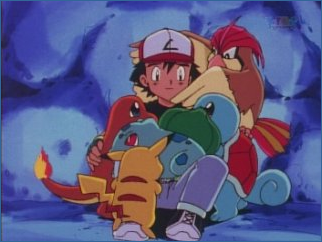
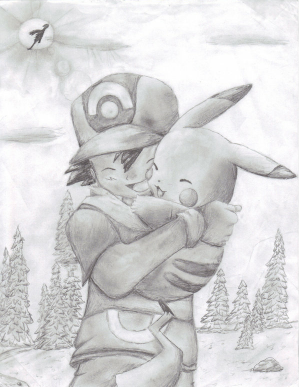
Anime Time: Episodes 49 and 52

So Near, Yet So Farfetch’d – Princess vs. Princess

Ash’s location: Oregon.

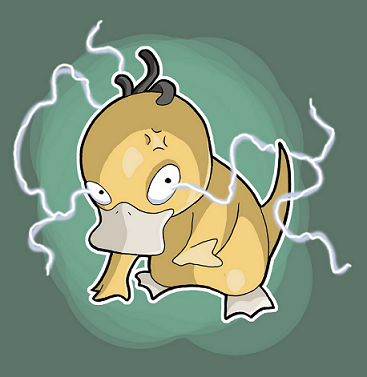
Misty and her Psyduck have something of a love-hate relationship, thanks to Psyduck’s total dearth of useful skills, constant debilitating headaches, and inexplicable habit of bursting from his Pokéball at the worst moments imaginable.  On the other hand, he does occasionally get to be awesome, thanks to his latent psychic powers, which is generally enough to mollify Misty for about five minutes and convince her not to pitch him off a cliff.  Today’s two episodes are among Psyduck’s rare but glorious good days.  Let’s take a look.
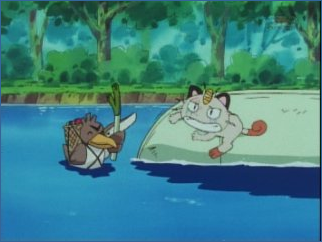
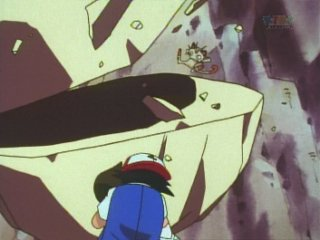
 This Farfetch'd appears in one episode, and manages to accomplish more than Team Rocket normally does in twenty.  Maybe *he* should be the villain.  Screenshots from filb.de/anime.

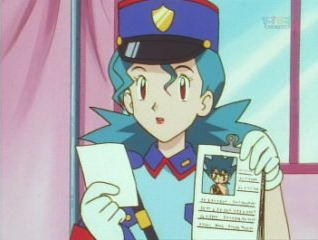
So Near, Yet So Farfetch’d sees Ash, Misty and Brock travelling through a forest where a rare and extremely delicious bird Pokémon called Farfetch’d can be found.  When Ash and Brock leave Misty alone for a moment, she sees one twirling its leek like a baton.  Intrigued, she follows the Farfetch’d, but loses it when she collides with a young boy in the woods (his name is never actually mentioned, but Bulbapedia calls him Keith) and drops her bag.  Misty returns, downcast, to Ash and Brock, only to find that Keith has switched bags with her: he has her Pokéballs, while she has only rocks packed in newspaper.  Meanwhile, Team Rocket stumble into Farfetch’d and Keith, who leads them to his rowboat tied up on a riverbank.  Claiming to have left something in his tent, he runs off, leaving his bag with Jessie, James and Meowth, who promptly steal it, the boat, and Farfetch’d.  Their gloating soon turns to anger when they realise that Keith’s bag is full of rocks and his boat is full of holes.  As their own Pokéballs float away, Farfetch’d scoops them up and flies off.  By this point, Misty and the others have learned from Officer Jenny #354 that Farfetch’d and Keith are notorious thieves…

“We’ve been together for a long time, Farfetch’d,” Keith tells his Pokémon, in case he has forgotten, “right after I found you injured on the road and nursed you back to health and started stealing.  I wish there was some… other way for us to get by, but… how else will we survive?  You’re just too weak to battle.”  Oh, cry me a river of clumsy exposition…  Anyhow.  Team Rocket find them and demand compensation.  Keith returns their Pokémon, along with a whole bag of Pokéballs.  Psyduck finally tracks down Farfetch’d, and Ash challenges him despite Keith’s objections.  To everyone’s surprise, Farfetch’d turns out to be more than Bulbasaur can handle, with his brilliant Agility technique.  Farfetch’d then pummels Psyduck for a while, until Psyduck flips out and mind-crushes him.  At that very moment Team Rocket, who are floating overhead, realise that all Keith’s Pokéballs contain explosive Voltorb, and frantically start pitching them out of the balloon… right onto his head.  Keith surrenders and agrees to return all the Pokémon he stole to their trainers.  Everyone, including Jenny, instantly forgives him, because he’s really sorry, and he promises to go off and live the life of an honest trainer with Farfetch’d.

I like to think he murmured the word “suckers” under his breath as he walked away.
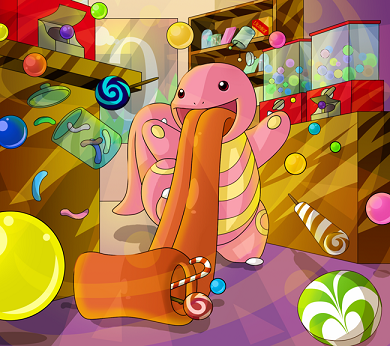
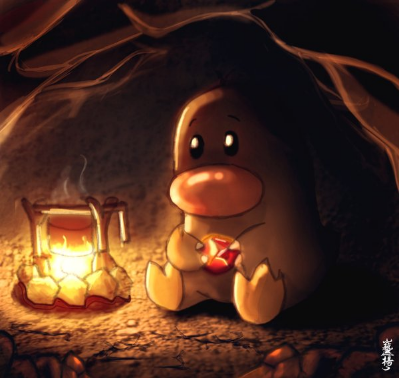
 Lickitung in heaven, by the ever-brilliant Endless Whispers (http://endless-whispers.deviantart.com/).

In Princess vs. Princess, the day of the annual Princess Festival rolls around: a celebration of rampant commercialism, where women buy clothes, accessories and delicacies by the tonne at rock-bottom prices.  Misty and Jessie both eagerly join the shopping spree.  Jessie’s doesn’t end so well – she takes the opportunity to buy expensive gifts for Giovanni, to help the trio ooze their way back into his good graces, but runs into a wild Lickitung who slurps up the lot.  Jessie, furious, hurls a Pokéball and captures the Lickitung, whom she threatens to deal with later.  When she returns to the shopping malls, she and Misty get into a fight over a blue dress, and agree to settle the matter in the Queen of the Princess Festival Contest.  Both of them are independently desperate to win the contest because of the prize: a one-of-a-kind set of extremely valuable Pokémon Princess Dolls.  For Jessie, dolls like these are a symbol of everything she could never have during her childhood of poverty; for Misty, of everything she always got as a ragged hand-me-down from her three older sisters.  The contest appears at first to be a beauty pageant, which Misty and Jessie enter in their finest clothes, however it turns out that there is a second component: a Pokémon tournament!  How exactly the two halves of the contest fit together is never explained; and the winner of the tournament is the one who takes home the prize, so… maybe the pageant is just a qualifying round?  Anyway, Misty co-opts Pikachu, Bulbasaur and Vulpix to create a balanced team of four with her Staryu, while Jessie seizes Weezing from James and literally throws Meowth into the ring.  Predictably, Misty and Jessie squash all comers and make their way up to the finals, where Pikachu unceremoniously fries Arbok, Weezing and Meowth in quick succession.  Jessie despairs, but Meowth reminds her that she has one more Pokémon: Lickitung, whose stupefying Lick attack puts a quick end to Pikachu, Bulbasaur and Vulpix.  Misty calls on her final Pokémon, Staryu… but instead, out pops Psyduck.  Psyduck proves to be unaffected by Lickitung’s numbing slurps, which leads to a stalemate since neither Pokémon possesses any other useful attacks… until Psyduck’s powers kick in and Lickitung is walloped.  Misty wins the contest and the dolls, and promptly ships them back to Cerulean City, for the express purpose of making her sisters mad with jealousy.

…gods, she’s weird.
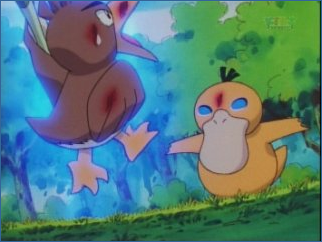
 Psyduck hits Farfetch'd with his Limit Break.

In both of these episodes, Psyduck gets the opportunity to prove his worth: he’s probably Misty’s strongest Pokémon once he gets going.  He’s not the only one, though: Farfetch’d and Lickitung both dramatically exceed the expectations of their respective trainers when they enter the ring.  Farfetch’d has been with his trainer for some time, but despite their experiences together, Keith remains convinced that Farfetch’d is too weak to battle.  Sound familiar?  Like Keith, Misty seems to feel responsible for her dead weight Pokémon; even though she clearly doesn’t want Psyduck, she never appears to think that releasing him is a viable solution, and in spite of her constant biting sarcasm towards him she seems no less protective of Psyduck than she is of her other Pokémon when he’s in trouble.  Unlike Keith, she has yet to find some way for Psyduck to be useful in non-combat situations, which probably isn’t helping their relationship.  Both Farfetch’d and Psyduck reveal their true strength only when things get desperate, which is when they prove to be ridiculously powerful.  Farfetch’d, who has presumably never been trained for battle and probably hasn’t fought in a long time, wipes the floor with a well-trained, experienced and extremely disciplined Bulbasaur.  I mean, yes, Flying beats Grass, and yes, the tone of Keith’s expositional onslaught implies that he’s been massively underestimating Farfetch’d for a long time, but that can’t change the fact that Farfetch’d has very little battle experience and, in all probability, doesn’t really know what he’s doing.  We’ve all heard the stories about mothers temporarily gaining super-strength when their children are in danger; I think this may actually be something similar.  Farfetch’d has realised that Keith is cornered and has nothing to fall back on, so he pulls out all the stops, physiologically and psychologically, to keep his partner safe – and, until Psyduck takes the field, it works.  Psyduck, of course, is quite different in that he isn’t really conscious enough of what’s going on around him to be particularly set off by a threat to Misty, though the connection between his psychic abilities and his headaches does imply that they’re a mechanism for dealing with very stressful situations.  In either case, the enduring message is that Pokémon, like people, are capable of being however strong they need to be.
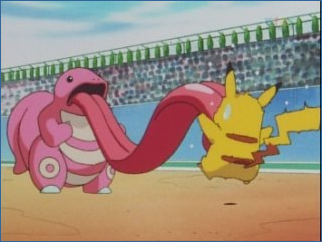
 "Right.  Okay; that's it.  This was *not* in my contract.  Ash, if you ever make me fight one of these things, I swear I will murder you."

Lickitung is something quite different.  When Jessie uses Lickitung, he’s clearly something of a Hail Mary play on her part.  I don’t think she really expects to win by that point, but is hoping at least to go out with some dignity.  Lickitung, however, astonishes everyone by defeating not only Pikachu but Bulbasaur and Vulpix as well.  Despite Lickitung’s apparent power, Arbok remains Jessie’s main Pokémon in subsequent episodes, and his addition to the team doesn’t result in a marked change of Team Rocket’s fortunes; they stay useless and Lickitung is never so effective again as he is in Princess vs. Princess.  Why?  All things considered, I think it has to come down to the element of surprise.  None of Misty’s Pokémon knew what they were getting into with Lickitung.  His unconventional fighting style is a challenge to deal with, since they don’t know its weaknesses or limitations, and this is compounded by the way it works – delivering a slobbery Lick that leaves an opponent helpless from the sheer grossness of it, which is undoubtedly much worse as a surprise (if you know what’s coming, it probably doesn’t seem so bad).  Psyduck, in turn, overcomes Lickitung because he is remarkably weird as well, and simply doesn’t care about being licked.  Deprived of his one big trick, Lickitung has no other viable tactics in his arsenal.
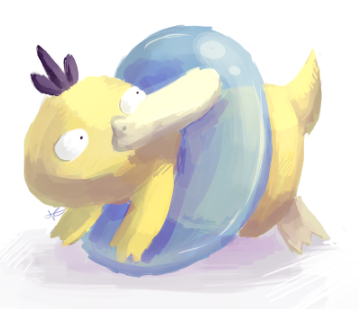
 Misty's Psyduck, inexplicably, cannot swim.  Luckily, Musical Combusken (http://musicalcombusken.deviantart.com/) has kindly given him a life preserver.

“Are you going somewhere with this?” you may well ask.  The thing about the anime is that it often gives weak or highly unusual Pokémon – and their unique powers – a moment in the sun.  As far as the games go, Farfetch’d has never been worth using except in masochistic self-imposed challenges, and probably never will be, but here we see that he is actually very intelligent and therefore a useful partner in Keith’s cons (amusingly, the inspiration for his design – the Japanese expression kamo negi, literally “a duck with a leek,” figuratively “a person naïvely walking into danger or a con” – refers in this episode not to Farfetch’d but to Misty, which is a rather nice twist).  Lickitung fares much better in the games, but still isn’t exactly ‘good;” moreover his mighty tongue, which was supposed to be the point of the design, never really came through in the way he fights until the comparatively recent additions of Wring Out and Power Whip to his movepool, since Wrap, Slam and Lick are, let’s be fair, terrible attacks (for heaven’s sake, in Red and Blue he didn’t even get Lick).  Arguably, for a long time Lickitung never got to be Lickitung in the games.  That brings me to Psyduck, because for Psyduck the relationship between the games and the anime is actually a very interesting one.  This is the original Pokédex entry on Psyduck from Red and Blue: “while lulling its enemies with its vacant look, this wily Pokémon will use psychokinetic powers.”  That’s… an extremely different portrayal from the Psyduck we know and ‘love,’ suggesting that his dim-witted appearance is just a facade.  It’s only in Yellow version, which is based on the anime, that we first get “always tormented by headaches. It uses psychic powers, but it is not known if it intends to do so,” which has dominated since.  Furthermore, when Misty originally met Psyduck in Hypno’s Nap Time, Nurse Joy #558 introduced him as one of the Pokémon adversely affected by Hypno’s psychic waves, who for some reason never fully recovered.  I don’t think Misty’s Psyduck was ever supposed to be typical of his species; rather, the whole species was subtly rethought with the release of Yellow version to bring them in line with his individual characterisation, and this shift has persisted to this day.

So, I totally intended for this entry to be about Misty’s relationship with Psyduck, but then it was about the games’ relationship with the anime instead.  That’s okay, though, because it’s one of the topics I really want people to think about when reading my Anime Time entries.  Occasionally the anime just plain defies reason, but a lot of the time the nature of the medium gives the writers more freedom to portray the Pokémon the way they’re supposed to be, and in at least one case, they apparently did a good enough job of it that the games actually followed suit.

Food for thought.
Anime Time: Episodes 43, 44 and 46

The March of the Exeggutor Squad – The Problem with Paras – Attack of the Prehistoric Pokémon

Ash’s location: Belgium.

I have way too much to talk about in this entry so I’ll just get going.

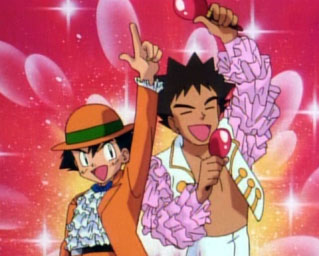
...I...I don't know.  I just don't know.Ash, Pikachu, Misty and Brock find a carnival!  Hooray!  Ash and Brock promptly get changed into… I don’t even know.  Frills.  Misty and Pikachu, in a fit of embarrassment, ditch them and run into a down-on-his-luck magician named Melvin and his Pokémon partner, an Exeggcute.  Misty foolishly agrees to fill in as his beautiful assistant for a little while… and is mortified when Ash and Brock turn up to watch the show.  Melvin has zero stage presence, lacklustre juggling skills, and a fire spell that singes the audience and sets off the tent’s sprinkler system, causing everyone to leave in disgust.  Ash tells Melvin not to give up, and devises his own magic act by stuffing his Pokémon into a chest and pretending to conjure fire and water.  Misty watches in mock amazement until Charmander accidentally sets the others on fire and the whole thing dissolves into chaos.  Ash notes that Exeggcute doesn’t do much… so the Pokémon uses Hypnosis to turn Ash into Melvin’s obedient mind-slave.  They run off into the nearby Leaf Forest, without Brock and Misty, where Ash helps Melvin to capture a herd of Exeggutor, so he can brainwash people into… enjoying his magic show.  Dream big, Mel.  Dream big.  Team Rocket appear and capture the ineffectual magician, and his Exeggcute evolves to save him, but unfortunately his newfound powers drive the other Exeggutor insane and start a stampede.  By the time Misty and Brock find Ash and get him back to the carnival, the ringmaster has planted a bomb to destroy the rampaging Exeggutor before they cause too much harm.  Ash quickly realises that only Charmander’s fire can snap them out of their trance, but Charmander isn’t strong enough to deal with all of them at once.  Misty convinces Melvin that his fire spell WILL work if he really tries, and he does, and it does.  The stampede ends, the Exeggutor go home, un-exploded, and Charmander is rewarded for his perseverance by evolving into Charmeleon.
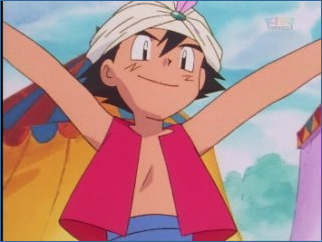
Ash, stop it.  Where are you even getting these clothes?I really have only a couple of minor points to bring up for this episode.  The first is that Hypnosis, which in the games just puts Pokémon to sleep, is used here (as in some other episodes) as a mind-control power.  The fact that a power of this nature exists is clearly awesome, if a little worrying.  The second is that Melvin’s Exeggcute apparently manages to evolve without the use of a Leaf Stone, as did, presumably, all the other Exeggutor in the herd.  No-one questions this at the time; Ash is too stoned to care, Melvin probably doesn’t know how Exeggcute are supposed to evolve anyway, and Brock and Misty aren’t there.  I can think of three explanations for this.  1) The writers screwed up… and, let’s be honest, this one has Occam’s Razor on its side here.  2) Stones aren’t the only way to make Pokémon that use them evolve; they’re just the easiest way, which, of course, massively affects the arguments in play in Electric Shock Showdown and the Battling Eevee Brothers.  3) The area is named the “Leaf Forest” because there are actually Leaf Stones buried there, or crushed and mixed through the soil, or something similar, and these unusual conditions allow Grass Pokémon to evolve there when they wouldn’t otherwise be able to (years later, it was established in an episode of the Johto series that Leaf Stones and Sun Stones can in fact remain potent if crushed and distributed on the wind, though obviously the writers of this episode didn’t know that yet).  You may decide for yourself which seems most likely.
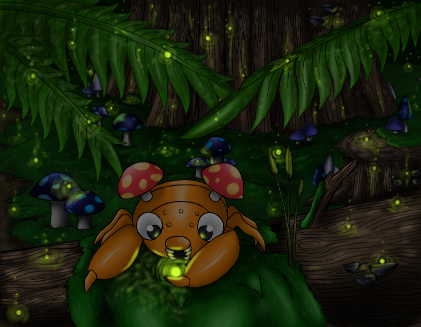
Paras in a secluded grotto, surrounded by glowing spores, by Aeris Arturio (http://aerisarturio.deviantart.com/).A few days later, near a hick town called Mossgreen Village, Meowth succumbs to a terrible fever.  Jessie and James shrug; “he’s got eight lives left.”  They are approached by a woman called Cassandra, who admonishes them for not taking better care of him and gives them some powerful medicine to cure the fever.  Meowth, who has a bit of a human fetish, immediately falls in love with her.  Later, looking for a Pokémon Centre and finding none, Ash himself meets Cassandra and learns she has a problem.  Cassandra and her grandmother run a small shop selling herbal medicines, and she wants her Paras to evolve into a Parasect so she can use his spores in creating new miracle potions, but he’s too cowardly to fight, and can’t gain any experience points.  Ash tries to challenge Cassandra and throw the match, but even the tiniest spark from Pikachu and the gentlest spray of water from Squirtle send Paras reeling… and then Ash tries Charmeleon.  Charmeleon has no interest in toning things down and chases Paras off with a Flamethrower.  In the woods, Paras falls in with Meowth.  Meowth thinks that Cassandra will love him if he helps Paras, and drags Jessie and James into the scheme with promises of the vast wealth Cassandra’s miracle potion will bring.  He quietly sabotages Arbok and Weezing when they battle Paras, and then pretends to faint from a gentle poke.  Drunk on Exp., Paras goes to challenge Pikachu to a rematch, which Pikachu throws once again, this time successfully.  Charmeleon remains unruly, but Team Rocket show up to cheer for Paras, who manages to stab Charmeleon into submission and evolves into Parasect at last, before finishing Charmeleon off with Spore.  Unfortunately for Meowth, Cassandra refuses to take him on as the mascot of her company – she could never break up his team!  Besides, her grandmother has just dragged in a random wild Persian that will serve just as well.
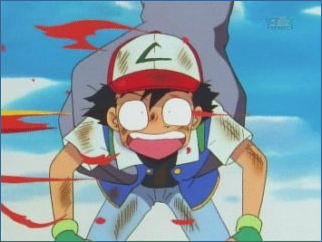

The Problem with Paras
is a weird episode.  It’s one of a scant handful of episodes that explicitly mention “experience points,” and seems to go out of its way to imply that they work exactly the same way as they do in the games, which is so counterintuitive it becomes absurd.  How on earth is Paras ‘gaining experience’ or becoming stronger in any concrete sense by repeatedly having his ass saved by Meowth in his battles with Arbok and Weezing?  The whole thing seems like a reference to the way we normally train weak Pokémon in the games – if you switch a Pokémon out of a battle, it will still gain an equal share of experience points, however little time it spent actually fighting (if any), but I doubt anyone thinks of this as anything more than an abstraction designed to simplify gameplay.  I am convinced that this episode is actually a stealth parody of the whole concept of experience points.  The repeated direct references to “experience points” are just so blatant, so far out of step with the series, and draw so much attention to the absurdity of what they’re doing that I really don’t see how they can be meant seriously.  What’s actually going on here, then?  The episode becomes far less logic-defying when viewed through the lens of evolution being a largely psychological phenomenon, which has always been hinted to be the case.  Paras isn’t kept from evolution by needing more of some kind of abstract ‘points’ which are accrued when a Pokémon is formally declared the winner of a battle; he’s kept from evolution by a major psychological block, born of his own conviction that he is a poor fighter.  When Paras appears to defeat Arbok, Weezing, Meowth and Pikachu, these false victories – although they do nothing to increase his actual strength – allow him to imagine himself as a winner (this remains true even if Paras is actually aware, subconsciously, that his victories are being staged; it’s still possible for him to become immersed in the fantasy).  The lucky shot he gets in against Charmeleon finally pushes him over the threshold, causing him to realise that there’s no physical reason for him not to have evolved a long time ago.

"Hooray!  Charizard's evolved!  He's going to save me!" FWWOOOSH! "Oh God!  Charizard's evolved!  He's going to kill me!"

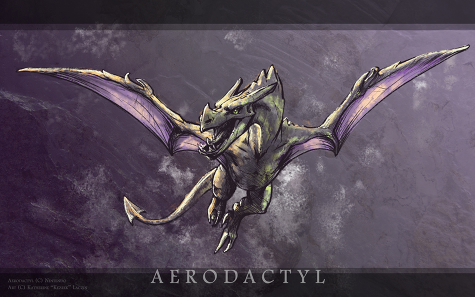
So, now that we’ve seen Charmander become Charmeleon, and his reaction to his newfound powers, let’s see how he gets the rest of the way.  It all starts when Ash runs into Gary, who has joined in a Pokémon Fossil Rush at Grandpa Canyon.  Because Ash and Gary compete over everything, Ash joins the dig as well.  Team Rocket are lurking nearby as well, and planning to dynamite the whole place so they can scoop up the fossils at their leisure.  Ash finds them and, one botched explosion later, he, Pikachu, Jessie, James and Meowth are trapped in an underground cavern, surrounded by supposedly extinct Pokémon.  Pikachu’s electrical powers prove ineffective against the fossil Pokémon, so Ash brings out Charmeleon… who settles down for a nap.  Luckily, the fossil Pokémon hear something that scares them off.  Unluckily, that something is an Aerodactyl, who clocks Charmeleon on the head, grabs Ash, and breaks out through the roof of the cave, with Pikachu and Charmeleon clinging to his tail.  Once they’re on the surface, Charmeleon challenges Aerodactyl, who just taunts him and flies away with Ash.  Charmeleon decides he will take no more of this; he wants his wings NOW.  He evolves into Charizard and pursues Aerodactyl through the sky, sniping him with Flamethrowers.  Ash is overjoyed until he realises that Charizard will happily write him off as collateral damage.  Misty realises the same thing, finds Jigglypuff, and convinces her to sing Aerodactyl and Charizard down.  Aerodactyl drops Ash and falls back into the caverns, while Charizard grabs Ash as he falls and sets him down on the ground before falling asleep himself.  When everyone wakes up, Officer Jenny #869 declares that IT WAS ALL A DREAM AND WE ARE SHUTTING DOWN THE SITE NOW BECAUSE OF REASONS.  Ash remembers, though… and suddenly has a mysterious red- and blue-spotted egg in his possession…

The terrifying awesomeness that is Aerodactyl, by Kezrek (http://kezrek.deviantart.com/).

First things first: this episode is basically the poster child for evolution being triggered by psychological factors.  There is no way Charmeleon has gotten from level 16 to level 36 in three episodes; he evolves not by gaining experience but through a supreme act of will, brought on by his overwhelming desire to reduce Aerodactyl to cinders.  What I really want to talk about, though, is Charmeleon’s character development.  Ash is astonished by Charmeleon’s sudden disobedience in the Problem with Paras, which Cassandra’s grandmother puts down to Ash’s own insufficient skill and Charmeleon’s lack of respect for him.  It’s true that, by game logic, Charmeleon is an ‘outsider’ and can’t be expected to obey Ash past a certain level, but considering Ash’s strong relationship with his Pokémon, and the fact that Charmander was always so nice, it’s still a striking turnaround.  There is a hint at the end of March of the Exeggutor Squad that Charmeleon is going to be quite a handful, but I think the problem really starts in the next episode.  Charmeleon has just evolved, and was already Ash’s strongest Pokémon aside from Pikachu.  He was probably expecting to face ever stronger opponents in his new form… but instead, for his very first battle after evolving, Ash sends him against a cowardly weakling Paras, and tells him to go easy on it.  I think he found this unbelievably insulting, and was still in a bad mood when Ash called on him in Grandpa Canyon.  When he was able to evolve into Charizard all on his own, he came to the conclusion that he simply didn’t need Ash anymore, and decided to act accordingly until Ash was prepared to treat him with more respect.  Notably, though, he does have the presence of mind to catch Ash when Aerodactyl drops him, and bring him safely to the ground, even as he’s drifting off to sleep himself.  He still regards Ash as his human, and clearly still feels he has some responsibility to him.  I suggested in a recent entry that Ash’s relationship with his Pokémon has an almost parent/child cast to it; this works with relatively few problems when his Pokémon are small and cuddly, but grows problematic when they take on more mature, powerful forms.  It takes sixty episodes before he and Charizard finally start working as a team again.

Anime Time: Episodes 42, 45 and 47

Showdown at Dark City – The Song of Jigglypuff – A Chansey Operation

Ash’s Location: Somalia

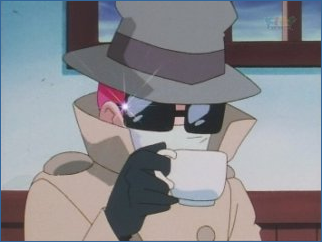
I’m slowly learning that whenever I try to stuff three episodes into a single entry, the length of my synopses quickly becomes unmanageable.  This isn’t going to stop me from doing it, but I am going to make an honest effort to cut down on that stuff, so I have time to… y’know… actually say stuff about the episodes.  This is another one of those entries where I’ve just thrown three episodes together because I can just about cram them all into my vaguely defined “Pokémon and Society” heading.  Without further ado…"I am so inconspicuous right now.  Yep; Joy, you are one badass master of disguise.  If my identical twin cousins-in-law could see me right now, they'd look right through me."  Screenshots from filb.de/anime.

In the first of today’s episodes, Ash and his friends have the misfortune to stumble into Dark City, where the locals hate and fear Pokémon Trainers because of a violent gang war between the city’s two unofficial Pokémon Gyms, the Yas Gym and the Kaz Gym.  Each Gym has ambitions to become the sole official Gym of Dark City, and is desperate to destroy the other before the arrival of a Pokémon League inspector a few days hence.  They’ve given up on formal battles, and mostly just brawl in the street, trainers and Pokémon alike.  The kids run into some of the Kaz Gym’s trainers – who turn out to be Jessie and James – forcing a restaurant to supply their Gym with food, and Brock roasts them with Vulpix, which prompts one of the Yas trainers to recruit them.  Misty insists that they use false names to keep their reputations from being damaged, so they enter the Yas Gym as Tom Ato, Ann Chovy, and Caesar Salad (I kid you not) to speak to the Yas leader.  He tries to test Ash with his Scyther, but Pikachu uses a ketchup bottle he picked up in the restaurant to squirt Scyther in the eyes, driving him berserk and forcing the leader to recall him.  Ash makes a big dramatic speech about how both sides are dreadful, ruins the effect by slipping on some ketchup, and gets chased out of the Gym.  Ash learns from the Pokédex that both Scyther and the Kaz Gym’s strongest Pokémon, Electabuzz, are enraged by the colour red, so when the Yas and Kaz trainers meet up for their final showdown he and the downtrodden citizens drop barrels of ketchup all over both sides to sabotage the battle.  The Gym Leaders unite to destroy Ash, but Pikachu smites them with Thunder, and the Pokémon League inspector is revealed to have been in Dark City the whole time, hidden behind a trench coat and a surgical mask – none other than Nurse Joy #1, the Supreme Joy.  She declares both Gyms utterly reprehensible and orders the leaders to submit to Ash for instruction, forcing Ash to explain his theory of Pokémon training.  “Sure, you try to win, but you don’t try to beat each other!  Um…”

Electabuzz and Scyther attack... not each other, but... their own reflections in each other's eyes.  Yeah... it's kinda like that.Dark City is a dreadful portrait of just how badly wrong this setting can go.  The worst part is that it seems like an entirely realistic scenario.  If it comes to a fight, very few people will have any hope of beating an experienced Pokémon trainer without Pokémon of their own.  The only thing stopping the whole world from dissolving into chaos is the fact that, as a rule, the most powerful trainers tend to be decent people, since most Pokémon respond better to kindness than abuse.  Sure, the ketchup strategy was clever and caused the gangs no small amount of pain, but if Ash and Pikachu hadn’t been there, the civilians would have been toast once the Gym Leaders decided to join forces.  In fact, let’s put some thought into how this situation could have deteriorated without Ash’s presence.  Nurse Joy seems to have no weapon in this conflict besides her authority.  The anime has never portrayed Chansey, her only Pokémon, as a powerful fighter, and it should have been obvious to her within minutes of arriving in Dark City that both Gyms were nauseating stains on the honour of all trainers.  Had she been able to end the fighting, she would already have done so.  If either Gym had lost interest in winning official status, Joy would have been powerless.  One hopes that she could have called in reinforcements from the Pokémon League, but given their conspicuous failure to deal with a powerful rogue Gym Leader in the past, it is difficult to be optimistic.  The civilians might eventually have become organised; they might even have developed the same plan as Ash did to set the Yas and Kaz forces fighting amongst themselves, but they would have been crushed in short order once the two Gyms decided to join up.  Eventually, one Gym would win the street war, unless they chose to unite permanently.  Either way, Dark City would be ruled absolutely by violent robbers.  They might even start handing out badges, claiming to be an official Gym, and reaping many of the benefits of being one without paying lip service to the Pokémon League.  This is all prevented solely by the fact that, with Electabuzz and Scyther out of the picture, the highest-level Pokémon left in the town happens to belong to Ash.  Hooray…?

Later, they go to Las Vegas!

Part of me actually thinks the series would be improved if they were like this in every episode.  Someone must have agreed with me, because that's pretty much what the Go-Rock Quads in Pokémon Ranger are.Well, the show calls it Neon Town, but… it’s a big city in the middle of the desert filled with bright flashing lights and casinos.  Trust me, it’s Vegas.  Everyone in Vegas is a misanthropic sociopath because they’re all massively sleep-deprived, so the kids stay there for as little time as possible before returning to the woods, where they find a wild Jigglypuff.  Misty wants to catch her, of course, so she summons Staryu and has it whack Jigglypuff, who bursts into tears (they all find this really bizarre for some reason).  They realise that this Jigglypuff can’t sing.  Misty says she’s still cute – which cheers her up a bit – but who wants a Jigglypuff who can’t sing? – which starts her crying again.  Then this http://www.youtube.com/watch?v=Fpoq_fcMixc happens (and ends exactly the way every other fight with Team Rocket ends).  Misty and Pikachu try to teach Jigglypuff to sing and fail (and Jigglypuff is a real bitch to Pikachu about his singing, too), but Brock finds a rare fruit that can be used to soothe an inflamed throat, which works.  Jigglypuff can sing at last!  Unfortunately, no-one can sit through her song without falling asleep… not even Psyduck.  Jigglypuff is enraged and scribbles on everyone’s faces with a marker as they sleep.  The kids decide to take Jigglypuff back to Vegas with them, since those jerks never seem to sleep.  Team Rocket disguise themselves as a rock band and offer to let Jigglypuff use their outdoor stage, planning to stay awake using earplugs and rob everyone blind, but the earplugs fail and they fall asleep, along with every other person in Vegas.  When the kids wake up, Jigglypuff is nowhere to be seen, but the people of Las Vegas have suddenly become halfway decent after their first proper night’s sleep in decades.  That, in a roundabout way, constitutes the kids’ good deed for the day, so they return to… whatever it is they were doing, now with Jigglypuff following them, ready to resurface whenever it’s most inconvenient for everyone.
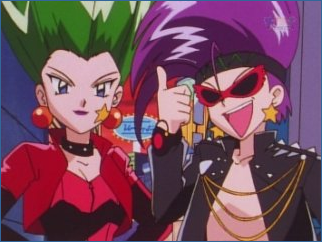
Alternatively, this works too.In The Song of Jigglypuff, Ash and his friends use a Pokémon to cure insomnia.  I just want to point out that the last time someone tried that, a whole bunch of kids went insane and ran away from home to live as Pokémon in the city park.  Just so we’re clear on that.  Anyway.  Jigglypuff is a weird little Pokémon in the anime.  Although her Doubleslap is useful against other small, physically weak Pokémon, she can’t really fight.  Her trump card is her song, which Team Rocket try to capture on tape in this episode.  I can’t think of anything that’s ever managed to stay awake through the whole thing and thus avoid provoking Jigglypuff’s fury.  Strangely, even though she continues to follow Ash around for years, after this episode both Misty and Team Rocket seem to lose all interest in catching her, possibly because they’re all terrified of her.  How anyone ever manages to train a Jigglypuff is beyond me; if their songs will put everyone within a good twenty metres to sleep, using one would surely put an end to most battles by rendering both trainers unconscious, as well as any spectators.  They’re extremely rare Pokémon, it’s true, and tend to live far away from humans, but presumably trainers must bring them into towns from time to time.  In order to maintain some semblance of sanity, you almost have to assume that the Jigglypuff Ash meets in this episode has an especially enchanting voice, and that a typical Jigglypuff isn’t quite so soporific.  The kids clearly don’t anticipate the sheer power of her song; they go back to Vegas fully expecting that many of the citizens will be able to shake it off, and haven’t given any thought to what might happen if anyone happened to be driving a car during Jigglypuff’s performance.
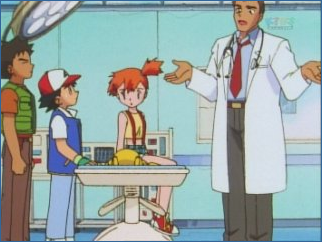
"What do I look like, a DOCTOR!?"A Chansey Operation, my last episode for today, begins with Pikachu swallowing a whole apple and nearly choking to death.  Ash panics because there’s no Pokémon Centre nearby, so they rush to a hospital instead.  There is exactly one doctor in this hospital, and he refuses to do anything because he’s off duty, until Misty uses her cute girl powers on him.  Dr. Proctor (for this is his name) sticks his hand down Pikachu’s throat and retrieves the apple.  Once Pikachu is saved, the emergency phone line rings.  Dr. Proctor, however, is still stubbornly off duty, so Ash answers it.  Jessie and James have caused a horrible accident on a highway by means of their massive incompetence, badly injuring a truckload of Pokémon.  The Pokémon Centre in the next town is overwhelmed, so Nurse Joy #29 is pressing Dr. Proctor into service as backup.  Since he is still the only doctor in the entire hospital, he gives lab coats to Ash, Misty and Brock and declares them to be doctors.  Medicine is easy, right?  Especially as Dr. Proctor’s solution to every injury imaginable is copious amounts of superglue. When Arbok and Weezing come in for treatment, Ash gets a crash course on the Hippocratic Oath (from this guy?  Mr. “screw that, I’m off duty”?  I get the distinct impression he was “off duty” when his class swore the damn oath) and Jessie and James join the team.  At some point Dr. Proctor accidentally anaesthetises himself trying to get close to an angry Dodrio, and goes to sleep for several hours, leaving Ash to figure out how to calm the thing down himself (Ash’s panacea turns out to be “Pikachu, THUNDERBOLT!”).  Team Rocket, inevitably, betray the kids eventually and attack them with evil hospital equipment, but Arbok and Weezing are unwilling to fight the Chansey who helped to heal them.  Dr. Proctor wakes up and reveals that his lab coat contains a veritable arsenal of scalpels and syringes, which scares off Jessie and James quickly enough.  All the injured Pokémon have been patched up now, so Dr. Proctor says goodbye to the kids – but not without suggesting that they stay and be doctors at the hospital.  Medical school?  Pfft.  Dr. Proctor got his MD watching reruns of Doogie Howser.
By some appalling mischance, this episode was my very first direct exposure to Pokémon as a child.

You can imagine my reaction.

I… I would comment on this episode but I honestly think it speaks for itself.  It’s one of those delightfully mad episodes you get from time to time which reminds you that, really, everyone in this universe is just a little bit nutty.  I don’t think A Chansey Operation really tells us anything meaningful about how the Pokémon world works, but if nothing else, it’s a lot of fun to watch.

Anime Time: Episodes 40 and 51

The Battling Eevee Brothers – Bulbasaur’s Mysterious Garden

Ash’s location: central Anatolia.

Evolution is one of my favourite themes.  It’s apparently a very simple concept, but the way it’s treated in the anime has all kinds of fascinating implications that you can draw into an extremely complicated and morally nuanced vision of how this world works.  As usual, much of what I have to say here is totally made up, but regular readers will know by now that I’ve never let that stop me before…

 Yes, they are wearing colour-coordinated tights.  Hey, don't look at me; I'm not going to be the one to say it.  Screenshots from filb.de/anime.

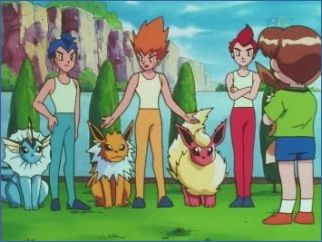
In the Battling Eevee Brothers, Ash, Misty and Brock find an Eevee tied to a tree in the woods with a bowl of food next to it.  Brock suggests that the Eevee has been abandoned, at which Ash and Misty are horrified.  They notice a gold tag on Eevee’s collar with an address engraved, in a place called Stone Town (at the foot of Evolution Mountain, claims Brock – three guesses what this episode’s going to be about…).  Misty is tempted to keep Eevee, but they agree they should try to find Eevee’s owner first.  Following Eevee’s tag leads them to an opulent manse with a spacious garden, where three triplets and their Pokémon – Rainer and his Vaporeon, Pyro and his Flareon, and Sparkyand his Jolteon – are hosting an evolution party, with free evolutionary stones for all comers.  Eevee, who belongs to their younger brother Mikey, is the guest of honour; today is supposed to be the day he chooses his Eevee’s evolved form.  Mikey himself is less than thrilled, and confides to Misty that he doesn’t care about battles, doesn’t actually want Eevee to evolve at all, and hid him in the woods to keep him out of sight, just until the party was over.  Ash and Brock, meanwhile, argue with Rainer, Sparky and Pyro, who have offered them a Thunder Stone and a Fire Stone to evolve Pikachu and Vulpix.  Team Rocket crash the party, have Weezing lay down some smog cover, and steal a dozen Pokémon, including Eevee and Misty’s Horsea, and as many evolution stones as they can carry before hightailing it out of there.  Horsea, however, is clever enough to leave a trail of ink for the heroes to follow.  While Jessie, James and Meowth are arguing over how to evolve Eevee (they eventually decide to use all three stones at once, just to see what happens) the good guys show up, and Vaporeon, Jolteon and Flareon give Arbok and Weezing a thrashing.  Remarkably, though, Jessie and James manage to turn things around… until Mikey’s Eevee enters the fray and slams Arbok and Weezing with a powerful Take Down.  As Misty had suggested, Mikey finally admits to his brothers that he’d rather just keep Eevee – and, after seeing what their brother’s Pokémon is capable of, they’re pretty cool with that.

 Pikachu and Bulbasaur having a bromance moment.

Some weeks later, Ash’s Bulbasaur collapses, quivering, after winning a difficult battle against a hiker’s Rhyhorn, and his bulb starts glowing softly.  Ash rushes him to a Pokémon Centre, where Nurse Joy #292 concludes that there’s nothing wrong with Bulbasaur at all: he’s preparing to evolve.  It’ll soon be time for him to journey to a place called the Mysterious Garden, a semi-mythical grove where Bulbasaur gather every year to evolve into Ivysaur.  Ash is overjoyed.  That night, Bulbasaur slips out of the Pokémon Centre to brood.  Pikachu follows him, and they talk for a while (Pikachu seems to be comforting him, and offering support).  Without warning, a gang of wild Bulbasaur seize Ash’s Bulbasaur with their Vine Whips and carry him off.  Pikachu runs to fetch Ash and the others, and together they track the Bulbasaur through the forest, even as the plants themselves try to keep them from following.  They narrowly manage to slip through a solid wall of vines as it knits itself together, and find themselves in the Mysterious Garden.  They see hundreds of Bulbasaur in the valley below them, singing, as the plants around them grow and blossom in moments.  An ancient Venusaur emerges from within an enormous hollow tree in the centre of the valley and roars.  The Bulbasaur roar in response, and all begin to evolve… except for Ash’s Bulbasaur, who seems to be struggling not to.  Venusaur is furious, and Ash runs to Bulbasaur’s side to block a Vine Whip.  Ash apologises to Bulbasaur for getting so excited about his evolution without considering his feelings, and tries to convince Venusaur that he shouldn’t be forced to evolve.  Venusaur responds by demonstrating his miraculous abilities, causing a bare cherry tree to burst into bloom, and Misty wonders “don’t you want to have that kind of power, Bulbasaur?”  As they argue, Team Rocket once again crash the party, floating over the wall of vines in their balloon and sucking up as many Ivysaur as they can with one of their ridiculous vacuum devices.  The situation looks dire… until the sun rises.  With a tremendous battle cry, Bulbasaur blasts Team Rocket with his first Solarbeam.  The balloon is destroyed, the Ivysaur fall back to earth, and Venusaur finds it in his heart to forgive Bulbasaur for disrupting the ritual.  Bulbasaur leaves with the kids as the wall of vines shrinks away, and they realise why no-one has ever been able to find the Mysterious Garden: once the ceremony ends, it simply ceases to exist.

 "Evolve your Pokémon or we will continue to shout at you!"

Let’s look at some quotes from Eevee Brothers.  The conversation Ash and Brock have with Rainer, Sparky and Pyro makes it plain as day that their views on evolution, particularly on induced evolution, are wildly different to the brothers’.  Ash is asked “one of these days you’ll turn that Pikachu into a Raichu, won’t you?” in a very matter-of-fact tone, to which Pikachu reacts with obvious worry.  The brothers also ask Brock “why don’t you just make [Vulpix] evolve?” as though it would be the easiest thing in the world – and, well, they’re offering him a free Fire Stone, so why not?  After all, “evolution is what Pokémon are all about!”  If you’ve been playing the games, this makes a lot of sense.  If there’s a move you want your Pokémon to learn, you might hold off on evolution until it’s learnt it, because most Pokémon stop learning new attacks after using stones.  In the long term, though, there’s no downside.  If you mean to use a Pokémon for fighting, you will eventually evolve it, no ifs, no buts.  That’s not how Ash and Brock see it.  Ash tells the brothers, somewhat defensively, “we just don’t evolve our Pokémon that way,” while Brock says firmly “you like your way of evolving and we like ours.”  You can read this either as making sense or as being utter bullshit.  Personally I would rather read it as making sense but, y’know, to each his own.  It makes sense when you think about what actually happens when Pokémon evolve; their physical bodies grow and change their proportions, sometimes drastically, and their mental state often undergoes a profound shift as well.  Normally in the anime this seems to have some kind of psychological trigger; Pokémon evolve when they’re ready for it, and sometimes seem to be able to forestall evolution on their own – but when a trainer uses a stone, the Pokémon simply evolves on the spot, without any choice in the matter.  It’s not really unreasonable for Ash and Brock to think that using these things is a little bit morally questionable, especially if it’s done for the sole aim of making the Pokémon in question better at battling.

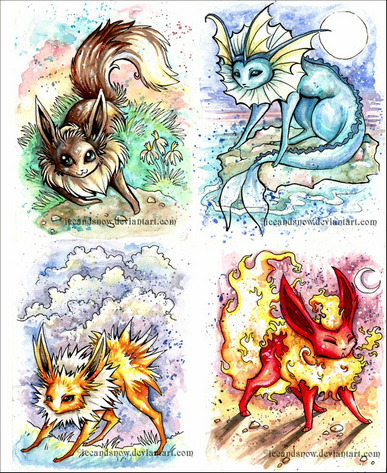
Eevee, Vaporeon, Jolteon, and Flareon, in all their glory, by Creepyfish (formerly IceandSnow, http://creepyfish.deviantart.com/).Where the argument breaks down – and where Ash and Brock’s position starts to make less sense – is that, for Pokémon like Pikachu and Vulpix, there is no other way to reach their final forms.  If Ash and Pikachu aren’t willing to use a Thunder Stone, Pikachu’s never going to become a Raichu; no two ways about it.  Brock’s statement suggests that he believes there is some other way for Pikachu and Vulpix to evolve, but if so, no-one ever hints at what that might be.  Moreover, Ash’s statement suggests that refusing to use the Thunder Stone Sparky offers him is not simply a matter of waiting for the right time; he has absolutely no intention of evolving Pikachu at all, now, later, or ever.  Surely Pokémon are supposed to reach their final forms eventually?  Why else would they even have them?  On the other hand, clearly evolution isn’t actually necessary for Pikachu to become an ‘adult’ since, as we just saw in Pikachu’s Goodbye, a community of wild Pikachu can get along just fine without a single Raichu.  Obviously they’re capable of surviving without the protection of their more powerful cousins, and presumably they also reach reproductive maturity without any hiccups (indeed, if we can trust the games, there are very few Pokémon that do need to evolve before they can reproduce – only the ‘babies,’ such as Elekid and Bonsly).  My newest pet theory on this is that Pikachu’s ability to evolve into Raichu is actually vestigial.  At some point in the history of their development, for one reason or another, they stopped needing to evolve (maybe Pikachu fill an ecological niche that Raichu are less suited to, or maybe some kind of Ground-type predator made speed and small size more valuable than greater electrical power).  They still have all the genes they need to become Raichu, but they’ve lost the genes that tell them when and why to evolve, so unless they’re triggered by some outside influence, they just don’t.  Basically, what I’m suggesting is that Pokémon like Raichu, Ninetales and Poliwrath are throwbacks – forms that have become extinct in the wild, because they’re no longer suited to a changing ecosystem, but can be recreated via human intervention.  That definitely leaves Ash and Brock plenty of room to feel a little bit uncomfortable about evolutionary stones, especially if the Pokémon have no choice in whether to use them.
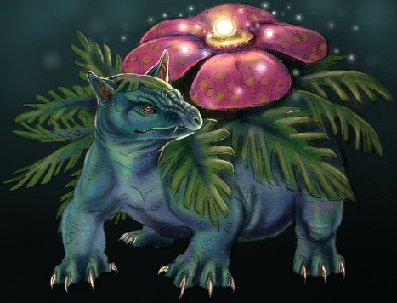
 A Venusaur readying a Solarbeam, by Maquenda.

The degree of choice Pokémon have in when they evolve is another tricky question that the anime implies things about, but rarely explains outright.  Most of the evolutions we’ve seen in the series so far have happened at moments of high emotion; it’s often implied that they’re triggered by strong desire or need – most notably, Ekans and Koffing evolving in Dig Those Diglett, in response to their trainers’ uncharacteristic outbursts of affection.  Bulbasaur, it seems, are very different.  They have little freedom to decide; evolution, for them, is an extremely ritualistic thing that all of them go through together – to the point that, when Ash’s Bulbasaur decides he doesn’t want to evolve, he provokes the outrage of the entire community.  That isn’t merely because his refusal somehow disrupted the ceremony either.  The scene between Bulbasaur and Pikachu is a little tricky to interpret because, y’know, they don’t speak, but I’m pretty sure that Bulbasaur is explaining to Pikachu that he doesn’t think he really wants to evolve yet, but doesn’t want to disappoint Ash either, and Pikachu is telling him that it’s okay and Ash will be cool with it.  The other Bulbasaur who overhear the conversation are apparently so discomforted by the whole idea that they immediately kidnap him and drag him to the Mysterious Garden.  Venusaur isn’t just upset about the ritual; he and all the Ivysaur are actually somehow offended that Bulbasaur doesn’t want to evolve.  For them, it’s the most natural thing in the world, the way they attain the powers that are their birthright, and trying to deny it is just asking for trouble.  Of course, if that’s how they do things, where the hell does Ash get off trying to stop them?  Or, conversely, if we do let the Bulbasaur get on with their strictly enforced mass evolution ceremonies in peace, what kind of ground are we standing on if we say that Mikey’s Eevee shouldn’t be forced to evolve?

I could go on, you understand.  It’s just that this entry is clearly getting far too long.

Anime Time: Episodes 39 and ???

Pikachu’s Goodbye – Snow Way Out

Ash’s location: Switzerland.

A Pikachu colony living wild and free.  Screenshots from filb.de/anime.
A Pikachu colony living wild and free. Screenshots from filb.de/anime.

Oh, no.  Not this episode.  Please, not this episode.  I still tear up just from remembering this one.  You’re meant to be together, Ash, don’t you see that!?

*Ahem*

Ladies and gentlemen, Pikachu’s Goodbye.

Ash and his friends, travelling through deep woodland, encounter a large group of Pikachu, whom Ash’s Pikachu tries to befriend.  Except for one very young Pikachu, they all flee, but when the little one comes to talk to him, the rest begin to gather around as well… until Ash decides to stick his ugly mug in and scares them all off again.  Pikachu is depressed for a while, but when the group sets up camp later on, he gets his chance to be a hero.  The little Pikachu he met before falls into a fast-flowing river, and he jumps in to save her… and… fails miserably, getting swept along with her in the current.  Luckily, the rest of the Pikachu colony manage to snag them by grabbing onto each other’s tails and forming a chain, anchored in a tree by the side of the river.  Pikachu is once again accepted into their culture, and joins in as they sing Pikachu songs under the light of the moon.  Brock makes a remark about how wonderful it is for Pikachu to be with his own kind, which… is kind of a douchebag thing to say, actually, because it gives Ash the idea of leaving Pikachu behind and presents him with a horrible dilemma that keeps him from getting any sleep, and really Brock would have to be pretty much the most insensitive person on Earth not to realise that would happen, but hey, whatevs.  While Ash is staring glumly into the campfire, he hears a Pikachu screaming, and runs back to where he left them.  Team Rocket, of course, have shown up and trapped all the Pikachu in a shockproof net, declaring “everything in this forest is public property!” “And we’re members of the public!”  As they fly away in their balloon, Ash gets Pikachu to chew a hole in the net, then uses the net Jessie and James had thrown at him, Misty and Brock as a trampoline so all the Pikachu can jump out safely.  Pikachu finishes off the balloon, and another half-assed plot is foiled by our plucky heroes.  The Pikachu all start celebrating, and Ash smiles sadly before going back to the campsite to pack everything up.  Pikachu follows him, but Ash tearfully tells him not to make this any harder than it already is, and runs away.

"Isn't Pikachu having a wonderful time here in the woods with his own kind?  Yep, Pikachu sure would have a swell life if he just stayed here.  Far away from civilisation.  Without Ash.  Oh, I'm sorry, Ash, what were you saying?"
“Isn’t Pikachu having a wonderful time here in the woods with his own kind? Yep, Pikachu sure would have a swell life if he just stayed here. Far away from civilisation. Without Ash. Oh, I’m sorry, Ash, what were you saying?”

No, Ash, no!  What are you doing?  This is your best friend!  Pikachu’s your soulmate!  Screw Brock and Misty; they’re douchebags and they’re only going to leave you anyway!  You’re going to cry yourself to sleep and then wake up in the morning and Pikachu won’t be there, every night and every morning for the rest of your life, and you’ll regret it forever!  No other Pokémon is ever going to understand you like Pikachu does; heck, no human is ever going to understand you like Pikachu does!  You’ll never truly be happy again without him, DON’T YOU SEE THAT?!

I’M FINE!

I’m fine.

Where’s my handkerchief…?

Anyway.  Just when Ash thinks he’s run far enough, the whole Pikachu community run up over the crest of the hill, with Ash’s Pikachu at their head, and cheer as he runs back to his trainer.  The world is set to rights, and that, I can guarantee you, is the very last time Ash gives even a second’s thought to what life would be like without Pikachu.

The second of today’s episodes, Snow Way Out, has always aired as episode sixty-something, but that’s clearly a lie since Togepi still hasn’t joined the team and Charmander hasn’t evolved yet; it’s probably meant to have happened shortly after Pikachu’s Goodbye.  At a fork in the road, Ash decides to lead the group over a mountain, despite Brock’s objections, and gets them all lost in a blizzard.  Meanwhile, Jessie is singing to James and Meowth about how much she loves snow, because during her ridiculously impoverished childhood her mother used to make food for her out of snow and-

"No, Misty.  It's too late for him now.  We have to save ourselves!" "But we can catch up with him if we-" "Can't you see this is something he has to do on his own?"
“No, Misty. It’s too late for him now. We have to save ourselves!” “But we can catch up with him if we-” “Can’t you see this is something he has to do on his own?”

Wait, what?

Anyway, they fire up the balloon, say their motto, and realise that the balloon is floating away with all their food.  Jessie declares that she will make snow rolls with soy sauce, and they build an igloo and attempt to stay warm through the night with the power of imagination.  That is pretty much their contribution to this episode.  Back to the kids.  To Ash’s annoyance, Brock wants to build a snow cave and bunker down for the night because, really, trying to get off the mountain at night in a blizzard is not Ash’s best plan ever.  Unfortunately a blast of wind blows Pikachu down a slope, and Ash chases after him.  Brock tells Misty not to follow, because… because he’s sure Ash will be just fine on his own, and knows that splitting the party never has any negative consequences, I guess?  Wow, Brock is being a real douchebag in these episodes.  Ash finds Pikachu dangling off a cliff and has Bulbasaur save him, but realises they can’t climb the slope to get back up to Brock and Misty.  They decide to dig their own cave.  Charmander blowtorches his way into a snowdrift, Ash calls out Bulbasaur and Squirtle, and they all seal up the entrance with packed snow before gathering around Charmander’s tail to stay warm.  After a couple of hours, Charmander’s flame begins to fail.  He insists he’s fine, but Ash recalls him, Bulbasaur and Squirtle, despite their protests, and… takes off his jacket and wraps their Pokéballs in it to keep them warm… because… okay, yes, whatever.  Ash and Pikachu argue for a while, until the wind blows a hole in the cave mouth.  Ash chooses to block it with his body rather than with more snow, and orders Pikachu to get in his ball.  Pikachu refuses point blank, while Bulbasaur, Charmander, Squirtle and Pidgeotto rebel and burst out of their Pokéballs.  Ash gives in, and they all huddle together for the rest of the night.  In the morning, they find Brock and Misty, and learn that they had a warm, comfortable night after Onix tunnelled into some hot springs.  Apparently they never tried to find Ash.  They have, however, found Team Rocket’s balloon.  Brock has his Vulpix fire the thing up, and the kids drift safely down from the mountain on the wind.

Okay, I could whine for a bit about how there are no Pichu in the community of wild Pikachu and that makes absolutely no sense, but I think we all know that’s a cheap shot since Pichu didn’t exist when this episode was made, and anyway these episodes are about Ash’s relationship with his Pokémon in general and Pikachu in particular, so let’s talk about that.

Can’t… think… too… adorable… must… look… away…

Pikachu’s Goodbye and Snow Way Out prominently display Ash’s sense of responsibility, which seems to be a significant part of what being a trainer means for him.  He is supposed to keep his Pokémon happy, healthy and strong, and faced with a potential life-or-death situation his top priority is to protect them (I’m not convinced that wrapping his Pokéballs in his jacket actually affords his Pokémon any additional protection from the cold, but clearly Ash believes it does, and cares more about that than about keeping warm himself).  Way back in I Choose You, Ash related to Pikachu as a master to an underling, and Pikachu very nearly died; the traumatic events of Ash’s first day as a trainer have almost certainly stayed with him, and I suspect those memories may be a factor in his overwhelming instinct that he has a duty to keep his Pokémon safe, especially Pikachu (nearly losing Metapod in Challenge of the Samuraimight well be weighing on him too).  This doesn’t apply so much to battles; any reasonable trainer will pull a Pokémon out of a fight if it’s taking too severe a beating, and Ash is no exception, but he’s generally fine with having his Pokémon stay in and tough it out until things get truly dire.  This is presumably because Ash, like most humans in the Pokémon universe, regards battles as being beneficial for Pokémon on some level; it’s how they grow stronger and learn about their own powers.  The moment he begins to feel that one of his Pokémon is in genuine danger, though, Ash will act quickly and often recklessly to deal with the threat.

This piece is by Pikachu6123 (http://pikachu6123.deviantart.com/) and is so adorable that my head is actually about to explode.

An important point for these episodes is that this relationship I’m describing, as sweet and loving as it generally is, is still a relationship where Ash sees himself as the superior – almost like his Pokémon are his children.  In Snow Way Out, this is obvious; he takes it upon himself to shut his Pokémon up in their Pokéballs to protect them, even when they make it clear that they would rather stay outside and endure the cold with him.  Honestly, I can’t help but wonder whether this gently, quietly patronising attitude is part of what sticks in Charmander’s craw so badly after he evolves into Charmeleon.  In Pikachu’s Goodbye too, Ash agonises over what’s best for Pikachu, watching him immerse himself in community life and weighing up the obvious benefits Pikachu would enjoy if he stayed against the friendship they share and their experiences on the road together.  However, he never takes what would seem to be the obvious course of action by asking Pikachu about it.  He listens to what Brock has to say on the subject, he spends hours making up his mind, and he eventually decides to leave Pikachu behind because he genuinely believes that Pikachu will be better off without him, but throughout the episode he seems to consider it entirely his decision.  He also seems to feel that the downsides of releasing Pikachu are entirely on his side; he’ll lose his best friend and most powerful ally, but is prepared to endure that so Pikachu can reap the obvious benefits.  Again, you could make a parent-child comparison out of this; once they’ve taught their children everything they can, most parents want their children to leave and make their own lives, because it isn’t right for them to be under their parents’ thumbs forever.  I suspect Ash’s logic here, while obviously different, is nonetheless parallel.

Pikachu himself never seems to have considered leaving Ash even for a moment.  He clearly enjoys his time spent with the wild Pikachu, but more as a nice break and a good way to spend some down time than anything he’d actually want to do long term.  Near the end of the episode, when Ash is packing up to leave, Pikachu bounces out of the bushes ready to leave with him, giving not the slightest hint that he suspects anything is wrong, and won’t hear anything Ash has to say on the subject of parting ways.  Likewise, in Snow Way Out, Pikachu refuses Ash’s direct order to get into his Pokéball, and all the other Pokémon burst out of their Pokéballs soon after, reminding Ash that they don’t actually have to do anything he says.  They follow his orders because they trust him, but if he’s clearly doing something stupid, they are quite capable of ignoring him, because as far as they’re concerned, they’re not his children; they’re his friends.  This, I think, is the lesson Ash is supposed to take out of these episodes.  Although his heart’s in the right place, his ideals are often rather simplistic.  In this case, while few trainers understand better than Ash the need to care for Pokémon and raise them with kindness, Ash doesn’t quite realise yet how independent a Pokémon’s mind can be and how important it is to consider each individual’s distinct values and desires.  Luckily, Pikachu loves him enough to be patient while he learns.

Anime Time: Episodes 37 and 41

Ditto’s Mysterious Mansion – Wake Up, Snorlax

Ash’s location: Czech Republic, or thereabouts.

For today’s show… two weird-ass episodes about two weird-ass trainers and their two weird-ass Pokémon!

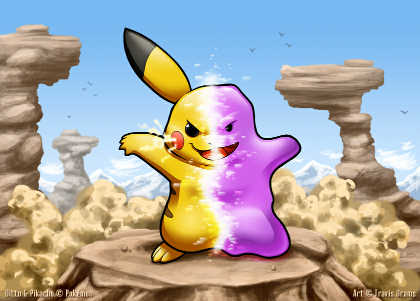
 Ditto shapeshifting into Pikachu to prepare for battle, by Travis Orams (http://trezhurisland.deviantart.com/).

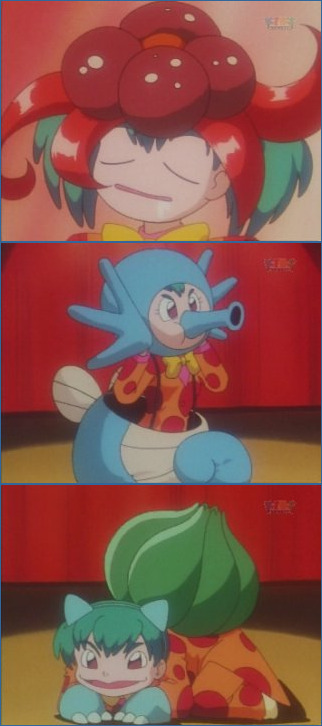
In Ditto’s Mysterious Mansion, Ash, Misty and Brock take shelter from a sudden, violent rainstorm inside a worn-out, creaking old mansion, which appears deserted until they see a teal-haired boy wearing clothes exactly like Ash’s standing in the shadows.  “Yeah, except it’s a girl,” Brock notes.  How does he know?  “Men’s intuition.”  Indeed, the ‘boy’ is a young girl named Duplica, who has an incredible gift for imitation, and lives in the mansion with her Pokémon partner, a Ditto.  Ash is disdainful when Duplica explains that Ditto’s only power is Transform; he doesn’t see the point in a Pokémon that can only ever be a cheap imitation of something else.  Duplica shows him his mistake by challenging him to a battle and having her Ditto block Bulbasaur’s Razor Leaf with Vine Whip, then use its vines to restrain Bulbasaur.  Ash surrenders and sulks for a little while, until Brock points something out to him: Ditto may have been imitating Bulbasaur, but Duplica wasn’t simply imitating Ash; she used another of Bulbasaur’s powers to counter what the real one was trying to do.  In order to battle like that with Ditto, Duplica must have encyclopaedic knowledge of all Pokémon species and their capabilities.  She isn’t really the battling type, though; Duplica wants to be a performer.  When travellers stop at the mansion, Duplica entertains them with her Pokémon cosplay and Ditto’s transformations.  Unfortunately, Duplica’s Ditto can’t mimic faces, which has wrecked their act on more than one occasion.  As she is telling Ash her woes, Team Rocket make their obligatory appearance and nab Ditto.  They want it to Transform into a mythical Dratini so they can present it to Giovanni, but Ditto, presented with a picture of Dratini in a book, can only Transform into the book.  They also quickly learn of Ditto’s inability to mimic faces, but eventually succeed, using threats of physical violence, in getting it to Transform into a perfect copy of Meowth.  When the kids arrive – wearing Team Rocket costumes from Duplica’s stash and reciting the Team Rocket motto, just for the hell of it – Duplica is overjoyed and even thanks them for helping Ditto learn to Transform properly.  Jessie and James try to give Meowth to Duplica and fly off with Ditto in their balloon… but she isn’t fooled for one second, and lobs him at the balloon, causing Jessie and James to drop the real Ditto.  Furious, they deploy a cannon from the balloon’s basket, but Duplica has Ditto Transform into the cannon and blast Pikachu at them, with predictable results.  Duplica goes back to her mansion to re-open for business, the kids get on with whatever it is they claim to be doing, and Jessie and James attempt to stuff Meowth into a Dratini costume…

 This is the kind of thing you want to see when you stop for a rest at the side of the road, right?  Screenshots from filb.de/anime.

Let’s talk about Ditto.  Ditto is one of those Pokémon who’s gotten something of a raw deal in the games, because Ditto in the games really is just a cheap imitation of whatever it Transforms into.  It’ll probably have less HP, it can match but not exceed its opponents in all other respects (including, most importantly, speed), and it’s overwhelmingly likely to be at a one-turn disadvantage because of the time it takes to Transform.  Contrast the way Ditto’s Mysterious Mansion portrays this weird-ass little Pokémon.  The way Brock and Duplica describe how Ditto battles seems to imply that Ditto can imitate any technique a Pokémon is physically capable of, even if the opponent doesn’t actually know it – if they had been fighting outside in fine weather, for instance, Duplica might have had Ditto hammer Ash’s Bulbasaur with a Solarbeam.  What’s more, Ditto’s ability to imitate inanimate objects is something entirely unique to the anime (and with good reason; it’d be merry hell to add something like that to the games).  Whatever it’s imitating, though, it seems clear that – as in the games – Ditto can only Transform into what’s actually in front of it.  A picture of a Dratini won’t cut it; Ditto can only manage a copy of the picture.  However, when Jessie shows Ditto a photo of her old school crush and asks it to show her what he’d look like aged up a few years, Ditto is able to accommodate her; it can still only Transform into a photo, and it fails, as usual, to imitate his face, but it does manage to age the boy in the image as Jessie asks.  Clearly, then, Ditto can take some licence with its transformations (for instance, it could probably Transform, if it chose, into a ‘shiny’ version of a Pokémon standing in front of it, or make other superficial changes); it just can’t create a whole three-dimensional form from scratch, or from memory.  The other fascinating thing Ditto is able to imitate is Meowth’s ability to speak, which is an extremely unusual skill that Meowth learned only with incredible effort.  When Jessie and James present Duplica with two identical Meowth, Ditto mimics everything Meowth says, though it doesn’t appear to be able to add anything (suggesting that it’s just parroting the sounds without understanding them, but even that is beyond the abilities of most Meowth).  Clearly, then, Ditto has some degree of access even to complex learned abilities, but may not be able to use them effectively without some sort of instruction.  Some questions to ponder, then: would Ditto be able to speak if it Transformed into a different Meowth?  What if Team Rocket’s Meowth had been there with them to show it how?  In short, does Transforming actually allow Ditto to take knowledge from the template Pokémon’s mind?  More importantly, why isn’t this the kind of thing Professor Oak and his ilk are researching?

So much for Ditto… now for a distinctly more vexing Pokémon.

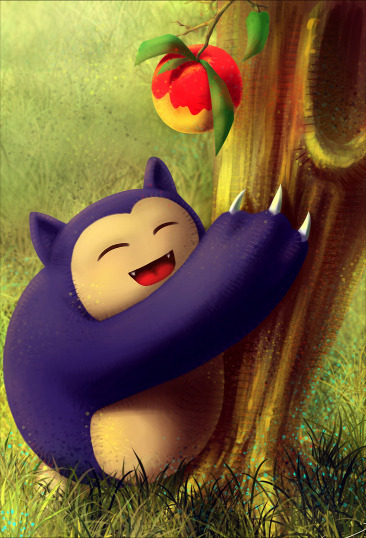
 Snorlax reaching up to grab a Leppa Berry, by theMerce (http://themerce.deviantart.com/).

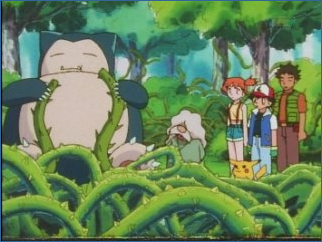
After a brief run-in with an old hobo, who plays them a song on his Poké-Flute before demanding food (which they do not have) as payment, Ash, Misty and Brock wander into a town, delirious with hunger, and find that no-one there has any food either.  Luckily for them, they run into the mayor, who is generous enough to give them a meal from his family’s private stores.  The mayor explains that the river that flows through the town has dried up for some reason, ruining their farmland and causing massive food shortages.  “No-one dares go upstream anymore.  There’s no telling what you might find.”  Luckily, Ash and his friends are random wandering Pokémon trainers – the best people for any dangerous and loosely-specified task!  They follow the dry riverbed for some time, hacking through the oppressive tangles of thorny vines in their path, and find what seems to be the problem… a Snorlax blocking the river (where… is all the water going, exactly?).  Ash tries to capture Snorlax, but his Pokéball just bounces off.  As the kids puzzle over his monstrous bulk, Team Rocket arrive in their balloon and declare that they have come to take Snorlax.  Ash is reluctant to let them steal the massive Pokémon, but- wait, steal?  Isn’t it a wild Snorlax?  Surely it’s fair game?  Clearly, as far as Ash is concerned, there is a definite ethical distinction between battling a wild Pokémon to capture it in a Pokéball and simply carting it off in its sleep, as Jessie and James mean to.  Regardless, Ash has to admit that getting rid of Snorlax is more important.  The balloon can’t lift his fat ass, though, and nothing they try can wake him up.  When he shifts his weight, though, they find a “Do Not Disturb” sign underneath him, with the instruction “in case of emergency, please use a Poké-Flute to wake.”  The kids remember the hobo, rush back to find him… for some reason, get into a battle with Team Rocket for control of the hobo, which of course they win… and lead him to the Snorlax.  The hobo claims that the Snorlax is his, and that he wakes it with his flute once a month.  He does so now, but it turns out that Snorlax was never the problem… the stream is being blocked by another dense thicket of vines.  As the kids scratch their heads, Snorlax takes matters into his own hands and devours the entire thicket, releasing the river and restoring the town’s lifeblood, before going back to sleep.  Finally, the hobo’s Snorlax-shaped pager beeps and flashes “No. 7,” to tell him that he has to go and wake up another Snorlax.

Wait, what?

Okay, guys, I know you probably meant that as a throwaway joke, but… you do realise you just implied that this hobo is responsible for travelling around Kanto regulating the sleep cycles of at least seven different Snorlax?

Because that is AWESOME!

 Snorlax saves the day.

Seriously, though, let’s put a little thought into this.  Snorlax is an interesting Pokémon, from an ecological perspective… by which I mean, the damn thing eats everything.  Luckily they also sleep for months at a time, giving the ecosystem time to recover from their onslaughts.  However, in an episode from the Orange League series, Snack Attack, we see how absurdly destructive a single Snorlax can be when it gets peckish in the wrong place at the wrong time; these things can devour forests in a matter of days.  The flip side of this, though, is how Snorlax fit into ecosystems that are used to their presence.  Snorlax presumably don’t often move very far.  One imagines that the one Ash encounters in Wake Up, Snorlax has been living in the area for quite some time.  Its presence is probably what has been keeping the thorn weed under control and stopping the river from turning into an overgrown swamp long before now.  The removal of such a major consumer from an ecosystem could only be disastrous; if Ash actually had captured the Snorlax, and then found a way to clear the vines himself, chances are they would have grown back within months, choking the river once again.  There are probably many grassland and meadow environments in Kanto that can exist in their present state only because of Snorlax living in the area and regularly trimming back more aggressive types of flora.  Think about that for a moment the next time you’re playing Fire Red or Leaf Green and decide to catch that wild Snorlax.  The hobo’s role in all this is a little harder to guess at, unless you’re prepared to accept that Snorlax will actually sleep indefinitely unless disturbed.  It might be that their natural sleep cycle is easily disturbed by human activity, or that they’ve been moved from their original territory (maybe to make room for a city, or maybe as a deliberate attempt to alter the environment) and need to eat more or less often than usual because of the different vegetation.  In spite of their size and power, I could actually see Snorlax being tremendously vulnerable to environmental disturbances because of their massive energy requirements, and perhaps being a very high-maintenance species to protect, like the giant pandas they vaguely resemble.

What I like about the anime is that it often gives more detailed portraits of particular species of Pokémon than the games are capable of providing in their current state.  I think there’s actually plenty of room for the games to do this as well, but that’s neither here nor there.  Ditto and Snorlax are both very interesting Pokémon to think about – Ditto because of the unanswered questions about the extent of its powers, Snorlax because of his unusual lifestyle and needs – and, in keeping with the spirit of learning and discovery that’s been part of the point of Pokémon from the beginning, such portraits are a tremendously important part of the franchise as a whole.  Or… that’s what I think, anyway.

Anime Time: Episodes 36, 48, and 53

The Bridge Bike Gang – Holy Matrimony – The Purr-fect Hero

Ash’s location: San Francisco.  I assume.

We’re more than thirty episodes into this series and I haven’t had an entry about the villains yet.  Clearly this will not do.  Jessie, James and Meowth of Team Rocket are quite possibly the least threatening villains ever.  They certainly manage to cause the heroes harm from time to time, but they never accomplish anything.  I don’t think a single one of their plots ever bears fruit.  Luckily, the show’s writers understood that, gods bless them, and wrote Team Rocket as comic relief characters.  We often see them in brief asides, discussing how desperately they need to get something right, and they frequently break the fourth wall for comedic effect.  Anyhow, that’s enough of their general portrayal – these episodes all reveal things about the specifics of their characters, so let’s take a look.

 Admit it: you wish you could be half this badass.  And/or ridiculous.  Screenshots from filb.de/anime.

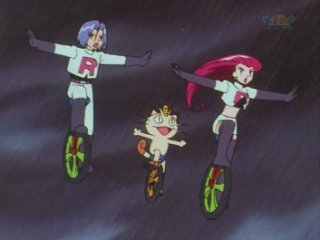
In The Bridge Bike Gang, Ash, Misty and Brock come across an epic bridge leading across an inlet to a place called Sunnytown, but sadly the bridge is not complete and they can’t walk across… only the cycle track is finished.  Because bicycles are by far the most valuable objects in the entire Pokémon universe, they can’t just go out and buy one, let alone three… but, luckily, Nurse Joy #148 needs someone to deliver some medicine to Sunnytown, and is willing to let her couriers borrow some bicycles.  The kids immediately agree and race off down the cycle track.  On the bridge, they are accosted by a gang of miscreant cyclists, who demand a Pokémon battle.  During the fight, Team Rocket arrive in their usual dramatic style to mix things up… and it turns out that the gang leader, Tyra, recognises them.  Apparently Jessie and James were once members of this very bicycle gang, after flunking out of Pokémon Tech, and were known as “Big Jess,” who would always swing a chain around her head as she rode, and “Little Jim,” the only member of the gang who still used training wheels.  They were, and are, regarded as the absolute height of badass.  For some reason.  Anyway, the gang members think they’re even more awesome now that they’re hardened criminals, so they’re more than happy to help Jess and Jim fight Ash and his friends… until Officer Jenny #270 arrives and scatters them.  The kids keep riding, even as a terrible storm gathers.  Meanwhile, Tyra encourages Jessie and James to ride out themselves, to renew their… er… legend… and show the gang what real riding is.  They do so on unicycles, because this will earn them unimaginable street cred.  Team Rocket and the kids, coming from opposite sides, both reach a drawbridge being raised to allow a ship to pass beneath.  Ash, being Ash, decides to jump it, in the middle of a violent storm, at the same moment as Team Rocket.  The kids… somehow bounce off their heads and narrowly make the jump, while Jessie and James plummet into the water below.

To be honest, all things considered I thought this was kind of a ‘meh’ episode, but it does have certain bright points; notably, we get a little bit of insight into what motivates Jessie and James in their life of crime.  They crave respect, anything to let themselves forget what failures they normally are, and will do blatantly insane things to cultivate the worship of Tyra and the others.  More importantly their dialogue in this episode suggests that they, like the bike gang, resent rules and value freedom above all else.  Jessie and Meowth can be genuinely spiteful at times, but Jessie at least often seems to be driven at least as much by a burning desire to flip off ‘the system,’ probably on account of her childhood spent in poverty.  Ironically she’s now part of a system anyway, being ‘evil’ apparently for no better reason than because it’s her job, making her something of a ‘punch-clock villain’ (James plays up this aspect a great deal more than she does, but Jessie has her moments too; when things are going particularly badly for them they seem like nothing so much as downtrodden nine-til-five office workers).  She claims to enjoy being villainous, but like James it takes precious little to distract her, and she takes to honest work surprisingly quickly in the episodes where she’s given the opportunity.  Left to her own devices, she would probably remain self-centred, arrogant and superficial, but not outright evil.  James, of course, has baggage of his own… and that’s what Holy Matrimony is all about.

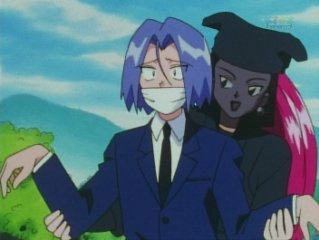
 Okay... I think I actually know what this whole 'invisible costume' thing is about.  In Kabuki theatre, stagehands wear all black clothing.  The audience, by convention, ignores anyone wearing this kind of costume.  Incidentally, assassin characters in Kabuki plays would wear the same costume, so that the audience would think they were just stagehands until they struck, which is where the familiar image of the black-clad ninja comes from.  Isn't learning FUN!?

I love Holy Matrimony, because from the perspective of Ash, Brock and Misty the whole episode is one great big long “WTF?”  It all begins when they stop to look at a “missing person” sign by the road, and an elderly gentleman in a suit pulls up in a limousine to ask whether they recognise the boy in the picture (I presume he has been monitoring the sign in case anyone showed an interest in it).  The picture is years old, but it’s unmistakably James, so the butler piles them into the limo and drives them to an enormous mansion, which, according to the butler, is just the doghouse.  He leads them into the even more opulent actual mansion and explains that the master and his wife have just passed away, and that if their son, James, does not marry his betrothed within twenty-four hours, he will lose his inheritance.  Team Rocket, as usual, have been watching.  James is reluctant to get married, but Jessie and Meowth like the sound of this “fortune” business, so they dress up in ‘invisible costumes’ – flimsy black gauzy things – so they can manoeuvre James like a puppet.  These… seem to work on the butler, and they drag James inside, where his insane parents promptly spring from their coffins, very much alive, and reveal his fiancée, Jessiebelle – a terrifying Southern Belle version of Jessie, from whom James had fled as a youngster.

The psychological implications are nothing short of mind-boggling.

Jessiebelle brings James downstairs into what she claims is the family’s vault, but is actually some kind of exercise dungeon in which she plans to whip James into shape.  James’ parents reveal that they could see Jessie and Meowth the whole time, so they drop smoke bombs and flee while Jessiebelle calls out her Vileplume and drowns James and the kids in Stun Spore.  At this point, James’ childhood Pokémon, Growly the Growlithe, manages to break out of the ‘doghouse’ and charges in to save him.  The group retreats to the doghouse, where James explains everything to Ash, and when Jessiebelle and Vileplume arrive, Pikachu and Growly attack them together and chase them off.  James rejoins Jessie and Meowth, leaving Growly behind to take care of his parents, and Ash, Brock and Misty leave the mansion with Jessiebelle hot on their tail, begging them for help in finding James.

James and Growly being ludicrously adorable, by Bandotaku (http://bandotaku.deviantart.com/).

When James fills Ash in on his backstory, we learn that his parents arranged his engagement to Jessiebelle because they wanted her to teach him how to behave like a proper aristocrat, something he had absolutely no interest in doing.  He ran away from home rather than marry her, and eventually fell in with Team Rocket.  James likes wealth and luxury well enough but, as his final scene with Jessie makes clear, he’d rather be free than rich any day – presumably he hopes to get money and power as a member of Team Rocket, but even once Jessiebelle has been scared off, he’d rather stay a criminal than go home, where he could have those things, just for the asking.  It seems likely that he joined Team Rocket as a gesture of rebellion against the order of society as much as anything else.  As the same time, though, he does care for his parents in a somewhat neurotic way; although he professes to hate them and their upper-crust lifestyle, he would rather leave Growly at home to protect them than bring his loyal friend along on his journey.  What’s really interesting about Holy Matrimony, I think, is that it seems to take a broadly positive view of James and his life choices.  We’re almost certainly supposed to sympathise with him in his arranged marriage to Jessiebelle, whom he doesn’t love and can’t even tolerate, his relationship with Growly presents him as a genuinely decent trainer, and the final scene between him and Jessie on their hot air balloon even seems to suggest that the life they live really is the choice that makes the most sense for them.  As in The Bridge Bike Gang, they affirm that their freedom is more important to them than anything, and the episode seems to be okay with that.

Finally for today… in The Purr-fect Hero, Ash, Misty and Brock stumble into a primary school that’s been expecting some Pokémon trainers to visit, but the other trainers have cancelled at the last minute.  Brock immediately volunteers the group to replace them because he thinks the teacher is hot, and they let all their Pokémon out to play with the children.  Most of them have fun but one, Timmy, seems disappointed because the only Pokémon he wants to meet is a Meowth – the Pokémon that once saved him from a wild Beedrill.  Appearing just when we needed them, Team Rocket show up with their latest plan to steal Pikachu: present a Pokémon Magic Show and make him disappear, replacing him with Meowth and then escaping before Ash realises that they’re not really performers.  This they do, but unfortunately Timmy is so excited to run up and meet a Meowth that, in the confusion created by Weezing’s Smokescreen, he gets caught up in Team Rocket’s magic box and Pikachu is left behind.  When Jessie and James take him out and realise their mistake, Timmy is convinced that their Meowth is the same wild one who saved him long ago.  Jessie and James convince Meowth to play along, because “we’re not in the business of destroying children’s dreams!  Well, not yet…”  Meowth ‘saves’ Timmy and returns with him to the school, where Timmy’s classmates crowd around him excitedly, but the adoration goes to his head and a “that’s right!” slips past his lips.  Misty hears him and becomes suspicious, and Meowth flees back to Jessie and James.  Timmy follows, so Ash has to go as well… right into an ambush in a dead-ended rocky valley.  The ensuing battle starts a rockslide, which forces Team Rocket to retreat and nearly flattens Ash and Timmy, but at the last moment a wild Meowth appears and Mega Kicks a boulder in two, saving them.  Everyone returns to the school safe, and Timmy declares his intention to become a trainer one day, with Meowth as his partner.  Team Rocket’s Meowth tells Jessie and James that being a ‘hero’ was nice, but they need him more, so it’s for the best.

 Best.  Meowth.  Ever.

Meowth, distressingly enough, is the brains of the operation.  He’s normally extremely cynical, and quite honestly is probably more evil than either of his human compatriots.  Meowth gets a whole episode devoted to his backstory, Go West Young Meowth, much later in the series, and that will probably get an entry all to itself, so I’ll try to keep this short. The Purr-fect Hero brings out one of Meowth’s most important character traits: his desire for attention, affection, and adoration.  Meowth is incredibly prideful but also rather insecure; whenever he speaks directly to the Boss (whom he seems to regard as being formally his trainer), he is reminded, painfully, that he has fallen out of favour with Giovanni and been replaced by a Persian.  It’s hardly surprising, then, that he finds the prospect of being treated as a hero – deservedly or not – rather attractive.  After returning to Jessie and James, though, he seems somewhat exhausted and glad to have gotten away from it all, and his comment at the episode seems to suggest that he’s happiest being with people who actually need him, rather than the kids, who have only been tricked into viewing him as a hero.  Although traditionally ‘noble’ ideas like honesty and charity tend to make Meowth gag, his pride demands, in the end, that he earn the admiration he feels he deserves – besides which, he does seem to care for Jessie and James as well, though he rarely admits it and would generally prefer them to think he looks down on them.

Honestly, I’m beginning to wonder whether calling Team Rocket ‘villains’ is entirely warranted.  They’re antagonists, certainly, but their villainous actions typically serve as ‘spanners in the works’ rather than anything critical to the story, and although they appear in every episode, I imagine most of the plots could be reconstructed without them fairly easily.  Moreover, when an episode does focus on them, Jessie, James and even Meowth are normally portrayed in a fairly positive light, all things considered.  To cut a long story short (or at least, as short as I am apparently capable of making these things) I think the most natural designation for Team Rocket is ‘anti-villains’ – they have a villainous streak, but are in many respects genuinely sympathetic, and would probably live a much easier life if they just gave up and started backing the other team.

Anime Time: Episodes 33-34

The Flame Pokémonathon – The Kangaskhan Kid

Ash’s location: The wilderness sometimes euphemistically referred to as “Fuchsia City.”

These two episodes aren’t really all that interesting, and the second is one of those ones that pops up now and again to make me wonder what the writers were smoking, but they’re chronologically the first ones after the Ninja Poké-Showdown so I suppose I’d better get them out of the way… here we go.

 Lara Laramie and her Ponyta.  Screenshots from filb.de/anime.

So, anyway, the set-up of The Flame Pokémonathon is that Ash, shortly after winning his Soul Badge, is caught by a girl named Lara Laramie trying to capture a Tauros on land he thinks is the Safari Zone but is actually a Pokémon ranch owned by Lara’s family.  Though she’s initially annoyed, once the mistake is cleared up Lara is happy to show Ash and friends around the enormous ranch and even invites them to stay for a Pokémon race the next day, a fantastic competition with honorary membership in the Laramie clan as the prize.  According to Brock, the Laramie dynasty is world-famous, and all breeders know and respect their name and the quality of their Pokémon, so this is no small thing.  Lara will be riding her Ponyta in the race to uphold her family’s honour, and one of her toughest opponents will be another breeder who works on the ranch, an obnoxious fellow named Dario who works with Dodrio.  Unfortunately, Team Rocket also have a horse in this race – figuratively speaking.  Jessie and James want a way in with the Laramie clan, so they’ve made a deal with Dario to help him win the race in exchange for the influence he will soon gain.  That night, Meowth spooks the Tauros herd, then snipes Lara’s Ponyta from afar with a slingshot when she comes to calm them down, making Ponyta throw Lara off and break her arm.  Lara asks Ash to ride in her place the next day, gambling on Ash being able to win Ponyta’s trust with his experience as a trainer so she won’t burn him.  Ash duly enters the race, along with – just for the hell of it – Misty and Starmie, Brock and Onix… and Pikachu and Squirtle, who plod steadily along in last place, Pikachu practically having to push Squirtle up the hills in the course.  Team Rocket follow, sabotaging other racers with slingshots and pit traps, and Onix glumly surrenders when the course crosses a river.  Jessie and James have to attack directly at one point to delay Ash and Misty, when Dodrio’s heads start squabbling over food at a pit stop, and Misty, Squirtle and Pikachu stay behind to deal with them as Ash and Ponyta try to catch up with Dario.  For all Ponyta’s speed, she can’t quite keep up with Dodrio… at least, not in her current form.  Ponyta eventually decides that enough is enough, evolves into Rapidash, and streaks ahead to beat Dodrio by a nose.  The race is won, Ash becomes an honorary Laramie, and there is much rejoicing.

 The contestants assemble.

The next episode, the Kangaskhan Kid, is one of those episodes that really make you wonder who writes this stuff.  The initial set-up is a bit lazy in that it recycles what happened in the last episode: once again, Ash sees a rare Pokémon (a Chansey) in what he thinks is the Safari Zone, but it turns out to be Officer Jenny #74 wearing a ridiculous hat and she arrests him for poaching.  Again, Ash is immediately forgiven, and Jenny deputises the kids when an alert sounds to warn her of actual poachers (Team Rocket, of course) attacking a herd of Kangaskhan.  When they arrive in Jenny’s jeep, they narrowly avoid the stampeding herd, which Jessie and James soon trap beneath a net.  Luckily, the Kangaskhan have a far more competent protector than Jenny on hand, in the form of an eight-year-old boomerang-wielding wild child dressed in animal skins, who frees the Kangaskhan and sics them on Team Rocket before swinging back into the jungle yelling “kanga-kangas-KHAN!” at the top of his lungs.  While the kids are trying to figure out what on earth has just happened, a helicopter lands nearby a young woman and her ugly midget husband disembark.  The pair are searching for their son Tommy, whom the moron of a husband dropped out of the helicopter as a toddler.  It has apparently taken them several years to remember where they dropped him and come looking.  Jenny takes one look their photo of Tommy and says “Oh!  You must mean Tomo!  His address is listed right here in the Safari Zone directory!  Yeah, he’s totally in my carpool!”

 We all get together at his place for poker on Wednesday nights.  I'm sorry, how is this weird?

…okay, the carpool part was a lie but she actually says the rest of it.

Anyway, they build a makeshift litter for Tommy’s parents, who are far too rich to be expected to walk, and go off into the jungle to find him.  When the kids find an injured baby Kangaskhan and try to help it out, its cries draw Tomo/Tommy, who attacks them and demands to know whether they are people or Pokémon.  The kids try to explain who his parents are, and he temporarily goes mad trying to decide whether his mother is the human who gave birth to him or the Kangaskhan who raised him, then flees into the jungle.  The kids have no time to chase them, because Jenny has been alerted that Team Rocket are attacking the Kangaskhan herd again, this time using a… a giant robot Kangaskhan that uses a fake roar to attract the real Kangaskhan – all but one of whom fall for it – and then subdues them with tranq darts.  Tommy attacks with his boomerang, which predictably does absolutely nothing, and Charmander sets the robot on fire, which doesn’t help either, but Tommy’s parents arrive in their helicopter and perform a kamikaze strike that destroys the robot.  As Tommy mourns his parents, they crawl out of the wreckage, battered but miraculously alive, clad entirely in animal skins, and announce that they have decided to live with Tommy and the Kangaskhan in the jungle so that he can keep both of his families.  So… yeah.

 Rapidash being awesome, by Dr. Karayua (http://dr-karayua.deviantart.com/).

In a misguided attempt to have this entry make sense, I have decided that these episodes do in fact have a theme in common, though the link is somewhat tangential: Pokémon and family.  The Flame Pokémonathon isn’t the first episode that’s made me think Pokémon are often a family business, but boy, it’s a big one.  Being made an honorary Laramie seems to be the only prize to be had in the Pokémon race, but just becoming associated with the Laramie name is apparently enough incentive for Dario to deal with notorious criminals in order to beat Lara.  Conversely, the prospect of being owed a favour by someone inside the Laramie clan is attractive enough to Jessie and James that they don’t ask Dario to give them anything else in exchange for their help, even though they don’t really stand to gain anything from the mission itself.  All of this is over a name – Dario already works with the Laramie family on their ranch, so it’s not even like it’s about getting him into the ‘company’ or anything.  He just wants to be able to call himself a Laramie.  Clearly these people have one heck of a reputation, and possibly some serious clout in Pokémon breeding circles.  One imagines that all this goes back generations.  Practically everyone in this world has something to do with Pokémon, one way or another, but it’s been my observation that a lot of the Pokémon trainers we know best are part of families whose history is closely tied up with Pokémon – Ash’s father is a trainer and his mother, from what we see of her relationship with Mr. Mime later in the series, easily could have been if she’d wanted; Gary’s grandfather is Professor Oak (come to think of it, the wording of Gary’s boast in Pokémon, I Choose You – “it’s good to have a grandfather in the Pokémon business” – seems to suggest an interesting line of thought); Misty’s sisters are all trainers; Brock’s parents are both trainers; and of course my all-time favourite example are the Dragon Masters of Blackthorn City, a family of fantastically powerful trainers who go back centuries.  Obviously this doesn’t mean that big, old families have a monopoly on Pokémon training and breeding in general, but it seems likely that becoming a skilled trainer or breeder is often strongly influenced by one’s upbringing and the way one was taught to view Pokémon as a child.

Speaking of the way children view Pokémon growing up…

 Yabba dabba doo.

Tomo was raised by Kangaskhan and, of course, is the series’ interpretation of the old ‘wolf child’ type; a human raised from a very young age by wild animals, the most notable literary portrayal being Tarzan.  In the real world we don’t actually know a whole lot about kids like this, purely because so many reports turn out to be hoaxes, but it’s believed that they normally have great difficulty learning how to speak and are incapable of grasping many of the basic concepts of human society.  Now, in Tomo’s case, the speech thing raises some interesting questions.  Although very few Pokémon can actually produce human speech, most of them seem to understand it, and since Tomo can speak in pidgin English, he was clearly old enough to have started talking already when his moron father dropped him out of the helicopter.  Presumably he could address his ‘family’ in human speech and they would understand him.  The thing is, though… he doesn’t.  He speaks to the Kangaskhan in their own language (and by the end of the episode has started teaching it to his human parents).  The fact that he even remembers how to speak English at all suggests to me that he must have had regular human contact during his time in the Pokémon preservation, I assume with Officer Jenny, since she apparently knows him and even seems to have a file on him, complete with a photograph.  This brings up a nagging little question: why the hell hasn’t she told anyone about him?  Unless this particular Jenny is somewhat unhinged (which, let’s be fair, is a possibility), the only reasonable answer is that Kanto doesn’t consider it entirely unreasonable for human children to be raised by Pokémon (extreme, clearly, but not unthinkable).  And why not?  Tomo clearly has a happy life with his adoptive family and seems to make a meaningful contribution to the wellbeing of the herd.  Most Pokémon seem to possess intelligence, self-awareness and social complexity that only a few animals can match, and unlike, say, chimpanzees or dolphins they also seem to be naturally predisposed to cooperating with humans.  Humans, by their own nature, prefer to take control and assimilate Pokémon into their society, but Tomo (and, later, his human parents) demonstrates that the reverse can and does happen, even in the face of contact with normal human societies.

I am gradually building up a very strange view of this universe…

Anime Time: Episodes 26 and 32

Pokémon Scent-sation – The Ninja Poké-Showdown

Last anime review for a few weeks so we can look at something else, so let’s make it a good cut-off point: Ash’s next two Gym battles, against Erika of the Celadon Gym and Koga of the Fuchsia Gym.  Can he defeat these fearsome foes?  Don’t be silly; of course he can.  He’s the main character.

 Erika and her homies chilling at the Celadon Gym with their Grass Pokémon, by Dark Lugia (http://darklugia1.deviantart.com/).

When the gang arrives in Celadon City, Misty immediately drags them into a perfume shop to do girl things while Brock ogles the shop assistants.  Ash scoffs, declares to everyone in earshot that perfume is foul-smelling, overpriced garbage that “turns guys into zombies,” and is thrown out of the store by the bitterly offended manager.  He doesn’t care, because he’s only interested in getting to the Celadon Gym anyway.  Unfortunately, it turns out that the Gym manufactures perfume, and the trainers there are none too pleased with him.  They refuse him entry and he wanders off, dejected, until serendipity strikes.  Jessie, James and Meowth have been trying to infiltrate Celadon Gym to steal their secret perfume recipe – unsuccessfully; they ran into the Leader’s Gloom, whose stench was bad enough to overpower even Koffing.  They concoct a cunning plan to get both Ash and themselves inside.  Because they are Team Rocket, this plan involves cross-dressing.  They disguise themselves as parents wanting to enrol their ‘daughter’ – Ash in a dress and a blonde wig – in a Pokémon training class at the Gym, so they can slip inside too.  Ash is permitted to enter the Gym’s inner rooms, where he finds not only that the Gym Leader, Erika, is the manager he insulted in the perfume store, but also that Misty, Brock and Pikachu are there already, participating in one of Erika’s classes.  Misty asks why Erika’s Gloom doesn’t stink, and she responds by telling the story of how Gloom saved her from a wild Grimer when she was a child, and explains that Gloom’s stench is purely defensive and won’t trigger if Gloom feels safe.  Ash can’t maintain his disguise for long once Misty and Pikachu start talking to him, so he drops the act and challenges Erika.  Bulbasaur is unable to defeat Erika’s Tangela, but her next Pokémon, Weepinbell, quickly loses to Charmander.  Erika grudgingly acknowledges Ash’s skill, but declares that “there’s one thing you don’t have – empathy for your Pokémon!”  Erika’s… kinda full of it; Ash has many shortcomings as a trainer but empathy is probably his greatest strength.  Anyway, she calls out Gloom and Charmander passes out within seconds.  Pikachu volunteers to step into the ring, but the battle is interrupted by Team Rocket appearing and blowing themselves up by mistake (although they do escape with a vial which, sadly, turns out to be only one ingredient of Erika’s perfume – “essence of Gloom”).  The Gym is now on fire.  The trainers rush around frantically to evacuate the Grass Pokémon, and once they’re all outside Squirtle and Misty try to put out the blaze.  In the chaos, however, Erika… somehow left behind her Gloom.  Y’know, her partner Pokémon, her dearest friend.  Ash charges back into the burning building, finds Gloom, manages to calm her down enough to get her to stop filling the area with noxious fumes, and carries her out.  Erika is sufficiently impressed by all this to concede that Ash really does possess true empathy, and decides to write off their battle and award Ash a Rainbow Badge for going beyond the call of duty (for those counting, that’s 1/5 badges so far that he’s earned by winning a legitimate Gym battle).

 Koga with his Golbat and Soul Badge, by Fox0808 (http://fox0808.deviantart.com/)

Some weeks later, we find Ash and his companions lost in the forest, as usual.  They’re looking for the Fuchsia Gym, but the problem is that, in the anime, there doesn’t seem to be a “Fuchsia City,” or if there is, they never visit it; the Gym is very remote.  As they weave across the landscape, they find a walled mansion built like an old Japanese castle, and enter through the front gates to see whether anyone’s home.  The mansion is full of traps – rotating false walls, Voltorb concealed under the floorboards, glass panels that spring up to block their path – and the only inhabitant seems to be a Venonat who keeps leading them into trouble (we know, from our privileged position as the audience, that this Venonat has been watching Ash and his friends for some time).  Venonat turns out to belong to a pink-clad ninja girl named Aya, who introduces herself by nailing Ash’s jacket to the wall with a fistful of shuriken, and refuses to let them leave without a battle.  Ash’s Bulbasaur counters Venonat’s Stun Spore with… Whirlwind… which is not a thing Bulbasaur has ever been able to do in any version of the games, although, to give them credit, it doesn’t come completely out of nowhere because Bulbasaur actually pulled the same thing on Butterfree when Ash first met him (Bulbasaur’s Whirlwind just involves puffing up his cheeks and blowing really hard).  Finally Bulbasaur saps away all of Venonat’s power with Leech Seed.  Aya’s older brother, Koga, shows up to critique her battling, and explains that the mansion is, in fact, the Fuchsia Gym and he is the Gym Leader.  He accepts Ash’s challenge and meets Pidgeotto with another Venonat, who rather dramatically evolves into Venomoth the moment the battle begins.  Venomoth’s powder attacks are too strong for Pidgeotto’s Whirlwind, and Ash is forced to switch in Charmander, who is rapidly becoming his powerhouse Pokémon and can handle Stun Spore quite effectively with his Flamethrower.  Jessie and James show up to interrupt and hurl sticky webs around the room to disable everyone’s Pokémon, and the heroes are forced to retreat from Arbok and Weezing through the Fuchsia Gym’s traps.  Eventually, to Misty’s dismay, her perennially confused Psyduck is the only thing standing between Team Rocket and the good guys.  Ash flips open the Pokédex to help her figure out what Psyduck can actually do, and his pathetic attempts at Scratch and Tail Whip attacks reduce Jessie and James to hysterics.  Meowth is getting impatient, however, so Arbok eats Psyduck’s head.  This turns out to be a mistake, because – as the Pokédex helpfully explains – when Psyduck’s perpetual headaches become worse than usual, he gains phenomenal telekinetic powers, which he uses to crush Arbok and Weezing and send Team Rocket flying.  Ash and Koga resume their battle outside, and although Koga’s Golbat proves quite a challenge with its blistering speed and horrible Supersonic attack, Charmander manages to overcome it with Fire Spin and earn Ash his Soul Badge.

 A little reminder from Jake Richmond (http://jakerichmond.deviantart.com/) of just why Psyduck is a badass.

The Ninja Poké-Showdown is the first of many episodes with subplots that revolve around Misty and Psyduck.  Misty never wanted Psyduck and it’s not entirely clear that Psyduck understood what he was doing when he climbed into Misty’s Pokéball either.  She tolerates him, barely, but his tendency to leap out of his Pokéball when she wants a different Pokémon (usually Starmie) grates on her nerves, especially since he invariably has no idea what’s going on and can’t actually fight.  Whenever his headaches get bad enough to unlock his powers, however, he becomes probably the strongest Pokémon in the whole party.  At the beginning of this episode, Misty suggests that she trade Psyduck for Brock’s Vulpix in order to get rid of him, but by the end, she’s turning down Koga’s generous offer of a trade for his Venomoth.  Although she never stays happy with Psyduck for long, I feel that his sporadic successes do gradually wear her down over the course of the series, softening her less attractive character traits, like her impatience and her superficiality, and increasing her capacity for empathy.

Anyway, this entry was supposed to be about Gyms, so let’s look at those some more.  Again, we see that Pokémon Gyms are fundamentally very independent.  No-one questions Erika’s decision to bar Ash from the Gym for insulting her profession, or her later decision to confer a Rainbow Badge, even though he was actually losing their battle (hey, the guy did run into a burning building to save a Pokémon; he deserves something).  More importantly, one can suppose that Erika isn’t reliant on Pokémon League funding to maintain the Celadon Gym, because the high-quality perfume the place produces probably earns her and her trainers a fair amount of money.  I’m not sure I even want to guess what Koga and Aya might do to supplement their income, but presumably they don’t live in the middle of nowhere practicing ninja arts just for their health, y’know?  The isolation of Fuchsia Gym is another interesting point; the games like to portray Gym Leaders as pillars of the community, but anime Koga is almost a hermit and the Fuchsia Gym doesn’t even announce itself as a Pokémon Gym.  In both the games and the anime, it’s a historic ninja training ground, presumably with a long tradition of Pokémon training, and probably predates the formation of the Pokémon League.  It’s odd that the League would award official status to such a remote compound; it’s unlikely they get many visitors or take many challenges.  It seems like common sense that a Gym is supposed to provide a place for local trainers to practice their craft, and the way Erika runs the Celadon Gym – offering classes on Pokémon training – seems to back this up, but the Gyms Ash visits in the anime have such wildly varying administrative structures and community roles that it’s difficult to work out what on earth is supposed to constitute ‘normal’ for these people.  We can strike off the Saffron Gym right away because it’s inhabited by a maniacal cult; likewise the Viridian Gym, which is a crime lord’s den.  The fact that the Cinnabar Gym even exists is one of Kanto’s best-kept secrets.  The Pewter and Vermillion Gyms seem like dark, forbidding places occupied only by the Gym Leader and (in Vermillion) a couple of sidekicks.  The Cerulean Gym, worst of all, is run by Misty’s sisters.  No-one has a particularly clear idea of what a Gym ought to be or do other than that it should accept challenges and give out badges, as appropriate.  Celadon seems like a good model for how a Gym should be run, but it’s the exception, not the rule, and I doubt the Pokémon League has much say in any of this.

I can’t help but assume that Koga, like Sabrina, has some excuse for operating his Gym the way he does, because his is one of the weirder situations.  If I can be allowed to speculate a little, the Fuchsia Gym – since we know it has a long history – might have been involved in creating the Indigo League in the first place; it’s been a Gym for as long as there have been Gyms, and has stayed the same as conceptions of ‘what a Gym should be’ have changed around it.  Any attempt to get rid of it now would deny its historic contributions, so Koga is free to sit in his ninja castle and give Soul Badges to anyone crazy enough to trek out to the Gym, pick through all his traps, and get past his lunatic pink ninja sister.  It’s a little unfortunate I haven’t had much to say about Celadon Gym today but, well, I’m drawn to things that require explanation and, frankly, Erika’s Gym is almost freakishly normal considering what whacked-out places most of the Kanto Gyms are…

Anime Time: Episodes 30-31

Sparks Fly for Magnemite – Dig Those Diglett

 This fanart of a Grimer in a place not unlike Gringy City, by Quinnzel (http://quinnzel101.deviantart.com/), actually looks marginally less repulsive than most Grimer.  It's almost cute... y'know, in a... hideous misshapen travesty of nature kinda way...

Sparks Fly for Magnemite sees Ash, Misty and Brock visit Gringy City, an industrial town that is almost as pleasant as it sounds.  Dirty, smelly, and blanketed with choking smog, the place seems to be all but abandoned, and as if today weren’t bad enough already, Pikachu’s cheeks are discharging sparks at random.  The distressingly ineffectual Nurse Joy #222 lazily diagnoses Pikachu with a cold and tell Ash to leave him at the Pokémon Centre overnight… but then, to add a finishing touch to what is already the low point of the week, the power cuts out and leaves all the Pokémon in the ICU without vital life-support machinery.  Ash leaves Pikachu at the Pokémon Centre, but he sneaks out and follows them because he’s kind of insecure and is worried Ash might ditch him.  After stopping at the police station to consult Officer Jenny #400, who’s almost as unhelpful as Joy but at least gives them directions, they head for the seemingly abandoned power plant.  As they walk through the dark corridors, they sense something following them – a wild Magnemite.  Ash initially wants to catch it but Misty points out that it doesn’t seem to want to battle (yes, this matters; trying to capture a Pokémon that doesn’t want to fight you almost seems to be thought rude, if not downright impossible).  In fact, Magnemite just wants to hit on Pikachu.  Before anyone has time to ponder Magnemite’s choice of love interest, a swarm of Grimer, led by a Muk, burst into the corridor and, insulted by Ash and Misty’s failure to appreciate their charming aroma, attack.  Ash, Misty and Brock flee and find their way to the control room, where a pair of cowering engineers explain the situation: the huge numbers of Grimer have clogged the power planet’s seawater intake.  The Grimer break down the door, and it seems all is lost; there are just too many for Ash, Misty and Brock to deal with… until Pikachu’s strange boyfriend reappears with an army of Magnemite and Magneton.  Together with Pikachu, they send the Grimer scurrying away, restoring power, and weaken the Muk enough for Ash to capture it (since it turns out that Muk’s smell leaks through the Pokéball – how the hell do those things work, anyway? – Ash quickly sends it back to Pallet Town for Professor Oak to deal with).  Magnemite loses interest in Pikachu, since the sparks were actually symptoms of overcharging, which altered his magnetic field (it actually makes a lot of sense that Magnemite would recognise each other by their magnetism; I quite like this), and he’s burnt up his excess in the battle with Muk.  Our heroes suggest keeping the charming little town cleaner to reduce the numbers of Grimer, Useless Joy and Useless Jenny thank them for making everyone in Gringy City a better person just by meeting them, and they go on their merry way.

 The most adorable possible interpretation of the question "what does the lower half of Diglett's body look like?", by YiYang1989 (http://yiyang1989.deviantart.com/)

Of course, they promptly get lost again.  Ash is looking for the Fuchsia Gym, but unfortunately “Fuchsia City” doesn’t actually appear to be a thing in the anime, and the Gym is in the middle of nowhere, which makes it rather difficult to find.  As they wander, an explosion rocks the hills (disturbing Team Rocket’s lunch and prompting them to seek revenge), and as they run to look they see a convoy of trucks being wrecked by a troupe of Diglett.  The Diglett are interfering with the construction of a dam nearby, and the foreman has called for Pokémon trainers to help drive them off, including Gary, who remains as insufferable as ever.  In the English continuity this is the first time Brock and Misty have met him, because Beauty and the Beach was axed.  They hate him instantly.  Fortunately, Gary isn’t around for long: none of the trainers present, including Ash and Gary, can get their Pokémon to emerge from their Pokéballs, much less actually fight the Diglett, and Gary leaves in disgust, along with most of the others.  While Ash, Brock and Misty try to understand, Jessie and James are having a nervous breakdown because none of their evil schemes ever bear fruit.  They conclude that their Pokémon aren’t powerful enough, and decide to invoke “The Principle of Induced Evolution!”  This turns out to be a rather dull textbook.  They learn that Ekans and Koffing will only evolve if they gain enough experience, but also that evolution might change their personalities.  Jessie and James become conflicted and start sobbing over Ekans and Koffing, who begin to evolve when the tears touch them.  Meowth says smugly that “their time to evolve just happens to be now;” he seems to be suggesting that they were about to evolve anyway, but Ekans and Koffing haven’t fought anything for two and a half episodes, so this seems to be less a matter of gaining experience and more about making their masters proud.  Anyway, Ash and the others follow one of the Diglett away from the construction site and find a landscape being tilled and cultivated by Diglett and Dugtrio.  They realise that all the forests in the region – which the new dam would flood – are gardens built and maintained by the Diglett, who are understandably protective of their lands.  The other Pokémon refused to fight them because they agreed with what the Diglett were doing.  The foreman, seeing everything his plans would destroy, gives in and decides to halt the construction.  At this point Jessie and James show up with their new Pokémon, Arbok and Weezing, and try to go after Pikachu, but only seconds into the battle Jessie makes the supreme tactical mistake of sending Arbok underground, invoking the wrath of the Dugtrio, who summarily crush Arbok and Weezing before they can bring their new powers to bear (not sure what I think of this – on the one hand, it makes their evolution distressingly anticlimactic; on the other, it emphasises that power isn’t all that matters).  Order is restored and, well, the dam couldn’t have been that important anyway, right?

 Magneton fanart, by Kairyu (http://kairyu.deviantart.com/ - I don't think this dude's been using his account for some time but his Pokémon fanart is awesome, so check it out).  For those of the audience who had no childhood, three Magnemite make up a Magneton, their evolved form.

In the Pokémon world, the environment is a very fiddly thing to deal with – and not least because it will fight back!  Some (most? all?) Pokémon are sentient, which makes the notion of compromising their habitats an even trickier ethical question than it is in the real world.  It’s effectively conquest, which is the same kind of theme as we got in Tentacool and Tentacruel.  Of course, when your tools of conquest are, themselves, Pokémon, the whole thing doesn’t work so smoothly.  The refusal of the trainers’ Pokémon even to come out of their Pokéballs implies some very curious things.  First, they know what’s going on around them even while inside (again, how the hell do those things work, anyway?).  Second, they already know what the Diglett are trying to do, and since I doubt they would immediately understand the implications of the construction project on their own, this further suggests that they’re already familiar with the Diglett as regulators and protectors of the environment.  Attacking them is in some sense ‘not part of the deal.’  That’s not the interesting part, though.  The interesting part is how this episode differs from Tentacool and Tentacruel.  Until the bizarre accident with Team Rocket’s stun sauce, the Tentacool are essentially a passive part of the environment; everything they do is reactive.  The Dugtrio, on the other hand, are active agents in all of this, just as much as the humans are.  They deliberately manipulate the environment in order to create and maintain habitats for themselves and for many other species – and Brock speculates that this isn’t just a local phenomenon either, but something that Diglett and Dugtrio do all over the world.  They have a large-scale, systematically implemented plan for the management of the landscape, and mount a co-ordinated defence of that plan when it is threatened.  In fact, I think it’s a mistake to see the Dugtrio as part of ‘nature,’ or to see the ‘natural’ landscape of the hills and forests in the region as any less of a created, artificial environment than it would have become if the dam had been completed.  The way the Dugtrio handle things revolves around balancing the needs of multiple species, and is much more subtle than what the humans have learned to do.  Bear in mind, however, that the dam would probably have provided hydroelectric power and thus lessened the atmospheric pollution created by human dependence on fossil fuels (made so very prominent in Gringy City).  In short, although ‘nature’ and ‘civilisation’ form one of the core dualities that Black and White focus on, and although that same contrast is a theme that Pokémon as a franchise has always dwelt on often, I don’t think we should view Dig Those Diglett in quite those terms, since the Diglett and Dugtrio as presented here are, dare I say it, ‘civilised’ in their approach to the world around them.  Complications like this are – I think – exactly why trainers, who can act as mediators between Pokémon and humanity, are a vital part of society in the Pokémon world.

So, what about the Grimer?  Where do they fit in all of this?  Grimer and Muk (along with Koffing and Weezing, for that matter) are another of those strange little corner cases that make the Pokémon word so interesting.  Like the Diglett, they blur the lines between civilisation and nature, in that they’re a product of civilisation but not a part of it; in fact they’re a product of that most undesirable aspect of civilisation, industrial pollution.  You could even make the analogy that, just as Diglett create environments that are suitable for Rattata, Pidgey and other typical forest Pokémon, humans create environments that are suitable for Pokémon like Grimer, Koffing and Magnemite.  Sparks Fly for Magnemite clearly has an environmentalist moral; the people of Gringy City get their comeuppance for all the pollution their town vomits into the air when the Grimer, who feed on that pollution, multiply out of control.  The message is clear: we want a world without Grimer.  They’re still Pokémon like any other, though, presumably with the same rights from an ethical perspective.  Although Ash doesn’t often have reason to deploy his Muk, the Sludge Pokémon is a fantastic ally when he does (and an interesting… friend… to Professor Oak the rest of the time), so I don’t think we should necessarily assimilate the undesirable nature of their origins to the Pokémon themselves.  Is it right to clean up the polluted areas that constitute their ‘habitat’?  I’m not sure I have a satisfactory answer to this one yet, but for now I’m going to suggest seeing Grimer and Muk as regulators of the sensitive balance between humans and the environment – they can’t create toxic waste from nothing, and in fact they consume industrial waste.  One can only assume that they actually break the stuff down, resulting in products that are less harmful to other Pokémon.  They appear to make a situation worse because of the way they concentrate toxins, but I suspect that they’re really a positive influence.  Too much pollution, though, and they’ll just multiply and swallow your city, and you’ll be no better off.

I’m not sure how far my conclusions today match the writers’ original intentions (if at all); rather, this is an outline of a starting point for questions the franchise could ask and elaborations that could be made on its existing themes.  When I reviewed all the Unova Pokémon last year, I often talked about ‘doing more with less’ – this is sort of what I mean.  New Pokémon are great, but we don’t actually need them when the existing ones still have so much untapped storytelling potential.  Or at least, that’s what I think.  You may have other ideas.