Rhydon usurped Bulbasaur’s “Pokémon #1” spot.
If anything, Billy, the reverse is true.

One lunatic's love-hate relationship with the Pokémon franchise, and his addled musings on its rights, wrongs, ins and outs. Come one, come all, and indulge my delusions of grandeur as I inflict my opinions on anyone within shouting distance.
Rhydon usurped Bulbasaur’s “Pokémon #1” spot.
If anything, Billy, the reverse is true.
If you had to pick your least favorite & favorite starters (Pikachu doesn’t count) which would you pick?
*sigh* Oh, Bulbasaur, I don’t care which regional Pokédex we’re looking at, you’ll always be #001 in my heart…
*ahem*
Totodile, on the other hand, is silly.
My thoughts on these and all the other starters in excruciating detail can be found here (the 5th and 6th generation starters as part of my general reviews of each generation, all the rest as part of a series I did on, well, starter Pokémon).
Make Room for Gloom – To Master the Onixpected
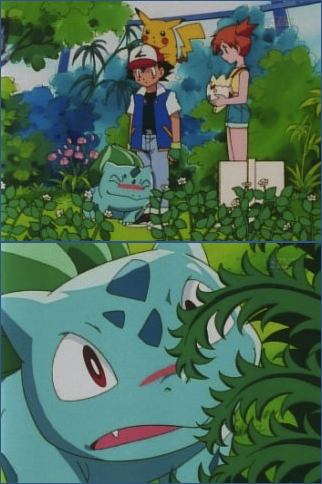
As we join our heroes today, Ash is still at home in Pallet Town, staying with his mother Delia and her Mr. Mime, Mimey, and supposedly training for the Pokémon League tournament… not that he spends a lot of time doing that. In fact, like a schoolkid with an impending exam, it’s largely while avoiding the process of actually training that he gets up to the stuff that happens over the course of these two episodes. In the process, though, he inadvertently winds up learning some interesting things about what it means to be a trainer – and so can we. Let’s get to it.
In Make Room for Gloom, Ash, as he tries to escape the horror of doing chores for his mother, inadvertently leads Misty and Brock to the very place she’d wanted them to pick up gardening supplies for her – a huge domed greenhouse called the Xanadu Nursery. Ash spent a lot of time there with his mother when he was young, but thought it had closed years ago when the owner moved away. The kids are let into the greenhouse by one of its workers, a man named Potter, and Ash decides to let Bulbasaur out to play among the plants. Bulbasaur has great fun at first, getting high off a herb known as Pokénip (like catnip, geddit?), but soon runs into trouble when he sniffs another plant, stun stem, which can paralyse humans and Pokémon. Luckily, the nursery’s new owner Florinda and her Gloom are on hand to help. Having worked with stun stem for so long, Gloom has developed an immunity to the plant’s toxin, and can even produce an antidote nectar to cure other Pokémon who have been exposed. While Bulbasaur promptly starts flirting with his saviour, Brock – in more or less the manner we have come to expect from him – takes the opportunity to get to know Florinda. Florinda is cripplingly insecure, and believes that she’s a failure at both training Pokémon and running her family’s business. Potter explains to Ash and Misty that when Florinda bought a Leaf Stone for her Gloom, it failed to evolve Gloom into Vileplume, and she believes this is because she’s a poor trainer.
Continue reading “Anime Time: Episodes 68 and 71”
House Venusaur: In Harmony With Nature
Before leaving for Lumiose City, I check out the route east of Santalune (Détourner Way – another interesting change, all of the routes now have French names as well as numbers; I think I like this). This route apparently leads to the headquarters of the French Pokémon League, so I don’t get very far, although I do pick up a Psyduck, a Riolu, and a new Pokémon called a Litleo as I explore. Litleo is, as the name implies, a little lion who has been lit (on fire) – the game’s first Fire/Normal dual-type. This might be interesting enough to be worth a spot on my team, at least for the time being. I attempt to name her Ishtar, after a Babylonian war goddess whose sacred animal is a lioness, but the game rather impudently tells me “you can’t enter that word,” not deigning to give a reason why, so I opt instead for Astarte, the Phoenician name of the same goddess, and spend some time training her up a bit. Litleo appears to be a balanced all-rounder with a bias towards speed and special attack but decent defences as well. I wonder whether the males and females look different when they evolve (no manes for the females)? While mucking around here, I get my Spewpa to level 12 – and she evolves into a deep green Vivillon. Hmm. I admit I was focussing more closely on the Infestation attack, but I’m pretty sure Viola’s Vivillon was pink. The Pokédex helpfully explains that Vivillon come in different colours and patterns depending on their environment – Viola’s was a meadow Vivillon, while mine is a garden Vivillon. Initially I thought this was basically the same kind of thing as Shellos has and was all set to be totally underwhelmed by it, but, in between writing this bit and actually posting the entry, readers have explained to me that Vivillon have different patterns depending on where in the world their owners are from – so my garden Vivillon must be what New Zealanders get (the internet suggests that we have this in common with Tasmania, Britain and parts of Eastern Europe).
Continue reading “Professing Comprehension”The Battling Eevee Brothers – Bulbasaur’s Mysterious Garden
Ash’s location: central Anatolia.
Evolution is one of my favourite themes. It’s apparently a very simple concept, but the way it’s treated in the anime has all kinds of fascinating implications that you can draw into an extremely complicated and morally nuanced vision of how this world works. As usual, much of what I have to say here is totally made up, but regular readers will know by now that I’ve never let that stop me before…
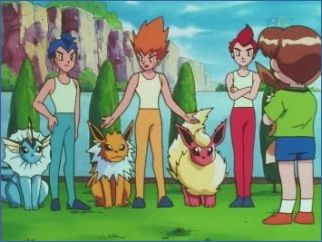
In the Battling Eevee Brothers, Ash, Misty and Brock find an Eevee tied to a tree in the woods with a bowl of food next to it. Brock suggests that the Eevee has been abandoned, at which Ash and Misty are horrified. They notice a gold tag on Eevee’s collar with an address engraved, in a place called Stone Town (at the foot of Evolution Mountain, claims Brock – three guesses what this episode’s going to be about…). Misty is tempted to keep Eevee, but they agree they should try to find Eevee’s owner first. Following Eevee’s tag leads them to an opulent manse with a spacious garden, where three triplets and their Pokémon – Rainer and his Vaporeon, Pyro and his Flareon, and Sparkyand his Jolteon – are hosting an evolution party, with free evolutionary stones for all comers. Eevee, who belongs to their younger brother Mikey, is the guest of honour; today is supposed to be the day he chooses his Eevee’s evolved form. Mikey himself is less than thrilled, and confides to Misty that he doesn’t care about battles, doesn’t actually want Eevee to evolve at all, and hid him in the woods to keep him out of sight, just until the party was over. Ash and Brock, meanwhile, argue with Rainer, Sparky and Pyro, who have offered them a Thunder Stone and a Fire Stone to evolve Pikachu and Vulpix. Team Rocket crash the party, have Weezing lay down some smog cover, and steal a dozen Pokémon, including Eevee and Misty’s Horsea, and as many evolution stones as they can carry before hightailing it out of there. Horsea, however, is clever enough to leave a trail of ink for the heroes to follow. While Jessie, James and Meowth are arguing over how to evolve Eevee (they eventually decide to use all three stones at once, just to see what happens) the good guys show up, and Vaporeon, Jolteon and Flareon give Arbok and Weezing a thrashing. Remarkably, though, Jessie and James manage to turn things around… until Mikey’s Eevee enters the fray and slams Arbok and Weezing with a powerful Take Down. As Misty had suggested, Mikey finally admits to his brothers that he’d rather just keep Eevee – and, after seeing what their brother’s Pokémon is capable of, they’re pretty cool with that.

Some weeks later, Ash’s Bulbasaur collapses, quivering, after winning a difficult battle against a hiker’s Rhyhorn, and his bulb starts glowing softly. Ash rushes him to a Pokémon Centre, where Nurse Joy #292 concludes that there’s nothing wrong with Bulbasaur at all: he’s preparing to evolve. It’ll soon be time for him to journey to a place called the Mysterious Garden, a semi-mythical grove where Bulbasaur gather every year to evolve into Ivysaur. Ash is overjoyed. That night, Bulbasaur slips out of the Pokémon Centre to brood. Pikachu follows him, and they talk for a while (Pikachu seems to be comforting him, and offering support). Without warning, a gang of wild Bulbasaur seize Ash’s Bulbasaur with their Vine Whips and carry him off. Pikachu runs to fetch Ash and the others, and together they track the Bulbasaur through the forest, even as the plants themselves try to keep them from following. They narrowly manage to slip through a solid wall of vines as it knits itself together, and find themselves in the Mysterious Garden. They see hundreds of Bulbasaur in the valley below them, singing, as the plants around them grow and blossom in moments. An ancient Venusaur emerges from within an enormous hollow tree in the centre of the valley and roars. The Bulbasaur roar in response, and all begin to evolve… except for Ash’s Bulbasaur, who seems to be struggling not to. Venusaur is furious, and Ash runs to Bulbasaur’s side to block a Vine Whip. Ash apologises to Bulbasaur for getting so excited about his evolution without considering his feelings, and tries to convince Venusaur that he shouldn’t be forced to evolve. Venusaur responds by demonstrating his miraculous abilities, causing a bare cherry tree to burst into bloom, and Misty wonders “don’t you want to have that kind of power, Bulbasaur?” As they argue, Team Rocket once again crash the party, floating over the wall of vines in their balloon and sucking up as many Ivysaur as they can with one of their ridiculous vacuum devices. The situation looks dire… until the sun rises. With a tremendous battle cry, Bulbasaur blasts Team Rocket with his first Solarbeam. The balloon is destroyed, the Ivysaur fall back to earth, and Venusaur finds it in his heart to forgive Bulbasaur for disrupting the ritual. Bulbasaur leaves with the kids as the wall of vines shrinks away, and they realise why no-one has ever been able to find the Mysterious Garden: once the ceremony ends, it simply ceases to exist.

Let’s look at some quotes from Eevee Brothers. The conversation Ash and Brock have with Rainer, Sparky and Pyro makes it plain as day that their views on evolution, particularly on induced evolution, are wildly different to the brothers’. Ash is asked “one of these days you’ll turn that Pikachu into a Raichu, won’t you?” in a very matter-of-fact tone, to which Pikachu reacts with obvious worry. The brothers also ask Brock “why don’t you just make [Vulpix] evolve?” as though it would be the easiest thing in the world – and, well, they’re offering him a free Fire Stone, so why not? After all, “evolution is what Pokémon are all about!” If you’ve been playing the games, this makes a lot of sense. If there’s a move you want your Pokémon to learn, you might hold off on evolution until it’s learnt it, because most Pokémon stop learning new attacks after using stones. In the long term, though, there’s no downside. If you mean to use a Pokémon for fighting, you will eventually evolve it, no ifs, no buts. That’s not how Ash and Brock see it. Ash tells the brothers, somewhat defensively, “we just don’t evolve our Pokémon that way,” while Brock says firmly “you like your way of evolving and we like ours.” You can read this either as making sense or as being utter bullshit. Personally I would rather read it as making sense but, y’know, to each his own. It makes sense when you think about what actually happens when Pokémon evolve; their physical bodies grow and change their proportions, sometimes drastically, and their mental state often undergoes a profound shift as well. Normally in the anime this seems to have some kind of psychological trigger; Pokémon evolve when they’re ready for it, and sometimes seem to be able to forestall evolution on their own – but when a trainer uses a stone, the Pokémon simply evolves on the spot, without any choice in the matter. It’s not really unreasonable for Ash and Brock to think that using these things is a little bit morally questionable, especially if it’s done for the sole aim of making the Pokémon in question better at battling.
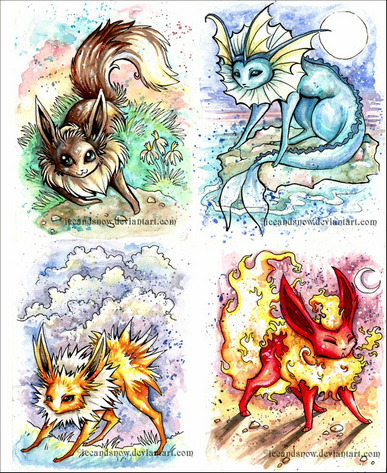 Where the argument breaks down – and where Ash and Brock’s position starts to make less sense – is that, for Pokémon like Pikachu and Vulpix, there is no other way to reach their final forms. If Ash and Pikachu aren’t willing to use a Thunder Stone, Pikachu’s never going to become a Raichu; no two ways about it. Brock’s statement suggests that he believes there is some other way for Pikachu and Vulpix to evolve, but if so, no-one ever hints at what that might be. Moreover, Ash’s statement suggests that refusing to use the Thunder Stone Sparky offers him is not simply a matter of waiting for the right time; he has absolutely no intention of evolving Pikachu at all, now, later, or ever. Surely Pokémon are supposed to reach their final forms eventually? Why else would they even have them? On the other hand, clearly evolution isn’t actually necessary for Pikachu to become an ‘adult’ since, as we just saw in Pikachu’s Goodbye, a community of wild Pikachu can get along just fine without a single Raichu. Obviously they’re capable of surviving without the protection of their more powerful cousins, and presumably they also reach reproductive maturity without any hiccups (indeed, if we can trust the games, there are very few Pokémon that do need to evolve before they can reproduce – only the ‘babies,’ such as Elekid and Bonsly). My newest pet theory on this is that Pikachu’s ability to evolve into Raichu is actually vestigial. At some point in the history of their development, for one reason or another, they stopped needing to evolve (maybe Pikachu fill an ecological niche that Raichu are less suited to, or maybe some kind of Ground-type predator made speed and small size more valuable than greater electrical power). They still have all the genes they need to become Raichu, but they’ve lost the genes that tell them when and why to evolve, so unless they’re triggered by some outside influence, they just don’t. Basically, what I’m suggesting is that Pokémon like Raichu, Ninetales and Poliwrath are throwbacks – forms that have become extinct in the wild, because they’re no longer suited to a changing ecosystem, but can be recreated via human intervention. That definitely leaves Ash and Brock plenty of room to feel a little bit uncomfortable about evolutionary stones, especially if the Pokémon have no choice in whether to use them.
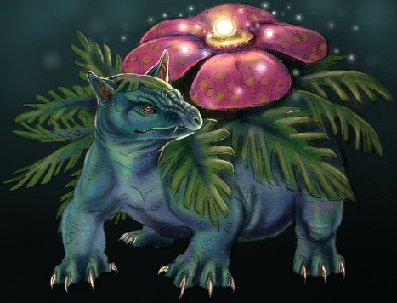
The degree of choice Pokémon have in when they evolve is another tricky question that the anime implies things about, but rarely explains outright. Most of the evolutions we’ve seen in the series so far have happened at moments of high emotion; it’s often implied that they’re triggered by strong desire or need – most notably, Ekans and Koffing evolving in Dig Those Diglett, in response to their trainers’ uncharacteristic outbursts of affection. Bulbasaur, it seems, are very different. They have little freedom to decide; evolution, for them, is an extremely ritualistic thing that all of them go through together – to the point that, when Ash’s Bulbasaur decides he doesn’t want to evolve, he provokes the outrage of the entire community. That isn’t merely because his refusal somehow disrupted the ceremony either. The scene between Bulbasaur and Pikachu is a little tricky to interpret because, y’know, they don’t speak, but I’m pretty sure that Bulbasaur is explaining to Pikachu that he doesn’t think he really wants to evolve yet, but doesn’t want to disappoint Ash either, and Pikachu is telling him that it’s okay and Ash will be cool with it. The other Bulbasaur who overhear the conversation are apparently so discomforted by the whole idea that they immediately kidnap him and drag him to the Mysterious Garden. Venusaur isn’t just upset about the ritual; he and all the Ivysaur are actually somehow offended that Bulbasaur doesn’t want to evolve. For them, it’s the most natural thing in the world, the way they attain the powers that are their birthright, and trying to deny it is just asking for trouble. Of course, if that’s how they do things, where the hell does Ash get off trying to stop them? Or, conversely, if we do let the Bulbasaur get on with their strictly enforced mass evolution ceremonies in peace, what kind of ground are we standing on if we say that Mikey’s Eevee shouldn’t be forced to evolve?
I could go on, you understand. It’s just that this entry is clearly getting far too long.
Oh, Bulbasaur; I know you aren’t as popular as Squirtle or Charmander, but my heart will always belong to you…

Today is basically going to be one huge nostalgia trip for me, since we’ll be looking at my first Pokémon ever: Bulbasaur, the first-generation Grass-type starter Pokémon. It’s hard for me to express how much I loved this little guy; I honestly don’t think I ever chose a different starter on any of my myriad playthroughs of Blue version as a kid (I branched out a little on Leaf Green, but Bulbasaur remained my favourite). It’s probably fair to say I’m slightly biased, but I will do the best I can to back myself up with sensible argument. Here’s why I think Bulbasaur is awesome.
What made Bulbasaur stand out amongst the Grass Pokémon of Red and Blue was his heavy emphasis on the idea of symbiosis. Most of the first-generation Grass-types (in fact, most Grass-types full stop) are plants – Oddish, Bellsprout, Tangela and Exeggcute may move, talk and fight, but they’re very clearly plants with a couple of animal traits rather than the other way around. The subsequent Grass-type starters, and a few other weirdoes like Leafeon, all reject the trend and are animals with a couple of plant traits. Bulbasaur is unique in being neither; his appearance gives the impression of two distinct but joined organisms, one animal and one plant, and this is explicitly what he is, with a seed “planted on its back at birth.” Even today, there’s only one other Pokémon that balances its plant and animal aspects in the same way, and it’s actually one that’s been around from the beginning. It’s Paras. Truthfully, though, Paras and Parasect with their story of parasitism are even stranger. They may be terrible Pokémon but they have one of the most fascinating designs of the entire first generation; they’re not the point of this entry, though. The point is, although Bulbasaur is the first Grass Pokémon many trainers will ever meet, he’s not at all archetypal; in fact he’s the best example of an idea that the subsequent Grass starters never quite caught onto. In Bulbasaur’s Mysterious Garden, Brock describes Bulbasaur, Ivysaur and Venusaur as a symbol of nature’s interconnectedness and the fundamental dependence plants and animals have on each other. He’s perhaps poeticising a bit excessively, but I actually quite like this way of looking at them; if you wanted to come up with such a symbol, you could do much worse than Bulbasaur. It might have been nice if the later starters had explored symbiosis in different ways to create contrasts with Bulbasaur – Torterra, actually, does this quite well – but he’s still fun on his own. As compared to the other starters of his own set, Bulbasaur is a little odd. Squirtle and Charmander follow broadly similar progressions from cute through tough to full-on badass; Blastoise with his heavy cannons and Charizard with his, y’know, being a freakin’ dragon. Bulbasaur is different. I think he is meant to be cute (well, I think he’s cute) but clearly not so overtly as Charmander or Squirtle; he almost seems to aim for the ‘tough’ aesthetic from the beginning (the fact that he’s the only quadruped in the group is probably a factor since it adds to his physical stability) and then just builds on it as he grows through Ivysaur to Venusaur. ‘Badass’ is a hard adjective to define, but I don’t think it describes Venusaur, or at least not as well as it describes Blastoise and Charizard. Instead Venusaur projects a sense of age, experience and self-control – this is a Pokémon that can fight, but chooses not to. Venusaur is not for everyone, but for me it was his differences that made him my favourite.

I’m sentimental, of course, but there are plenty of reasons to like Bulbasaur’s line other than their design characteristics. Venusaur is a starter Pokémon, and as such high stats are his birthright – solid all around, with a bias towards his special stats. Back in the olden days, Venusaur was the fastest Grass Pokémon in the game, which made him a good choice for using Grass’s two big trump cards: Sleep Powder and Leech Seed. He was also one of only two fully evolved Grass Pokémon (the other being Victreebel) with Razor Leaf, easily the best Grass-type attack at the time because of Red and Blue’s idiosyncratic critical hit mechanics and the absence of any way to speed up a Solarbeam. On the ‘con’ side, Venusaur was a Poison-type Pokémon in a world ruled by Psychic-types, an uncomfortable place to be, and Poison had no powerful attacks in Red and Blue. Over the years, Venusaur developed into a versatile tank who can focus on physical or special, offense or defence. With the advent of Sunny Day, Razor Leaf was replaced by Solarbeam as the Grass type’s strongest offensive option, then Solarbeam eventually by Giga Drain and Seed Bomb, but Leech Seed and Sleep Powder remained potent weapons in Venusaur’s arsenal. He gained the ability to rebalance himself towards slow, bulky physical offense with Curse in Gold and Silver; with the addition of Earthquake to his movepool in Ruby and Sapphire, he can act as a competent physical tank. Power Whip and Leaf Storm present devastating options for Grass-type damage. As a Grass-type, Venusaur is also one of the few Pokémon who actually appreciates having Poison as a secondary offensive element in the form of Sludge Bomb, since it can swiftly deal with other Grass Pokémon, who are immune to Leech Seed and resistant to Earthquake. Finally, Synthesis lets Venusaur heal – it may be unreliable, dependent as it is on fine weather, but it backs up his reasonable defensive stats nicely.

Black and White brought Venusaur two major gifts, the first of which is Growth. Growth has been a part of Venusaur’s movepool from the beginning, but its usefulness decayed after the special stat was split into special attack and special defence in Gold and Silver, since it then increased only special attack, not both. Black and White have given Growth – and with it, many Grass Pokémon – a new lease on life; it now increases both physical and special attack, giving Venusaur more diverse options for putting together an offensive moveset. Even better, Growth’s effect is now doubled in bright sunlight, allowing Venusaur to slot quite neatly into almost any sun team as a dangerous bulky sweeper. The other great blessing Venusaur received was his Dream World ability, Chlorophyll. When Ruby and Sapphire introduced abilities Venusaur, like all the other starters, received an ability that boosts the damage of his elemental attacks when his health is low (for the Grass-types, this ability is called Overgrow). While this is nice to have, it’s difficult to plan to make use of it. Chlorophyll, on the other hand, an ability available to many Grass Pokémon which doubles their speed in bright sunlight, compliments the newly-improved Growth perfectly to make the Grass-types that possess both extremely dangerous. Several other Grass Pokémon have this combination, but few of them can compete with Venusaur. Victreebel is stronger, but he’s also much frailer and doesn’t learn Earthquake, which limits the usefulness of his excellent physical attack score. Tangrowth is so slow that he still risks being outrun even with the Chlorophyll boost, and his special defence is shockingly bad (though it’s worth noting that Tangrowth can sit and get pummelled by physical attacks all day without blinking). Shiftry is fast and has a nice movepool, whether you want to go physical, special, or both, but curls up and dies after even the weakest attacks. This is not to say that all three don’t have advantages of their own, of course, but Venusaur is definitely up there with the strongest solar Pokémon. Getting your hands on a Dream World Bulbasaur may not necessarily be easy, but they are out there, so see if you can find something valuable to trade for one.
As my very first Pokémon, Bulbasaur has inevitably become something of a gold standard for me. A simple but well-executed design with pleasing symbolic connotations, coupled with measures of power and versatility that, for most of his history anyway (the additions from Black and White change this somewhat), have proven generous without creating an unachievable benchmark for the poor rank-and-file Pokémon. Even today, even if I must admit to having soft spots for many of them, given the choice of any of the fifteen starter Pokémon of the past and present, I would find it very difficult not to stop looking at #001.
Battle Aboard the St. Anne – Pokémon Shipwreck – Island of the Giant Pokémon
Fresh off Ash’s victory at the Vermillion Gym, Ash and his friends are given free tickets by a pair of teenage girls to a lavish Pokémon trainers’ convention aboard the world-famous luxury cruise liner, the St. Anne! THERE IS NO WAY THIS COULD POSSIBLY BE A SCAM!
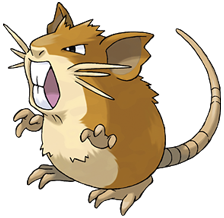
We quickly learn that the ‘teenage girls’ were Team Rocket in disguise (yes, James too), and that they were giving out free tickets to all the trainers they could find on the orders of their shadowy Boss, Giovanni, who appears for the first time in this episode. The Boss (who seems to be the closest thing Meowth has to a formal ‘owner,’ but has come to prefer his Persian – this will be a constant source of insecurity to Meowth during the series) is displeased with the time and energy they have expended failing to catch Pikachu, but still seems to have enough confidence to put them in charge of the ambush planned on the St. Anne. His confidence, of course, is misplaced – not only do the Team Rocket goons fail miserably to steal even a single Pokémon, James also loses a ludicrous amount of money buying into a Magikarp-breeding pyramid scheme, and the entire ship capsizes and sinks with Jessie, James and Meowth still on board (not to mention our plucky heroes). This, of course, is all totally incidental as far as I’m concerned. I want to talk about what happens in the meantime: Ash encounters a dapper gentleman with a top hat and moustache, whose name is never given, challenging other trainers to exhibition battles with a powerful Raticate. Ash, being Ash, takes up the challenge and finds that Raticate and his Butterfree are very evenly matched; however, just as Butterfree begins to gain the upper hand with Stun Spore, the Gentleman – to Ash’s annoyance – recalls his Raticate and suggests calling it a draw. The Gentleman later proposes a trade, his Raticate for Ash’s Butterfree, which Ash hesitantly accepts but later regrets. Luckily, the Gentleman reluctantly agrees to trade back at the end of the episode, just as the ship is sinking.
When you think about it, Pokémon trading is a pretty bizarre practice from the perspective of a trainer like Ash, who regards each and every one of his Pokémon as a close personal friend (which I think counts as further evidence that Ash’s way of doing things is actually quite unusual, since Pokémon trading manifestly isn’t). The Gentleman’s ideas about trading are interesting ones – he believes that trading Pokémon is a way of deepening and widening new friendships and spreading relationships between trainers all around the world; basically, a form of social networking. You could argue that he’s running what amounts to a scam here, proposing a trade for the first Pokémon he could find that was stronger than his Raticate and then dazzling the Pokémon’s kid trainer with some pretty rhetoric, but since he does agree to trade back when Ash asks him, I think it’s more likely he actually believes it. Misty’s perspective on the situation is almost as interesting because it shows, I think, that she relates to Pokémon in a very different way to Ash: although she is sympathetic when he begins to regret trading away Butterfree, her response, “look on the bright side; you got a Raticate!” seems to indicate that she doesn’t really understand the depth of Ash’s attachment to his Pokémon yet. I’m kind of disappointed to miss Brock’s opinion; Ash does ask him before the trade, but he’s too busy getting goo-goo-eyed over the Gentleman’s lady friend to offer a coherent response. For a person like Ash, trading away a Pokémon is basically signing away the health and wellbeing of a close friend to someone else. If Ash’s attitude is at all typical, you wouldn’t expect Pokémon trading ever to happen except between good friends but, again, this is manifestly not the case. I think this indicates that for a ‘typical’ trainer, a Pokémon is less like a friend and more like… not a possession, but… perhaps a colleague, co-worker, or subordinate – basically, someone with whom you have a formal, rather than an emotional, relationship. I should qualify that, like most complex issues, this is probably more of a spectrum than a dichotomy; Ash is at one end, and trainers like the Gentleman at the other, but a lot of people probably fall somewhere in the middle.
Anyway, the ship flips upside down and sinks, and due to the captain’s gross incompetence no-one notices that a few of the passengers were still on board. There’s still plenty of air in the ship, but it’s steadily filling up with water from the bottom, and it’s balanced precariously on a huge spire of rock over a deep ocean trench…
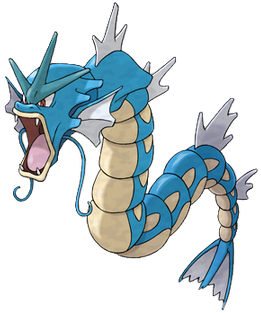
Pokémon Shipwreck is kind of a ‘meh’ episode, if you ask me. It’s basically supposed to be about Ash’s party and Team Rocket having to work together to escape their mutual dilemma, but it’s actually about Ash’s party working together to escape their dilemma while Team Rocket cling to their coattails and scream incoherently. Suffice to say, they eventually escape the ship by blowtorching through the hull with Charmander’s Flamethrower and swimming to the surface with the help of their Water Pokémon (Team Rocket use the Magikarp James bought on the St. Anne and nearly die, but to Pikachu’s immense displeasure they recover). Once they’re all on a raft cobbled together from the debris of the St. Anne, James throws a fit, kicks his Magikarp, and renounces his ownership of the useless thing… which, of course, prompts it to evolve into a Gyarados, summon its brothers, and go all you-ain’t-in-Kansas-no-more on their asses, which leads to the next episode, Island of the Giant Pokémon…
I love Island of the Giant Pokémon. If I had my way the whole damn series would be done like Island of the Giant Pokémon. The set-up is that Gyarados’ waterspout separated Pikachu, Bulbasaur, Squirtle and Charmander from the rest of the group on an island which is, for no immediately obvious reason, inhabited by Pokémon of unusual size (hereafter known as POUSes). Ash, Misty and Brock do stuff in this episode too but it is irrelevant and distracting, because this is the episode in which everything the Pokémon characters say is subtitled, which means we get a closer look at their personalities. Squirtle is laid-back and irreverent, and has something of a black sense of humour (among other things, he upsets Pikachu and Charmander by joking that Ash might have been eaten by wild Pokémon). Bulbasaur is stoic, pessimistic and cynical; he’s the one who suggests that Ash might have abandoned them, which I think speaks to the way he views humans in general. Charmander… well, Charmander is kind of boring, actually. He seems nice. He’s quite trusting, maybe a little naïve. Mostly he just goes along with Pikachu (who, as we know from the rest of the series, is defined mainly by fierce loyalty to his friends). Odd that there’s no foreshadowing of the problems Ash is going to have with him after he evolves into Charmeleon in episode forty-something; maybe they hadn’t planned that far ahead yet. And then… there’s Ekans and Koffing. They’ve also been separated with their trainers, along with Meowth, who orders them to attack Pikachu and his friends when they run into each other. Ekans and Koffing seem to be portrayed as not particularly bright, even by Pokémon standards (especially Koffing, who mostly parrots Ekans); their dialogue is subtitled in broken English, and their worldview is basically “we do as our masters tell us”… and Meowth, they are most emphatic, is not their master. They claim that if Pokémon do bad things, it’s out of loyalty to bad masters (contrast Meowth, who points out that his master is never around and he’s as rotten as Jessie and James on his own); they apparently understand morality but think it either isn’t important or doesn’t apply to them. Alone, Meowth is easily overpowered and tied up, while Ekans and Koffing join the group. As they eat dinner, and Squirtle taunts Meowth with the promise of food if he’ll just apologise (which, of course, he refuses to do), they hear a loud rumbling sound and are nearly crushed by a rampaging POUS. Pikachu goes back to untie Meowth as the others leg it (like Ash, he’s a kind soul), and they eventually spend much of the night running away. Then… then there is this one wonderfully mad scene in which, later that night, the whole group stops at a bar.
 In the middle of the jungle. Run by a Slowbro. Bulbasaur and Squirtle get totally hammered and start drunkenly arguing over something (hard to say what, since this scene doesn’t have subtitles) while Meowth quietly passes out, and Pikachu and Charmander try to comfort Ekans and Koffing, who have been reduced to tears (and are presumably pretty deep in their cups themselves). At a random bar in the middle of the jungle run by a Slowbro.
…I’m not even going to question it; I’m just going to accept it.
They all go to sleep together, curled up with Ekans coiled around everyone else. This is a lovely scene; it illustrates very well how ready Ash’s Pokémon are to trust, even when Ekans, Koffing and Meowth have been their enemies for the whole season so far – or perhaps it’s more appropriate to say that Ekans and Koffing work for their enemies. Off-duty, they’re no more hostile than anyone else. Anyway, the next day, they try to negotiate with the POUSes they encounter, fail miserably, wind up getting chased by them, and eventually run into Ash, Misty and Brock being chased by more POUSes, as well as Jessie and James in a mine cart dragging another one behind them (they… had an interesting couple of days, put it that way). Everyone reunites, there is much rejoicing on both sides, and all the POUSes trip over each other, get tangled together, and are completely destroyed – they’re robots, it turns out, and the whole thing is a theme park called Pokémon Land (a theme park, incidentally, run by Giovanni, who gets a call shortly afterwards to tell him of its destruction).
Again, I wish every episode were like Island of the Giant Pokémon. Most of Ash’s Pokémon are surprisingly expressive considering they can’t really speak, and Pikachu in particular builds up a reasonably developed character by sheer weight of screen-time alone, but the characterisation of and relationships between all the Pokémon characters we see in this episode are just wonderful stuff, if you ask me. That they never did this again is probably one of my biggest regrets for the whole series.
Bulbasaur and the Hidden Village – Charmander: The Stray Pokémon – Here Comes the Squirtle Squad
Okay, last entry was so long this is starting to get ridiculous, so I’ll try to blaze through the synopsis of these three episodes as quickly as I can so I can spend more time on commentary; here goes nothing!
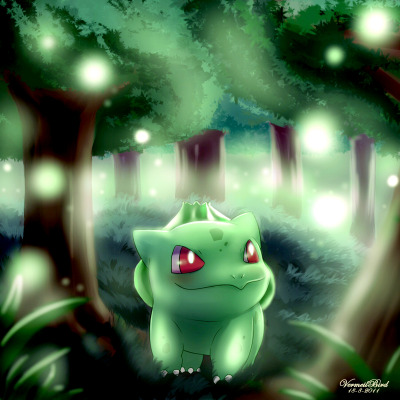
These are the episodes in which Ash meets and catches, in rapid succession, his Bulbasaur, Charmander and Squirtle, each under unusual circumstances. Bulbasaur is the guardian of the ‘hidden village,’ a kind of halfway house deep in the forest for Pokémon abandoned by their trainers, run by a girl named Melanie, who patches them up and releases them back into the wild. Bulbasaur is initially hostile towards Ash for intruding into the village and trying to capture one of the Pokémon, an Oddish, but warms to him when he, Brock and Misty help protect the village from Team Rocket. Melanie suggests that Bulbasaur leave with Ash so he can grow stronger, and so the Pokémon of the village can get used to surviving on their own again, and Bulbasaur agrees on the condition of a battle with Ash – which, of course, Ash wins. Soon after, Ash and his friends encounter Charmander waiting alone on a rock in the forest. Ash tries to capture Charmander, but Pikachu establishes that he actually has a trainer already, so they decide to leave him and travel on to the next Pokémon Centre. That night, they overhear a trainer named Damian bragging about his huge collection of Pokémon and explaining how he finally managed to ditch his useless Charmander in the wilderness by telling it he’d be back soon. Brock is furious and Damian’s group nearly comes to blows with the heroes, but Nurse Joy #147 breaks up the fight. Since a storm is brewing, Ash, Brock and Misty go back and look for Charmander, and manage to bring him back to the centre before his tail flame sputters out. Early in the morning, Charmander escapes and wanders off to look for Damian again, but he stumbles across Ash’s group on the road and saves them from Team Rocket. Damian shows up and wants Charmander back, but Ash convinces Charmander that Damian is a good-for-nothing jerk and the little salamander Pokémon joins Ash’s team instead. Ash’s Squirtle, finally, leads a gang of juvenile delinquent Squirtle who terrorise a small town with pranks, vandalism, theft, and their awesome sunglasses. The Squirtle Squad resent humans because all of them were abandoned by their trainers, and Meowth exploits this by tricking them into thinking that he owns and controls Jessie and James (which… let’s face it, is not far from the truth). Meowth manipulates the Squirtle into capturing Ash, Pikachu, Misty and Brock, but they let Ash return to town to buy medicine since Pikachu is injured. When Ash returns as promised, he finds that they have released his friends, since they aren’t a genuinely malicious bunch. He then helps the Squirtle Squad when Team Rocket inevitably turn on them, and coordinates them to put out a forest fire started by Team Rocket’s weapons. The Squirtle are reintegrated into society as part of the local fire brigade, and the leader joins Ash to travel Kanto with him.
Whew.
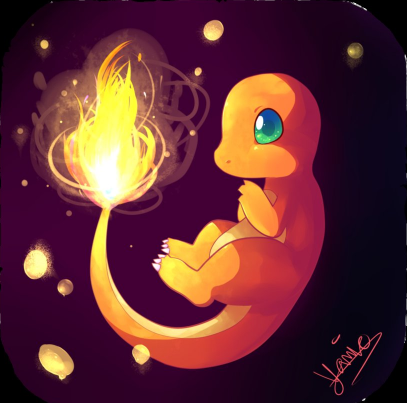
Let’s talk about Pokémon and their trainers. As I said, Bulbasaur, Charmander and Squirtle all join Ash’s team under unusual circumstances, and furthermore all of them had been abandoned by other trainers in the past (well, Charmander and Squirtle had; Bulbasaur could have been wild but I think it’s more likely that he was abandoned – how else would he have come to be working with Melanie? – and it would explain his somewhat aloof and suspicious nature), so all three of them presumably have somewhat skewed perspectives on humanity compared to wild Pokémon. Given this, it’s interesting that only Charmander acts in the way you’d expect an ‘outsider’ to act in the games – growing rapidly and later becoming disobedient. Part of the reason is probably that Squirtle and Bulbasaur had largely forgotten their trainers and washed their hands of humanity in general (except for Melanie, in Bulbasaur’s case) until Ash came along and forced them to totally rethink their attitudes towards people, while Charmander was still ‘loyal’ to Damian until making a snap decision to Flamethrower him in the head two minutes from the end of his episode. He may have regretted that choice later, and may even have come to feel he’d been forced into it – Bulbasaur and Squirtle both had other reasonable choices, but Charmander’s options, besides Ash, were going back to Damian or wandering off into an environment he wasn’t very well suited to (as he had learned the hard way only the night before). Finally, while Bulbasaur and Squirtle were both befriended by Ash specifically, it was actually Brock who did most of the work of rescuing Charmander, and Brock who decided to brave the storm to look for him in the first place. In fact, Ash acknowledges that Brock has as much right as him, if not more, to become Charmander’s trainer, but Brock insists Ash catch Charmander because… y’know, I’m honestly not sure. In short, Charmander may actually have legitimate reasons to be upset here.
Probably the single thing I find most interesting about these episodes is Bulbasaur’s insistence on a battle with Ash, which seems like a formality by that point – Ash and Bulbasaur have worked together, Bulbasaur clearly has at least some degree of respect for him, and Melanie has suggested that everyone involved would benefit if Bulbasaur joined the team, and given her blessing. Honestly, I think it seems like a formality because that’s precisely what it is: trainers catch Pokémon, and Bulbasaur is not going to go easy on Ash just because he seems like kind of a decent guy; he is damn well going to be captured, because that’s what trainers are for. Squirtle and Charmander don’t challenge Ash; they just join up because they feel he’s already earned their respect, and I think the fact that Bulbasaur does is at least partly because, as we’ll see in Island of the Giant Pokémon, he’s very stubborn and also a bit of a cynic (Squirtle the reformed gang leader, by contrast, isn’t so likely to be a stickler for tradition). What does being captured actually mean for a Pokémon, anyway? Theoretically they belong to the trainers who capture them, but we know they can break out of their Pokéballs whenever they really want to (case in point, Misty’s Psyduck, but others do it too, and not just for comic relief either), so there’s nothing stopping them from wandering off in the night and never coming back, but in practice they don’t. The very act of capturing a Pokémon normally seems to instil a degree of loyalty, which tends to remain even when it’s not such a good idea, as with Damian and Charmander. This is presumably why releasing a Pokémon is viewed as such a jerkass thing to do in the anime. Speaking of capture, when Ash first tries and fails to catch Charmander, Brock observes that he’s quite weak and tired – in theory, an easy catch. Now, what happens in the anime when you try to catch another trainer’s Pokémon is neither entirely clear nor totally consistent across different seasons, but here and now I think the only reasonable interpretation is that Charmander’s loyalty to Damian is what makes it so easy for him to break out of Ash’s Pokéball. Even for a weak or injured Pokémon, being captured still involves an element of choice: no Pokémon can be captured unless it is at least receptive to being partnered with a human (with the caveat that most wild Pokémon will still want to test a trainer’s worth by battling first). This gives an interesting perspective to Nurse Joy’s seemingly nonsensical comment, when she breaks up the fight with Damian, that it’s disrespectful to Pokémon to use them for settling personal disputes. How is it any more disrespectful than using Pokémon to battle at all? I suspect it’s meant to be implicit that practice battles and official challenges, as part of the advancement of a Pokémon’s career with a trainer, are in some sense “what they signed up for,” while “hey, Pikachu, beat up this guy’s Pokémon for me because he’s a douchebag” is unfairly bringing Pokémon into a wholly human dispute (although this particular example is something of a grey area; Damian’s mistreatment of his Pokémon could be considered just as much Pikachu’s business as Ash’s).
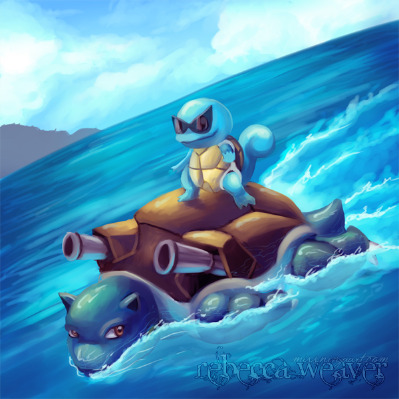
To finish up for today, I want to take a closer look at Squirtle’s street gang. For the Squirtle Squad, being abandoned by their trainers resulted in disillusionment with humanity in general, so clearly they had expectations of partnership with trainers which weren’t met – presumably power, knowledge and friendship. Again, abandonment is regarded as an unambiguously rotten thing to do, by both human characters and Pokémon; in a sense it’s a breach of the implied agreement a trainer makes with any Pokémon who joins his team. I suspect the Squirtle Squad are a Pokémon-world instance of the depressing phenomenon reported by real-world animal shelters, who invariably receive kittens and puppies in huge numbers after each Christmas – presents given to children who weren’t ready for the responsibility. Squirtle, of course, are one of Kanto’s standard starter Pokémon. It seems likely that the Squirtle Squad all belonged to new trainers who quickly realised that they weren’t cut out for the trainer’s life and ditched their starters in the wilderness. Ash and Officer Jenny #604 are quick to blame the trainers, but honestly I think the Pokémon League is just as much at fault here; obtaining a Pokémon License seems to be literally just a matter of turning ten and showing up.
What I’m driving at with this entry is that – easy as it is to dismiss Pokémon training as slavery and thereby demonise the franchise – the ethics of Pokémon training are, even from an in-universe perspective, a great deal more complicated than that, which is why I’m so glad the games finally caught up in Black and White and produced a whole storyline about whether ownership of Pokémon is morally justified. I still wish the story was a little more complex and the antagonists not so… well, cartoonish, but hey, it’s a kid’s series. Baby steps.
 Pokémaniacal