Reviewing the glass from the Eretz-Israel museum

On Thursday I went to the Eretz-Israel museum in Tel Aviv, and because I am a huge glass nerd (and, y’know, I’m doing tourist things as well but I am technically in this country to study ancient glass) I spent basically the entire time in their glass gallery ogling pretty Phoenician core-formed alabastra and Roman mould-blown bottles. So my reduced posting schedule this month doesn’t sting too much, here’s my definitive expert review of all the things there that most stuck out to me:
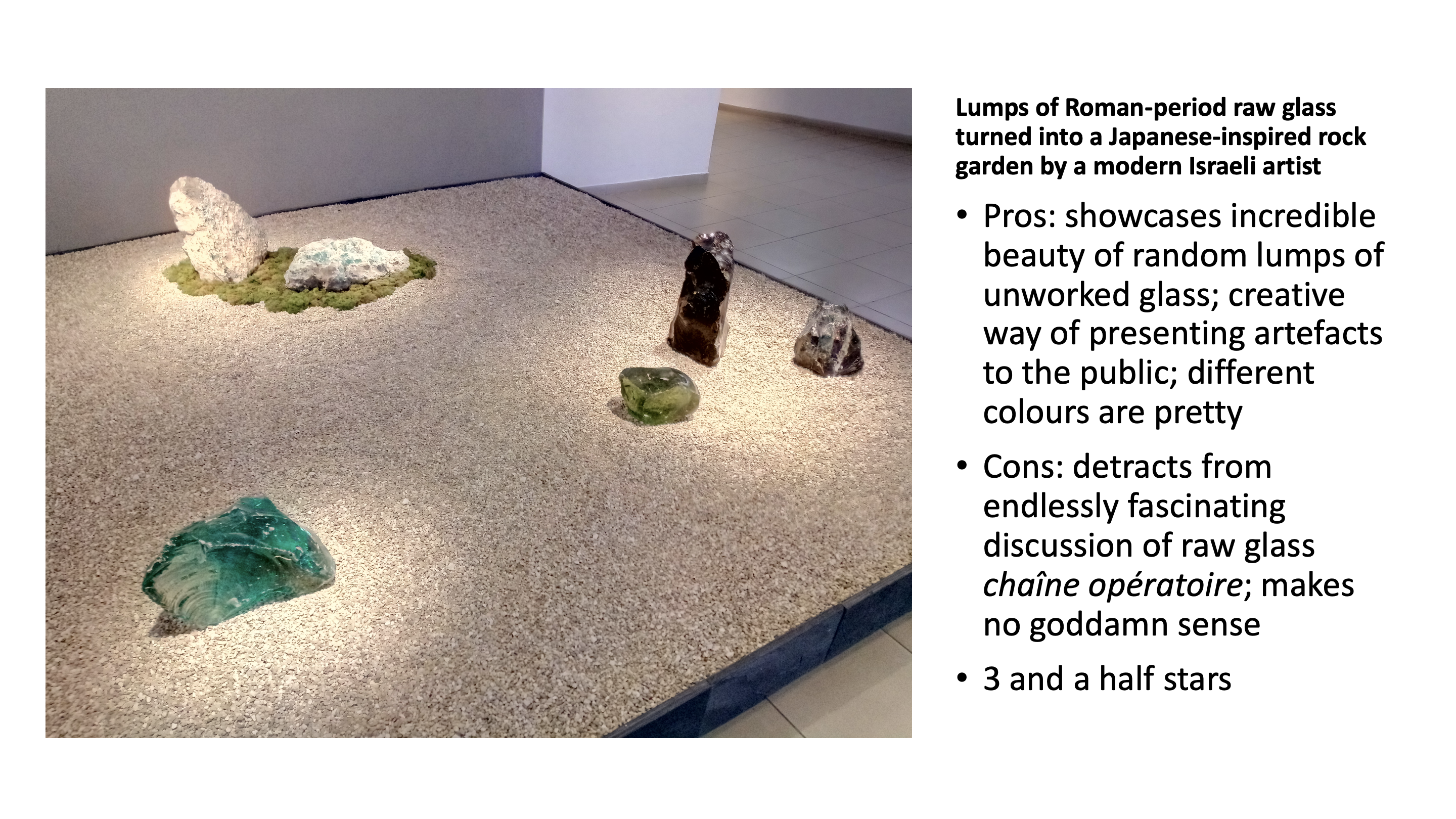
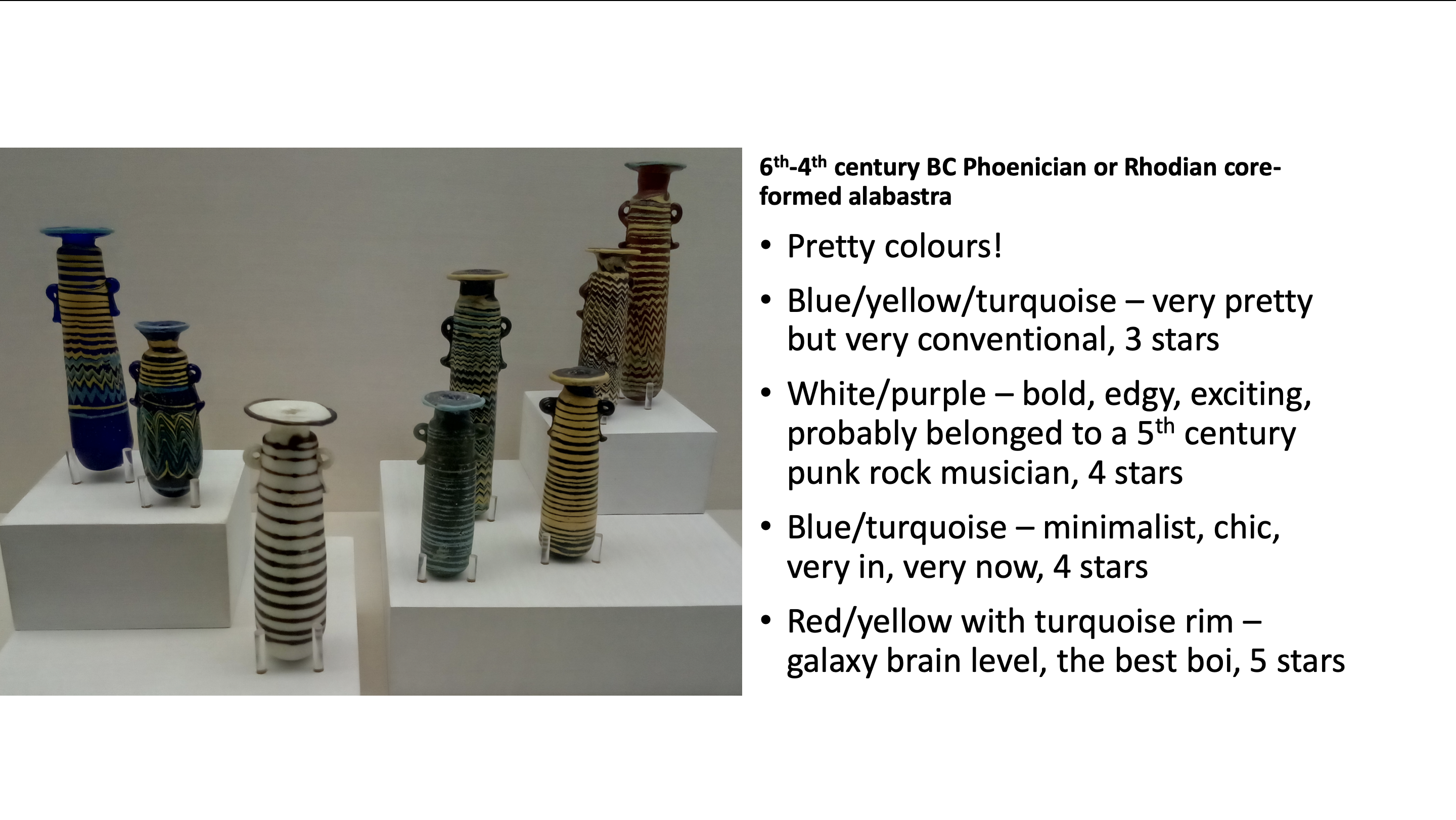
Continue reading “Reviewing the glass from the Eretz-Israel museum” →

Anonymous asks:

Something that’s been on my mind for a bit that your professional word may be able to help with. Would you happen to know how ethnically diverse the Greek and Roman empires were?

very

next question please

…

…what, you want more?  Oh, fine, but for the record this is not the sort of thing people just “happen to know.”

Okay so I’m assuming by “Greek empire” (remember, kids: there was never a politically autonomous and unified state called “Greece” or “Hellas” until 1822) you mean Alexander’s empire (320s BC) and the Hellenistic successor kingdoms (323 BC – 31 BC), and by “Roman empire” you mean Rome starting from the time it becomes a major interregional power (say, following the second Punic War, which ended in 201 BC) rather than just Rome in the time of the Emperors.  You could spend like most of a book on each of these just corralling the data that might let us answer this question, but whatevs. Continue reading “Anonymous asks:” →