Scatterbug, Spewpa and Vivillon

Scatterbug.
Scatterbug.

I didn’t really intend to leave these Pokémon so late, but I kind of forgot about them for a while, and here we are, with only one other set left in the Central Kalos sub-region.  It’s not like I forgot they exist or anything like that; I think I just assumed I must have done them already.  By contrast, I regularly forget that Mothim exists.  It used to be an oversight, but now it’s become a matter of principle.  Butterfly and moth Pokémon are one of the stock design types like Normal Bird, Normal Vermin and Electric Rodent; at least one appears in every region aside from Johto, and the rapid caterpillar-cocoon-butterfly succession originally seen in Butterfree (and paralleled by her vicious opposite, Beedrill) was repeated by Beautifly, Dustox, and now Vivillon herself.  Years ago I declared Beautifly and Dustox the joint third-worst Pokémon of all time on a combined assessment of their nonexistent battle capabilities and the highly derivative character of their designs, which borrow a great deal from Butterfree and Venomoth.  Game Freak’s decision to come out with yet another of these things represents, to my warped psyche, something of an invitation to a grudge match.  Let’s get to it.

Continue reading “Scatterbug, Spewpa and Vivillon”

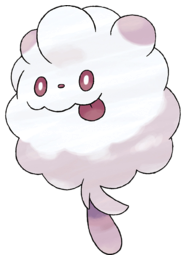
Swirlix and Slurpuff

Swirlix.
Swirlix.

Swirlix and Slurpuff are weird Pokémon, that’s for sure.  They are the inheritors of the tradition of Vanillite, Vanillish and Vanilluxe, the ice cream Pokémon of Black and White, who earned my ire so long ago.  I wasn’t upset with them for being ice cream Pokémon, you understand.  I was upset with them because the fact that they looked like ice cream cones was easily the most interesting thing about them.  Their powers were, for Ice-types, utterly standard and generic.  Nothing in their abilities, their behaviour, or the way they interact with humans relates in any way to the fact that they’re ice cream Pokémon, and I’m pretty sure their bodies are actually made of snow and only bear a visual resemblance to vanilla ice cream anyway.  This is why Swirlix and Slurpuff, fortunately, win that comparison easily; they’re just much less boring.  Unfortunately, this means I have no excuse to dismiss them and actually need to think about whether I’m okay with ‘food Pokémon’ as a thing.

Continue reading “Swirlix and Slurpuff”

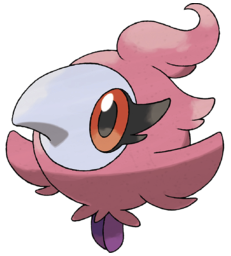
Spritzee and Aromatisse

Spritzee.
Spritzee.

Spritzee and Aromatisse are two more of those Pokémon that can only make you think “well, of course the French would have that.”  French companies dominate the modern perfume industry, and only Italy can possibly compare to France’s reputation for perfume production.  Kalos, not content with that, has also cornered the market on perfume Pokémon (anime Erika would kill for one of these things).  While I have much more to add now, I have to stand by my original assessment of Aromatisse from my playthrough journal of X: “I feel like Big Bird’s French cousin is trying to seduce me.”  Don’t you try to tell me you’re “just doing the can-can,” Aromatisse.  That is a suggestive dance and you know it.  I see the way you look at your trainers as you bare your leg salaciously.  I’m watching you…

Continue reading “Spritzee and Aromatisse”

Froakie, Frogadier and Greninja

Froakie.

My unfathomable whims have decreed that it’s time to wrap up the Kalos starters.  The third and last is the Kalosian Water-type starter Pokémon, Froakie, a little blue frog with a good head for deception and evasion.  His second form, Frogadier, also happens to have one of the most fun English names to say of the entire sixth generation, energetically tripping off the tongue in the same way as Octillery or Galvantula.  As for the fully adult ninja frog… well, at some point, quite early on, I realised that the pink scarf thing around Greninja’s neck is probably his long froggy tongue, and ever since then I’ve been so weirded out by it that I can never quite accept him without doing a nervous double take.  I’m now forced, whenever I see him, to contemplate the mental image of my own tongue stretched out to twenty times its normal length and wrapped a couple of times around my neck.  I can see what it adds to the design; ninja are regularly portrayed with masks or headbands that leave strips of cloth fluttering free, and the tongue allows Greninja to mimic that appearance, while also providing a visually striking colour contrast between its bright pink and the deep blue of his body.  Hell, if my tongue went that well with my outfit, maybe I would wear it as a scarf.  Anyway.  Past Water starters have generally been bulky Pokémon with a ‘tough guy’ aesthetic, so Froakie’s very different take on the type is a welcome bit of diversity, and also establishes him as a very different Pokémon from either Chespin or Fennekin.  Let’s take a closer look.

 The legendary ninja Jiraiya atop his majestic giant frog steed.

These Pokémon are ninja frogs.  Frogs and ninja are connected in a variety of modern fiction, apparently because of one very famous ninja hero from Japanese folktale, Jiraiya, who was the subject of a classic Japanese novel of the 19th century (which, as is the way of such things, was only loosely based on a wide variety of different version of older tales).  Jiraiya seems to have had a thing for frogs and toads; he supposedly had the power to transform into a toad, and is often depicted riding a giant magical toad whom he saved from a marauding serpent.  Snakes as villains seem to be a unifying thread of the Jiraiya tradition.  In fact, one sequence in the 19th century novel even describes a rock-paper-scissors relationship – almost exactly like the one that exists between trios of starter Pokémon – between Jiraiya’s frog powers, the snake powers of the story’s villain Orochimaru (which are apparently strong against frog and toad magic), and the slug and snail powers of Jiraiya’s love interest Tsunate (which can overcome snake magic, for reasons which I imagine made perfect sense at the time).  Or something.  Look, I haven’t actually read it; I just looked for summaries on the internet.  What do you people want from me?  The fact that Froakie, Greninja and Frogadier seem to be referencing Jiraiya makes me wonder whether there’s any significance to the presence, in the previous starter trio, of a snake Pokémon whose powers can defeat theirs – Serperior.  Obviously Serperior wasn’t designed with such a relationship in mind, but maybe Greninja’s creators got a kick out of it – and if they did, they would probably also have noted that there are slug and snail Pokémon in the game as well, and that these Pokémon, although not actually starters, are Fire-types.  Although it’s rather a stretch to think that they planned it this way, Greninja, as well as being a starter, actually completes a weird little cross-generational trio of his own.

Anyway, that’s why ninja frogs are a thing.

A Water-type ninja as one of the sixth generation starters is also an interesting choice following the Water-type samurai we got in Unova, Samurott, given that samurai and ninja tend to be set up as opposites in popular culture – samurai are seen as large, powerful warriors, devoted to honour and often more than a little flamboyant, while ninja are depicted as stealthy, agile, deliberately understated, and perhaps more unscrupulous.  Water seems like it should be a natural element for that kind of Pokémon; it’s changeable, being the only substance in nature that exists on Earth as a solid, a liquid, and a gas, it flows around obstacles as easily as smashing through them (as Misty explains at length to a rival Fire trainer in the anime episode Some Like it Hot), and it is regularly associated with subtlety and deception.  The mutable nature of water is particularly evident in Greninja’s signature move, Water Shuriken, which magically compresses water into sharp-edged discs that slice through his enemies’ flesh with pinpoint accuracy.  Bulky, powerful Water Pokémon that draw on the unparalleled fury of a stormy sea are common, but ones focussing on the constantly shifting, intangible nature of water are few and far between; the only ones I can think of are Golduck, Vaporeon and possibly Starmie and Jellicent.  Not that this is necessarily a bad thing, but I find it surprising that Water Pokémon like Greninja aren’t more common, and the contrast between Greninja and Samurott almost seems to draw attention to it. 
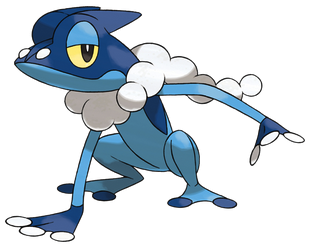
 Frogadier.

Chesnaught and Delphox are both perfectly competent, as starters normally are, but Greninja has hit the jackpot.  He seems made to be a mixed attacker, employing both physical and special attacks to confound heavy wall Pokémon who focus on only one side of their defences, although his movepool pushes him much more towards a special focus.  His special attack is great, his attack isn’t far behind, and he’s so fast that he can probably afford not to invest the greatest possible effort in speed, leaving more to divide between his attack stats if you want to pick up one or two of his physical moves.  His need for heavy speed training is further diminished by Water Shuriken, which gives him access to a fairly strong physical priority attack.  Because Water Shuriken is a multi-hit attack, its power fluctuates a great deal; it will sometimes be weaker than Aqua Jet, though not by much, and it will usually be stronger, sometimes by quite a lot.  The truly lovely thing about Greninja isn’t his stats, though; it’s his hidden ability.  Chesnaught and Delphox have pretty neat hidden abilities, but Greninja’s blows both out of the water.  It’s called Protean, an English adjective derived from the name of shapeshifting Greek ocean god Proteus, and it automatically changes his type to match that of any move he’s about to use.  Effectively, Greninja gets STAB (Same-Type Attack Bonus, +50% damage) on everything and, thanks to his excellent speed, can sometimes shift his type to gain resistance or immunity to incoming attacks, hopefully keeping his lacklustre defences from having their full impact – but bear in mind that he’ll always have his native Water/Dark typing when he switches in; Pokémon with actual resistances or immunities are safer.  Basically, it’s like Kecleon’s Colour Change, only it’s actually useful (and, indeed, Kecleon now shares Protean as his Dream World ability and gets to suck a little bit less).  Of course, life’s a bit grim if you want to use the Froakie you got from Professor Sycamore, whose ability will be Torrent, but hey, no-one ever said Pokémon was fair.

Protean Greninja can use both physical and special attacks of any type with roughly equal competence, though his physical movepool leaves much to be desired (maybe future games will change that).  Surf, Hydro Pump, Dark Pulse, Ice Beam and Extrasensory form the core of his offensive capability.  Grass Knot punishes other Water types, provided they belong to high weight classes, although be careful they don’t return fire with Ice Beam after you become a Grass-type.  Hidden Power deserves special mention on Greninja because of the way it can be used to exploit Protean; if you want Greninja to be able to shift his type to resist, say, Dragon attacks, which would otherwise be impossible since he doesn’t learn any Fairy or Steel attacks, you can try to trade or breed for a Greninja with Hidden Power: Fairy and net him a quasi-immunity [EDIT: I HAVE MISLED YOU; Hidden Power cannot take a Fairy type, probably because that would have meant reassigning all the other types to different personality values and therefore screwing up Pokémon with Hidden Power transferred from older games].  Water Shuriken and Power-Up Punch are the high points of his physical movepool – trying to use a pure physical Greninja is a bad idea since his physical moves just aren’t very powerful, but Power-Up Punch will spell doom for any Blissey who thinks she can take you, and again, Water Shuriken is on average pretty powerful for a priority attack.  U-Turn is worth it whether you’re training his attack stat or not, because free switches are always welcome.  Acrobatics is difficult to use at the moment because Flying Gems don’t exist on X and Y and it’s depressingly weak if you can’t reliably use up Greninja’s item, but when Game Freak gets around to introducing gems in the sixth generation, it could be interesting.  Rock Slide and Night Slash are there, but just not powerful enough to be worth it.
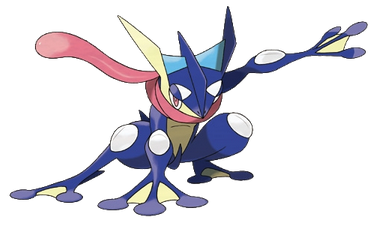
 Greninja.

Support duty almost seems like a waste of Greninja’s amazing offensive potential, but he has a couple of very helpful support moves – most importantly, Spikes and Toxic Spikes; one or both could find its way onto a moveset to amplify his own and other Pokémon’s offensive potential.  He also gets Taunt and has the speed to use it effectively, anticipating and cancelling support moves coming from defensive Pokémon.  There’s a second signature move that deserves a mention, if only to explain why it shouldn’t be used – Mat Block, which references the ninja technique of blocking a thrown weapon by flipping up one of the woven straw mats used as flooring in traditional Japanese houses.  Mat Block is only useful in double or triple battles, where it acts as a sort of mass Protect attack, guarding all of your active Pokémon from damage… with three important flaws: 1) it doesn’t have priority, so anything that outruns Greninja can bypass it, 2) it doesn’t block status moves, so stuff like Thunder Wave and Will’o’Wisp can bypass it, and most importantly 3) like Fake Out, it can only be used on the first turn after Greninja enters play, something the move’s description conveniently neglects to mention and leaves players to discover for themselves.  Don’t worry, Chesnaught and Delphox – Greninja may have two signature moves to your one, but the second is nothing to be jealous of.

Before we wrap up today, I promised I’d talk at some point about the starters as a group, and in particular about the warrior/spellcaster/rogue interpretation that has become so popular: the idea that Chesnaught, Delphox and Greninja are based on a trio of common roles or classes from role-playing games.  Chesnaught is the warrior, fighter, knight or whatever; Delphox is the wizard, sorcerer, or black mage, and Greninja is the thief, rogue or assassin.  Strength, magic, and skill, the classic three fantasy RPG archetypes.  You can divide some other starter trios along similar lines – Venusaur, Charizard and Blastoise, for example, could be parsed as spellcaster, rogue/scout/fast warrior (remembering that Charizard originally had only average special attack in Red and Blue) and knight/paladin/bulky warrior; Meganium, Typhlosion and Feraligatr work as white mage, black mage and warrior.  For that reason, and also because the Pokémon community is often overeager to construct patterns out of things (says the guy who writes character studies and lengthy speculative discussions of this stuff), I was a little sceptical of the idea at first, though in the end the set of human-influenced designs – knight, witch and ninja – make this way of looking at things particularly appropriate to the sixth generation, and it’s entirely plausible that RPG classes were, if not the creators’ starting point, at least an influence.  To me, all of this is just one example of a general principle of designing starter trios: the starter Pokémon occupies a place of special importance as your partner and as the first point of contact most players have with the game, so it’s vital that everyone (or at least as many people as possible) be able to find one that appeals to them.  To that end, it’s sensible to have starter trios with strongly contrasting aesthetics, fighting styles and personalities.  Sceptile, Infernape and Greninja, for example, would make a poor starter trio because they’re all different takes on the same idea – a fast, active warrior-type.  They continue to be nicely designed Pokémon in themselves, and nothing can diminish their individual appeal, but they don’t provide the same breadth of choice.  Some people would love all three, others wouldn’t like any of them.  A trio of Torterra, Emboar and Swampert would be similarly ill-conceived.  The existence of fighter/magic-user/rogue as a recognisable trope has its roots in the same basic concept; RPG players want to be able to play a hero whose powers have particular appeal to them.  People like choice; it’s really pretty simple.  They also like not to be penalised for their choices, which is where the notion of game balance comes into it, but that’s another topic entirely.

I quite like this Pokémon, in spite of his alarming combined approach to fashion and oral hygiene.  Frogadier makes the cute-to-badass transition remarkably smoothly in comparison to what most starters manage, and the ninja frog thing is a bit weird if you’re not in on the joke, as it were, but was very interesting to learn about.  As for his battle capabilities… well, Protean is a game-changer, there’s no other way to describe it.  Expect Greninja to make a serious impact on any battle he sticks his aqueous ninja stars into.

Pancham and Pangoro

So, our next Pokémon is a literal kung fu panda.  Sure, why not?

 Official art of Pancham by Ken Sugimori.

With Ursaring and Beartic in the back of my mind, I’m beginning to wonder whether Game Freak are capable of doing a bear Pokémon that isn’t a bipedal hulking brute with a bad temper and tremendous physical strength.  Pandas are such different creatures from grizzly bears or polar bears that I’m a little disappointed Pangoro turned out to be so very similar, type notwithstanding.  There’s some neat stuff in there as well, though.  Teddiursa and possibly Ursaring have some kind of weird lunar imagery going on that doesn’t really tie into anything at all (except maybe for the fact that there are constellations called the Great Bear and Little Bear), while Cubchoo has magic ice snot or something ridiculous that I never fully understood and doesn’t carry over to Beartic at all, but Pancham and Pangoro appear to be trying to tell a story through their designs and evolution.  There’s something there, and I’m going with it.

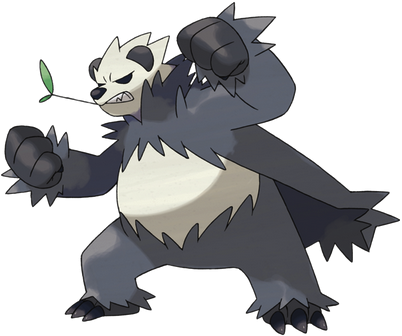
Bulbapedia posits that the principle source of inspiration for these Pokémon is a stereotypical depiction of a male Japanese juvenile gang leader, or banchou, from certain manga genres – particularly visible in Pangoro’s ‘cape,’ possibly a representation of a long coat, and in the sprigs of bamboo they hold in their mouths.  This being well outside my normal area of expertise, I naturally turned to the universal wellspring of all pop-cultural knowledge, TvTropes.org (obligatory warning: TvTropes will ruin your life), which confirms the prevalence of these clichés, among others, as a visual shorthand for juvenile delinquency in Japanese fiction.  The real giveaway seems to be a pompadour hairstyle, something Pangoro easily could have had and I’m glad he doesn’t, but constantly chewing on a twig, a blade of grass or a stalk of wheat (something which tends to signify ‘country yokel’ in Western fiction) is another big one.  A long coat, typically worn over the shoulders – leading to the appearance of a cape that we see on Pangoro – is similarly widely recognised. Whenever a character who matches the banchou archetype is actually important in a story, it will often be because his callous exterior conceals a warm, caring soul or some bullsh!t like that.  This makes a great deal of sense in the context of Pangoro’s personality as it is described to us: violent and quick to anger, but ultimately motivated by a sense of justice.  It also has personal appeal to me because it fits the way I like to characterise the Fighting type, namely that I believe the common thread uniting them is a preoccupation with honour as much as aptitude for martial arts; banchou characters, from what I’m given to understand, certainly like to think of themselves as being in some sense honourable.  The tension between theoretically noble goals and the use of ‘dark’ emotions or underhanded actions as a source of strength makes a lot of sense for a Dark/Fighting Pokémon.  This contrasts strongly with Pancham, who typically wants to be seen as tough and dangerous, but is really just mischievous and playful, lacking a true Dark-type’s readiness for anger and deception.

What’s neat about the transition is their unusual evolution method – Pancham can evolve into Pangoro starting from level 32, but only if there is a Dark Pokémon in the party as well.  Evolution influenced by another Pokémon is pretty rare, and all the other examples I can think of are pretty closely tied in with the nature of the Pokémon’s powers – Shedinja splits off from Ninjask, Mantyke needs Remoraid to become Mantine, Karrablast steals Shelmet’s armour – so it seems reasonable to think the designers meant something by making Pancham evolve in this way.  The obvious answer seems to be that a Dark-type companion can mentor Pancham in ruthlessness, in much the same way as parents fear the ‘influence’ their sweet children could be exposed to by hanging out with delinquents.  Where the analogy breaks down is that this process is not only perfectly natural for Pancham, being the only way for them to reach maturity, but is probably facilitated in the wild by the parents themselves, the adult Pangoro who surely provide the Dark-type presence that allows most wild Pancham to evolve.  Pangoro’s berserker rage supplies the great physical strength with which they defend themselves and put a stop to unfairness wherever they find it, and of course evolution in general tends to be depicted as a positive thing on the whole (Ash and Pikachu’s neuroses on the subject notwithstanding).  Still, both Pancham and Pangoro have interesting personality traits, and the development from one to the other makes sense, and I’m prepared to chalk that up as a victory.

 'Oh, I could get up, but what's the point? I'll never find another stick like it... I may as well just lie down and die.' Good grief; even Farfetch'd isn't this neurotic.

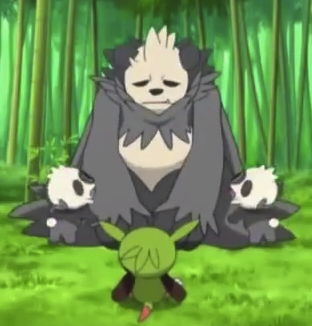
I want to mention the anime episode that focuses on Pancham and Pangoro, since I watched it last night and it was really quite silly.  Normally I love the anime because it gives Pokémon a chance to show off what’s unique about their abilities, but this episode… Well, in this episode, damage to Pangoro’s bamboo sprig caused by a panicked Pin Missile from Chespin causes him to experience an instant and catastrophic collapse of all willpower and fighting ability, leaving him a miserable, unresponsive wreck, even in the face of capture by Team Rocket, until Ash is able to replace it.  This change is so rapid that it can even happen mid-attack, completely cutting off a charge Pangoro was directing at Chespin!  I don’t know about you, but personally I think it’s a bit of a pathetic weakness to have.  What if someone attacks Pangoro with a Fire attack and burns the twig to ashes?  In some ways, this total and ludicrous dependence makes a strange kind of sense as a reference to the real giant panda’s laughable inability to survive on any sort of food other than bamboo (or at least, it would be laughable if it weren’t one of the factors driving the ridiculous things toward extinction).  It also might reference the importance of the twig to the ‘tough guy’ image of the stereotypical banchou character, essentially suggesting that Pangoro just can’t imagine himself as a powerful and competent fighter without this ‘charm’ of sorts.  Luckily, Pangoro in the games suffers from no such mind-blowingly stupid flaw.

 Pangoro.

Dark/Fighting, formerly an exceptionally powerful attack combination resisted only by Toxicroak and Heracross, has lost a good deal of its lustre following the introduction of Fairy Pokémon, most of whom resist both types.  Fairy attacks also sting Pangoro with a nasty double-weakness.  However, it’s still a reasonably powerful combination, and since Fairy-types are really the only major hole in what you can hit with those two moves, it shouldn’t be hard to find room for Poison Jab, to at least make it more difficult for Fairy Pokémon to switch in.  Pangoro sadly lacks the extra-powerful attacks that characterise Fighting-types – no Superpower, no Close Combat, and no Hi Jump Kick – so your main options are instead Sky Uppercut and Hammer Arm, both of which, luckily, get a 20% damage bonus from Pangoro’s Iron Fist ability.  Hammer Arm slows you down, but honestly Pangoro isn’t in much of a position to outrun anything important anyway, so that probably doesn’t matter as much as it might for some Pokémon.  Crunch is a slightly lacklustre secondary attack, which most Dark-types just have to deal with, though he’s slow enough that Payback could be a reliable alternative.  If you go for a straightforward Choice Band tactic, which is the sort of thing Pangoro seems to be built for – powerful, slow, tolerably resilient – there are plenty of options to fill things out, the most important being Earthquake and Stone Edge, which are always great for scoring super effective hits.  X-Scissor and Dragon Claw are mostly inferior, but it’s nice to know they exist.  On the other hand, since it apparently works for Ursaring, you could try Swords Dance with Pangoro; it’s a dangerous thing to try on a Pokémon so slow, but maybe you’re a scary badass who lives fast, dies hard, and can’t be happy with an attack stat less than 700, so whatever; your funeral.  I would avoid Bulk Up myself, since Pangoro doesn’t have any effective ways of healing – Drain Punch seems like it should be a no-brainer on a Pokémon like this, particularly with Iron Fist, and Slack Off would surely be appropriate for a panda Pokémon, but neither is accessible to him (Drain Punch is high on the list of moves that are likely to show up through tutors in later sixth-generation games though, since it’s been a TM in the past, so watch this space).  Sucker Punch is another move that would be awesome for Pangoro and make perfect sense but that he doesn’t get (this one doesn’t actually get an Iron Fist boost, despite the English name, but for a slow, physically powerful Dark-type it would be a godsend).  Also strange that no non-Fighting-type punching attacks feature.  Really there just seem to be a lot of attacks missing from what this Pokémon wants to be able to do.

Pangoro’s other abilities are worth mentioning, because they both happen to be excellent ones; it’s just unfortunate that Pangoro isn’t really the best candidate to use either of them and probably needs Iron Fist more, to keep his Hammer Arm competitive.  Mold Breaker is great for anything that relies on Earthquake a lot since it bypasses Levitate, though Pangoro is unlikely to get much else out of it.  Scrappy, his hidden ability, makes it possible to hit Ghost Pokémon with Normal or Fighting attacks, which is obviously great for a Fighting Pokémon, but since Pangoro is a Dark-type as well, they aren’t really the biggest threat to him.  Still, given how much Pangoro loves his Choice Band, it’s easy for him to get locked into unfavourable attacks.  Give Scrappy some thought if you’re using a Choice item.  Otherwise, stick to Iron Fist.  Other weird things you could use on Pangoro include Taunt for messing up support Pokémon (great, but he’s probably too slow to do so effectively), Rest for healing (he’s no pushover defensively, but he’d need to be tougher to use Rest and Sleep Talk properly – maybe a Bulk Up set with Scrappy and a Fighting attack would be fun?), and Power-Up Punch (could work with Leftovers, I guess?).

 'You talkin' ta me, punk?'

The real reason to use Pangoro over any of the other perfectly good slow, powerful Choice Band-type Pokémon out there is his nifty signature move, Parting Shot.  This move is a godsend for fragile sweeper-type Pokémon who have difficulty switching in safely – like U-Turn, Baton Pass, or Volt Switch, Parting Shot causes Pangoro to leave play, but rather than doing damage or transferring buffs to a recipient, Parting Shot reduces the attack and special attack of its target.  In some cases, this may force your opponent to switch as well on the following turn by making their attacks ineffectual, netting you free time to entrench your position.  Pangoro’s poor speed has mixed implications for this attack, depending on what you’re using it for; on the one hand, it’s likely Pangoro will take the full damage of an incoming attack on the turn it’s used, whereas a faster Pokémon would be able to offload a diminished attack onto your incoming Pokémon, but on the other hand, if you’re using Parting Shot as a way of getting a Pokémon with mediocre defences into play, maybe you want Pangoro to soak the attack first.  Like all moves that switch you out after you use them, Parting Shot is a perfectly respectable option to use with a Choice item.  Because the attack is based on shouted insults (appropriately enough for a gangster-inspired Pokémon), Pokémon with the Soundproof trait are immune to it, but since all the Pokémon who get Soundproof have much better abilities to choose from except for (arguably) Electrode, that’s probably not going to come up very often.  With that caveat out of the way, have fun with Parting Shot!

I am on the record as disliking Pokémon based on modern clichés, subcultures or stereotypes, although I have to admit the way Pangoro does it is a good deal more subtle than Gothitelle or Scrafty, the Pokémon who first prompted me to articulate that dislike, and manifests in ways that don’t seem altogether incongruous for a bear Pokémon.  I honestly don’t find him all that interesting, and he’s rather lacklustre as a battler, although I suppose in both respects he outdoes Beartic quite handily (not that that’s saying much).  In a word… meh.

Skiddo and Gogoat

Hmm.

Have we done goats before?

No, I mean, it’s fine if we have; I just want to know if there’s something I should be comparing-

No?  Really?  Huh.

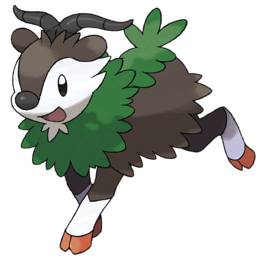
 Official artwork of Skiddo by Ken Sugimori; all hail Nintendo.

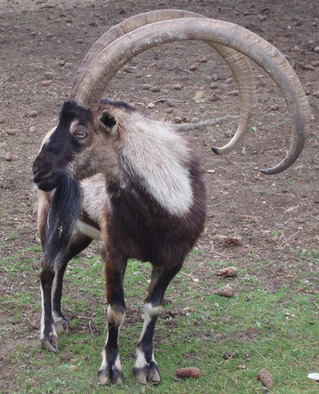
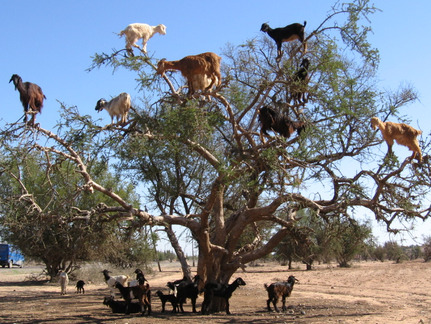
I think goats often get overlooked for being part of the usual farmyard menagerie we all learn to list in primary school, but the truth is they are actually pretty badass animals!  Goats can live in all manner of terrain types, will eat just about anything, often have big, elaborate, dangerous horns, and are in many cases perfectly capable of seriously messing you up with a good kick or headbutt.  They’re also among our earliest companions in this great epoch-spanning clusterf%ck we call ‘civilisation,’ having been domesticated around the beginning of the Neolithic period, possibly earlier than any other animal besides the dog (whose relationship with humanity is a bit more complicated), and at the very least contemporary with sheep, cows and pigs.  Isn’t it odd, then, that we’ve only just gotten around to having a domestic goat Pokémon?

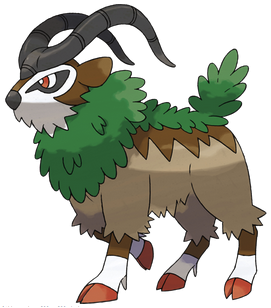
I cannot help but admire the weirdness of choosing a goat to be Kalos’ primary riding animal.  In all the time goats have been domesticated, I don’t think they’ve ever been used primarily as mounts; in fact looking for information about riding goats on Google mostly turns up some very strange references to some kind of esoteric Masonic initiation ritual involving riding a bicycle that looks like a goat around a room while blindfolded (something which I don’t think is relevant to our interpretation here, though you never know…).  The choice is all the more interesting when you consider the lack of emphasis placed on riding by the Pokédex’s descriptions of Ponyta and Rapidash; it seems to be common sense that they would be used as mounts, and the anime testifies to that, but does so in amongst a slew of other riding Pokémon, some more appropriate than others (ranging from Dodrio to… Electrode…).  Certainly the thick, soft moss of Gogoat’s pelt would seem to make him a very appropriate choice for a riding animal, while Ponyta’s mane of fire is perhaps subtly less appealing to the discerning equestrian.  Skiddo and Gogoat, in contrast to Ponyta and Rapidash, really push the riding angle.  We’re told that, because of their naturally calm temperament, they were among the first Pokémon to live with humans (or has long domestication made them tamer?) and that Gogoat possess a kind of empathic sixth sense that allows them to judge a rider’s feelings and intentions, so that they “run as if one being.”  This sense functions through the touch of a rider’s hands on Gogoat’s backward-sweeping horns, which bear a slight resemblance to the handlebars of a bike.  The Kalosians do not hesitate to make use of this unique ability, employing Gogoat for environmentally friendly travel around Lumiose City, and a Skiddo ranch near Coumarine City affords players the unprecedented and unmissable opportunity to jump up ledges, a dream that has entranced our imaginations since the days of Red and Blue.  Gogoat is something of a gimmick Pokémon in that way, but like Furfrou’s it’s a gimmick I don’t really mind because it’s used for world-building.  Skiddo and Gogoat aren’t the only Pokémon ridden by the player in X and Y – Mamoswine also offers a lift through the snow, and of course Mother is a famous Rhyhorn jockey – but they are the mascots of a way of living and working with Pokémon that, as obvious as it might seem, the games haven’t been able to show us before.

 F%ckin' majestic.

The domestication theme brought up in Skiddo’s Pokédex description is further stressed by the fact that Gogoat is only the second Pokémon ever to learn Milk Drink, the move that signifies Miltank’s ability to produce the most nutritious milk in the Pokémon world.  Gogoat milk may not be the universally beloved panacea that Miltank milk is, and the availability of Moomoo Milk in parts of Kalos suggests that Miltank are pretty highly thought of in this region as well, but you don’t just hand out a move that’s been exclusive to a single species for four generations without meaning something by it (especially when Synthesis already fulfils a similar function Gogoat’s movepool, and we’re told that Skiddo can photosynthesise to obviate the need for food).  This Pokémon is an ideal mount and maybe the second-best milk-producing animal in the world (…even the males… which I’m suddenly going to stop thinking about…); it sounds like a godsend to an emergent civilisation, although presumably some of its more desirable qualities have been drawn out and emphasised by millennia of selective breeding.  It’s hard to say; wild ones seem to have the same traits as domestic stock, but they could easily be feral populations.  I privately like to believe that the very first Pokémon ever partnered to a human was a Fire Pokémon, largely because of the symbolic associations between fire and civilisation, but I’m certainly tickled by the notion of giving credit to a Grass-type for being one of the first, and not just because of personal predilections – domesticated animals are nice, but it’s the cultivation of plants that creates sedentary societies and, eventually, cities.  Skiddo happens to be both animal and plant, an unassuming but loyal companion on the road to the cultivated order of modern Kalos.

 Gogoat.

To top it all off, Gogoat is actually pretty powerful as well!  With a colossal HP stat, decent special defence and excellent attack and special attack, this goat is every bit as much a tank as a real one.  What’s more, thanks to Milk Drink, she doesn’t depend on calm weather for healing as most Grass Pokémon, reliant on Synthesis, do.  She can even augment that healing with Horn Leech.  Gogoat’s weak point is her comparatively poor physical defence, though she has a few potential workarounds to that.  Access to rapid healing is certainly helpful.  Her hidden ability, Grass Pelt (more on which later) can also contribute.  For now, though, let’s look at Bulk Up, which is a natural choice for a Pokémon with easy healing and can make her attacks more dangerous as well.  The difficulty with putting together movesets for Gogoat is that her primary attacking type is Grass (in the form of either Horn Leech or Leaf Blade), which is such a bad offensive type that it’s almost impossible to come up with a single complementary move that will give you decent coverage with it.  Gogoat really wants at least three attacking moves, which is a problem for anyone wanting to use both Bulk Up and Milk Drink.  Earthquake, for example, is a great move but combines with Grass pretty poorly, leaving you wide open to Bug-types, Flying-types, other Grass-types, an assortment of Levitating Pokémon, and goodness knows what else.  Rock Slide is pretty solid, and probably the best option if you want to go with two attacks, though its relatively low power is disappointing.  Payback is only properly effective against faster Pokémon, but Gogoat is slow enough that that shouldn’t be a huge problem, and Dark goes okay with Grass.  Brick Break and Wild Charge are just luxuries.  Losing either Bulk Up or Milk Drink will give Gogoat better attacking options at the cost of either power or survivability.  Choice Band or Choice Scarf sets could be interesting, but I suspect Gogoat should really be focusing on her durability, since that’s her biggest selling point.

 ...yeah, I... I got nothing.

Gogoat’s special attack stat is actually almost as good as her physical one, although she doesn’t really have the movepool to be a pure special attacker – Surf is really all she’s got aside from Grass attacks (although the fact that she can swim too is worth mentioning just to further emphasise how awesome she is).  You could try a mixed attacking set, throwing in Hidden Power: Fire if you can snag it, since Fire is one of the few attack types that actually does combine very well with Grass.  If nothing else it’ll keep people on their toes.  Leech Seed is probably worth mentioning for the extra healing it affords, but faster Pokémon have traditionally done Leech Seed better by combining it with Substitute, and Gogoat doesn’t really have any business trying to do that.  Finally, let’s look at those abilities.  Gogoat’s standard ability is Sap Sipper, a perfectly respectable ability for turning incoming Grass attacks into extra attack strength.  Gogoat resists Grass attacks anyway, but immunities mean free switches, and Gogoat can always use more power.  The hidden ability, Grass Pelt, is unique to Skiddo and Gogoat and therefore much more interesting – it triggers off Grassy Terrain, the new Grass-type field effect (there are three such moves – Grassy, Electric and Misty Terrain – which act like and stack with weather effects), and grants Gogoat a boost to her physical defence, which is exactly what she needs.  The standard effect of Grassy Terrain also powers up Grass attacks and provides gradual healing to all Pokémon touching the ground, which is just more great news for Gogoat (careful, though – it also reduces the power of Earthquake, one of Gogoat’s favourite attacks).  Furthermore, the effect is far less likely to be overwritten by another Pokémon than Grass’ traditional preferred field condition, Sunny Day.  The difficulty is that Gogoat can’t use this very exclusive technique herself, even if she had the moveslots to spare; only a handful of Grass Pokémon, plus Florges, can set it up, and unlike weather effects it has no handy item like a Damp Rock that will lengthen its duration (yet), so after taking time to switch, you’ll basically get three full turns of Grassy Terrain for Gogoat, and probably have to have two Grass Pokémon on your team to do it (if not more, in order to ensure you’ll be able to take advantage of the effect).  Gogoat on Grassy Terrain is a heck of a beast, but probably not worth the hassle, ultimately (at least, not in singles).

You know, I was totally underwhelmed by Skiddo and Gogoat when I first came across them playing X, but the more I look at them the more things I find to like about them.  I guess I’m so used to half-assed Grass Pokémon that I started to expect them without even thinking about it!  This game needs more badass Grass-types, and I have every intention of making sure this one enjoys a moment in the sun – maybe in that Rototiller triples team I keep promising myself I’ll put together…

Bunnelby and Diggersby

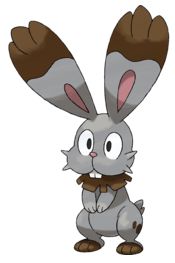
Official art of Bunnelby by Ken Sugimori; Nintendo is the way and the truth and the light, etc.

Tradition is tradition is tradition, and tradition dictates that no Pokémon generation is complete without an evolutionary line of exceptionally mundane Normal-type rodent Pokémon. [EDIT: correction for my phylogenic carelessness; rabbits and hares are not rodents but belong to a closely related group of their own, the lagomorphs – for our purposes, though, the distinction is probably academic] As with Talonflame, Game Freak seem to feel that they are in quite an odd position; if the Pokémon they design is not sufficiently banal and inconsequential, it will not fulfil the implicit requirements of Tradition, but if they go too far… well, is there really anyone out there who wants more perfectly generic rodent Pokémon?  Pokémon are weird creatures with a penchant for doing the impossible, but they are also a representation of the variability of life in the real world, variability that includes the animals we see all over the place and get, frankly, a little bored with – how should that conflict be handled?

History lesson time.

My difficulty with Raticate is that, although larger-than-life as all Pokémon are, otherwise he is a rat and does rat things: gnawing and chewing and infesting and breeding and surviving everywhere it has no right to be.  That’s great, don’t get me wrong, but it’s also just about the only Pokémon I can think of that has no supernatural powers whatsoever – even the ability to gnaw through concrete is something actual rats can do, which I suppose in a way is just testament to what a badass animal the Norwegian rat is.  Similarly, Furret’s most significant power, as far as I can make out, is being long and bendy, while Linoone… can run in a straight line, I guess?  Bibarel represents an early experiment in the same kind of encouraging dual-typing as we see in both Talonflame and Diggersby, but Water is a type that tends to get splashed around (pun most heinously intended) rather liberally, normally on the grounds that a Pokémon lives in or near water, and I’m shadowed by the question of what it actually adds to Bibarel.  Don’t even get me started on those creepy Unovan hell-beasts.  Linoone’s Belly Drum shenanigans notwithstanding, none of these are particularly effective Pokémon either, because if there’s no flavour reason for a Pokémon to have useful abilities, it often won’t get them (although it has to be said that many of them make amazing HM whores in generations three and four, particularly Bibarel with his access to water-related abilities).  Bland designs make bland strategies; the two can’t be completely separated.  With that in mind, let’s go to Bunnelby and Diggersby.

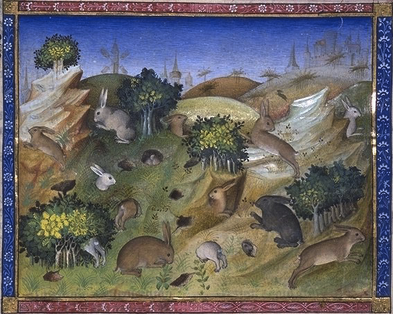
 Some species of rabbit are very social creatures and build complex interconnected systems of burrows, normally with at least two entrances - as mammals go, they are quite impressive architects.

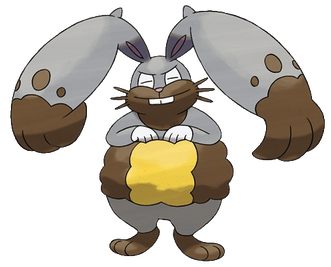
Bunnelby’s thing is his ears.  Rabbits’ long ears are of course among their most distinctive characteristics, but they don’t really do a whole lot other than… well, hear things.  Presumably help to radiate heat in species that live in hot climates.  Pretty standard stuff for ears to do, really.  Not so Bunnelby’s ears.  They are the largest organ in his body and are also his primary manipulative appendages, with ends almost like paws that he uses to scoop earth and dig the warrens that rabbits are famous for; the anime also portrays him as using his ears for most of his attacks.  The tips are brown, as though stained by mud, but a ruff of brown fur around his neck, the same shade, suggests that this is their natural colouring.  Diggersby continues to create the same impression with a speckled pattern at the edge of the brown portion; it’s a nice way of bringing his Ground typing into his physical appearance.  His mighty ears, even more potent than Bunnelby’s, can pummel through bedrock or lift and carry heavy loads.  How they can do this, tethered as they are to his body by the relatively slender and probably hollow parts of his ears responsible for hearing, is something of a mystery; in a real animal it would be difficult to understand how they can even be held up, let alone swung forcefully without simply ripping them off.  Then again, many Pokémon are in the habit of doing six impossible things before breakfast, and anatomical plausibility should probably be low on our list of criteria for evaluating them (although, having said that, this is one of the harder ones to overlook since Diggersby doesn’t have a lot of explicit special powers that could be used to justify it).  Ground Pokémon are known for being especially solid and stable, so maybe their flesh and bones can take a great deal more weight than we are accustomed to putting on our various appendages?  The information about Diggersby presented to us by the Pokédex focuses on their uses in the human world, where like Machoke and Gurdurr they are regularly enlisted as construction workers – like the comedic stereotype of construction workers, they are also lazy and like nothing more than lounging around once their work is done.  I’d actually be more interested in how they work ecologically, though; Bunnelby only dig into soil like ordinary rabbits (albeit rabbits with prehensile ears) but Diggersby can go much deeper and presumably can only navigate larger tunnels as well.   What might their ‘warrens’ start to look like?  The purpose of a burrow is surely defeated if something much larger than a Bunnelby can easily get inside, so the resulting structures could end up looking quite complicated, with the Diggersby-sized entrances protected carefully from smaller predators.

The thing about my relationship with Diggersby is that I can’t help but think he looks a little bit like a mouldy potato.  A damning assessment, one might think.  I’m pretty sure Diggersby isn’t meant to be a particularly elegant or awe-inspiring Pokémon, though; in fact I’m pretty sure he is meant to look fat and lazy, and he does that remarkably well.  He doesn’t exactly look like he could crush bedrock (although he certainly could – see below for the reasons bludgeoning power is at the core of Diggersby’s skill set) and is a little out of place in the traditionally ‘tough’ and ‘badass’ Pokémon crowds; to be honest, I’m not sure who he’s supposed to be appealing to.  The unkempt lazy bastard demographic, I suppose (you know, now that I put it like that, I’m really starting to empathise).  In a way, strangely, the fact that Diggersby is so shamelessly unappealing is actually what I like about him.  Rabbits are cute and cuddly; making a cute and cuddly rabbit like Buneary – or, to an extent, Bunnelby – is just a little bit cliché and predictable.  Making a muscular but pudgy rabbit who looks kind of like he needs a shave is much more out of left field, while still tying into a well-known trait of actual rabbits via the construction worker aesthetic: they’re good at digging.  This Pokémon has undeniable personality – not exactly an attractive personality, but nonetheless a much clearer one than his normal and Normal rodent predecessors have tended to exhibit… with the possible exception of Watchog, who, again, scares me.  Some unorthodox ideas went into this Pokémon, and I think on some level they kind of work.

 Diggersby.

If you want to use Diggersby, you’re going to want one with the hidden ability, no ifs, no buts.  As truly entrancing as Diggersby’s Cheek Pouch bull$#!t is (I mean, who doesn’t want to get bonus health back for eating any kind of berry?  That thing is gold, am I right?), there is simply no passing up the ridiculousness that is Huge Power.  To make clear how big a deal this ability is, I should clear up a common misconception about it – a lot of people seem to think Huge Power doubles the abstract ‘base attack’ score generic to a Pokémon’s species, which would effectively move Diggersby from an abysmal 56 to a fairly convincing 112.  In fact, it doesn’t; what it doubles is the Pokémon’s actual concrete attack stat with training, level, nature and individual variation factored in – for a level 100 Diggersby, this is likely to be somewhere in the low 200’s if he’s been trained for physical attacks (which he should be!) and will double to about 440-460 – equivalent to a base attack score around 160, approaching the likes of Slaking and Rampardos.  This Pokémon is a blunt instrument of epic proportions.  Earthquake is, of course, the key move here, backing up Huge Power with similarly dramatic bludgeoning force.  Either Stone Edge or Wild Charge is practically mandatory to punish Flying-types who seek to take advantage of their Ground immunity.  Normal attacks are, as always, mainly useful for being able to do neutral damage to most things, which isn’t that great an asset on a Pokémon like Diggersby, who has a fairly solid array of offensive types to choose from, but since he is a Normal-type, Return is probably worth checking out.  Hammer Arm and Power-Up Punch add Fighting-type options to round out the spread of dangers Diggersby can present.  Power-Up Punch is probably the smarter option unless you’re looking at a Choice Band set, since Diggersby can’t really afford to lose speed using Hammer Arm, and the power you sacrifice on your Fighting attack (which isn’t going to be your main one anyway) is relatively easy to justify when you can get a boost for your other attacks by using Power-Up Punch.  Always worth consideration, especially in conjunction with Choice items, is U-Turn; with Diggersby’s doubled attack stat, even this relatively weak move will leave quite a sting as he flees the scene.

The bad news for Diggersby is practically everything else about him: his defences are reasonable, but nothing to write home about, and he’s not the fastest thing on two legs.  The former, he mostly just has to deal with; the latter, on the other hand, can be at least partially alleviated by his access to Agility and Quick Attack – you probably should use one or the other, since, again, Diggersby is great at dishing out hits but not so good at taking them.  Being a Normal-type with such a colossal attack stat actually makes Quick Attack reasonably solid – after all, Aqua Jet always worked for Azumarill, who functions on the same basic principles.  As an alternative to Agility, Diggersby also gets Swords Dance (you know, just in case that 460 attack stat starts to bore you); you definitely want Quick Attack available if you pick that option.  He can also learn Flail, and a Focus Sash set with Flail and Agility might be sufficiently amusing and destructive to be worth a shot if you can keep him from taking any passive damage that would break the sash – it helps that Diggersby is immune to Sandstorm damage, but with entry hazards as popular as they are it’s probably more trouble than it’s worth (still… as Epic Flails go, Diggersby’s would be pretty impressive… maybe the AI trainers in the Battle Maison would fall for it…).  There aren’t really any other compelling options for this guy, which is sort of a weakness – he’s fairly predictable.  Almost nothing can absorb his attacks with impunity, but he’s naturally slow, not all that tough, has only a passable defensive type combination, and is very likely to be carrying a Choice item that will restrict his tactical options further.  Reliance on Normal and Ground attacks is also a big welcoming invitation to any of the many Levitating Ghost-types out there.  Diggersby is a sledgehammer – use him as such, but remember to bring your chisels along as well.

The bottom line for me is that you can pretty much explain Raticate, or Furret, or Bibarel, by saying “it’s a rat Pokémon” “it’s a ferret Pokémon” or “it’s a derpy beaver Pokémon.”  Saying of Diggersby “it’s a rabbit Pokémon,” while certainly correct, would clearly be missing the point.  There should be rodent Pokémon in the game, there should be Normal Pokémon in the game, and there should be common Pokémon based on common animals in the game – indeed, some of these categories deserve, if anything, more attention!  Bunnelby and Diggersby are a step in the right direction; they take something generic and everyday, and they twist it.  It doesn’t necessarily make total sense, but it’s interesting, and it immediately suggests a battle role based on overwhelming physical force, giving this Pokémon something cool to do.  Diggersby is far from my favourite Kalos design, but for once that’s mostly because of my own taste in Pokémon and not because the template has led to a half-assed creation.

Fennekin, Braixen and Delphox

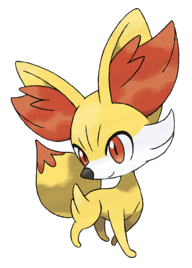
Official art of Fennekin by Ken Sugmori (praise be to Nintendo, etc).Probably one of the most popular commonplaces of fan-made Pokémon design for years and years has been the Pokémon with pyrokinetic abilities – the use of psychic power to manipulate heat and fire – and it looks like we’ve finally got one.  I’ll be honest, though: when I first saw Fennekin I was not optimistic.  A fiery fox Pokémon with a mystical streak?  That… sounds awfully familiar.  When all’s said and done, Vulpix and Ninetales are a lot more straightforward as far as their physical design goes; aside from the split tail thing they are basically foxes, and what’s interesting about them is mostly in their mystical powers and their obsession with vengeance.  Fennekin develops into something a bit more complicated with more of a mixture of influences going on, eventually ending up looking more like Lucario or Zoroark than anything else (Japanese sure do like their magic foxes).  That’s something we should probably talk about first, actually; let’s talk about the anthro-fox thing.
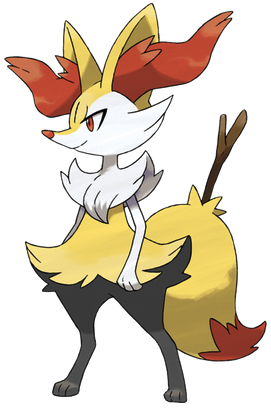
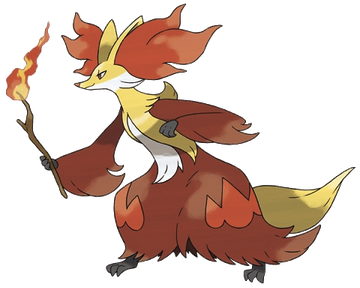
I know there are people who don’t like Lucario or Zoroark, or presumably Delphox either, because the anthropomorphism offends their sensibilities on some level, which is something I don’t quite ‘get,’ personally (now, whether we really need quite so many fox-like Pokémon is another matter entirely, but I spend enough time bitching about that kind of thing already).  The concept of anthropomorphic animals is literally as old as civilisation, even if depicting them physically as human/animal hybrids isn’t quite so universal, and I think everyone recognises the apparent callbacks from Lucario to Anubis, the jackal-headed Egyptian god of burial and funerary rites.  It’s not just some weird fetish thing of the last couple of decades, it’s actually kind of a millennia-old universal mythic archetype that resonates with people of radically different cultural backgrounds all over the planet.  Just to prove my point, I would like to note that, in fact, if you Google the phrase “anthropomorphic fox,” the first result is the Wikipedia page for a mediaeval French trickster-hero named Raynard or Renart (so an anthropomorphic fox actually makes a great deal of sense in a region based on France), whose principal rival is an anthropomorphic wolf named Isengrim.  It’s really quite amazing how much I learn from writing this bull$#!t.  The trope also makes a lot of sense in the context of some of Pokémon’s core themes, like the desire for balance between civilisation and nature – anthropomorphic animals straddle the line and can symbolically act as intermediaries or go-betweens in much the same way as Pokémon trainers can from the other direction.  Foxes in Japanese folklore are regularly depicted as shapeshifters as well, and are often quite fond of assuming human form for a variety of whimsical purposes, so it makes a great deal of sense that we should see fox-like Pokémon in particular filling this role (even if, again, I might wish for more variety in that respect, as elsewhere…).  Basically what I’m saying is that any complaint that anthropomorphic foxes are just inherently a dumb idea will be met with several heavy and fast-moving books.  Moving on.

 Braixen.

My favourite thing about Delphox is probably her name, which evokes ancient Delphi in Greece, a place closely associated with oracular foresight – and, lo and behold, Delphox can see the future by staring into the flames at the tip of her wand, and also learns Future Sight (though of course among Psychic Pokémon this is far from an unusual attack; it’s much more interesting with respect to flavour when it appears on a Pokémon of a different element).  Maybe it’s just me, but I also can’t help but see one of the ancient Greek words for fire, phlox, in there.  In contrast to Ninetales, who is a very faithful rendition of, essentially, a purely Japanese kitsune spirit, Fennekin and her evolutions seem very keen to bring western ideas into the design – which, again, makes sense both in the context of Kalos as a French-inspired region and of Pokémon’s growing interest in portraying itself as an international entity.  Braixen in particular, and Delphox as well to an extent, have a very strong east-meets-west thing going, combining the mystic foxes of Japanese folklore with the witches of European fairytale, whose signature broomstick is clearly visible in the shape of Braixen’s tail.  Delphox, likewise, directs her fire powers through a wand which also acts as a focus for her psychic abilities.  It’s a shame Braixen can’t use her ‘broomstick’ to fly, but then again, neither making her a Flying-type nor sticking Levitate on her would have been all that practical.  Potion-making abilities or herbal lore might have been nice too, but similarly difficult to reconcile with the Fire/Psychic typing, requiring a mixture of Grass- and Poison-type powers.

I cannot get over this line’s majestic ear hair.  I didn’t notice it at first because it just looks like they have big red ears at a glance, but when you actually look at them, it’s clear that those are huge bushy tufts of hair or fur sprouting from inside their ears, apparently meant to mimic the appearance of bursts of flame.  It confuses me so much because, although a fennec fox’s large heat-dissipating ears are one of its most noticeable traits and are referenced in the fact that Fennekin emits blasts of heat from her ears to frighten attackers, their ear hair, while admittedly impressive if you look at it with that in mind, is not really anything special.  In humans ear hair denotes age, so I guess you could say that it’s meant to be a sign of wisdom, but it’s usually in men that we think about prominent ear hair, and Delphox seems to very aiming at a feminine design.  Also, ear hair tends to be grouped with the less desirable traits of old age, like senility.  Maybe in Japan impressive ear hair is considered a good thing…?  Where does one go on the internet for information about the symbolic associations of ear hair in different cultures, anyway?  How has my life even gotten to the point where this is a question I am legitimately interested in knowing the answer to?

…yeah, I’m just going to talk about Delphox’s battle capabilities now.

 Delphox.

Delphox has an unusual type combination, shared only by Victini and Zen Darmanitan (who, of course, doesn’t count): Fire/Psychic, which comes with quite a lot of resistances but also some very nasty weaknesses, particularly Rock, Ground and Dark.  Offensively it’s a viable combination but not a brilliant one; Fire and Psychic share no weaknesses, but don’t cover each other’s weaknesses particularly well either.  Overall, it’s sort of a mixed bag as far as type combinations go, and the rest of Delphox’s traits follow suit.  The odd thing about this Pokémon is that her stats suggest a special sweeper – very good speed and special defence with excellent special attack, and poor physical stats – while her movepool and hidden ability are very much those of a supporter.  Aside from her core attacks – Flamethrower or Fire Blast, Psyshock or Psychic – Delphox really only has Grass Knot and Shadow Ball for coverage.  Grass attacks go great with Fire, but Grass Knot’s dependence on the target’s weight makes it a bit of a tricky move (the types that are weak against Grass – Ground, Rock and Water – do tend to have disproportionately heavy Pokémon, though, so it can work pretty well as a secondary attack).  Ghost attacks are also moving up in the world now that Steel-types no longer resist them, leaving excellent neutral coverage, but that’s not really a huge priority for Delphox, who already has a pretty solid offensive type behind her.  Calm Mind is difficult for a Pokémon whose physical defences are as weak as Delphox’s, although she’s pretty frightening with a special attack boost behind her.  Her support movepool has some great stuff: Light Screen, Will’o’Wisp, Switcheroo, Hypnosis, hell, if you’re good at reading your opponents she can even muck around with Magic Coat (although, if you really want to reflect status effects back at their users, just using a Pokémon with the Magic Bounce ability is a lot easier, albeit predictable).  Switcheroo could make for a neat Choice Specs set.  It’s worked for other Pokémon in the past and Delphox certainly has the stats for it; act as a traditional special attacker with a nasty Choice Specs power boost until you see a support-oriented Pokémon who won’t deal well with being locked into a single attack, then swap items with Switcheroo and hopefully cripple them.  The other moves are just universally useful, although it’s not exactly easy to see why you’d pick a relatively frail Pokémon like Delphox to use them.

Like Chesnaught and Greninja, Delphox enjoys access to a signature move, Mystical Fire.  This attack looks decidedly underwhelming at first glance since it’s simply much less powerful than the traditional ‘gold standard’ moves like Thunderbolt and Earthquake.  What’s interesting about it, though, is that on top of its damage Mystical Fire also reduces its target’s special attack, which is a surprisingly rare effect; only a handful of moves can do that, and many of them will not do so consistently (Moonblast only does so 20% of the time, Captivate only works on Pokémon of the opposite gender, and so on).  Considering that Delphox can also partially neutralise most physical attackers with Will’o’Wisp, the ability to reliably dampen special attackers as well is pretty cool.  In a similar vein, her hidden ability, Magician, is almost unique, shared only by the mischievous Klefki (who really has better things to do, since his other ability is Prankster, the greatest blessing any support Pokémon has ever received).  Magician basically adds the effect of Thief to all of Delphox’s direct attacks for free – if she’s not already holding an item, she’ll steal whatever her target is holding.  A lot of Pokémon rely quite heavily on their items, and being able to nab these reliably without taking up a moveslot is pretty cool, especially if you happen to gank something Delphox can actually use herself.  Combine this with a consumable item like an Air Balloon or a Fire Gem (once Fire Gems actually exist in X and Y) and you could seriously mess with even Pokémon who don’t think Delphox can harm them.  All in all, it’s probably best to think of Delphox as a special attacker whose greatest strength is actually not her special attacks, but her capacity to screw with people.  Make sure to pack at least one nasty little spell, and spring it when your opponent is least expecting it.

Delphox might actually be my favourite Fire starter so far – and only partially because we have finally broken the curse of Fire/Fighting.  She balances power and cunning in a way that’s quite rare in a Fire-type, and just being able to shrug off her attacks doesn’t necessarily mean she can’t leave your head spinning.  Like mythological foxes the world over, she’s clever and possesses mystical insight into the world of spirits and magic, embracing the magical quality of fire like few of her predecessors ever have.  You know, I think I’m good with that.

Espurr and Meowstic

Coming to you from Los Angeles Airport as I wait for my connecting flight to Auckland!  Isn’t that exciting?  Well, no, not really, but this is my life apparently.  Anyway.

Espurr.  Bow before the perfection of Sugimori, etc etc.We’ve just had a dog, so now let’s have some cats.  We’ve had loads of cats before, but these ones at least have the decency to be weird, alien cats with mysterious powers.  I’m torn between wondering why we needed more cats after Persian, Delcatty, Purugly and Liepard, and being relieved that Espurr and Meowstic are not just the pampered pets with few notable powers that we’ve come to expect from cat Pokémon in the past.  These cats certainly have a few tricks up their sleeves… or rather, their ears (as we’ll see)… so let’s take a look and figure out what makes them worth our time.
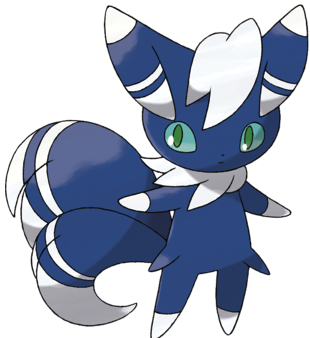
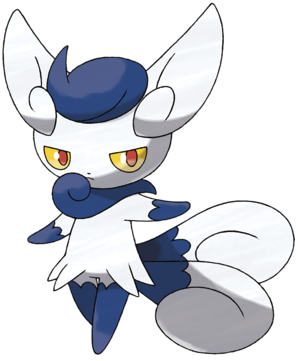
Espurr and Meowstic are known as the ‘Restraint Pokémon’ and the ‘Constraint Pokémon.’  They possess absolutely devastating psychic powers, possibly the greatest of any non-legendary Psychic Pokémon described to date (though it’s hard to tell because any sort of quantification of psychic power is hard to come by in Pokémon) – the Pokédex credits Meowstic with the ability to disintegrate a heavy-duty truck with the sheer force of their telekinetic blasts.  Unfortunately, their control over these powers is somewhat lacking.  I’m not exactly certain how serious this lack of control is, but I think the implication is that actually unbinding that degree of power would mean subjecting everything in a 90-metre radius to the full force of their psionic wrath – this, in many cases, would probably be a bad idea.  The idea of someone’s ‘true power’ being too wild and dangerous to use except in the most dire of circumstances is a fairly well-explored one in fiction about super-powered characters, particularly psychic ones because mental abilities are often associated with discipline and force of will; I think even Pokémon has had one or two designs before that draw on the theme, like Golurk, whose overwhelming power is kept in check by the seal on his chest.  The weird thing about the way Espurr and Meowstic handle that trope is exactly how they keep their powers under control: they emit psychic energy from a pair of eyeball-patterned organs inside their ears, so they can apparently hold it in quite simply by folding up their ears to cover these glands.  So apparently these are the kind of psychic powers that can be blocked by flimsy layers of fur and cartilege.  Well, it makes sense that containment would involve something fairly straightforward – otherwise these Pokémon would surely have levelled Kalos long ago – but it does make the whole thing seem a little bit silly.  On the other hand, Espurr’s art and in-game model do a good job of conveying the idea that she’s basically a walking bomb – her posture is stiff, her eyes wide and staring, as if constantly under stress and potentially about to explode (this also gives her a very different aesthetic feel to previous cat Pokémon).  Meowstic appear, appropriately enough, to have grown a bit more comfortable with the whole thing; their movements remain understated and controlled, though, and they keep their ears firmly folded over, just in case.  Training these Pokémon, unusually, is an exercise in getting them to unleash power they already have – very carefully.

 The cunning male Meowstic.

Aside from the radical and dangerous psychic abilities, Meowstic’s other big thing is somewhat more obvious: pronounced sexual dimorphism.  The females are white with blue trim and yellow eyes, the males blue with white trim and blue-green eyes.  They also adopt very different battle roles – their stats are the same, but they learn very different sets of moves as they level; the males favour support techniques, while the females learn powerful special attacks.  This seems to subvert the kinds of roles traditionally assigned to male/female counterpart characters in video games – when there is an explicit contrast, female characters will regularly have support powers and often healing abilities, while male characters tend to be the heavy damage dealers (the age-old domestic woman/warrior man trope).  Nidoqueen, for instance, has a very similar selection of moves to Nidoking but is encouraged by her more defensive stat bias to favour their support options like Stealth Rock rather than going total-aggression like Nidoking tends to.  I’m not sure what to say about Meowstic’s inversion of the typical arrangement other than that it seems to be there, but it’s nice to see and makes a pleasant contrast to many other male/female Pokémon pairs (Pyroar, for instance, who sticks to the stereotypes despite the fact that the real behaviour of lions gives her a very good reason not too…).  Actually, the fact that Meowstic have a support archetype option at all is pretty odd considering the kind of things we’re told about them and the nature of their powers – maybe the thing to take from this is that the males are better at letting out very small, restricted doses of energy, while the females are capable of going to higher levels of intensity without losing control?

It’s unfortunate that Meowstic’s stats don’t quite reflect what we’re told about their tremendous capacity for destruction – one is rather led to expect phenomenal special attacking power, with relatively poor speed to represent the need for constant restraint.  In fact, although Meowstic are very fast, their special attack leaves quite a lot to be desired, which I suppose is a testament to the level of control these Pokémon can maintain over their powers… a little too much, if anything.  Either that, or reports of their might are greatly exaggerated (which, coming from the Pokédex, would admittedly not be a huge shock).  An excellent special movepool – Psychic or Psyshock, Thunderbolt, Energy Ball, Dark Pulse, Shadow Ball – means that Meowstic can at least bolster an uninspiring special attack score with strong type coverage.  There’s also Calm Mind and Charge Beam to think about, if you want to take a more direct route to powering up; the female also gets Stored Power, which gets stronger with every stat boost the user accrues and can outdamage Psychic after two Calm Minds.  Meowstic probably doesn’t have the defences to play that sort of game, especially without healing, but Stored Power is an unusual enough move to be worth looking into on anything that gets it.  Me First (again, only for the female) is also interesting but tricky to use; it anticipates an incoming attack with more power, but fails if the user is slower than the target, and also relies on being able to guess what kind of attacks are coming at you.  Really, Meowstic’s stat spread seems to belong more to some manner of supporter than a true focused attacker; passable but unremarkable in all areas except speed (and physical attack – don’t even go there), and with a respectable support movepool, this sounds awfully like a utility Pokémon – and, of course, Meowstic can do either, depending on gender.

 The destructive female Meowstic.

The difficulty with Meowstic’s bifurcated movepool is that a lot of the best moves, particularly from the female’s list, are actually available to both of them anyway through a variety of TMs.  What it all boils down to in terms of actually useful moves, as far as I can see, is that female Meowstic get Signal Beam, Me First and Stored Power while male ones get Mean Look and Misty Terrain (indeed, male Meowstic are at this point the only non-Fairy-type Pokémon to have access to this technique, for what it’s worth).  The real distinction between males and females is their hidden abilities, which reinforce the battle roles outlined for them by their level-up moves.  The female’s Competitive ability is a special attacker equivalent to Defiant, giving her a major special attack bonus whenever one of her stats is lowered by an opponent – kind of tricky to use, considering that lowering the enemy’s stats is not a particularly common tactic, but there are enough Pokémon with Intimidate running around that it’s worth a try, and Meowstic might actually do some serious damage if she could grab a Competitive boost.  Infiltrator, one of the regular abilities available to both genders (which allows attacks to bypass Reflect, Light Screen and Substitutes), might end up being just as useful for an offensive Meowstic.  The male’s ability, though, is far shinier (although in flavour terms it’s very difficult to see how it fits the ‘restrained’ Meowstic): the ever-delightful Prankster, which grants speed priority to all support moves.  Being able to go first with his most important techniques means that a male Meowstic doesn’t need to focus so much on his speed and can afford to train his defences more instead, and even common moves like Reflect, Light Screen, Thunder Wave and especially Substitute have a lot to gain from an automatic first strike.  The male also has access to a couple of unusual support moves the female lacks; the most notable ones are Mean Look, which could potentially make an interesting addition to a Calm Mind set if you manage to trap something with lacklustre special attacking capabilities, and Misty Terrain, the new Fairy-type field move (Meowstic is in fact the only non-Fairy-type Pokémon who can use this move so far).  Misty Terrain blocks all major status ailments for Pokémon on the ground, and also dampens the effects of Dragon attacks – handy if for some reason you can’t have an actual Fairy or Steel Pokémon around.

More of a distinction between what these two Pokémon can do would be nice – the separate level-up movepools aren’t much good if most of the moves they contain are either not actually exclusive or kind of silly (Imprison and Miracle Eye, anyone?).  I would have liked to see some more unusual stuff showing up, for both of them, like Gravity, Power Split and Healing Wish for the male, or Zap Cannon, Moonblast and Aura Sphere for the female.  It’s also a shame the female’s hidden ability doesn’t really match up to the male’s Prankster, which is one of the best abilities in the game – I might have gone with something like Technician and stuffed her level-up movepool with really weird special attacks like Hidden Power and Silver Wind.  The concept is pretty neat, though, if a little underdeveloped, and the gender differences add some spice; it certainly puts Delcatty to shame.  Meowstic are the kind of Pokémon that live and die on their movepools, so it’ll be interesting to see what happens to them once we have some sixth-generation move tutors running around…

Furfrou

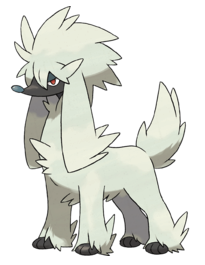
Official art by Ken Sugimori of the trashy, pedestrian 'Natural' Furfrou.  Some people just have no class at all.

I have a long history of bitter feuds with gimmick Pokémon – Pokémon apparently designed to show off some manner of unique mechanic.  This is not because I have problems with the gimmicks themselves; things like Spinda’s seven zillion and one unique spot patterns or Chatot’s ability to interact with the DS’s microphone (an ability now obsolete, incidentally) certainly add something to those Pokémon.  The trouble is that often the designers appear to think that one gimmick is all it takes to produce a finished design and that these unique Pokémon don’t deserve anything else, with two results: 1) their combat abilities generally border on ‘completely unsalvageable’ and 2) the gimmicks are often the only interesting thing about them.  It is therefore with no small amount of trepidation that I go into my analysis of Furfrou, the show poodle Pokémon, whose main distinguishing feature is his broad selection of fur trims, which can be styled in Lumiose City’s fantastically popular Friseur Furfrou salon.  Is that all there is to Furfrou?  Is it worth the attention Kalos gives it?  Can we find anything else to like about him?  Will I make it through this entry without suffering an aneurysm?  Tune in to find out… right now!

For the people of Kalos, and of Lumiose City in particular, owning a stunningly coiffed Furfrou is among the most vital aspects of the elusive and wondrous state of being that is True Stylishness.  Lumiopolitans (for so I have arbitrarily chosen to call them) are ardent connoisseurs of style in all its manifestations – stylish dress, stylish battling, stylish transportation, stylish personal grooming, even stylish diet – and there is no other channel by which their respect and adoration may be more quickly won or lost.  The exquisitely stylish tourist can expect to be admitted to exclusive establishments and offered choice discounts; the unkempt hitchhiker… can not.  One of the qualifications for the life of style is having a well-groomed Furfrou, and one of that life’s benefits is access to ever more exclusive and extravagant cuts and dyes: an ordinary customer will be offered only the frightfully plebeian ‘Star,’ ‘Diamond’ and ‘Heart’ trims, while those who have demonstrated their superior taste can request ‘Pharaoh,’ ‘Kabuki,’ or ‘La Reine;’ the truly elegant, as a badge of their absolute class, can have their Furfrou done in the coveted ‘Matron,’ ‘Dandy’ and ‘Debutante’ styles – these last three appear to have had the fur on their heads somehow pressed into a variety of crisply-outlined hat shapes.  It goes without saying that trainers sporting lesser Furfrou trims should be regarded with haughty disdain, reserving true respect for those whose Furfrou are maintained in the highest of styles.  Take careful note, however: be cautious when dealing with the trainer of a ‘Natural’ Furfrou.  Such a person may be an utterly philistine no-hoper who wouldn’t know stylishness if it walked up and offered them a designer handbag, or they may be may be an ultra-classy fashion ninja making a richly satirical comment on the nature of mainstream Kalosian style that operates five or six degrees of irony beyond anything you can even comprehend, much less mimic (much like Jim the Editor’s appreciation of certain rap artists).  Be sure to observe carefully the shape and tint of the individual’s sunglasses before jumping to any conclusions.

 The more socially acceptable Heart (pink), Diamond (orange) and Star (blue) Furfrou trims.  I suppose these are okay.So, as you might have guessed, what persuades me to tolerate Furfrou’s gimmick – even though all nine styles look utterly ridiculous – is that it makes a lot of sense in the context of Kalos’ broader themes.  It’s silly and pretentious, just like the Kalosians; Furfrou, unlike Spinda and Chatot (to stick with the examples I used earlier), is a part of the underlying atmosphere of the region in which X and Y take place.  They’re the French, turned up to eleven; of course they have an otherwise-useless Pokémon based on a poodle whose complicated fur styles act as an esoteric status symbol for his fashion-conscious trainers.  It would almost be unrealistic to expect them not to.  Furfrou himself is not all that interesting, particularly when you consider that his most unique power is apparently the ability to sit still and be groomed by human hairdressers in a variety of increasingly frivolous ways – I think that needs to be put out there.  Kalos’ cultural obsession with him, though, is at least amusing, and apparently goes back centuries, since Furfrou were traditionally used as the bodyguards of the Kalosian monarchy.  Honestly I have trouble imagining any of the available styles as appropriately imposing royal bodyguard attire (well, except maybe the Pharaoh…) and am compelled to wonder whether Pyroar might have been a more appropriate choice, though perhaps ancient Furfrou trims were a little more imposing.  I think this is probably a reference to Louis XVI, the king who was deposed by the French revolution, who had a particular fondness for poodles and is actually credited with responsibility for the creation of the first miniature breeds.  He is unlikely to have used them as bodyguards, although I confess that the mental image of the King of France staring down the Third Estate from behind the protection of a pair of savagely yipping miniature show poodles does fill me with a curious shade of joy.  I can find little to like about Furfrou as a Pokémon; he’s really rather generic.  He makes a neat cultural fixture though.
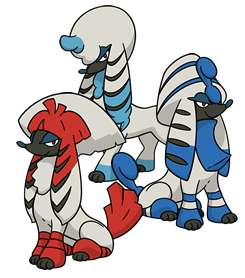
 The elegant and sophisticated La Reine (pale blue), Kabuki (red) and Pharaoh (deep blue) Furfrou styles.  Can you feel the waves of envy washing over you as you behold their beauteous forms?

Despite much anticipation and speculation by players prior to the games’ release, Furfrou’s various trims have no effect whatsoever on his battle qualities: all Furfrou are pretty much the same (in spite of the Pokedex’s groundless assertion that Furfrou become more agile when their fur is kept trimmed).  This is rather a shame, because Furfrou could do with some extra tricks, as we’ll see.  As a Normal-type, he fights an uphill battle for relevance; having only one weakness is nice, but one immunity and no resistances isn’t exactly ideal for a defensive Pokémon, which is what Furfrou tries to be.  This might have made a sensible effect for different trims, actually; give each style one or two associated resistances (or even immunities) to bulk out his somewhat lacklustre resistance profile and allow players to tailor their Furfrou (literally) to the needs of their teams.  Jim wants to give Furfrou a ‘Hair Strike’ (like an Air Strike but with hair… or something) attack that shakes off a cloud of loose hairs, which then turn rigid and fly at the target like Jolteon’s Pin Missiles; different coat styles would give the attack different elemental properties.  Because of Furfrou’s support predilections, I’m more inclined to want something in the fashion of Secret Power, with constant type and damage but variable secondary effects.  Anyway.  As it is, Furfrou’s principle assets are high speed, good special defence, and a lovely ability – Fur Coat – that roughly doubles his normally weak defence (just watch out for Mold Breaker Pokémon like Haxorus, who will shred Furfrou’s luxuriant coat like tissue paper… I mean, Haxorus can also do that by, y’know, being Haxorus, but you get the idea).  Furfrou’s physical attack stat is passable but no more, so ideally you’re going to need to find one or two solid support options to mix in if you want Furfrou to contribute.

Furfrou’s staple attack will probably be the Normal type’s universal go-to, Return, unless you want to try to flinch-spam stuff to death with Headbutt and Thunder Wave.  Sucker Punch is good for getting the drop on really fast Pokémon, and also gives Furfrou something to do against Ghosts, though it can be a trifle inconsistent since it will only work against opponents who are about to use direct attacks.  Electric damage is useful but Wild Charge, with its unwelcome recoil, is not a great attack; probably a better option is U-Turn, eternally valuable more for the free switch it entails than for the actual damage it does.  Furfrou doesn’t get a lot of support options, but considering that his greatest strength is not dying, we should take a look.  He’s one of the few Pokémon with access to Cotton Guard, the most powerful physical defence buff in the game, so if you want to really work with that ability and turn him into a total brick wall, you have the option – it’s not a brilliant option, mind you, since a great physical wall ideally should be able to switch into physical attacks at will, but if you have the opportunity to set up, Furfrou will be damn hard to take down (unless, y’know, something wildly implausible like a critical hit happens).  Packing Toxic to capitalise on that survivability might be your best option for actually hurting things – alternatively, carry Thunder Wave to sting the special attackers who will inevitably switch in to bypass Furfrou’s monstrous physical defence.  The trouble is that Furfrou doesn’t have any rapid healing moves, so any damage he takes tends to stick.  A Rest/Sleep Talk set could be interesting, though status moves tend not to mesh well with those.  If you have someone else to set up Stealth Rock and the like on Furfrou’s behalf, Sleep Talk would allow Furfrou to bypass the negative priority of Roar and use his high speed to shuffle opposing Pokémon through your entry hazards without giving them a chance for reprisal.  It’s a bit of a ridiculous strategy, is complicated by the fact that Furfrou’s not that fast, and isn’t even a terribly unusual thing to be able to do, but I’m running out of ideas here (and, in fairness, few Pokémon as fast as Furfrou can match his toughness).  If you’re feeling particularly brazen you could even try Swagger and trust in Furfrou’s ridiculous hair to protect you from any boosted attacks that get through the confusion effect.  This is not a good idea, but again, I’m short of them at the moment.

 The divinely fantastical Debutante (cream), Dandy (green) and Matron (purple) styles.  Their trainers must be at the very cutting edge of fashion; I am practically orgasmic just being in the presence of such radiant class!  Oh.  Um... hang on... gotta go get some paper towels...

Furfrou’s special movepool is actually a lot more appealing than his physical movepool, but he just doesn’t have the stats to back it up.  A Charge Beam set, including Surf, Dark Pulse and Grass Knot, would allow him to boost up to potentially viable levels and would certainly bring a surprise factor to the battle, but his initial special attacking power is just so lacklustre that it’s hard to see why you’d bother, and it’s also unfortunate that Furfrou has no strong Normal-type special attacks.  Snarl is an odd choice, but will lower the target’s special attack as well as doing Dark damage, and might be a good way to take special attackers by surprise if they switch in on you.  That’s… honestly about it; I think I’ve covered practically every useful thing Furfrou can do.  For a Normal-type, his movepool is almost obscenely small.  Perhaps move tutors in the next sixth-generation game will give him a new set of tricks, but I’m not holding my breath…

So that’s Furfrou – a Pokémon who tells us more about Kalos than he does about himself.  As walking, breathing accessories go, Furfrou isn’t bad, but he suffers from a severe lack of ability to… like… do things, and that comes through when you try to use him in battle.  I have trouble understanding why any self-respecting monarch would pick Furfrou, of all Pokémon, as a bodyguard (other than having a totally unashamed preference for style over function, which… in fairness is probably exactly what the reason was), and that’s a problem here.  What makes this Pokémon suited for that, either in the past or today?  Does their plethora of classy trims have any connection with this ancient role?  Do I even care?  No.  No I do not.  Next!