Spin Attaxx asks:

What’s your stance (from a narrative perspective, anyway) on the idea of Legendary Pokémon not being one of a kind (primarily with regards to the anime)? Do you think it “devalues” the awe they’re ostensibly supposed to have? It’s one thing to suggest relative nobodies like Heatran or Latios aren’t unique, but it’s jarring to have, say, a Lugia no different from any other big bird after all the grandeur and importance it had in Pokémon 2000, and an upcoming episode involves a wild Kyogre – something that was once a feared and uncontrollable force of nature that almost doomed the world just by existing – being the target of just one hunter. And then you have Mewtwo, who destroyed/mindwiped his creators and was motivated by how alone he felt, only for the Genesect movie to introduce a *different* Mewtwo that’s physically identical, made by a bunch of totally different people for no clear reason. It wouldn’t surprise me if in the future, we saw another Arceus that wasn’t the same one from its movie, yet they still state it created the universe somehow, or a Necrozma that influenced every dimension everywhere, and yet ISN’T the one we see in the Alola series.

I have… very mixed feelings about this, and I think it’s a more general problem that Pokémon has with the nature of canonicity.  ‘cause, see, I come from this background where I deal with mythology a lot, where there are multiple versions of every story,  they all flagrantly contradict each other, and no one sees any need to definitively settle the question of “but which one is true?” (because none of them are true but all of them are meaningful).  As a result, my natural inclination is “fµ¢£ the canon; writers should be able to tell whatever stories they want and have those stories be judged on their own internal merits.”  But then I do also see the other side – there’s worldbuilding happening here, and the nature and role of legendary Pokémon is confusing enough without sending these mixed messages.  It’s especially weird with legendary Pokémon that unambiguously should be unique, like Mewtwo, because Mewtwo’s creation was, as far as we know, a unique event.

Continue reading “Spin Attaxx asks:”
Poke the Bear asks:

Since you wrote at such length on Flying types…

god damn it; I knew it was a mistake to indulge that one

Do you think you could rank your favourite ghost-types by design?

I’d love to hear what you think of them…

So… there’s about twenty-seven Ghost-type Pokémon or evolutionary lines of Pokémon, give or take (depending on exactly who you count).  I think it’s reasonable to pick… let’s say a top five?  Does that seem fair?  I’m not sure there are any Ghost Pokémon that I dislike, because Ghost is a type that tends to attract the sort of antiquity/mythology/folklore-based Pokémon that I find really interesting – the ones that I’m the most “meh” on are probably… I guess Rotom and Gourgeist, which are perfectly fine.  That’s… like, honestly that’s a much better hit rate than Grass, which is ostensibly my favourite type.  But anyway, let’s pick some favourites.

Continue reading “Poke the Bear asks:”

Ash’s abandoned Pidgeot asks:

I was reading old reviews and chuckled at your disgust for Ash and Pikachu’s magical friendship bull$h!t but it made me curious as to your feelings on Let’s Go incorporating aspects of it into gameplay (Pokemon curing themselves if status conditions, enduring one shots, i.e.)

I haven’t played Let’s Go (maybe it does something new I’m not aware of), but those things have been in the games since X and Y, haven’t they?  Pokémon with high affection stats from Pokémon Amie (in generation VI) or Pokémon Refresh (in generation VII) can cure themselves during battle, endure attacks, dodge attacks, score extra critical hits, maybe a couple of other things I’m forgetting.  I actually kind of like it, since it gives us a reason to care about our relationships with our Pokémon – something that, up until generation VI, didn’t really have much gameplay effect outside of some fairly niche things like Return/Frustration and a handful of evolutions (of course now we have to figure out what the hell the difference between “friendship” and “affection” is supposed to be, since they sound like pretty much the same thing and are broadly characterised the same way, but are apparently totally independent).  I think one of the big challenges for Pokémon’s game design is the disconnect between the fantasy of partnership, spiritual bonding and, frankly, magical friendship bull$#!t that’s always been core to the series’ ethos, and the… well… somewhat interchangeable, even disposable nature of individual Pokémon as gameplay elements (how many baby Pokémon have you hatched and then immediately released into the wild while IV-breeding?  I have no idea – which in a way is kinda the point – but I’m pretty sure I’m in quadruple-digit territory).  I’m glad that the last few sets of games have seen efforts to try and resolve that tension.

Jim the Editor asks:

I thought you were going to talk about something similar to what you said in the celesteela article…

…oh yeah

right, we were going to use that space question as an excuse to go off on that tangent about Ultra Space that I didn’t do in the Celesteela thing

bollocks

See, this is why I keep him around.

Right, let’s talk about that now. So the thing about Ultra Space that I think is a bit weird is that it’s… not altogether clear what it actually is.

Continue reading “Jim the Editor asks:”

The Philosophical Sheep asks:

Aside from our brief encounter with Deoxys just outside the planet’s atmosphere in ORAS, we’ve never been to outer space in a Pokemon game. This feels strange, especially now that there have been multiple games where we spend long periods of time in alternate dimensions–space feels like a much more natural area for a Pokemon game to explore in comparison. Why do you think Pokemon hasn’t yet really explored outer space in a game?

I suspect there’s often not a good answer to questions of the form “why didn’t Pokémon/Game Freak/Nintendo do this?”  A lot of the time, the truth is that the answer is just “because they did something different instead, and one choice isn’t obviously better than the other.”  There’s not necessarily a logical progression that says you have to have outer space before… whatever Ultra Space is.  But I think if we want a real answer… well, what would be the consequence of going into outer space, rather than using Ultra Space as a proxy to let us explore the universe?  For one thing, we would in principle be able to touch back down anywhere on our home planet; there’s not really any good reason we’d have to return to the region we left from (things like Ultra Wormholes provide at least a handwavey justification for always coming back to the same part of the world you left). But I think a deeper consequence is that we see the solar system.  And Game Freak is a bit weird about whether or not the Pokémon world is supposed to be Earth.  After generation I, there are very few references to real places on Earth, but all the regions we’ve visited in the core series are based on real places, and the world has a single white moon that looks the same size as its sun (only I think Pokémon might believe that the moon is an independent source of light, since moonlight and sunlight are distinct sources of magical power with different effects).  If we leave the planet… well, do we see Mars? Other iconic planets of the real solar system, like Saturn?  Are there Pokémon on Mars?  If we can visit the moon, does that force definitive answers on things that have previously been deliberately left as the subject of rumour and conspiracy theories, like the origins of the Clefairy? Do we have to answer questions about how moonlight and Pokémon with moon-related powers work?  What about the gas giants?  How would they even support Pokémon?  Is Pluto a planet?  Can the games show us Earth from space without having a clearly defined world map?  Will the answers to some of these questions accidentally confirm that the Pokémon world is definitely not Earth?  Granted, Ultra Space and the Distortion World raise lots of questions too, but I think for the most part they’re questions that are relatively easier to ignore.  I don’t think you can let players travel the solar system without being forced to immediately take a stance on a number of things that Game Freak would probably rather leave ambiguous.

Celesteela

Celesteela

Today’s Pokémon is a bamboo alien, a moon rocket, and an ancient Japanese princess.

…no, I promise it makes sense.

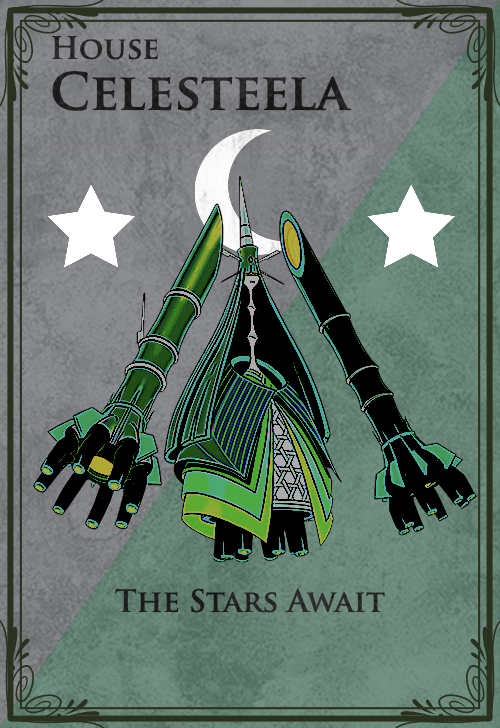
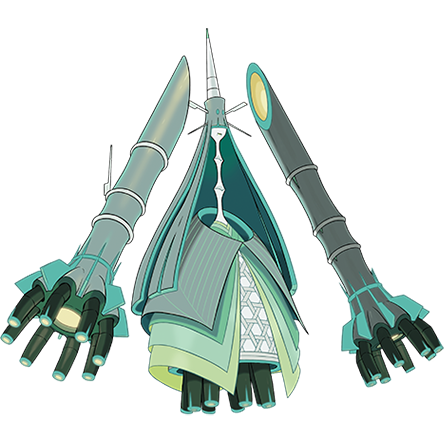
Celesteela’s rocket-booster arms, long flowing hair, steel gown and tiny head make it one of the most bizarre of all the Ultra Beasts, but once you dig through its lore and inspiration… well, you can see where they were coming from.  Let’s take a look at the Launch Pokémon.

Continue reading “Celesteela”

Dosidicus Giygas asks:

So apparently “Galar” is a Scots-Gaelic word that means disease. I wonder if Game Freak knows this?

Hmmm… whoops?

You know, I would love it if they did know this.  You could make it an early hint at a kind of hidden dystopian reality behind Galar’s very standard happy-go-lucky Pokéverse façade, where Poké-Scotland is being oppressed by the Poké-English bastards and they call the united region by a name that means “disease” to express their true feelings about it.  I’m just not sure Game Freak have it in them to be so delightfully subversive, though!  Jim the Editor says “Galar” reminds him of galahs, which are a sort of very noisy pink and grey parrot they have in Australia, and that’s probably not what Galar refers to either, but at least you could conceivably make a Pokémon out of it.