Results of the Crimson Mirelands Archaeological Survey Project (CMASP)

[I was playing Legends: Arceus, but then after I finished exploring the Crimson Mirelands I dropped everything for, like, a week to perform an archaeological survey and write up the results in the style of an actual academic publication.  Was this a good idea?  No, obviously not, but I did it and here it is.]

Although the Galaxy Expedition Team’s understanding of the contemporary ecology, geography and society of the Hisui region has advanced dramatically in the short time since the expedition’s arrival here, the region’s ancient past is still largely an enigma.  This is largely because no branch of the GET is explicitly dedicated to historical and cultural research.  These tend to fall by default within the broad and somewhat nebulous responsibilities of the Survey Corps, as the branch whose members most often interact with Hisui’s indigenous peoples, the Diamond and Pearl Clans.  In the interests of pursuing cultural research more actively, and at the recommendation of Survey Corps recruits assigned to the Crimson Mirelands of southeast Hisui, who had encountered several ancient “ruins” while exploring, the GET commissioned members of the Corps to identify sites of archaeological interest throughout the Mirelands and evaluate sites for possible future excavation by a joint crew drawn from the Survey and Construction Corps.

In a break with usual practice in survey archaeology, project staff were not instructed to catalogue surface finds.  This is owing to the annoying propensity of the Hisui region’s characteristic dimensional anomalies to deposit artefact fragments of varying ages seemingly at random across the landscape.  The resulting archaeological “noise” makes it extremely difficult to extract a meaningful chronology of human settlement from survey data using the standard methods of survey archaeology.  Accordingly, the survey has focused primarily on mapping architectural remains that are visible from the surface, as well as features of the landscape that may be artificial in origin.  This report discusses four major sites identified by the survey – the Gapejaw Bog Complex, Solaceon Ruins, Brava Arena and Shrouded Ruins – as well as the general characteristics of earth and stone archaeological features observed throughout the Crimson Mirelands.

This survey would not have been possible without the cooperation and guidance of numerous members of the indigenous Diamond and Pearl Clans, particularly Diamond Clan Warden Arezu, Pearl Clan Warden Calaba and Diamond Clan chieftain Adaman, all of whom have freely shared their knowledge and expertise with project staff.  Staff also wish to acknowledge the contributions of numerous Pokémon recruited individually by members of the Survey Corps, as well as, and particularly, the regular invaluable aid of the “noble” Pokémon known as Wyrdeer and Ursaluna.
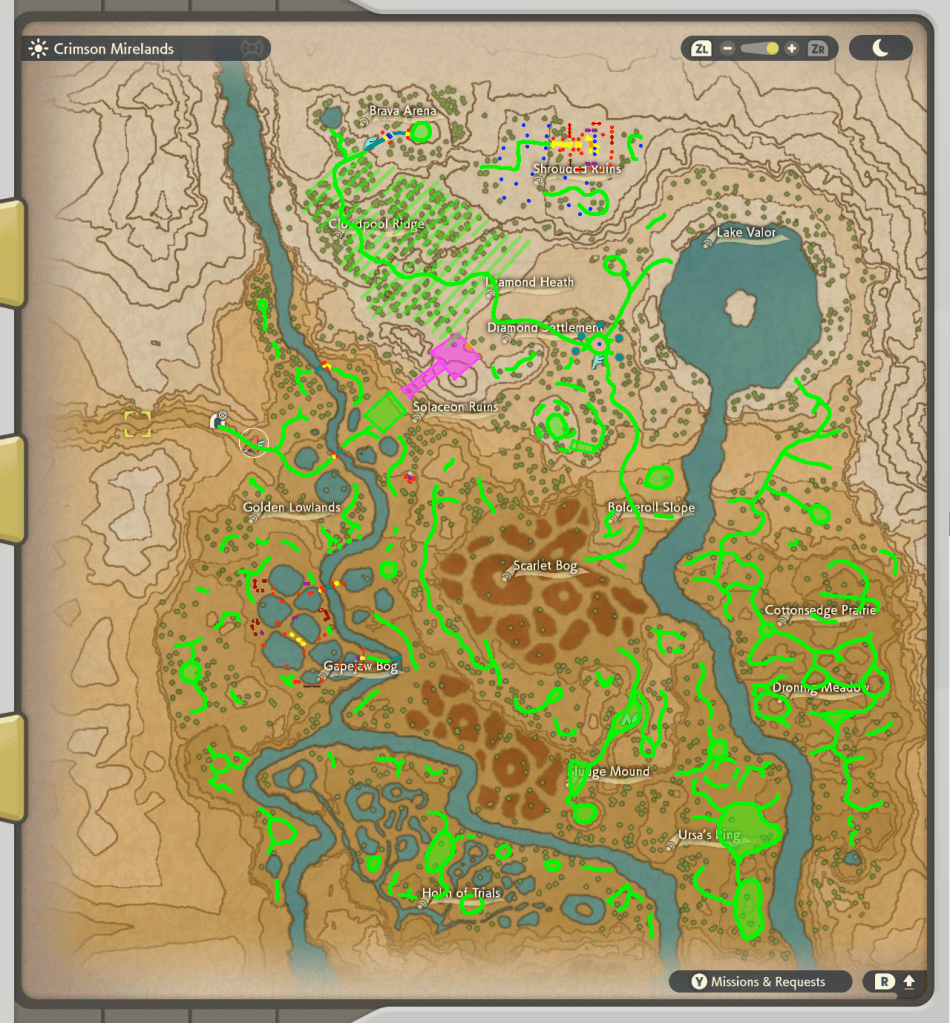
Full survey map. Green: beaten earth paths, ramps or earthworks. Bright red: standing or fallen marble columns. Dark red: masonry walls. Purple: marble arches. Yellow: stone paving. Orange: stone tablets and plaques. Blue: other stone features. Magenta: subterranean structure. Light blue: anomalous column. Teal: contemporary wooden architecture.
Continue reading “Results of the Crimson Mirelands Archaeological Survey Project (CMASP)”

Black 2 Kingslocke: Episode 5

Rules are here, and if you’re interested in hearing about the tribulations of other trainers suffering through this ridiculous challenge run I’ve created, check out the current season of the Exp. Share podcast!

Now, where were we?  Oh, right – on the way to Driftveil City.

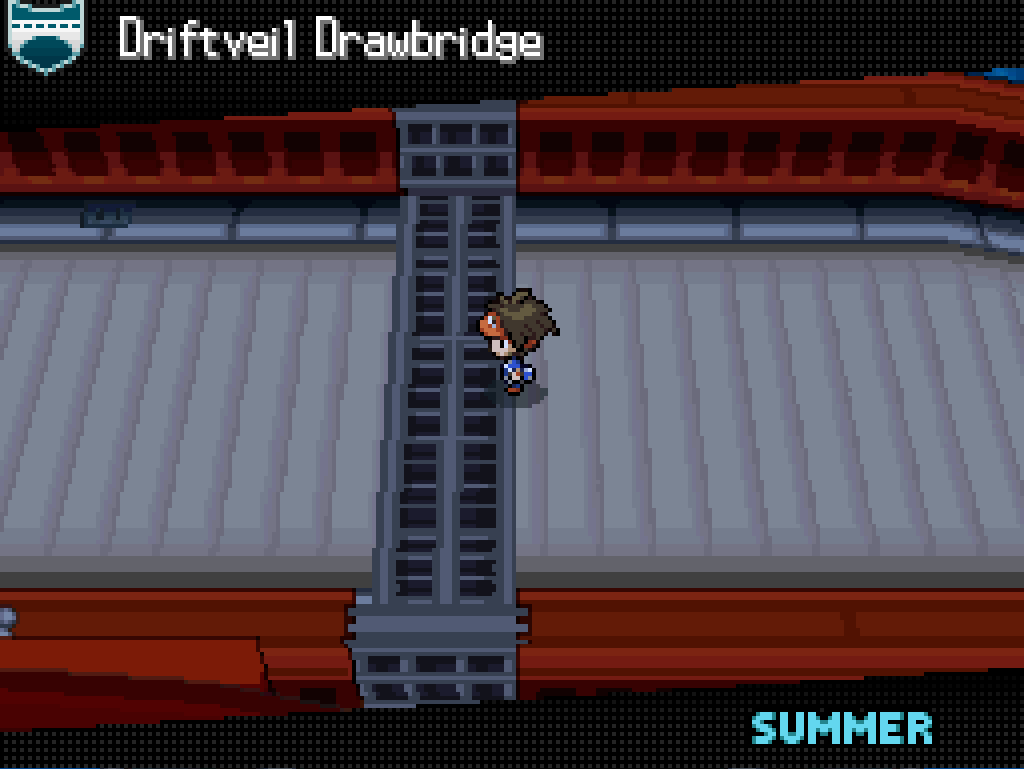
You can actually find wild Pokémon on the Driftveil Drawbridge itself, so…

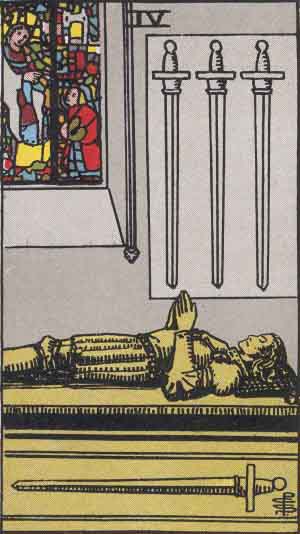
Knight – Challenge: Choose one of your current party Pokémon to fight every trainer battle solo until you have won at least five (not counting rematches) and drawn another card.  If it ever loses, it is disgraced and must be boxed until another card revokes this rule.  If it wins every battle, it becomes your champion and ignores all other rules and restrictions.  Either way, drawing another Knight ends all effects of this card and issues a new challenge.

Continue reading “Black 2 Kingslocke: Episode 5”

Black 2 Kingslocke: Episode 4

Rules are here, and if you’re interested in hearing about the tribulations of other trainers suffering through this ridiculous challenge run I’ve created, check out the current season of the Exp. Share podcast!

Time to get moving again – we’re leaving Castelia City.  Of course, first we have to pass through the suburbs, and that means…

Oof – this again.

Continue reading “Black 2 Kingslocke: Episode 4”

Black 2 Kingslocke: Episode 3

Rules are here, and if you’re interested in hearing about the tribulations of other trainers suffering through this ridiculous challenge run I’ve created, check out the current season of the Exp. Share podcast!

The first segment of the Pokéstar Studios subplot is obligatory for progressing the story, because we need to get Roxie’s dad the ferry captain out of the film industry and back onto his boat so he can take us to Castelia City.  I actually think making movies at Pokéstar Studios is a pretty cool little minigame, but it’s not relevant to the Kingslocke, so I won’t be discussing anything that happens here.  Let’s just skip ahead to…

A confrontation at the docks between gym leader Roxie, dear innocent rival Hugh and a group of Mysterious Masked Thugs.  We just learned about making movies, so obviously we all know that this is a moment we have to draw a card for dramatic effect if nothing else.

Continue reading “Black 2 Kingslocke: Episode 3”

Black 2 Kingslocke: Episode 2

Rules are here, and if you’re interested in hearing about the tribulations of other trainers suffering through this ridiculous challenge run I’ve created, check out the current season of the Exp. Share podcast!

While not technically a new “route” in the game’s own terms, the part of route 20 at the bottom of these stairs is inaccessible until after you’ve defeated Cheren, and it has different and higher-level wild Pokémon.  In the past, I’ve normally treated situations like that as new “areas” for Kingslocke purposes.

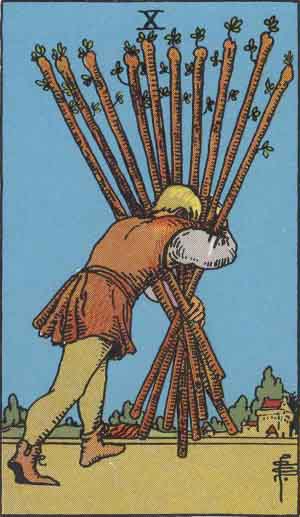
Ten – Rule Card: An observer to the game may revoke any or all (or none) of the rules currently affecting you, AND free any or all (or none) of your petrified PokémonAND either make up a new rule or change an existing one.  If no observers are available, you may revoke one rule.

Now there’s a twist… let’s see what Jim the Editor has in store for me.

Continue reading “Black 2 Kingslocke: Episode 2”

Let’s Talk About Legends: Arceus (part 2 of Some Number)

Last time I checked in, I was about to try to do… something… about the enraged “noble” Pokémon, Kleavor, the Pearl Clan’s “lord of the woods.”  Professor Laventon’s plan is to leverage the player character’s incredible skill at throwing $#!t by mashing some of Kleavor’s favourite foods into throwable clumps, which will in some way achieve something good, probably.

Continue reading “Let’s Talk About Legends: Arceus (part 2 of Some Number)”

Let’s Talk About Legends: Arceus (part 1 of Some Number)

listen, it’s been a mere week since this game came out and I started playing yesterday; that qualifies as punctual for me

For the benefit of anyone who hasn’t decided yet whether they want to buy this game, here are some thoroughly de-spoilered opinions:

It’s very different; it’s quite unlike the traditional Pokémon formula.  Follows Pokémon Go and Let’s Go Pikachu/Eevee in putting the emphasis on catching and releasing a lot of Pokémon to progress; follows Sword and Shield in putting the human characters and their motivations front-and-centre a bit more than previous titles.  A lot more open-world-action-game-y than Sword and Shield ever tried to be.  Cares a great deal about Pokémon’s exploration/discovery themes.  Sometimes Pokémon try to murder you.  Battles with other trainers are not completely absent, but so far a very minor aspect of the game, appropriately enough given its premise and setting; it’s mostly about wild Pokémon.  So far I like it; the characters are great, the new Pokédex system is great, the environments (both natural and human) are very pretty if you care about that.  I mean, I have to reserve full judgement until… well, if my previous record on Pokémon games is anything to go by, until about 10 years have passed and I’ve played it all the way through multiple times, but yeah, so far it seems good.

Also, while playing this game, I was watching an episode of House, M.D. (episode 8.8) in which the title character remarks – out of nowhere and to the utter bafflement of everyone else in the room – that “Arceus created a universe with three states of matter.”  It’s totally in-character; House spends a lot of time playing video games and he enjoys saying cryptic things just to mess with people; I just thought it was a fun coincidence that I’d never seen that particular episode before and happened to watch it during my first day with Legends: Arceus.

Anyway, this concludes my not-a-review; from this point on, HERE BE SPOILERS (but only for what I’ve played so far, which is honestly not that much, so unless you’re observing absolute blackout protocol it’s probably fine).  Let’s talk about the first… chunk… of this game, and some things I thought about it.

Continue reading “Let’s Talk About Legends: Arceus (part 1 of Some Number)”

A Pokémon Trainer is You! XLIII: Rocket to the Moon

[Catch up on the story so far here!]

Last time, on A Pokémon Trainer Is You:

Do you want to give Paras a nickname?

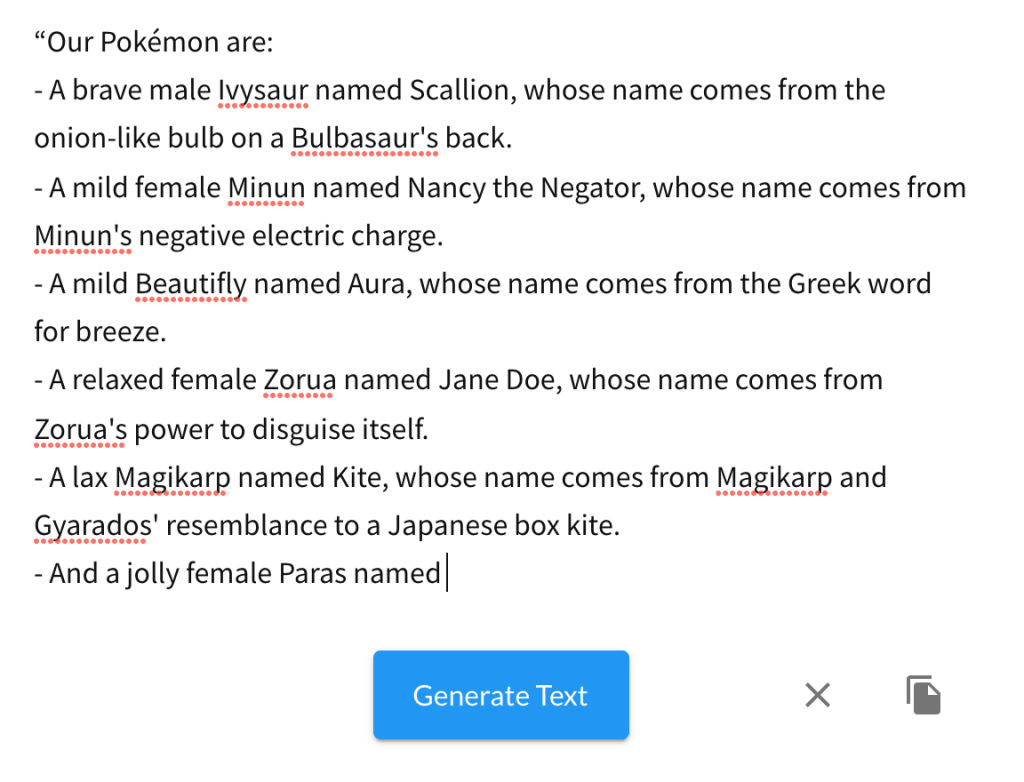
  • Receive an AI-generated name

Okay!  Look at this, kid; you’re gonna love this.  It’s gonna revolutionise the whole business of naming Pokémon.  All you have to do is plug in some context data to get the AI started…

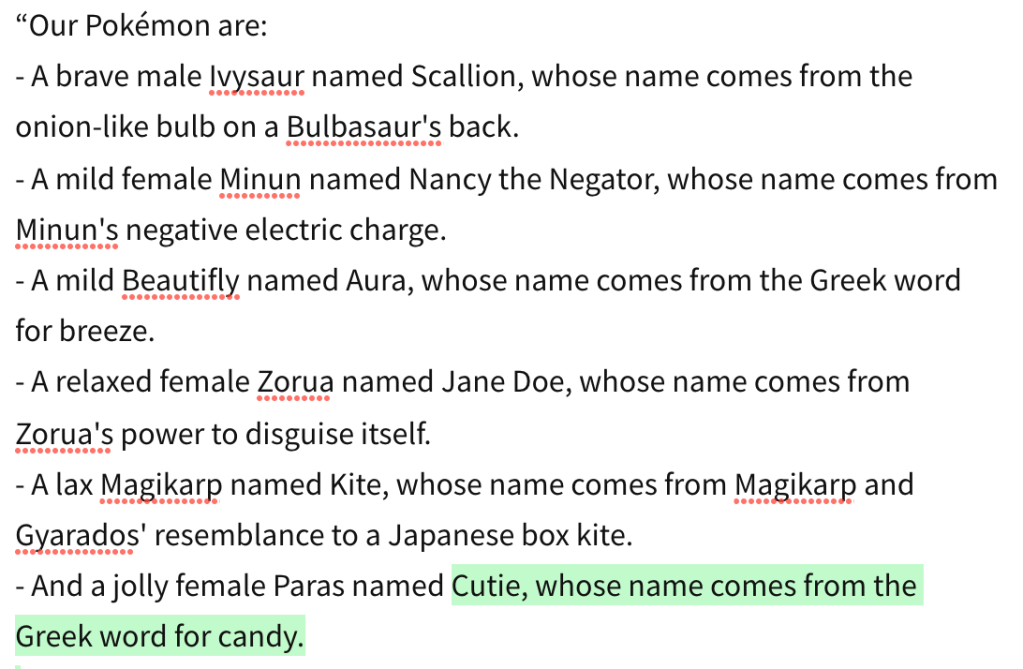
and presto!

Um.  Well, it… uh…

Look, it’s still in the experimental stages, okay?  Needs some… y’know, refining.  Work the kinks out.

I mean, your Paras seems pretty chuffed about it; she’s acting all bashful and her mushrooms are blushing.  Weirdest thing I’ve ever seen.

Ah, whatever; Cutie it is!

Continue reading “A Pokémon Trainer is You! XLIII: Rocket to the Moon”

Kingslocke Rules: Second Revised Edition

[June 3, 2022: These rules are now superseded by the Third Revised Edition. If you’re looking to start a new Kingslocke, you should probably go there; I’ve put a lot of work into making it more consistent and hopefully easier to work with. If you’re on this page because you’re continuing a run in progress, it’s probably safest to keep using this version.]

Tremble, mortals, and despair, for the Second Revised Edition of the Kingslocke Rules has come to this world.

For those wishing to know the history of this most bat$#!t of all Pokémon challenge runs, see the intro to the First Revised Edition, which remains available here.  You can see those rules in action in my recently-completed run of Pearl, which inspired the changes in this edition; you can also read the Ur-Rules here.  If you want to know more about the Second Revised Edition and my thought process behind some of the changes, scroll down to the second half of this post.  If you just want to try playing a Kingslocke, read on…

You will need:

  • A Pokémon game
  • A deck of tarot cards (or a simulation thereof)
  • An observer to the game, willing to occasionally provide custom rules (optional, but recommended)
  • Sanity and a willingness to sacrifice it
Continue reading “Kingslocke Rules: Second Revised Edition”

Revisiting Pokémon Pearl: The Kingslocke

As we all know, Timey Diamond and Spacey Pearl are coming out in a little over a month, with Legends: Arceus following early next year.  I feel like revisiting Sinnoh, so I want to do a playthrough of the original Pearl version – but not just any playthrough.  I think it’s time to revisit the dumbest Pokémon challenge run ever devised: the Kingslocke.

This is a challenge run I created with basically two aims in mind:

  • That it be more forgiving than a Nuzlocke, with mostly temporary penalties and consequences, as well as fewer unwinnable scenarios, but also…
  • That it be absolutely bat-fµ¢£ insane and require the player to rethink their party and strategy constantly.

In pursuit of these goals, Jim the Editor and I developed a challenge ruleset where the player would regularly draw from a normal deck of playing cards, with each card changing the rules.  The effects of the different cards are very loosely based on a popular drinking game that we call “Circle of Death” in New Zealand (because, at least in our version, the cards are arranged in a big circle around a vessel in the middle of the table), but which is more commonly known in America as “Kings” or “King’s Cup,” hence the name “Kingslocke.” You don’t have to drink to play with these rules, but to be honest you probably should.

Continue reading “Revisiting Pokémon Pearl: The Kingslocke”