One lunatic's love-hate relationship with the Pokémon franchise, and his addled musings on its rights, wrongs, ins and outs. Come one, come all, and indulge my delusions of grandeur as I inflict my opinions on anyone within shouting distance.
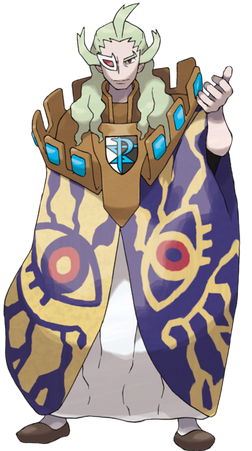
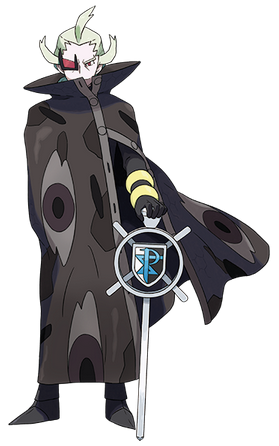
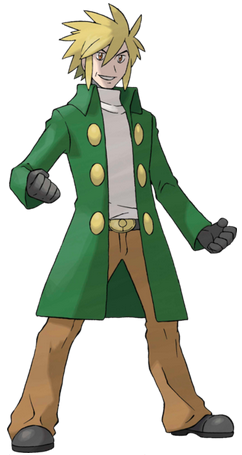
Okay, I realise that we’re pushing it by including Colress in this series; it’s easy to come up with reasons to lump in N with the list of ‘rival’ characters, even though he behaves very differently to the rest of them, but Colress is very clearly not the same thing. However, I don’t care and I want to talk about Colress, because shut up.
Nice reasoned argument there.
Thank you.
So, Colress. Crazy mad scientist character. I was underwhelmed by him, to be honest. I mean, what does he even do?
I actually liked him! I enjoyed the fact that he was working pretty much at right angles to what literally everyone else in the story was trying to do.
Well, you’ve done Champions, and you’re doing rivals, and he’s neither but he sort of acts like both, so it seems like as good an excuse as any.
My thoughts exactly.
Do you know what his full name is?
I do; do you?
Just learned it. “Natural Harmonia Gropius.” N is short for Natural.
Bizarre, isn’t it?
So does that mean that Ghetsis is Ghetsis Gropius?
I don’t think so; from memory I think his full name is Ghetsis Harmonia. There’s a bit at the end of Black and White where he tells N something like “you’re not worthy to share the name ‘Harmonia’ with me.”
So what does Gropius mean? That he’s a horrendous womaniser?
Not a clue. Maybe if we Google it…
Don’t image search it.
Why?
I don’t want to know what comes up when you image search anything with the word ‘grope’ in it.
No, it’s totally fine; apparently there was a famous German architect named Walter Gropius who lived in the early-to-mid 20th century. It’s all just photos of him.
Oh, okay. Yeah, actually, I think I’ve heard of him. Bulbapedia seems to think that’s what the reference is, too. Doesn’t give any suggestions for why, though.
It’s weird, and I have no idea why Gropius specifically, but I guess an ‘architectural’ name… sort of fits with his characterisation, with his mathematical theme. You know, how he’s obsessed with equations and is supposed to be some sort of mathematical genius or savant or something.
He is? Really?
Yeah. He talks about his quest in terms of “solving an equation to change the world;” he sees everything in terms of numbers and formulae. And I think Game Freak have actually said, explicitly – like, in interviews and such – that his first name being ‘N’ or ‘Natural’ is supposed to be a reference to ‘natural numbers.’
Mmm. Now that you mention it, yeah; looking at these quotes I can see that. Like here, when he rides the Ferris wheel with you in Nimbasa City – “I love Ferris wheels. The circular motion… the mechanics… they’re like collections of elegant formulas.”
Yeah, that’s a really good example, actually. He likes to break things down and see them objectively, through numbers and physics – which is an interesting trait, for a character who’s portrayed as being very emotional and idealistic.
And apparently he doesn’t know that the plural of formula is formulae.
Ah, I think I forgive him for that one; it’s a common enough word in English that I think we’re justified in giving it an English plural.
I don’t.
Well, there’s a shock.
It should actually be genitive plural. “Collections of elegant formulas.” Partitive.
So… you want him to say “formularum”? In… English?
Yes.
…of course you do.
Moving on from all that, though. What do you think of N?
I’m very fond of him. I think N is what makes the story of the fifth generation ‘work,’ the fact that we have this sort of ‘anti-villain’ character who is, in a lot of ways, objectively a good person but happens to be on the ‘wrong’ side. He’s the reason I still think Black and White have the best story that Pokémon’s given us so far.
It’s really interesting to watch the developments in his mindset as he travels during the game and realises that what he’s grown up believing just isn’t what the world is really like. It’s a shame about the truth/ideals thing, though, how the words are used interchangeably and just mean ‘really, really wanting stuff,’ because it would have been really cool to have him develop differently and interact with you differently depending on which of the dragons you were each working with.
Well, that would have been quite a bit more work, in fairness; you almost have to write two different storylines. It might have been quite difficult to write the version where he’s partnered with Reshiram and you’re partnered with Zekrom, where he’s standing for ‘truth’ against your ‘ideals,’ just because the default story is almost the opposite of that.
Mmm, not necessarily. I don’t think it would be that difficult; you’d just focus more on his growing realisation that his ‘truth’ is built on Ghetsis’ lies, and coming to accept that he needs to find a new way of seeing the world. N and Reshiram are both searching for truth, and the irony of it is that the truth is deliberately being hidden from them by their own allies. The games as they are don’t do much with that.
Fair enough. In some ways I think not giving more differentiation to ‘truth’ and ‘ideals’ is a big missed opportunity for N’s characterisation, actually, because if they really are distinct virtues instead of being basically the same, the way the games make them, N has traits that work well with both. ‘Ideals’ is obvious because N’s idealism, his determination to create a radically different new world and change all of civilisation at its core, is what drives the plot of the whole game, but I think he also works really well as an exemplar of ‘truth,’ because of his obsession with mathematics and physics, with seeing the world in an objective way and ‘solving’ societal problems like mathematical equations.
How do you feel about N’s ending? Because I think both sets of games, Black and White and the sequels, leave him hanging just a little – not in any huge or glaring way, but enough to be nagging. Like, he demolishes the Pokémon League, sets up this enormous castle around it, and then he flies off into the sunset without ever doing any of what he set out to do. He’s lost his belief structure, realised that it’s all built on lies, and… now what? It makes sense for him to fly off in search of some new truth, but what about his ideals? Where are they now?
I don’t know; I think where he is at the end makes sense. Even though he’s changed a lot, he hasn’t given up on the ideals he held, not really; at the end of Black and White 2 he still wants to change the world and change society – he talks about “freeing Pokémon and humans from the oppression of Pokéballs,” he just doesn’t want to separate them like Ghetsis wanted him to.
So he wants to make a world where people and Pokémon are friends without Pokéballs?
Like things were before Pokéballs were invented.
Eh…
No?
Well, maybe, but N is a biased source on that – it seems like this is still kind of an extension of everything he was brainwashed into believing. You need your crazy brainwashed…
Messiah.
Yes. Green-haired messiah. You need him to think all that, to believe that the world only is the way it is because of some horrible mistake. Everything N knows and thinks is based on a mythology created by Team Plasma. His beliefs about people and Pokémon and Pokéballs are the result of a warped image of human history and society that was fed to him by Ghetsis. I mean, I’m not saying there’s not some truth to it, and of course you can make friends with Pokémon without Pokéballs, but he’s still idolising a period of history that he wasn’t alive to see, one that we don’t know a whole lot about either, and making it his model for the future. It seems to me like what he says about that is just him clinging to the one shred of his mythology that still makes sense in the aftermath of everything that’s happened. After all that time, he still can’t shake that indoctrination.
Hmm. I’ll have to think about that. I think we’re ‘supposed’ to take him quite seriously when he talks about this stuff, because the whole point of Black and White is that there are some very real merits to the philosophy that the ‘bad guys’ are pushing, and N embodies those merits. Still, you’re right that N’s been wrong before, and holds some seriously warped views for a long time before you and your Pokémon can convince him otherwise. In any case, we’re almost certainly never going to see the world that N had in mind; it would just change the series too much, force Game Freak to throw away a lot of their formulaic stuff. So unless he does wind up all but abandoning his beliefs in favour of the status quo, he probably never gets a really satisfying resolution.
Unless he goes to Ranger land.
Yes, I suppose that’s true. Places like Fiore prove that it’s possible for humans and Pokémon to live together in the way that N envisions.
I really like Black and White, and N is a critical part of that, but I feel like riding off into the sunset at the end sold him short. Obviously they needed him to come back for the sequel, and they needed to leave him some loose ends to pick up for that, but I wonder whether that balance was achieved.Bianca’s story is very nicely resolved, Hugh’s is very nicely resolved, Cheren’s not so much, he just kind of peters out – I have fewer problems with N than I did with Cheren, but I do have some.
Hmm. Fair enough, I suppose. His ability to talk to Pokémon – what do you make of that?
Maybe he’s half Pokémon? Test tube baby? Genetic engineering?
Well, I… have to admit I wouldn’t really put it past Ghetsis… he was responsible for Genesect, after all. Or maybe N was conceived by the midi-chlorians. Do we think Ghetsis is his biological father? They both have green hair.
Well, yeah, but they’re Japanese; that means nothing.
Point taken.
Oh, this is interesting; I didn’t know this.
What?
Apparently N’s text speed is faster than all the other characters’, to show that he speaks quickly. That’s kind of cool.
Yeah; I didn’t notice that when I played the first time because if you have the text set to ‘fast’ anyway N’s speech isn’t significantly faster, but if you know to look for it and go back, you can tell. Anything else in there you want to talk about?
Hmm. Apparently Junichi Masuda has said he’s “rumoured to have been born from Pokémon.”
Hmm. Is that from an interview, or…? Ah, here we go. Hmm. There’s a whole list of little bits of trivia about N from the developers on Masuda’s blog.
Well, that makes our job easier.
Eh… I don’t know about that; it’s sort of disconnected. I think this is basically notes from the development of the games, when they were bouncing ideas off each other about how to portray N. And I think they may have put it into English through Google Translate, or something similar. Still interesting, though, even if most of it is stuff you pick up from the games anyway… Huh. Apparently N “thinks himself perfection.” I guess that explains the messiah complex.
Sometimes I think I’m perfection.
Yeah, I know that.
Damn right you know I’m perfection.
:-p
Members of Team Plasma do call N “child of the Pokémon” sometimes, come to think of it. And the writers definitely seem to have intended him to be somehow more than human, to have had supernatural powers of some kind – well, maybe ‘supernatural’ is the wrong word, but some sort of psychic abilities, certainly. Some of the stuff in Masuda’s notes seems to say that he can see the future, and his ability to talk to Pokémon probably works based on a heightened sense of empathy.
Mmm. Some kind of psychic power is probably about right. What does he do in the anime?
Not sure. I think the anime mostly follows the games fairly closely by that point, so I would imagine his role isn’t hugely different, but I haven’t seen any of the relevant episodes.
Let’s look it up… Hmm. Seems like he’s… sort of a combination of how he is in Black and White and how he is in the sequels. He has the Light Stone and Ghetsis imprisons him and steals it; then Ghetsis controls Reshiram instead of N. And N helps to arrest Ghetsis and Colress and the members of Team Plasma.
So… wait, he’s not part of Team Plasma?
Apparently not. He used to be, but he’s already left them by the time he meets Ash, along with… Hmm. Who are Anthea and Concordia?
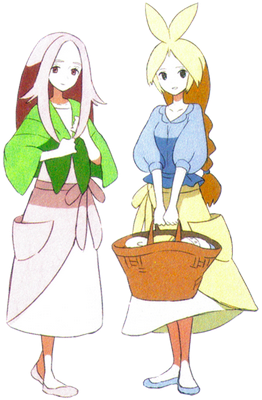
They’re the two women with the gold and pink hair who hang out in N’s castle, and later join Rood’s Team Plasma separatists; they’re like… N’s childhood nurses, or something. They’re mostly in the game to provide exposition, I think; they tell you a lot of the stuff we know about N’s past, since he doesn’t really talk about that much himself.
Oh, right. Them. Where are some quotes…? Ah, here. “N was an orphan. I heard that right after he was born, he upset people with behaviour that suggested he could talk to Pokémon. When he was living in the woods with Darmanitan and Zorua, Ghetsis took him in. We are also orphans Ghetsis took in. Our task was to take care of N.” Yeah, they’re just exposition-whores.
Okay, so he’s definitely not Ghetsis’ biological son, then.
Well, probably not. Who knows what kind of f#$%ed up way he might have come up with to raise his fake messiah? Maybe dumping babies in the middle of the woods to grow up with Pokémon was all part of the bizarre, twisted plan?
Mmm. Perhaps. Anyway… these two are weird – it doesn’t come up in the English, but in the Japanese version, and a lot of other languages too like French and Spanish, it seems like the game is very insistent about referring to them as ‘goddesses’ or ‘muses.’ The game really seems to want them to be important, and they’re in the intro cinematic to Black and White as well, which makes it seem like they’re going to be important…
But then they never do anything, and by the time you actually meet them you’ve forgotten that you ever saw them in the intro in the first place.
Yeah. I kinda feel like maybe Anthea and Concordia, in an earlier draft of the story, might have had a more important role that subsequently got written out, because the game doesn’t normally bother with unique models or names for incidental characters unless they’re going to matter.
Meh. They don’t do anything in the games we have; not much point speculating about what they might have done. Are we done?
I think just about.
I have one more question – why does N help you? In Black and White, why does he encourage you to grow and get stronger?
Well, he needs you. N’s basic understanding of the whole plan in Black and White revolves around the notion of re-enacting critical events from Unova’s mythology. He thinks that taking on the role of one of the legendary heroes will give him some kind of authority, make people listen to him – but there are two heroes in the legend, which dictates that he needs a rival to test himself against and represent the opposite worldview, otherwise he’s just some yahoo with a legendary Pokémon and there’s no point. Ghetsis thinks it’s a waste of time, but doesn’t have any choice but to indulge him. I suppose that lends some perspective to what you were saying earlier about N idolising the past.
Yeah… everything he does is about recreating the mythological past, like steps in a ritual to purify the world. Team Plasma and Ghetsis gave him a way to ‘fix’ everything, and he clings to it beyond all reason because of his obsession with mathematical patterns and natural cycles. Historical and social changes don’t work like that; magic doesn’t fix everything. Or even necessarily anything.
Unless maybe it does? This is the Pokémon universe we’re talking about here, remember.
…um… Germanic, maybe? It doesn’t sound like a Latin or Greek root. Google it?
Doing it now. Hmm; Old French, apparently.
Oh, right; that makes sense.
Ultimately from a Germanic root, though – ‘hug,’ meaning ‘mind’ or ‘spirit.’ And it gets into Mediaeval Latin from there. Declines as Hugo, Hugonis.
That’s disgusting.
What, ‘mind’ or ‘spirit’?
No, Mediaeval Latin.
Oh, that goes without saying. It’s an appropriate name at any rate; Hugh certainly isn’t lacking in spirit.
No indeed, burdened with something of an overabundance of it, I would think. What do you think of him?
I like that his storyline provides a link to the old games, as someone who was personally affected by what happened back then. He makes the whole thing seem more real, shows us the wider consequences of all that plot. And he sets up conflict with the ex-Team Plasma guys, Rood’s bunch, which would otherwise fall flat because the player just isn’t going to have the same emotional reaction to them and is going to listen to them with a bit of a more neutral perspective.
Mmm. I think it’s important to have someone like Hugh in the story, someone uncompromising, because one of the important themes of those games is the idea that recognising that the ideas of people who are opposed to you can be important and valuable – like, the problem with Team Plasma, the way the games present it-
Besides secretly wanting to take over the world.
–well, yes, besides that, their problem isn’t that they want to change the way people relate to Pokémon; their problem is that they’re uncompromising. They’re zealots. You see that most clearly in Castelia City, with Burgh, because he actually says explicitly that he wants to incorporate some of their ideas into his training philosophy; he thinks they have a point, and they absolutely do. They refuse to make that kind of concession to our side, though. And I think it’s important to have Hugh in the game as someone on the ‘good’ side who is equally uncompromising, just to stress that you can have that kind of problem from both sides of a conflict, because there isn’t really a ‘good’ character like that in the original games.
What about Cheren? He’s pretty black-and-white, if you’ll excuse the pun.
Oh, I think the pun is entirely appropriate; I think that’s very much a part of what the developers meant by choosing those titles. But go on.
Well, Cheren is fairly uncompromising in his attitude to Team Plasma; there’s never any question in his mind that they could be anything other than thugs. He’s still pretty hardline about them by the time Black and White 2 come around.
True, but Cheren in the original games sort of has surprisingly little involvement with the Team Plasma storyline. Looking back through it, it’s actually really weird how little he does. He helps you in the really short fight at Wellspring Cave, then again when you corner Zinzolin and a bunch of grunts in Driftveil City, where he actually seems totally dismissive of them – he talks about fighting them for Clay so that he can get stronger, like they’re just target practice for him. Then he… goes to the Dragonspiral Tower with Brycen, but they don’t show up until the party’s over, and he’s there when you fight Team Plasma in the Relic Castle but doesn’t say or do anything important; likewise at the final showdown with N at the palace of the Elite Four. I don’t think he ever says a single word to either N or Ghetsis again after you first meet them in Accumula Town.
Whereas Hugh gets involved pretty much every time you meet or fight Team Plasma in Black and White 2 and has lots of dialogue with them; I see your point. He has personal motivation that Cheren doesn’t, and his emotions ride a lot higher. Cheren’s much more distanced and logical about the whole thing. Still, Hugh and Cheren do have a lot in common, aside from Hugh being so much more hot-tempered. They sort of bond a little, don’t they?
Do they? As I recall, Hugh is rather prickly towards him. You remember that scene just after winning your first badge, outside the Gym, where Hugh is waiting to challenge Cheren? Cheren says he needs to go back inside and get ready, but Hugh get mad and calls him a coward or something because he wanted to have his challenge right then and there, in the street!
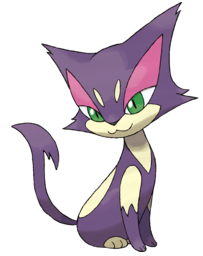
Oh, Hugh’s attitude improves later, after his Gym battle. “Cheren sure knows a lot, and he fought those Team Plasma thugs too;” that’s from the part where Cheren teaches you how dark grass works – Hugh comes to admire his skill and conviction very quickly. Which sort of makes sense, because Hugh’s a lot like Cheren was in the first games, in the kind of singleminded drive he has. Cheren doesn’t have any direction, though; he just wants to be stronger for the sake of strength itself, whereas Hugh has a very clearly defined goal; he wants to get his sister’s Purrloin back, or, failing that, avenge its loss. Actually, when you think of it that way, he sort of combines Cheren and Bianca’s most important personality traits into one character – he’s like Bianca in that he’s enthusiastic and energetic, and wants more out of strength than just being strong, and like Cheren in that he’s determined and focused.
Hmm. I hadn’t thought of it like that; that’s a neat way of looking at it, structurally. So, moving on… if you remember when we played Black and White 2 together http://pokemaniacal.tumblr.com/tagged/b2w2, we had this sort of running joke where we thought Hugh was a bit of a psychopath? A couple of people were actually a little upset by it, I think.
Ah, it was all in the spirit of fun. How much of what you write is ever 100% serious?
I kinda did mean it, though! Well, some of it, anyway. The stuff his own damn parents say about him in Aspertia City-
Wait, he has parents?
Yes! Hang on, I quoted them in the entry; let me just find it… here http://pokemaniacal.tumblr.com/post/39827151998/white-2-playthrough-journal-episode-1-where-the. Yeah, when you talk to his mother she says that she hopes you’ll keep Hugh on the right path and stop him from getting into trouble because he’s – and here I quote – “the sort of person who lets his rage build up inside him.” And his father starts to say “his goal is…” and then just trails off ominously. I mean, really, how the hell was I supposed to take that?
…well, after lines like that I think everything else you said was entirely justified. Doesn’t he kind of blow up at someone early on for being careless with their Pokémon?
Yeah, outside Floccesy Town when the farmer’s Herdier wanders off and he screams at them because it could be lost or dead or whatever. And there’s that whole obsession he has with his own rage…
Don’t forget his ‘shoot first, ask questions later’ attitude towards all Team Plasma, including Rood’s guys. Kid does have his ‘ticking time bomb’ moments from time to time.
In fairness, Hugh’s attitude does make a certain amount of sense eventually, once you get his backstory. Even his outburst against the farmer in Floccesy Town – I mean, I still don’t think that was reasonable, but coming from someone with his particular background, it’s understandable that he might feel that way. And, like, to be completely fair to him, there actually was a Team Plasma operative skulking around when that Herdier got lost! I mean… kind of a low percentage contingency there, but still…
And he gets better, too.
Mmm. That’s basically his whole character development right there – learning to take a more nuanced perspective on everything that’s happening in Unova while still retaining his core ideals. And that kind of culminates when he does his Inspiring Speech at the… y’know, the meteor crater, where Kyurem lives…
The Giant Chasm.
That’s the one. You know, when Rood shows up with a bunch of Team Plasma separatists to… I guess, like… stage a peaceful protest or something similarly useless, and Hugh encourages them to fight for their beliefs, recognising now that they’re fundamentally on the same side as him despite their past actions.
I remember. I think what I got from that mostly sounded like “you may be a vegetarian, but the time to eat meat is NOW!” They’re pacifists in the first place because their Pokémon are ones that they stole as part of Team Plasma and they think they have a duty to help and protect them now. The ideals that Hugh asks them to sacrifice are… literally what separates them from the people they’d be fighting.
Mmm.
And what good does it do, anyway? You and Hugh are both there, and who are you fighting anyway? A bunch of grunts? And Rood just has a bunch of his own grunts. Are they really going to be all that helpful?
Well, I think the idea is more that there are a lot of Ghetsis’ minions around, and it would take you a while to deal with all of them. Rood’s forces can help you to push through more quickly. And I would imagine that Rood himself is probably comparable in skill to Zinzolin, so he’s not exactly a pushover. Besides, however much we pick at the rhetoric, it does work.
Well, yeah, but Team Plasma grunts aren’t exactly hard to influence. He asks them “why do you have Pokémon by your sides?” and if actually you think about that for a minute, the answer is… well… because they stole the lot of them two years ago, haven’t been able to return them to their original trainers for one reason or another, and feel responsible for taking care of them. The idea is there, the spirit is there, the eloquence…
Is wanting.
It doesn’t really help that Hugh doesn’t quite seem to know what the word ‘ideals’ actually means.
Well, to be perfectly honest, I don’t think anyone in the entire fifth generation knows what the word ‘ideals’ means, not even Zekrom. Or ‘truth’ for that matter.
Oh, they definitely don’t know what ‘truth’ means. But back to Hugh. Is his head a durian?
A… durian?
Yeah, the fruit. His hair looks like a big blue durian.
I always placed him as more of a hedgehog, actually. Sorta reminds me of Sonic, now that I think of it. So, uh… does this mean we’re running out of things to say?
Well, I think that whether Hugh’s head is a durian is a very important question, but I suppose we could wrap it up.
I guess if I had to sum up Hugh in one phrase, really at any point in the story, it would be “the ends justify the means” – which, again, is interesting because it’s the same kind of attitude that typifies Team Plasma, and a lot of other Pokémon villains as well, actually, particularly Maxie and Archie.
He puts his own ideals ahead of those of others.
Exactly.
At the same time though, he’s one of the most ‘complete’ people at the end of the story. The games leave him in a place that makes sense; he’s learned a lot and he’s more of a whole and happy person. He even gets Purrloin back in the end – well, Liepard now, but still – and in the process he’s managed to find it in himself to forgive the ex-Team Plasma guys in Rood’s faction.
Yeah. I still think he’s a bit nuts, but I really like the perspective he adds to the game and how he shows us someone who was personally affected by Team Plasma’s past actions – and gives context to Rood and the separatists’ desire to atone for their crimes. I think people tend to regard Black and White as better games than the sequels, but the sequels do a lot of things right too, and Hugh is one of them, more or less!
Oh, come on; you don’t really think that. You say that about everyone and everything.I actually think Bianca is interesting and important to the themes of the game!
Ah. That sounds like you want to defend something. Go on, then.
Well, what Bianca is doing in those games is important for showing what humans get out of partnership with Pokémon, and that is important because that whole idea of partnership is on trial in Black and White, or supposed to be, anyway. Bianca doesn’t care about battling and getting stronger. Becoming a Pokémon trainer allows her to travel, experience the world, and ultimately figure out what the hell she wants to do with her life – and that turns out to be research, where she wants to study how people and Pokémon grow stronger together, letting her perspective as a trainer inform her research questions. She is a shining example of why they give young people the opportunity to do this crazy $#!t in the first place, and for reasons that have nothing to do with battling.
She clearly is enthusiastic about battling, though – when she talks to you, there are always comments about how hard she and her Pokémon are trying, how she’s sure they’re going to beat you this time. And she keeps getting stronger through to the end of the game; she’s certainly no Lucas or Dawn, I’ll give her that much.
Yes, all right, to say she doesn’t care about it is too much, I suppose. In contrast to the players themselves, though, or particularly in contrast to Cheren, it isn’t part of her motivation in the same way.
I think N says something to her about battling and getting stronger, doesn’t he? About how she can never be as strong as you?
Um… I’m not sure N ever actually speaks directly to Bianca at all, but… yeah, here it is; in the Chargestone Cave scene he talks about her. “Cheren is pursuing the ideal of strength. Poor Bianca has faced the sad truth that not everyone can become stronger. And you are not swayed either way – more of a neutral presence.”
Which isn’t really true; she does get quite powerful, and in Black and White 2 she competes in those tournament things in Driftveil City. Is Bianca always slightly weaker than you and Cheren?
It’s sort of difficult to tell because you almost never fight both of them at the same time, but yeah, in general she does seem to be a little bit behind the two of you. I think she ultimately winds up about two levels below Cheren at the end of the game? Something like that. Still a full team of six high-level Pokémon, though – with some pretty cool stuff in there, like Chandelure and Mienshao. I think it’s as a character that she really gets stronger, though. Standing up to her dad when he tries to put a stop to her journey, becoming more decisive about who she is and what she wants to do.
Yeah, and that’s where I start thinking about what I said when we did Silver – that we didn’t see enough development with him, or see the final resolution for his story, and with Bianca we do. She finds her niche and is happy with where she ends up, and isn’t resentful of your or Cheren’s abilities as trainers. She’s a bit of a pain, though, and then when she turns up in Black and White 2 she’s still a bit of a pain.
I think she can be fun too. She’s energetic, excitable, a bit sentimental at times… a little all over the place, I suppose, and not the most logical person, but it’s hard not to admire her optimism.
Really? I always felt like “oh, no, it’s Bianca,” every time she turned up, whereas Cheren is sort of more ‘on your level.’
Well, what do we say about Cheren, then? You like Cheren, don’t you?
Mmm… I think he’s more of a traditional sort of rival; I always saw him as the ‘main’ rival. He’s completely dedicated to what you’re both setting out to do – defeat Gyms, collect badges, challenge the Pokémon League, and work on the Pokédex along the way; he’s basically Blue, but without the snarky, dickish comments. He’s a familiar sort of character to have around in a world where practically everything else is new and different – strong, dedicated and intelligent, but flawed.
To me it’s the contrast between them that makes them work, really – which makes sense, since those two games are basically about opposition, contrast and conflict of all kinds, and one of the big themes is that two opposing ideas can both be in the right. Cheren knows what he wants in life and has absolute faith in his goals while Bianca initially has no idea where she’s going or what she’s doing. Their experiences turn them around; by the end Bianca has clear life goals and Cheren has realised that his ideas and ambitions don’t necessarily lead anywhere. And at one point he actually credits Bianca with making him realise that, although Alder is obviously important too.
I’m kind of disappointed with where that ends up in Black and White; they kind of leave him hanging in the same way as happened with Silver, where he’s left one path but hasn’t found another one and is kind of just floating uselessly at the end. I guess he does have a nice resolution in Black and White 2, though, even if making him a Gym Leader was a bit predictable and had been done before with Blue. I think it really undersells his character to have him as the first Gym Leader, too. What does he even use?
A Patrat and a Lillipup, I think. Little bit useless. He does talk briefly about that, though – remember? When he says, after losing, “the Gym Leader position is very tough… if I had my usual partners…”
What does that mean? What happens to them? Because he does use his old team in tournaments.
I think it’s basically supposed to be confirmation of how Gyms actually work. When you think about it, you almost have to assume that Gym Leaders hold back most of their strength against inexperienced trainers, otherwise you have to start asking difficult questions about why Brock is one of the weakest trainers in all of Kanto. Cheren’s comment is probably meant to imply that this is exactly what he’s doing.
Yeah, that makes sense. What do you have to say about Cheren, then?
I suppose I like Cheren most as a sort of foil to Alder (as well as to Bianca, of course), because they’re both flawed in complementary ways. Cheren is obsessed with going stronger to the point of no longer knowing why he even wants to; Alder has lost all faith in the idea of strength to the point of no longer understanding how important it is to fight for his beliefs – which is why he loses to N, ultimately.
Yeah; his grief over losing his partner just takes over to the point that he doesn’t think there’s any meaning to life other than having fun. As long as we’re talking about him – Alder mentions once or twice thar Cheren reminds him of Marshall, because they have the same singlemindedness and drive to get stronger. I think it would have felt neater for them to reference that by having Cheren replace Marshall on the Elite Four, while Marshall goes off to pursue other goals.
Eh. I don’t know that that would have been so much better, really. I mean, sure, it’s one way to deal with Cheren, but I think the Gym Leader position is perfectly suitable, and building his Gym around a trainers’ school, setting himself up to teach new trainers, makes a lot of sense for his ‘fight smarter, not harder’ attitude – Cheren’s always talking about using techniques with interesting effects and giving Pokémon items to hold; his idea of how Pokémon should fight is a lot more subtle than Bianca’s.
Well, okay, but why have that school right at the beginning, when you have so few options to ‘fight smarter, not harder’? You probably have access to only a couple of items, possibly no status conditions yet, very few moves that alter your stats or your opponents’ (certainly no good ones). I would have put Cheren maybe somewhere in Victory Road, near the Elite Four, which is where he hangs out at the end of Black and White – the idea being for him to be there to help other trainers learn to succeed where he failed. Sitting in Aspertia City teaching kids the absolute basics is just sad. And he doesn’t really do anything else after you leave Aspertia City other than fight in tournaments. There’s that bit where he explains how dark grass and wild double battles work, and then nothing.
He is one of the people you can contact on the X-Transceiver for advice, and I think he does a good job of that.
Explaining abilities? Meh.
No, I think it’s actually really good! Because Cheren’s explanations are often a lot clearer than the one-line versions you get when you open up the status screen, and he gets details that the standard descriptions don’t even hint at, like that Magma Armour makes eggs hatch more quickly – and he’s exactly the kind of person who would know that sort of trivia, too. Bianca’s useful too for being able to check a Pokémon’s happiness any time and any place.
Is it really that much of an improvement? Most of the ability descriptions are pretty self-explanatory, and he still doesn’t give you the solid number that you’d get if you looked these things up online – like Torrent or Overgrow being a 50% bonus, and activating below 33% health.
Still an improvement over “in a pinch;” I mean, how the hell are you supposed to know that “in a pinch” means low health?
Well, that’s obvious.
It isn’t, though; because there’s two terms like that, “in a pinch,” which means low health, and “when suffering,” which means being afflicted with a status condition.
Meh. It’s still not a complete description; you’d still go to Bulbapedia or Serebii or something for that.
Perhaps, but it’s the kind of thing the games should have. You should be able to learn this stuff from just playing around within the games themselves, and I think Cheren is just the person to give you that. He’s not an active participant in the plot anymore, and nor is Bianca, but it’s not their story anymore by this point, it’s the new player’s and Hugh’s. Where they are and what they’re doing is a perfectly satisfying resolution, to me.
Well, we always do have more fun when we disagree.
True, that.
Are we done, then?
For now, I suppose. Hugh next, I think.
Yeah. And then the X/Y rivals? I haven’t played those games; I don’t know how we’re going to work that.
Eh, we’ll burn that bridge when we come to it. Besides, there’s a couple of other characters I think we can shoehorn into “rivals” between now and then…
This month, Jim the Editor and I are actually in the same city – a welcome but rare occurrence these days. As such, this entry and the conversation on which it is based come to you courtesy of a long walk around the bays and harbours of Auckland on a fine summer morning (yes, it’s summer here; don’t panic), rather than Skype as will probably be the case for most of the others in this series.
And a good thing too; you need the exercise.
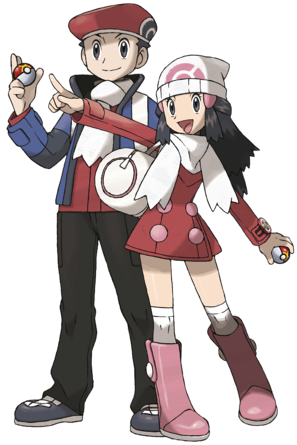
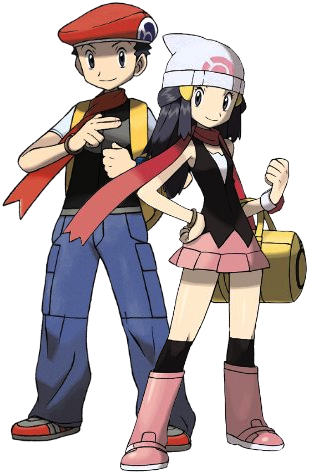
Shut up. Anyway, first things first – is there actually enough to say about Lucas and Dawn (the ‘unused’ player characters from Diamond and Pearl, one of whom becomes Professor Rowan’s assistant while you, playing as the other, gallivant around Sinnoh earning badges and fighting Team Galactic) to justify doing a whole entry on them, or should we just fold them in with Barry?
Eh. What is there to say about them? What do they ever do? They show you how to catch Pokémon, and they show up from time to time to give you stuff like the Itemfinder. They’re really just the professors’ aides from previous games, or the old man with the Weedle, but with faces. Do they ever actually battle you?
I don’t think so. There is a bit in Jubilife City where the two of you have a double battle against some Team Galactic minions who are trying to confiscate Professor Rowan’s research data, and another in Veilstone City when some more bad guys steal their Pokédex. Dawn and Lucas by that point have a Clefairy and a Kadabra as well as the starter, all in the mid-20s, so they’re not, like, completely useless. They do become… at least competent. But I don’t think we ever see them fight after that. Or do anything, really, aside from fail miserably to stop Team Galactic at Lake Verity.
To be fair, all three of you fail miserably to stop Team Galactic; Barry gets his ass handed to him by Jupiter at Lake Acuity and you arrive at Lake Valor too late to do anything.
I suppose that’s true. What else? Aren’t they up on Mount Coronet when Cyrus is doing his thing? Or did I hallucinate that?
No, they do show up with Professor Rowan right at the end, after all the fighting is over. They just don’t say or do anything important. On Platinum they don’t even get to be there; you just go and talk to them at the lab after you and Cynthia escape from Hell.
Mmm. I do quite like the notion of having trainers who simply don’t care a lot about getting stronger, giving more prominence to other kinds of relationships with Pokémon – like Lucas and Dawn as researchers. It’s sort of a shame that the game itself doesn’t really care much about anything beyond battling, or give people like Lucas and Dawn opportunities to do cool stuff.
Yeah; people who don’t care much about battling do presumably make up the majority of this world’s population, so it should matter. To be honest, though, Lucas and Dawn never seem all that committed to the Pokédex quest either. They avoid the subject of how well their work on the project is going, they lose their Pokédex, they don’t really seem to do anything else for Professor Rowan’s research…
They’re not as cavalier as Barry, but I suppose that’s true. I almost think that Lucas and Dawn are really just in the game so that both character designs will get used, no matter which one you actually pick to play as – not because there’s actually any need to have them there.
I also think that Black and White do that whole ‘uncompetitive trainers’ idea better anyway, with Bianca.
Bianca does eventually get quite powerful, though.
Mmm, but she’s consistently weaker than Cheren and the player, I thought.
True, and as a matter of characterisation she certainly has very different priorities, even if she doesn’t slack off on her training the way May/Brendan and Lucas/Dawn do.
Exactly. But we’ll talk about Bianca next time; we’re supposed to be sticking to Diamond and Pearl for now.
Oh yeah. So, are we done with those two? Barry now?
Probably.
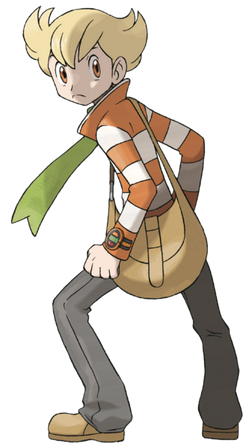
So, Barry. He’s… certainly excitable.
I suppose that’s one word for a character whose main ‘thing’ is slamming into you at high speed whenever the two of you meet. Maybe they should both just quit Pokémon so they can be a comedy duo; the player can be Barry’s ‘straight man’ and Barry can run into things and suffer hilarious injuries.
You know, I think in the Pokémon Adventures manga, Barry and Lucas (or Diamond and Pearl, rather – I can’t remember which is which) actually are a slapstick duo. Like, that is their thing; they want to be professional comedians or something.
…huh. Well, there you go.
In fairness to Barry, though, he’s not just there for comic relief. They do give him a character arc of sorts; it’s perhaps a little rudimentary, as these things go, and not really as compelling as Silver’s, in my opinion, but it’s there. You can see him developing more of a sense of responsibility and duty as the story progresses. At the start he’s easily distracted and impulsive to the point of recklessness…
You know, he’s actually the only ‘rival’ character aside from Silver who never has a Pokédex, because he runs off so quickly after Professor Tree gives you your starters. That impulsiveness and eagerness to move put him in interesting company, in that respect.
Hmm. I never thought of it like that. True, though – Blue, May and Brendan, Cheren and Bianca, Hugh, all four of the X and Y kids, they all join the Pokédex quest, with… greater or lesser degrees of commitment. Barry is the only one who actually refuses the offer of involvement in a Professor’s research, albeit only by implication. He’s certainly never a bad person by any stretch of the imagination, but he seems almost to resent the idea of being given responsibility – even though he clearly understands that he owes Professor Rowan for giving him his first Pokémon.
I think losing to Jupiter at Lake Acuity is the turning point for him. It’s obvious that she trounced him, and he seems pretty shaken, not just by his loss, but by what he sees happening to Uxie, and by the fact that his loss allowed it to happen. Before that point, he wants to be strong for the sake of being strong – not for ‘philosophical’ reasons, if I can put it that way, like Silver; more because he’s competitive and wants recognition, like Blue – and he’s only there at all because he owes Professor Tree a favour. Afterward, though, when he turns up at Mount Coronet, he’s committed to stopping Team Galactic because he knows it’s the right thing to do, and he’s been training specifically for that.
He learns what it means to stand for something – and in Pokémon, that’s more important than anything; that’s supposed to be what really makes trainers strong.
Took the words right out of my mouth. What do you think of the differences in the way the game starts on Platinum, compared to Diamond and Pearl? Barry’s the one who starts you on your journey either way, but how it actually happens is different.
I actually like the original story better, where Barry has this madcap scheme to find and catch a Red Gyarados in Lake Verity, despite neither of you having any Pokémon of your own, all because of something he happened to see on TV that morning. It says a lot about the kind of person he is, I think – either way, we see that he’s impulsive and adventurous, but this version also paints him as kind of whimsical, childish if you like (which makes sense). The idea that he has on Platinum, of going to Sandgem Town to meet Professor Rowan and ask him for Pokémon, is actually more dangerous in a concrete sense because it means trying to travel without Pokémon, but it’s also a much more practical sort of plan; you can see how he might think it was a realistic idea. There’s nothing wrong with that; I just think the crazier version of the story is more interesting – and I like the fact that it basically leads to you becoming Pokémon trainers by accident.
That does just repeat what happens at the beginning of Ruby and Sapphire to an extent, though. And the way it turns out on Platinum gives us some more characterisation for Barry, when he confesses to Professor Tree that it was his terrible idea and asks him to give you a Pokémon, even if Barry himself can’t be trusted with one. He’s willing to take a fall to help out his friend – pretty noble, I think.
I suspect he might be gambling on Professor Rowan being impressed by his show of maturity. Still a gutsy move, though, I have to admit.
So overall, do you think he’s well done?
Hmm. I think that with him, the fourth generation is kind of at an uncomfortable middle point where having a rival character has become a tradition they can’t get rid of, but they haven’t yet figured out how to do anything really clever with the rivals, like we’ve been seeing more recently.
What exactly do you mean by that?
Well, in general the rival characters aren’t really necessary for the plot to work – everything that happens would still make sense without them; I think Hugh is really the only one who interacts with the events of the story in a major way. Black and White, and then X and Y, have multiple rivals who play off against one another and contrast each other, and do so in a way that supports the themes of the stories. Barry doesn’t have anyone to do that with except for Lucas and Dawn – one of whom is the silent player character, and the other is something of a nonentity by the end of the first ‘act.’
But he does work as a mirror – I think of all the rival characters, Barry is the one who’s most closely aligned to the player character’s own aims, desires and actions.
Except maybe for Serena and Calem in X and Y, yeah; I could see that.
Since your character is never anything more than a blank slate for you to project yourself onto, it’s up to Barry to be the model of a new trainer. He’s like a… sort of secondary or backup protagonist.
I believe the appropriate term would be ‘deuteragonist.’
Yeah, that sounds right.
Fair enough, I suppose, but Barry still reminds me of what you were saying about Silver last time – how he doesn’t ever get a proper resolution or achieve recognition for how far he’s come. Barry has the same kind of thing, really; the player gets all the glory at Mount Coronet when Cyrus goes down, and Barry never gets anything.
Barry is really strong by the end of the game, though; Silver just falls behind to the point that he can never challenge you, but Barry is easily as strong as the Champion, and keeps getting stronger.
Well, does that matter? I feel like that gives too much weight to the particular numbers the game chooses to assign to their Pokémon, which is sort of something you can fudge a little bit – remember what we said about how Silver actually ends up very close in strength to Lance in the original Gold and Silver, and it’s only in the remakes that he doesn’t manage to keep up? We should focus more on how the game presents them and less on the numbers. He’s strong, sure, but even when we meet his father, Tower Tycoon Palmer, Barry never gets any of the resolution you wanted for Silver either. He never beats the player, he certainly doesn’t get to become Champion or anything remotely like that. We never even see him interact with Palmer, which is a shame because what little he does say about his dad makes it seem as though living up to his expectations, and surpassing them if possible, is extremely important to Barry.
He does seem confident, though. By the time the two of you get to the Battle Frontier, Barry feels happy saying that he “got here on [his] own power,” and adds “it won’t take long before I see him” – Palmer, that is. Where Silver almost seems to hit a wall in his training, Barry just drives on through it… metaphorically and literally, as usual. And the way he keeps getting stronger and stronger after you defeat the Elite Four a number of times reflects that. His goals were always a little more nebulous than Silver’s anyway – he never had anything as specific as Silver’s vendetta against Lance, which doesn’t ever get resolved. I think the game leaves Barry in a position where we can feel he will achieve his goals, one way or another.
I guess there’s one thing everyone can agree on – Barry is one determined kid. It’s not wise to stand in his way.
Particularly if he isn’t paying much attention to where he’s going.
Right, well, I was going to do a thing on Mega Evolution, but the thought occurs that trying to write that at a point in time when everyone in the world except for me has played Alpha Sapphire and Omega Ruby would probably lead to silly places. That being the case, then, the plan is to do the rivals now – I’m not going to write about Blue, because he’s already covered in my old Champions series, and I don’t think there’s all that much to be gained by going over him again; I’m also going to delay May/Brendan and Wally to the end, since it wouldn’t make a whole lot of sense to talk about them before playing Alpha Sapphire. That means that the second-generation rival, Silver, is first up, and then we’ll skip to Barry and Dawn/Lucas in the fourth generation. For the next couple of months, Jim the Editor and I will be discussing the lot of them in a series of increasingly pointless conversations, which we will inflict upon you here. Welcome to the blog, Jim.
Hey.
So, where do we start this?
I don’t think we need to go through everything that happens in the games; your readers all know that stuff. You answered a question a little while ago saying that Silver is your favourite rival. I think you should start by backing up that statement.
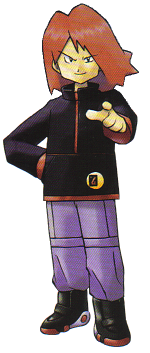
Hmm. All right. What I like about Silver – and I think I might have talked about this before – is his character development. First of all, he has character development, which, let us note, was kind of a step forward for the series at that point! Second, though… Silver is a dick. He’s abrasive, obnoxious, sullen, and unpleasant. Through being with his Pokémon and fighting with them, he learns to open up to them and love them, care for them, like Lance tells him he has to (and just as an aside here, I like the way his Golbat doesn’t evolve until the very end, despite being a very high level – since the original Gold and Silver were the games that introduced evolution based on friendship, I think it’s likely that this was intentional and meaningful). And having successfully done that, at the end of it all… he’s still a dick. He’s still abrasive, obnoxious, sullen and unpleasant. He’s noticeably a better person by the end of the game, but he’s still the same person – I think the overall effect is much more realistic than if he had just turned into a nice person through the magic of friendship or whatever. Improving himself doesn’t mean that he has to abandon who he is or even what he values, and I think that actually makes the overall character arc not just more real but also more inspiring, in a way.
Yeah, you would. I don’t think they handled him well at all.
…of course you don’t; that would be too easy. What problems do you see?
Well, my main problem is that Silver has nothing to do with the story of those games; he just runs alongside it and gets in the way. In the first generation games, Team Rocket was more incidental to the whole ‘story,’ which, let’s face it, was not about collecting all the Pokémon either but about collecting badges and building up to challenging the Elite Four, and then Blue is the Champion. He does everything that you do, and even though he never beats you he’s always one step ahead in the gym quest (and usually the Pokédex quest too). Silver kinda tries to do the same thing as Blue and has the same ambition to be the world’s greatest Pokémon trainer, but he never even comes close. Blue does get to the very top – becomes “the most powerful trainer in the world” – even if it’s only briefly. The game gives him recognition as a powerful and worthy rival, which Silver never gets. Silver tags along after you and loses whenever he fights you; he turns up during the Team Rocket quests but never does anything useful – Blue doesn’t either, but Blue doesn’t care, and neither did the games. Presumably Silver challenges gyms too but it doesn’t seem like he ever achieves… well, anything.
I don’t think Silver does challenge the Gyms and collect badges though, does he? I’m not sure that this kind of official recognition is important to him; it kind of seems to go against his whole ‘personal strength’ and ‘despising the weak’ deal.
He visits the Olivine Gym while Jasmine is at the lighthouse, remember? He wanted to challenge her, but she’s away, so he complains about her being soft.
Oh yeah. Hmm. Well, I suppose challenging gyms is a natural way for him to pursue strength and push his limits, even if he doesn’t respect the leaders for their authority.
There’s an easy way to check; is his name on the statues inside the gyms, like Blue’s is in the first generation games?
Hmm. Good point. Hang on; let me find my Soul Silver.
…
It does not; only the player is recorded as a successful challenger. Silver’s name does not appear.
Well, either way. He’s not important in the gym quest, and I know you like the contrast between him and Team Rocket and the way the game has two ‘bad guys’ that aren’t automatically on the same team, but he’s not really important in that part of the story either. And I think at the end of the game he is a broken character.
Broken how?
Look at his dialogue when you beat him in rematches at the Indigo Plateau. “…Oh, no… I still can’t win after all that training… I…I have to believe more in my Pokémon…” All that ‘character development’ and he’s still never going to beat you! I think that just goes to show that caring about your Pokémon doesn’t really matter at all; Silver starts to and it doesn’t get him any closer to winning. The moral of his arc is broken; he does everything he’s supposed to and nothing changes – and he seems like he knows it too; look at how hesitant he sounds compared to all his condescension, confidence and bravado earlier in the game.
Well, I think there he’s sort of a victim of how winning and losing works in single-player Pokémon – not only is its general power curve easy enough that you’re never terribly likely to lose a battle if you know what you’re doing, the games don’t really know how to handle it if you ever do; you just keep going as though nothing had ever happened. Pokémon’s never really figured out how to make recurring rival-type characters seem competent; just look at… well, just about any of the other characters we’re going to be doing in this series. I think Silver’s relative power level at the end of the game might also be something that wasn’t quite thought through all the way; on the original Gold and Silver, when the Elite Four didn’t get power-ups after being beaten the first time, Silver’s six Pokémon all finished in their high 40s, which is high enough for him to give Lance a run for his money. The only characters in the game who were stronger than Lance as Champion, to my memory, were Blue and Red, which actually makes Silver in his final state the fourth most powerful trainer in those games (not counting the player) and very close on the heels of the third. In terms of objective power, the remakes levelled Silver up just like everyone else, but I don’t think they considered how much weaker he is relative to the rest of the world now; he’s on a par with most of the Kanto Gym Leaders, but he’d have a hard time with the upgraded version of Will, let alone Lance. And in terms of what he actually does in the game, well, most of Team Rocket are a joke to us, but other characters in the world take them very seriously, so we probably should too – and Silver, as far as we can tell, trounces them every bit as thoroughly as the player does!
I guess all that’s fair.Still, that doesn’t change the fact that he doesn’t really have the ending he should have; his story doesn’t finish properly. I would have liked it if, say, he had become a Gym Leader. He misses out on getting some scene of final closure or at least recognition for how far he’s come.
Well, in fairness, I think the stuff they added in Heart Gold and Soul Silver did a lot to fix that – like when, if you go back to Professor Elm’s lab at the end of the game, one of his assistants tells you how Silver came back to return his starter, but Elm decided to let him keep it, because they had obviously come to care for each other. Going right back to the beginning to make up for his past actions, and being forgiven for them by the person he wronged, gives the whole thing a very pleasing symmetry, I think.
Yeah, that bit is definitely good, and it makes a nice tie-in to the franchise’s themes about how being with Pokémon is supposed to make you a better person and all that, but would it have been so hard to actually show us that scene rather than just telling us later that it happened? It could have made a really good character moment!
Mmm… point taken. How about the double battle with Lance and Clair in the Dragon’s Den?
That does help a lot, actually. In practice the player will almost certainly carry Silver through that battle, but on the other hand, he does get to beat Lance, and he gets some recognition for his potential. I still think it leaves him only part of the way through his development, but it’s definitely an improvement over the original games.
What I like about that scene is that it puts his whole character in perspective. It stresses the stuff I mentioned right at the beginning – how he’s still the same, somewhat unpleasant person, but noticeably calmer and more cooperative – as well as reminding us that Lance doesn’t see him as a bad person or even as an enemy, just a kid who wound up on the wrong path for a while, which is important for Lance’s characterisation as well. There is one more nice end-game bit the remakes add to Silver; the scene that comes with the Celebi event, where we see Silver talking to Giovanni.
Right; I think we should talk about that. Do you like it?
Yeah, I do, actually. I think it provides a good explanation for everything we’ve seen of Silver’s character up to that point. When Giovanni loses to Red and disbands Team Rocket, what young Silver sees is that his father’s reliance on the power of his organisation counted for nothing in the end because his own personal strength failed him, and that this is what comes of relying on others. They’ve really gone back and thought about the way the original games presented the character and his motivations and values, and the result is a backstory that ties it all together very neatly. What do you think?
It’s good, and I like it; it just doesn’t do enough to grab me. There’s no follow-up to it because Silver isn’t the point of the event – the fight with Giovanni is – and although getting the origins of the character is nice it doesn’t do anything to fix his lack of a satisfying ending. And it shouldn’t have been put in that Celebi event, where a lot of players outside Japan and the US never got the chance to see it; it’s just dumb to hide something so important to his characterisation like that.
Mmm. Agreed, I suppose. Well, I think that’s everything we planned to cover for today… as long as we’re here, do you think we should talk about the other ‘rival’ from Heart Gold and Soul Silver?
Huh? What other rival?
You know, the annoying kid from New Bark Town with the Marill who just kind of wanders around uselessly and never actually fights you.









 Pokémaniacal