
Starting in about 15 minutes; if you have a moment, come say hi!
Author: pokemaniacchris
A Pokémon Trainer is You! XX: What a Tangled Web We Weave
[Catch up on the story so far here!]
Last time, on A Pokémon Trainer Is You:
Surrounded by six huge spider Pokémon, what do you do?
- Negotiate?
Well, I’ve heard worse ideas. True, most of them were Larry’s, but under the circumstances I guess talking is relatively unlikely to get you all killed.
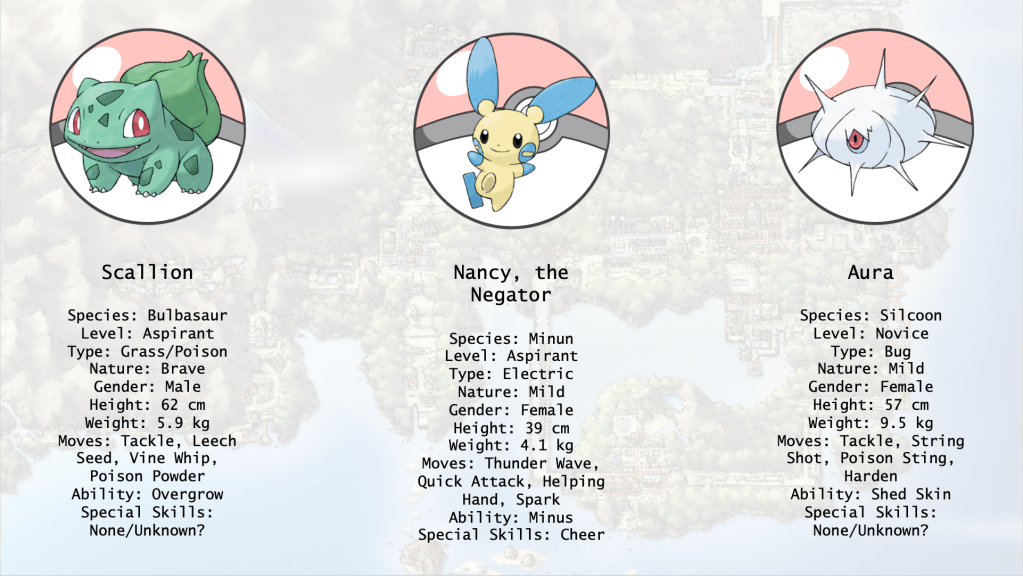
Abner, Stacey and Dane are standing back-to-back and glaring defiantly at the spider Pokémon surrounding them, with all their own Pokémon at the ready. Dane’s Weedle and Stacey’s Caterpie are clinging to their trainers’ arms, but are poised to fire String Shots; Abner’s Metapod and Kakuna are both on the ground, already using Harden; and Stacey’s Ledyba is zipping around their heads, glaring at each of the fierce-looking Bug Pokémon in turn. Ellis and his Beedrill move to join them, but you catch him by the elbow and hiss a warning. Between the five of you, with all your Pokémon, you have your attackers well and truly outnumbered, but frankly they’re bigger.
Continue reading “A Pokémon Trainer is You! XX: What a Tangled Web We Weave”“A Pokémon Trainer Is You!” is coming back!
This has been paused for far longer than I meant it to be, but starting tomorrow, A Pokémon Trainer Is You! is coming back! If you don’t know/remember what that is (in which case, well, I can’t blame you; I haven’t written anything for it in months) APTIY is an interactive story loosely based on the events of Pokémon: Red and Blue, where the main character’s actions and choices are determined by polls of the audience. It was previously on a weekly update schedule, but in future I’m going to aim for every two weeks, at least for the time being, to avoid taking too much time away from articles. If you haven’t read any of this story before, or just want a refresher on everything that’s happened so far, you can read it all here!
A Pokémon Trainer Is You! The Story So Far
This post contains the entire story so far of my ongoing interactive Pokémon adventure fiction, A Pokémon Trainer Is You!, a reimagining of the story of Pokémon: Red and Blue where my readers choose the main character’s path through the world through polls accompanying each episode (latest episodes can be found here). Read this to get up to speed on what’s currently happening, or refresh your memory of past events!
A Pokémon Trainer Is You!
The day has finally come! Having reached at last the ripe old age of [data not found], you are ready to leave Pallet Town all on your own and quest for glory! A Pokémon trainer is you! Your Pokémon legend is about to unfold! Y’know, unless you get lost in the woods and starve to death. That can happen. I knew a guy once who that happened to. Poor Larry. Rest in peace, man.
Continue reading “A Pokémon Trainer Is You! The Story So Far”An Evil Bag asks:
Now that we have Jellyfish Pokemon based off of stinging jellies and ghost jellies, what are some other hypothetical concepts based of real-world jellies? Like, maybe the box jellyfish or moon jellies, or the Man-0-war.
Also, I think jellies is a funny word, don’t you?
So I have a fun story about the word “jelly,” which is that in New Zealand we don’t use “jelly” to mean a sweet, fruity spread the way it’s used in America; we only say “jam” for the whole category of things that, in US English, are divided into “jams” and “jellies.” “Jelly” for us means a fruit-flavoured gelatine dessert, which is what the US calls “jello.” I think this is all true of the UK and Australia as well as New Zealand. And we have peanut-butter-and-jam sandwiches; that is A Thing. But here’s the thing; I also knew about peanut-butter-and-jelly sandwiches from American kids’ TV, and I didn’t know that the words meant different things depending on your dialect (it also didn’t help “jelly” is often purple in cartoons and I thought of “jam” as usually being red). I thought Americans were eating what they would call peanut-butter-and-jello sandwiches, which they made from jars of pre-made jello, and naturally this led me to believe that they were all completely insane.
Anyway yeah I think a Portuguese man o’ war Pokémon would be legit; there’s a lot you could do with that. A man o’ war isn’t technically a jellyfish at all, it’s a siphonophore, a colony of zillions of microorganisms in several different specialised types and roles. You could have a unique evolution method where multiple Pokémon of different species combine into one, and you could play on the name and mix some naval motifs into the design, maybe give it an actual sail or some cannons. There’s space for something interesting there, I think.
House Hightower of the Hightower asks:
Now that we’ve had the Fairy type for a while, how well do you think they achieved their conceptual goals, which ostensibly were to both nerf Dragon Pokemon and re-assert the offensive relevance of Poison and Steel types?
Pretty well, I guess? A lot of Dragon-types are still really good, but they’re largely carried by their extremely high base stats now; the game is noticeably much less about throwing Draco Meteors and Outrages while blocking with Steel-types than it was in generations IV and V. You can’t really make a competitive team with, like, four or five Pokémon from one of those two types and expect it to work, which… you arguably could, for a while? You still probably wouldn’t stick a Poison attack on a non-Poison Pokémon unless you were really strapped for better options, but I guess I feel less bad about using Poison-types in offensive roles now. Steel as an attack type often still feels redundant with other attacks that a lot of the same Pokémon tend to learn (and when do you need a type advantage against Ice, anyway? They don’t resist anything; just hit ‘em with whatever), but Steel Pokémon are fine, obviously.
A Bucket of Water asks:
Why do you think Rotation Battles sorta just stopped being a thing?
Well… well, I want to just answer “because they were kinda dumb and gimmicky and probably not worth the effort,” but upon sober reflection that might be slightly unfair. I don’t think alternate battle formats with different fundamental rules are in principle a bad idea; they mix up what can be a somewhat repetitive core gameplay experience, and depending on exactly what rules you change, they can be ways for otherwise useless Pokémon to get some time in the spotlight (there are quite a few that have never been good in singles, but shine in doubles because of their support skills). I don’t know much about how rotation battles tend to play, though, because… well, because hardly anyone ever played them. Even in generation V I don’t think there were ever many big tournaments that used rotation battles as the format, or a large competitive community. And… well… even the games themselves sort of treat them as a gimmick. There are so few rotation battles in the single player story that you never really get a feel for how they’re different from single or double battles, so it doesn’t feel important to learn how they work and there isn’t any case made for why anyone would want to play them. They’re just… kind of superfluous, and to make them not superfluous they needed to have more support from the very beginning, not just be kept around for the sake of completeness.
I have also seen a suggestion that axing triple and rotation battles for Sun and Moon might have something to do with the graphical capabilities of the 3DS. Triples and rotations in X and Y are… well, they have performance issues, put it that way, and Sun and Moon noticeably struggle to run at normal speed even with four Pokémon on screen in a double battle. I don’t know that this was a factor in discontinuing them, but it kinda makes sense to me? The Switch is more powerful and Sword and Shield don’t seem to have these problems, so mayyyyyyybe there’s an argument there for the return of triples and rotations in a future game? Not sure.
Streaming Final Fantasy X
Tomorrow morning at 7 am NZ time/8 pm tonight UK time, I’m going to be hanging out on Skype with Jim the Editor while he streams Final Fantasy X for his Youtube channel for about 90 minutes. If you’re free, come hang out and talk about the game with us!
EDIT: And here it is!
We kinda… wound up talking a lot about my research while Jim indulged in his favourite pastime – level grinding – so if you want to hear me ramble in an unstructured way about ancient glass to a backdrop of random encounters in Kilika woods, this is the video for you.
Pokémon Trainers of Fire Emblem: Three Houses (Part 2: Blue Lions)
Welcome back to this ridiculous series where I create Pokémon teams for the ludicrous number of characters in this game I really enjoyed, because that is a thing I do now I guess??
The game’s called “Three Houses” so obviously there need to be three houses, and number two are the Blue Lions, from Faerghus, a kingdom in the northwest part of the continent that broke away from the southern Empire long ago and are now its major rival/frenemy.

Dimitri Alexandre Blaiddyd
- Future King of Fantasy Prussia
- Although going by his name he might be half-Greek and half-Welsh
- Parents and several of his closest friends were killed a few years ago in a terrorist attack by a neighbouring allied country
- Kinda fµ¢£ed him up a bit
- As, y’know, any one of us might reasonably be fµ¢£ed up by that
- Dutiful, loyal, kind, cares a lot about growing up to be a worthy king
- Believes in protecting the weak from oppression
- Wants classmates to treat him as an equal rather than a king, which not all of them can realistically do
- Struggles to balance moral abhorrence toward violence with seething desire for blood-soaked vengeance
- He is perfect and I love him
Favoured types: Ice, Ghost, Fighting
Vengeance for the dead is an important theme in Dimitri’s story, as is fighting for a cause, which Fighting-types value. Ice because he’s from a cold part of the world and dislikes hot climates.
Disfavoured types: Fire, Dark, Poison
Dimitri values honour highly and won’t stoop to the methods of Dark and Poison Pokémon. Fire as an opposite to Ice, and because he acts as a foil to Edelgard.
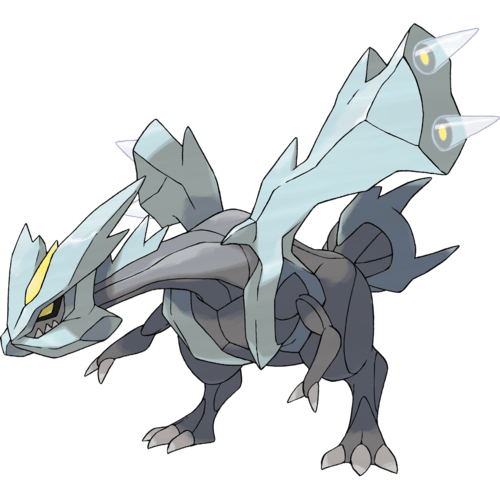
Partner: Kyurem
My reasons for picking Kyurem as Dimitri’s partner are mostly related to the second half of his story, which I’m not going to explain. Kyurem is a legendary Pokémon, so appropriate for one of the house leaders. It represents emptiness and brokenness, and also has kind of a savage reputation.
Other Pokémon: Banette, Froslass, Sandslash (Alolan), Primeape, Hitmonlee
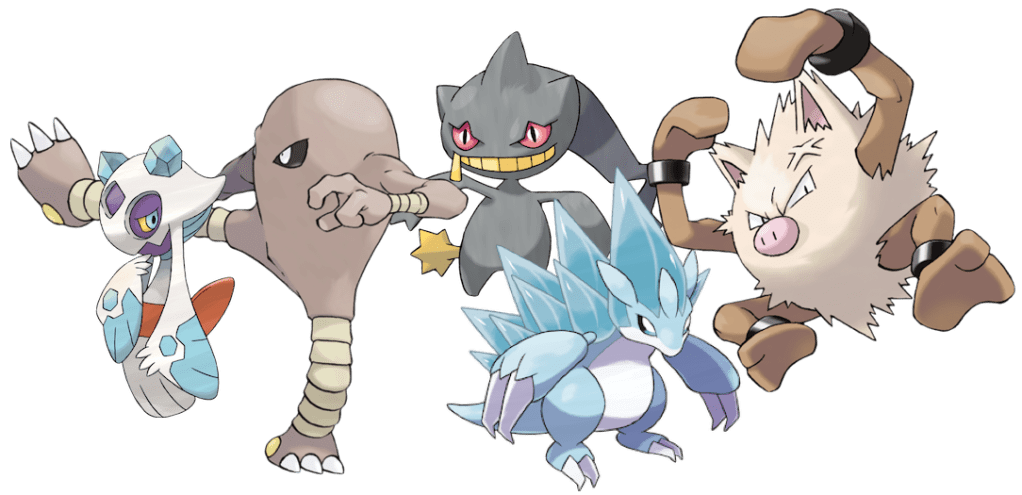
Banette and Froslass because Dimitri has a lot of vengeful ghosts in his life, and it’s unclear how literal that statement is. In a fight he likes to get up close and skewer enemies with a spear; Alolan Sandslash feels like a particularly good fit with its icy spines, while Hitmonlee and Primeape are both powerful melee fighters who also provide a contrast between discipline and boiling rage.
Continue reading “Pokémon Trainers of Fire Emblem: Three Houses (Part 2: Blue Lions)”Regional Variant Pokémon: Galarian Yamask and Corsola
Today’s Galarian variant Pokémon, Yamask and Corsola, are both Ghost-types, and they have some pretty different ideas about what that means. One is an ancient curse, supposedly the twisted remnants of a long-dead human corrupted by mysterious dark magic; the other is older still, the revenant of a prehistoric extinction event whose lasting effects on the Galar region we can only begin to trace. This piece might feel a little different from the others in this series, because it’s difficult to talk about Pokémon “adapting to the environment” of a new region when those Pokémon are dead and the environment is literally magic. But Ghost Pokémon consistently have really interesting lore, and there’s some cool stuff to dig into as we investigate the inspirations of these Pokémon. Let’s take a look.
Yamask and Runerigus
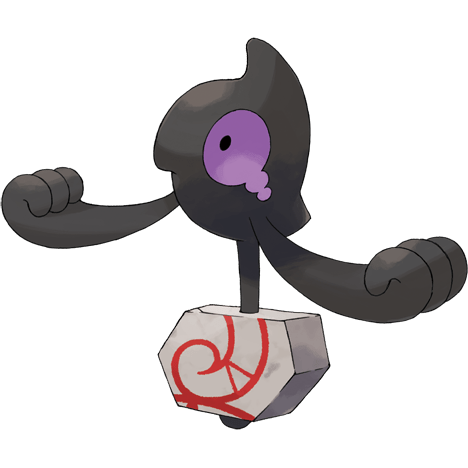
Unovan Yamask are tragic Pokémon, with some of the saddest backstories in the Pokédex. Yamask are supposedly the spirits of dead humans, and each one carries a clay mask which is said to represent its human face. They retain memories from their human lives and weep for their loss, their masks a constant reminder of their eternal sorrow. Which is, as the expression goes, a bummer. Once it evolves, Cofagrigus has a pretty different attitude, becoming a spiteful tomb guardian who devours grave robbers with a crazed grin on its face. Although its mask is still there, set into Cofagrigus’ forehead, according to its new Pokédex entry in Sword Version, “people say it no longer remembers that it was once human” – as if its curse has overtaken it completely. Now, Galarian Yamask… don’t have masks. Instead, a Galarian Yamask’s tail is embedded in a chunk of what looks like carved stone but might in fact be clay, since its Pokédex entry makes reference to “a clay slab with cursed engravings [that] took possession of a Yamask” (this mention of clay is the only reason I can find for Galarian Yamask to be Ground/Ghost rather than Rock/Ghost, since from every other angle these Pokémon appear to be rocky). In the case of the evolved form, Runerigus, we get a troubling line about “absorbing the spirit of a Yamask” to animate the painting on the surface of its body. Just like Unovan Yamask eventually succumb to the curse that strips away the last of their remembered humanity and transforms them into Cofagrigus, something has taken over this Yamask spirit and is gradually turning it into a malevolent force… but what?
Continue reading “Regional Variant Pokémon: Galarian Yamask and Corsola” Pokémaniacal