WARNING: This entry is clearly too long and I have no idea why I wrote it.
Let’s talk about starter Pokémon.
Your starter Pokémon is your partner, a bird of your feather, a pea in your pod, the cheese to your macaroni. It is like a huge feathery pea covered in melted parmesan.
…yeah, that metaphor got away from me a little.

My point is, this is supposed to be the Pokémon that defines your experience of Pokémon training, what Pokémon mean to you personally, and your own style as a trainer… so it had better be good. These are the most important designs in the game to get right, barring maybe plot-relevant legendary Pokémon, and there’s even more to get right than when you’re just working on any old filler Pokémon. For one thing, you have to be sure – at least, as far as humanly possible – that there will be at least one starter Pokémon in each trio that appeals to everyone. Obviously that battle’s over before it even starts because there are always going to be a few people who think that all three are terrible, but there are a couple of ways to minimise that, and Game Freak do seem to try their best. Of course, many of us will just accept the Grass/Fire/Water paradigm and take what we’re given from our favourite elements, but for a lot of people, including a lot of new players, other factors are going to be important. It’s good to give a choice of personality types and aesthetic styles – often these are divided along elemental stereotypes, so we generally get an aggressive Fire-type, a stoic Water-type and a laid-back Grass-type. This isn’t always the case, though; Black and White, for instance, have a stoic Grass-type, a laid-back Fire-type and an aggressive Water-type (forgetting for the moment that Oshawott’s art and sprites are terrible and should never have seen the light of day). I think you can argue that it’s probably better, in general, for starter Pokémon to be exemplars of their elements’ defining traits, rather than exceptions, because many people are going to choose starters according to element and won’t necessarily want Pokémon that are radically different from the norm. Obviously, that’s not a hard-and-fast rule, but this is probably not the place to get experimental and create a Grass Pokémon with the power to drain and kill plants or something weird like that. Anyway… the other important thing is that these Pokémon have to be strong, or at least decent (bearing in mind, of course, that the things that make a Pokémon good for high-powered competitive play are often quite different to the things that make a Pokémon good for in-game storyline play). If your starter Pokémon is weak, you’re either going to ditch the thing as soon as possible or keep it around as a sort of mascot while vaguely resenting it the whole time. You can find accounts of exactly this kind of thing happening in Yellow Version – although later games have made an effort to help him out, an unevolved Pikachu is, let’s be fair here, a pretty terrible Pokémon. A lot of people just stuff him in the PC and never look back (and, heck, why not? Yellow gives you all three of the original starters anyway); others accept that he’s terrible and use him anyway because why else would you play Yellow Version, damnit, and a few people just never notice that he’s terrible because they’re also using Raticate and Butterfree.
Yellow Version gives you no choice in your starter Pokémon, so if you don’t like Pikachu, you’re out of luck, and it sticks you with a starter Pokémon who is demonstrably weaker than almost any other Pokémon you could possibly pick. For these reasons, it is an example of a really terrible way of handing out starter Pokémon. It works anyway because 1) Pikachu can get away with anything, 2) we all wanted to re-enact Ash’s journey, 3) if you didn’t like Pikachu you wouldn’t have bought Yellow anyway, and 4) let’s face it, the real reason we were playing Yellow was because we wanted Bulbasaur, Charmander and Squirtle. All that said, Yellow is the only game so far that actually makes an effort to treat your starter Pokémon as special and emphasise your relationship with that Pokémon by introducing, just for Pikachu, the forerunner of the happiness mechanic that has been part of the game since Gold and Silver, as well as having Pikachu follow you around in the overworld. He may be just a mascot, but a fair bit of effort went into making him the best mascot possible, and as a result the game works. Well, it does if you like Pikachu. If not then you dump him in the PC and forget about him; he’ll hate you when you take him out, but it’s not like you were planning on doing that anyway. None of the other main series games has ever done anything like what Yellow did, probably because no other Pokémon can really compare to Pikachu for widespread popular appeal. The original Pokémon Ranger, like Yellow, gave you no choice of partner, sticking you with Plusle (if you’re a girl) or Minun (if you’re a boy), which is a little painful if you despise Plusle and Minun as much as I do, but aside from having powers that no other Pokémon in the game possesses, your partner actually plays an active role in the storyline, which seems only appropriate. According to Bulbapedia, Guardian Signs gives you a Pichu with a ukulele, however I am convinced that this is some sort of misinformation because not even Nintendo is that ridiculous. I think Gale of Darkness starts you off with an Eevee, who is sort of the ideal choice for a single starter because her split evolution ensures that most anyone will be able to evolve her into something that appeals (how many Yellow version players wish that your douchebag rival hadn’t swiped the Eevee that Professor Oak meant for you?). However, I digress.

One of the uncomfortable little problems with the Pokémon games that we don’t like to talk about is the severe disconnect between the series’ persistent and often heavy-handed theme of partnership and the way the games actually play. This has come up in my reviews of the anime a couple of times: we’re clearly meant to want to imitate Ash, who has only a handful of Pokémon and loves them like his family, but in practice I (and, I’ll bet, most other players) are more like Gary – if I take a quick look through my PC on Black Version, for instance, I find a couple of dozen Pokémon I use for battles, perhaps another dozen I use for various utility purposes like swimming and flight, and literally hundreds that I never use at all; they just sit there gathering dust because, having earned their Pokédex entries, I no longer have any particular need of them. I keep them around because I might someday need them to produce children for serious training. Does that seem right to you? A game that placed a great deal of importance on players’ relationships with every individual Pokémon would, of course, be vastly impractical if it were based on anything like the game’s current structure, with its monolithic Pokédex quest and the notable disadvantages associated with continuing to use your in-game team after completing the storyline. Just one Pokémon, though, for whom the player is assumed to care particularly deeply, as with Pikachu in Yellow… that, I feel, would make gameplay and message hang together a touch less haphazardly.
There’s a few ways this could be done. Having the starter follow you around, as Pikachu in Yellow, is an obvious starting point; having it react to events in the storyline, as Plusle and Minun do in Ranger, is a logical continuation. Something that has tempted me for a long time is the idea of evolution triggered by plot events (with some alternative method available post-Elite Four so you can evolve other starter Pokémon you obtain later); possibly even a single starter Pokémon with a split evolution determined by the way the player tends to react to in-game events, or the way the player treats the starter – which isn’t necessarily a strict contrast between ‘well’ and ‘badly,’ but more a contrast between different but valid and potentially overlapping types of relationship, like ‘intellectual,’ ‘emotional,’ ‘competitive,’ ‘protective’ and so on. To keep this working without hiccups, it might be wise to include an option for the starter to stay with the player at all times, even when there are six other Pokémon in the party, but become ‘inactive’ and unusable until a space opens up – some people just don’t like using their starters, while others may want to branch out after several playthroughs. Perhaps the starter’s presence even grants some kind of bonus to the rest of the party. I could go on. All of this, of course, ups the ante on creating starters that no one will strongly object to (or picking some from the ranks of existing Pokémon – Eevee seems to be universally adored) or offering a wider variety of starters (BLASPHEMY!) to ensure that there’s something for everyone. Personally, if I were aiming for this kind of effect, I would probably base the design around something associated with partnership in the real world somehow, like a dog or horse, just to hammer in the point. Assuming new Pokémon were being created, I would imagine rejecting dozens of designs (perhaps reworking some into regular Pokémon) before deciding on the final set; after all, this is not something to be done by halves.

The other main topic I want to address today is the Grass-Fire-Water paradigm. A lot of people want a change; I remember there was a great deal of excited speculation prior to the release of Diamond and Pearl that Game Freak were going to try experimenting with a Dark-Fighting-Psychic trio instead. This trio doesn’t have quite the same relationships between the types as Grass, Water and Fire, because Dark-types are strictly immune to Psychic attacks rather than simply resistant. In fact, it’s very difficult to construct a trio that works in just the same way as Grass-Fire-Water without using at least one of those three types, since so many elemental relationships aren’t reciprocal (for instance, Ice attacks are strong against Ground-types, but Ice-types don’t resist Ground attacks). The only one I can think of is Fighting-Flying-Rock, which is somewhat problematic because of Game Freak’s apparent distaste for pure Flying-types. It’s not immediately obvious why this should be a point against a change, but the big advantage of Grass-Fire-Water is its potential for easing new players into the system; the way the three types interact is quite simple compared to other possible trios, and the reasons for those interactions are also fairly intuitive (Grass-drains-Water is a little out there, but Fire-burns-Grass and Water-douses-Fire are much easier to understand than, say, Dark-mindfucks-Psychic or however that one is supposed to work). However, Game Freak have shown by way of the Striaton Gym and its triplet Gym Leaders that they are open to more sophisticated ways of indoctrinating new players into Pokémon’s vast and convoluted game of Rock-Paper-Scissors-Lizard-Spock, so it’s possible to imagine a game where the starters are no longer the primary vehicle for introducing the mechanic. Arguably, it would actually help to have a starter trio with more complicated relationships, since new players are going to have to deal with stuff like immunities, mutual resistances, and the Dragon- and Ghost-types’ strengths against themselves sooner or later, and at present the games make no real effort to introduce any of that; they just encourage a vague (incorrect) belief that all elemental advantages are reciprocal. I spent much of my childhood assuming that Steel attacks must be strong against Dark-types, Ghost-types, and goodness knows what else because Steel Pokémon were resistant to those attack types. Again, I could bring up my favourite game mechanic of the day, the split evolution; in this case, the potential advantage is in allowing new players to delay their choice of element until after they understand the ramifications of that choice. Two other ideas I’ve toyed with are having a set of starters that all become Dragon-types upon reaching their final evolutions, so that all three are strong against each other, or having a set of starters who shift into each other’s elements (so the Grass-type becomes Grass/Water, the Water-type becomes Water/Fire, and the Fire-type becomes Fire/Grass)… not because these would necessarily be good ideas, you understand, but because they would be different and strange and would probably force the designers to come up with some really weird, quirky stuff.
We’ve seen an impressive variety of starter Pokémon over the years; tough, proud, gentle, courageous, reclusive, wise… for the most part, these are – as they very well should be – quite good designs. Like so much else in Pokémon, however, this is one place where I wish that, once in a while, Game Freak would dare to be different. Give them another year or two, and they’ll be announcing the approach of generation six… and goodness knows, none of us want another Fire/Fighting-type…

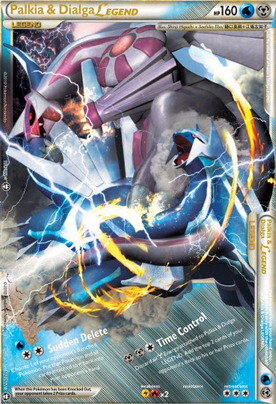 Although I hadn’t quite had it in mind originally, these entries on the Pokémon Power Bracket eventually evolved into something akin to a discussion of what I think legendary Pokémon should and should not be. Given the direction this project ended up taking, I suppose that I now ought to talk about these questions in more general terms and lay out, once and for all, what opinions I hold on these mysterious creatures and why.
 Legendary Pokémon are significantly tougher and have more powerful attacks than the vast majority of ordinary Pokémon (Dragonite, Tyranitar, Salamence, Metagross, Garchomp and Hydreigon have stat totals that match or exceed those of some legendary Pokémon, and are often called ‘Pseudo-Legendary’ for this reason). Big numbers don’t make the Pokémon, of course: consider Articuno, whose type combination carries a number of crippling weaknesses and whose movepool is small and inflexible. Most members of the lowest ‘tier’ of legendary Pokémon are like this: theoretically powerful, but limited (there are also a couple, like Entei and Regigigas, who are just plain bad, but that’s really a topic for another day). That’s all well and good. It’s the really powerful ones that concern me: Mewtwo and Ho-oh and the like; Kyogre and Arceus most of all. These Pokémon clearly aren’t meant to be ‘balanced’ in any meaningful sense – possibly not even against each other. They don’t merely have a slight edge over mortal Pokémon; they can steamroll entire teams if played competently. Now, I’ve always contended that game balance has never really been a ‘thing’ in Pokémon anyway; I simply don’t believe it was ever part of the designers’ aims. However, it doesn’t take a genius to see that this legendary élite will quickly take over any context to which they are introduced; Nintendo themselves recognise this and ban most of them from official tournaments and in-game battle facilities. Outside of official contexts, however, any ban-list must be self-policing, which is a recipe for chaos – particularly since Nintendo’s ban-list, while a reasonable starting point, is riddled with flaws (they regularly ban Phione, for goodness’ sake). Some fan communities produce and regularly update tier lists to define which Pokémon should and should not be allowed, but one need only consider the vitriol directed against Smogon University for banning Blaziken to see that this is hardly a perfect solution. Some would consider it the height of lunacy to ban Celebi while allowing Excadrill (as Nintendo does); others would think it perfectly rational. As a result of all this, I cannot help but regard legendary Pokémon as a negative influence on the games’ ability to function as intended.
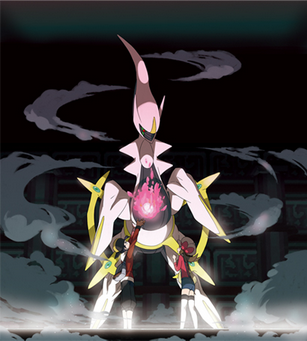 It is partly for this reason that I expect rather a lot of them elsewhere. Legendary Pokémon are, well, legendary; that is, they are the subject of legends, myths, traditions and tales. As a result they are a fundamental part of the culture, history and philosophy of the Pokémon world and serve to expand our understanding of that world. Provided they do a good job of it, tell a good story, I am generally willing to give them some latitude to act as game-breakers when they take the field; they’ve ‘earned it,’ in a sense (especially ones that aren’t actually game-breaking, like Zapdos and Suicune). This is not always an easy thing to judge. I maintain that it was the second generation that got it right, with the story of Entei, Suicune and Raikou, who were killed in the fire that destroyed the Brass Tower and drove Lugia away from Ekruteak City, and then resurrected by Ho-oh with incredible new powers. These Pokémon all have a history that ties them in with the past of their home region and its visible remnants, while hinting at fantastic powers beyond what ordinary Pokémon can harness. Articuno, Zapdos and Moltres contribute to the general feel of the games with their aura of mystery, but don’t do so with the same eloquence or sophistication as their successors, while many later legendary Pokémon simply go too far. Ever since Ruby and Sapphire, Game Freak seem to have gotten it into their precious little heads that a good plot must be ‘epic’ and that one of the requirements of ‘epic’ is an impending apocalypse (neither of which is actually true), so naturally they’ve been designing legendary Pokémon to match – Kyogre and Groudon, Dialga and Palkia, Arceus, Reshiram and Zekrom – as though their games won’t be complete without Pokémon capable of destroying the nation, the world, or even the universe. This isn’t even a flawed concept, in principle. The flaw is in the way it interacts with the games’ premise and central tenet: “gotta catch ‘em all.” If these Pokémon truly were as remote and aloof as they are often portrayed, present in the game as forces to be deflected or mitigated, I would not have any major objections to them; many of them have interesting stories, and they could definitely add something to the setting’s cosmology. The problem is that once something exists in Pokémon, you have to be able to catch it; otherwise the whole mess falls apart.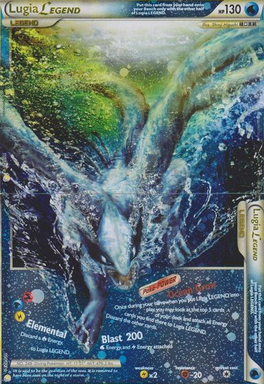
 Which legendary Pokémon are effective additions to the world, in my view (aside from the second-generation ones I’ve mentioned)? Mewtwo is one; though the extent of his powers is difficult to gauge, his backstory was clearly written with ideas of morality and identity in mind, and he also allows us to ask interesting questions about the relationship between humans and Pokémon. This, I think, is the sort of thing that Pokémon is actually rather good at, simply because the basic premises of the franchise are so interesting from an ethical standpoint. Regirock, Regice and Registeel, though I’ve always felt they are distressingly emotionless, making them difficult to relate to, have a fascinating backstory that gives us a new perspective on the way people related to Pokémon in the past, and what that might mean for the future (arguably, the very thing that bugs me about them actually makes them more effective, their alien countenance emphasising how far they stand apart from humanity). They recognise, as well, that the power to shape worlds is not actually a requisite for winning the fear or adoration of an ancient civilisation. Tornadus, Thundurus and Landorus, too, have destructive and protective powers that function on a local rather than a regional or global scale; they are deities of folktale, not epic, a smaller scale of things to which Pokémon, by its very nature, is eminently better-suited.
 Pokémaniacal