One lunatic's love-hate relationship with the Pokémon franchise, and his addled musings on its rights, wrongs, ins and outs. Come one, come all, and indulge my delusions of grandeur as I inflict my opinions on anyone within shouting distance.
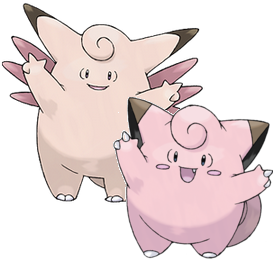
I thought they made the switch from clefairy because they wanted a more gender neutral pokemon and clefairy was too pink and girly? Or is that just a rumor that’s never had evidence?
Dunno. It would kind of make sense? I can’t find anything reputable online that discusses it in any detail. Most people who talk about the decision are pretty clearly extrapolating from Bulbapedia’s rather bare-bones account.
If you had the power to make any other Pokemon besides Pikachu the mascot, who would it be? (I would choose Poliwhirl)
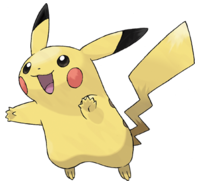
You know, I’m honestly not sure that I would. Pikachu being the mascot, like a lot of other stuff from Pokémon’s early development, kind of happened by accident. Pokémon didn’t really have a mascot at first; Pikachu gained the spot because of the popularity of the anime, for which he was largely responsible. But Pikachu being Ash’s starter and the most prominent Pokémon character in the anime was a last-minute change; he was originally supposed to be a Clefairy, and it’s not entirely clear why they made the switch. Ultimately, he’s the mascot because people love him, and people love him because, objectively, he is adorable as f$%&. Much as I like to complain about Pikachu spawning a line of irritating knock-offs in subsequent generations, it’s hard to deny that he earned his popularity. So yeah. I’d keep Pikachu.
If you had the power to mind control Gamefreak employees while they’re brainstorming Pokemon ideas, what would you have them come up with?
Okay, let’s be clear on one thing here; if I had the power to mind-control Game Freak employees at any time at all, I would use it to make them wire all of their company’s money into my US bank account, then high-tail it to Acapulco and never be seen again. Just so that’s clear.
But aside from that, I would probably start by temporarily blocking out all memory of Pikachu and Pikachu’s popularity, because that is the only way I’m ever going to get them to stop making more goddamn cookie-cutter electric rodents. Then I would compel them to spend hours on end staring at Mediaeval European bestiaries. Then again, it’s possible they do that already. It would explain Murkrow startlingly well.
Choose 6 human-Pokemon pairs from the anime and pit them in a Hunger Games-style battle set in a map that is 1/3 Ilex Forest, 1/3 Dark Tunnel, and 1/3 Whirl Islands. Who will win?
Okay I don’t quite know what “Hunger Games-style” implies because I have only the vaguest familiarity with the series, but let’s see what we can do.
I can’t remember ever actually seeing this episode as a kid. I was missing out; I really like this one. It makes for a great opportunity to get back into one of my old favourite subjects, the ethics of Pokémon training, and to start asking new questions about whether the series considers Pokémon to be ethical agents in themselves, or merely instruments of their trainers. Seriously, if I had my way this is what the whole series would be about.
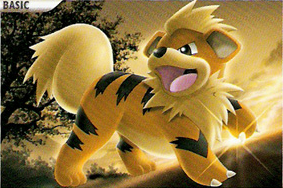
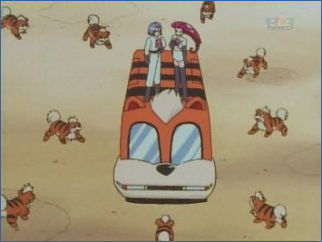
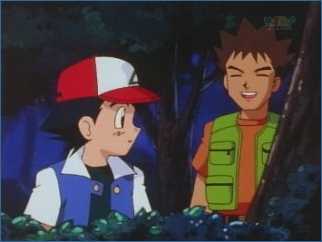
Ash and company are innocently strolling through the woods when they hear the cry of “stop, thief!” and see a suspicious-looking man carrying a bag of loot fleeing pursuit. Ash, not one to take this sort of thing lying down, commands Pikachu to stop him, but the more observant Pikachu has noticed that the man is carrying a handgun and, to Ash’s annoyance, refuses to attack… until a Growlithe bursts from the undergrowth and tackles the thief, causing him to drop his gun. Pikachu merrily begins blasting away and brings him down, but the nine other Growlithe who arrive immediately afterward, led by Officer Jenny #40, don’t seem particularly happy. It turns out that Ash and Pikachu have just interrupted a training exercise and assaulted a plainclothes police officer. Whoops. Jenny quickly gets over it once she realises it was an honest mistake, and invites Ash, Misty and Brock back to the police station for a hot meal. This particular Jenny runs the academy that trains Kanto’s police dogs, specially drilled Pokémon capable of taking on humans with firearms at relatively low risk to themselves. Jenny and Misty both admonish Ash for ordering Pikachu, who has no such special training, to attack an armed man, which annoys and offends him. He asks for Jenny’s permission to enrol Pikachu in her training program so he can become stronger. Jenny warns him that the training is difficult, but gladly allows it. The next morning, she wakes Ash and Pikachu at 4am for a race against one of her Growlithe – and Ash and Jenny will be running too, because a trainer should never expect more of his Pokémon than of himself. Ash and Pikachu are faster than Jenny and Growlithe, but are defeated by their obstacle course (which Jenny completes in her high heels). While Ash and Pikachu recover, Brock tries to remind Ash that Pikachu is great even without special training. Ash responds that he wants Pikachu to keep getting even better, though Pikachu himself doesn’t seem so sure anymore.
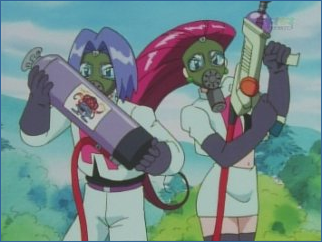
Then Team Rocket crash through the wall of the academy in the Mutt Cuts van from Dumb and Dumber, pull on some gas masks, and start blasting away at everyone with canisters of Gloom spores.
I really feel sorry for other anime shows that have to trudge through the bleak desolation of existence without Jessie and James to brighten their lives.
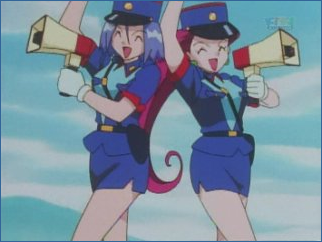
This week, Jessie, James and Meowth have gotten it into their heads that it would be a good idea to steal all of Jenny’s Growlithe and use them to commit crimes, because the irony is just too delicious to pass up. Jenny insists that her Growlithe would never be party to Team Rocket’s criminal schemes, but Jessie and James seem unconcerned, and pull out more gas canisters – this time to dose everyone with helium. Between the overpowering stench of the Gloom spores and the helium raising the pitch of her voice, the Growlithe can’t recognise Jenny’s scent or the sound of her voice, and stop responding to her commands. Jessie and James then change into police uniforms, produce voice synthesisers and use Jenny’s own voice to command the Growlithe to arrest her, which they do, taking ropes in their mouths and tying her up. Meanwhile, Ash, Brock and Misty have stupidly left their Pokéballs back in the station’s dormitory, so Pikachu is all they’ve got. Jessie tries to command him too, using Ash’s voice, but Pikachu is not impressed; Brock claims that Pikachu knows Ash by what’s in his heart, and can’t be fooled by a cloud of foul-smelling gas and a voice synthesiser. Pikachu unloads a Thunderbolt on the Growlithe, but there are just too many for him to handle on his own and he quickly runs out of power. Jigglypuff appears, tries her song, finds that the helium renders her enchanting voice powerless, and wanders off again. Finally, Jessie orders one of the Growlithe to attack Jenny, but as it bites down on her wrist, she looks into its eyes and invokes the Power of Friendship to remind it who she is. Team Rocket try to command the others to deal with her, but their synthesisers choose this moment to malfunction, and the Growlithe turn on them and chase them away. The episode ends with Jenny commending Ash and Pikachu on the strength of their partnership: “you two recognise what’s in each others’ hearts, and that’s what count. I’ll try to keep that in mind.” Also Brock uses one of the discarded voice synthesisers to deliver an incredibly creepy ode to himself in Jenny’s voice. Because he is Brock.
Let’s talk about these Growlithe. Jessie, James and Meowth have – for once – actually come up with a pretty damn solid plan for their daily mischief. To a human, it seems ludicrous that a Growlithe could have trouble telling Jessie in a police uniform apart from Jenny – who is, after all, their trainer – but humans rely on sight a lot more than most animals do and consequently have unusually good vision compared to other mammals. Most mammals – like dogs – compensate with their keener hearing and sense of smell, and this episode suggests that many Pokémon are much the same. Once Team Rocket have deprived the Growlithe of their usual means of identifying their masters, they have only their sub-par vision to fall back on, and they are left following orders given in the voice they were trained to obey. Then Pikachu comes in. Pikachu isn’t fooled; although Ash sounds and smells nothing like himself, Pikachu can recognise his trainer anyway – not immediately, he has to think about it for a few seconds, but he gets there. I suppose the obvious explanation is that Pikachu is simply much more intelligent than the Growlithe (an attribute that is sorely neglected in the games’ portrayal of many Pokémon). He’s been paying attention to what’s going on, and although he doesn’t exactly understand what Team Rocket have been doing to confuse him, he knows they’re an underhanded lot and is on his guard for tricks. As a result, he’s able to decide to ignore what his trainer’s voice is telling him and do what he figures makes sense, whereas the Growlithe latch onto a voice they know and follow its orders, even though Jenny has been standing right there the whole time and they should know who she is even if they can’t hear or smell her clearly. What’s interesting is that the Growlithe eventually figure it out too – or, at least, one of them does – by staring into Jenny’s eyes and having a touching flashback montage of all their happy times together. The obvious explanation – the Growlithe aren’t as intelligent as Pikachu – doesn’t quite seem to make sense anymore; the tone of the scene doesn’t fit with Growlithe suddenly putting together the information and figuring out that Jenny’s voice is being faked. It’s a lot more consistent with Growlithe knowing who she is the whole time and only now wondering why he’s being ordered to attack her.
Pokémon follow orders; this we know. The Growlithe, in particular, are probably being trained to follow orders from any police officer (or perhaps simply from any Jenny; there are non-Jenny police officers in this episode, but I get the impression that the Jennies are the ones who most often work with Pokémon), so they aren’t necessarily supposed to have the same deep personal relationship with their handlers as Pikachu does with Ash. There’s a further point to this, though. Jessie and James are both quite convinced that they will be able to order the Growlithe to commit robberies, and Jenny is equally convinced that the Growlithe would never do such a thing. The story is structured so as to suggest to us that Jenny is actually wrong – her comment is immediately followed by Team Rocket successfully taking control of her Pokémon and ordering them to restrain her. The difference between their views is that Jenny regards the Growlithe as moral agents in and of themselves, capable of understanding that certain actions are ‘wrong’ and refusing to take part in them, while Jessie and James think that they’ll be able to order the Growlithe to do just about anything once they establish themselves as authority figures (and I feel I should emphasise again that the structure of the episode immediately shoots Jenny down). I’m reminded of Ekans’ dialogue in Island of the Giant Pokémon – “Pokémon not bad; Pokémon do bad things because Master bad” – which suggests that, although Ekans and Koffing are totally aware that they are aiding their trainers in committing morally repugnant acts and would never do such things on their own, this is trumped by the principle of loyalty to their masters. The Growlithe – who have been taught to view anyone who knows how to command them as ‘master’ – would find themselves in just the same position if they were taken by Team Rocket. When you think about it, this has to be the case in order for Team Rocket even to exist as an organisation: their modus operandi is to steal Pokémon for use in other crimes with more direct rewards. This could hardly be practical if a significant number of stolen Pokémon were likely to rebel against trainers who committed crimes. As Pikachu and Growlithe remind us, though, Pokémon are in fact capable of understanding that an action is ‘wrong.’ It’s much easier for Pikachu – probably because Ash places an unusual amount of emphasis on treating his Pokémon as friends and individuals – though even Growlithe, raised specifically to be part of a squad, can do it when ordered by a new ‘authority figure’ to attack an old one.
In short, Pokémon do understand human morality – it’s just that most of them are used to thinking that it doesn’t apply to them. They simply don’t see themselves as moral agents – thinking about that stuff is their trainers’ job – unless they’re been strongly encouraged to, one way or another. I think this is what Brock and Jenny are talking about when they say that Ash and Pikachu “understand what’s in each other’s hearts;” Pikachu recognises Ash not merely as his trainer, but as an objectively good person, and would continue to emulate Ash’s moral character even if they were somehow torn apart. As she acknowledges at the end of the episode, Jenny and her Growlithe could stand to learn a lot here.
A Pikachu colony living wild and free. Screenshots from filb.de/anime.
Oh, no. Not this episode. Please, not this episode. I still tear up just from remembering this one. You’re meant to be together, Ash, don’t you see that!?
*Ahem*
Ladies and gentlemen, Pikachu’s Goodbye.
Ash and his friends, travelling through deep woodland, encounter a large group of Pikachu, whom Ash’s Pikachu tries to befriend. Except for one very young Pikachu, they all flee, but when the little one comes to talk to him, the rest begin to gather around as well… until Ash decides to stick his ugly mug in and scares them all off again. Pikachu is depressed for a while, but when the group sets up camp later on, he gets his chance to be a hero. The little Pikachu he met before falls into a fast-flowing river, and he jumps in to save her… and… fails miserably, getting swept along with her in the current. Luckily, the rest of the Pikachu colony manage to snag them by grabbing onto each other’s tails and forming a chain, anchored in a tree by the side of the river. Pikachu is once again accepted into their culture, and joins in as they sing Pikachu songs under the light of the moon. Brock makes a remark about how wonderful it is for Pikachu to be with his own kind, which… is kind of a douchebag thing to say, actually, because it gives Ash the idea of leaving Pikachu behind and presents him with a horrible dilemma that keeps him from getting any sleep, and really Brock would have to be pretty much the most insensitive person on Earth not to realise that would happen, but hey, whatevs. While Ash is staring glumly into the campfire, he hears a Pikachu screaming, and runs back to where he left them. Team Rocket, of course, have shown up and trapped all the Pikachu in a shockproof net, declaring “everything in this forest is public property!” “And we’re members of the public!” As they fly away in their balloon, Ash gets Pikachu to chew a hole in the net, then uses the net Jessie and James had thrown at him, Misty and Brock as a trampoline so all the Pikachu can jump out safely. Pikachu finishes off the balloon, and another half-assed plot is foiled by our plucky heroes. The Pikachu all start celebrating, and Ash smiles sadly before going back to the campsite to pack everything up. Pikachu follows him, but Ash tearfully tells him not to make this any harder than it already is, and runs away.
“Isn’t Pikachu having a wonderful time here in the woods with his own kind? Yep, Pikachu sure would have a swell life if he just stayed here. Far away from civilisation. Without Ash. Oh, I’m sorry, Ash, what were you saying?”
No, Ash, no! What are you doing? This is your best friend! Pikachu’s your soulmate! Screw Brock and Misty; they’re douchebags and they’re only going to leave you anyway! You’re going to cry yourself to sleep and then wake up in the morning and Pikachu won’t be there, every night and every morning for the rest of your life, and you’ll regret it forever! No other Pokémon is ever going to understand you like Pikachu does; heck, no human is ever going to understand you like Pikachu does! You’ll never truly be happy again without him, DON’T YOU SEE THAT?!
I’M FINE!
I’m fine.
Where’s my handkerchief…?
Anyway. Just when Ash thinks he’s run far enough, the whole Pikachu community run up over the crest of the hill, with Ash’s Pikachu at their head, and cheer as he runs back to his trainer. The world is set to rights, and that, I can guarantee you, is the very last time Ash gives even a second’s thought to what life would be like without Pikachu.
The second of today’s episodes, Snow Way Out, has always aired as episode sixty-something, but that’s clearly a lie since Togepi still hasn’t joined the team and Charmander hasn’t evolved yet; it’s probably meant to have happened shortly after Pikachu’s Goodbye. At a fork in the road, Ash decides to lead the group over a mountain, despite Brock’s objections, and gets them all lost in a blizzard. Meanwhile, Jessie is singing to James and Meowth about how much she loves snow, because during her ridiculously impoverished childhood her mother used to make food for her out of snow and-
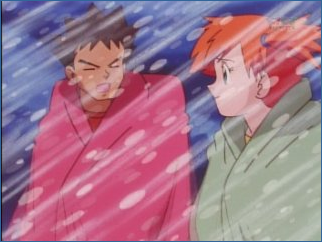
“No, Misty. It’s too late for him now. We have to save ourselves!” “But we can catch up with him if we-” “Can’t you see this is something he has to do on his own?”
Wait, what?
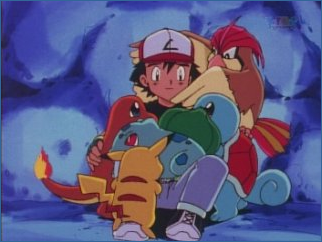
Anyway, they fire up the balloon, say their motto, and realise that the balloon is floating away with all their food. Jessie declares that she will make snow rolls with soy sauce, and they build an igloo and attempt to stay warm through the night with the power of imagination. That is pretty much their contribution to this episode. Back to the kids. To Ash’s annoyance, Brock wants to build a snow cave and bunker down for the night because, really, trying to get off the mountain at night in a blizzard is not Ash’s best plan ever. Unfortunately a blast of wind blows Pikachu down a slope, and Ash chases after him. Brock tells Misty not to follow, because… because he’s sure Ash will be just fine on his own, and knows that splitting the party never has any negative consequences, I guess? Wow, Brock is being a real douchebag in these episodes. Ash finds Pikachu dangling off a cliff and has Bulbasaur save him, but realises they can’t climb the slope to get back up to Brock and Misty. They decide to dig their own cave. Charmander blowtorches his way into a snowdrift, Ash calls out Bulbasaur and Squirtle, and they all seal up the entrance with packed snow before gathering around Charmander’s tail to stay warm. After a couple of hours, Charmander’s flame begins to fail. He insists he’s fine, but Ash recalls him, Bulbasaur and Squirtle, despite their protests, and… takes off his jacket and wraps their Pokéballs in it to keep them warm… because… okay, yes, whatever. Ash and Pikachu argue for a while, until the wind blows a hole in the cave mouth. Ash chooses to block it with his body rather than with more snow, and orders Pikachu to get in his ball. Pikachu refuses point blank, while Bulbasaur, Charmander, Squirtle and Pidgeotto rebel and burst out of their Pokéballs. Ash gives in, and they all huddle together for the rest of the night. In the morning, they find Brock and Misty, and learn that they had a warm, comfortable night after Onix tunnelled into some hot springs. Apparently they never tried to find Ash. They have, however, found Team Rocket’s balloon. Brock has his Vulpix fire the thing up, and the kids drift safely down from the mountain on the wind.
Okay, I could whine for a bit about how there are no Pichu in the community of wild Pikachu and that makes absolutely no sense, but I think we all know that’s a cheap shot since Pichu didn’t exist when this episode was made, and anyway these episodes are about Ash’s relationship with his Pokémon in general and Pikachu in particular, so let’s talk about that.
Can’t… think… too… adorable… must… look… away…
Pikachu’s Goodbye and Snow Way Out prominently display Ash’s sense of responsibility, which seems to be a significant part of what being a trainer means for him. He is supposed to keep his Pokémon happy, healthy and strong, and faced with a potential life-or-death situation his top priority is to protect them (I’m not convinced that wrapping his Pokéballs in his jacket actually affords his Pokémon any additional protection from the cold, but clearly Ash believes it does, and cares more about that than about keeping warm himself). Way back in I Choose You, Ash related to Pikachu as a master to an underling, and Pikachu very nearly died; the traumatic events of Ash’s first day as a trainer have almost certainly stayed with him, and I suspect those memories may be a factor in his overwhelming instinct that he has a duty to keep his Pokémon safe, especially Pikachu (nearly losing Metapod in Challenge of the Samuraimight well be weighing on him too). This doesn’t apply so much to battles; any reasonable trainer will pull a Pokémon out of a fight if it’s taking too severe a beating, and Ash is no exception, but he’s generally fine with having his Pokémon stay in and tough it out until things get truly dire. This is presumably because Ash, like most humans in the Pokémon universe, regards battles as being beneficial for Pokémon on some level; it’s how they grow stronger and learn about their own powers. The moment he begins to feel that one of his Pokémon is in genuine danger, though, Ash will act quickly and often recklessly to deal with the threat.
An important point for these episodes is that this relationship I’m describing, as sweet and loving as it generally is, is still a relationship where Ash sees himself as the superior – almost like his Pokémon are his children. In Snow Way Out, this is obvious; he takes it upon himself to shut his Pokémon up in their Pokéballs to protect them, even when they make it clear that they would rather stay outside and endure the cold with him. Honestly, I can’t help but wonder whether this gently, quietly patronising attitude is part of what sticks in Charmander’s craw so badly after he evolves into Charmeleon. In Pikachu’s Goodbye too, Ash agonises over what’s best for Pikachu, watching him immerse himself in community life and weighing up the obvious benefits Pikachu would enjoy if he stayed against the friendship they share and their experiences on the road together. However, he never takes what would seem to be the obvious course of action by asking Pikachu about it. He listens to what Brock has to say on the subject, he spends hours making up his mind, and he eventually decides to leave Pikachu behind because he genuinely believes that Pikachu will be better off without him, but throughout the episode he seems to consider it entirely his decision. He also seems to feel that the downsides of releasing Pikachu are entirely on his side; he’ll lose his best friend and most powerful ally, but is prepared to endure that so Pikachu can reap the obvious benefits. Again, you could make a parent-child comparison out of this; once they’ve taught their children everything they can, most parents want their children to leave and make their own lives, because it isn’t right for them to be under their parents’ thumbs forever. I suspect Ash’s logic here, while obviously different, is nonetheless parallel.
Pikachu himself never seems to have considered leaving Ash even for a moment. He clearly enjoys his time spent with the wild Pikachu, but more as a nice break and a good way to spend some down time than anything he’d actually want to do long term. Near the end of the episode, when Ash is packing up to leave, Pikachu bounces out of the bushes ready to leave with him, giving not the slightest hint that he suspects anything is wrong, and won’t hear anything Ash has to say on the subject of parting ways. Likewise, in Snow Way Out, Pikachu refuses Ash’s direct order to get into his Pokéball, and all the other Pokémon burst out of their Pokéballs soon after, reminding Ash that they don’t actually have to do anything he says. They follow his orders because they trust him, but if he’s clearly doing something stupid, they are quite capable of ignoring him, because as far as they’re concerned, they’re not his children; they’re his friends. This, I think, is the lesson Ash is supposed to take out of these episodes. Although his heart’s in the right place, his ideals are often rather simplistic. In this case, while few trainers understand better than Ash the need to care for Pokémon and raise them with kindness, Ash doesn’t quite realise yet how independent a Pokémon’s mind can be and how important it is to consider each individual’s distinct values and desires. Luckily, Pikachu loves him enough to be patient while he learns.
Battle Aboard the St. Anne – Pokémon Shipwreck – Island of the Giant Pokémon
Fresh off Ash’s victory at the Vermillion Gym, Ash and his friends are given free tickets by a pair of teenage girls to a lavish Pokémon trainers’ convention aboard the world-famous luxury cruise liner, the St. Anne! THERE IS NO WAY THIS COULD POSSIBLY BE A SCAM!
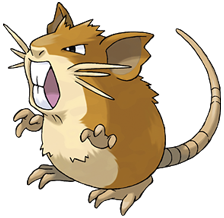
We quickly learn that the ‘teenage girls’ were Team Rocket in disguise (yes, James too), and that they were giving out free tickets to all the trainers they could find on the orders of their shadowy Boss, Giovanni, who appears for the first time in this episode. The Boss (who seems to be the closest thing Meowth has to a formal ‘owner,’ but has come to prefer his Persian – this will be a constant source of insecurity to Meowth during the series) is displeased with the time and energy they have expended failing to catch Pikachu, but still seems to have enough confidence to put them in charge of the ambush planned on the St. Anne. His confidence, of course, is misplaced – not only do the Team Rocket goons fail miserably to steal even a single Pokémon, James also loses a ludicrous amount of money buying into a Magikarp-breeding pyramid scheme, and the entire ship capsizes and sinks with Jessie, James and Meowth still on board (not to mention our plucky heroes). This, of course, is all totally incidental as far as I’m concerned. I want to talk about what happens in the meantime: Ash encounters a dapper gentleman with a top hat and moustache, whose name is never given, challenging other trainers to exhibition battles with a powerful Raticate. Ash, being Ash, takes up the challenge and finds that Raticate and his Butterfree are very evenly matched; however, just as Butterfree begins to gain the upper hand with Stun Spore, the Gentleman – to Ash’s annoyance – recalls his Raticate and suggests calling it a draw. The Gentleman later proposes a trade, his Raticate for Ash’s Butterfree, which Ash hesitantly accepts but later regrets. Luckily, the Gentleman reluctantly agrees to trade back at the end of the episode, just as the ship is sinking.
When you think about it, Pokémon trading is a pretty bizarre practice from the perspective of a trainer like Ash, who regards each and every one of his Pokémon as a close personal friend (which I think counts as further evidence that Ash’s way of doing things is actually quite unusual, since Pokémon trading manifestly isn’t). The Gentleman’s ideas about trading are interesting ones – he believes that trading Pokémon is a way of deepening and widening new friendships and spreading relationships between trainers all around the world; basically, a form of social networking. You could argue that he’s running what amounts to a scam here, proposing a trade for the first Pokémon he could find that was stronger than his Raticate and then dazzling the Pokémon’s kid trainer with some pretty rhetoric, but since he does agree to trade back when Ash asks him, I think it’s more likely he actually believes it. Misty’s perspective on the situation is almost as interesting because it shows, I think, that she relates to Pokémon in a very different way to Ash: although she is sympathetic when he begins to regret trading away Butterfree, her response, “look on the bright side; you got a Raticate!” seems to indicate that she doesn’t really understand the depth of Ash’s attachment to his Pokémon yet. I’m kind of disappointed to miss Brock’s opinion; Ash does ask him before the trade, but he’s too busy getting goo-goo-eyed over the Gentleman’s lady friend to offer a coherent response. For a person like Ash, trading away a Pokémon is basically signing away the health and wellbeing of a close friend to someone else. If Ash’s attitude is at all typical, you wouldn’t expect Pokémon trading ever to happen except between good friends but, again, this is manifestly not the case. I think this indicates that for a ‘typical’ trainer, a Pokémon is less like a friend and more like… not a possession, but… perhaps a colleague, co-worker, or subordinate – basically, someone with whom you have a formal, rather than an emotional, relationship. I should qualify that, like most complex issues, this is probably more of a spectrum than a dichotomy; Ash is at one end, and trainers like the Gentleman at the other, but a lot of people probably fall somewhere in the middle.
Anyway, the ship flips upside down and sinks, and due to the captain’s gross incompetence no-one notices that a few of the passengers were still on board. There’s still plenty of air in the ship, but it’s steadily filling up with water from the bottom, and it’s balanced precariously on a huge spire of rock over a deep ocean trench…
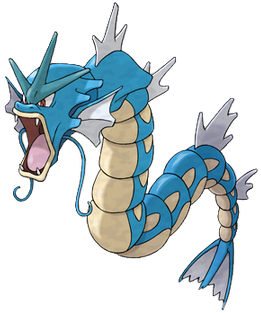
Pokémon Shipwreck is kind of a ‘meh’ episode, if you ask me. It’s basically supposed to be about Ash’s party and Team Rocket having to work together to escape their mutual dilemma, but it’s actually about Ash’s party working together to escape their dilemma while Team Rocket cling to their coattails and scream incoherently. Suffice to say, they eventually escape the ship by blowtorching through the hull with Charmander’s Flamethrower and swimming to the surface with the help of their Water Pokémon (Team Rocket use the Magikarp James bought on the St. Anne and nearly die, but to Pikachu’s immense displeasure they recover). Once they’re all on a raft cobbled together from the debris of the St. Anne, James throws a fit, kicks his Magikarp, and renounces his ownership of the useless thing… which, of course, prompts it to evolve into a Gyarados, summon its brothers, and go all you-ain’t-in-Kansas-no-more on their asses, which leads to the next episode, Island of the Giant Pokémon…
I love Island of the Giant Pokémon. If I had my way the whole damn series would be done like Island of the Giant Pokémon. The set-up is that Gyarados’ waterspout separated Pikachu, Bulbasaur, Squirtle and Charmander from the rest of the group on an island which is, for no immediately obvious reason, inhabited by Pokémon of unusual size (hereafter known as POUSes). Ash, Misty and Brock do stuff in this episode too but it is irrelevant and distracting, because this is the episode in which everything the Pokémon characters say is subtitled, which means we get a closer look at their personalities. Squirtle is laid-back and irreverent, and has something of a black sense of humour (among other things, he upsets Pikachu and Charmander by joking that Ash might have been eaten by wild Pokémon). Bulbasaur is stoic, pessimistic and cynical; he’s the one who suggests that Ash might have abandoned them, which I think speaks to the way he views humans in general. Charmander… well, Charmander is kind of boring, actually. He seems nice. He’s quite trusting, maybe a little naïve. Mostly he just goes along with Pikachu (who, as we know from the rest of the series, is defined mainly by fierce loyalty to his friends). Odd that there’s no foreshadowing of the problems Ash is going to have with him after he evolves into Charmeleon in episode forty-something; maybe they hadn’t planned that far ahead yet. And then… there’s Ekans and Koffing. They’ve also been separated with their trainers, along with Meowth, who orders them to attack Pikachu and his friends when they run into each other. Ekans and Koffing seem to be portrayed as not particularly bright, even by Pokémon standards (especially Koffing, who mostly parrots Ekans); their dialogue is subtitled in broken English, and their worldview is basically “we do as our masters tell us”… and Meowth, they are most emphatic, is not their master. They claim that if Pokémon do bad things, it’s out of loyalty to bad masters (contrast Meowth, who points out that his master is never around and he’s as rotten as Jessie and James on his own); they apparently understand morality but think it either isn’t important or doesn’t apply to them. Alone, Meowth is easily overpowered and tied up, while Ekans and Koffing join the group. As they eat dinner, and Squirtle taunts Meowth with the promise of food if he’ll just apologise (which, of course, he refuses to do), they hear a loud rumbling sound and are nearly crushed by a rampaging POUS. Pikachu goes back to untie Meowth as the others leg it (like Ash, he’s a kind soul), and they eventually spend much of the night running away. Then… then there is this one wonderfully mad scene in which, later that night, the whole group stops at a bar.
In the middle of the jungle. Run by a Slowbro. Bulbasaur and Squirtle get totally hammered and start drunkenly arguing over something (hard to say what, since this scene doesn’t have subtitles) while Meowth quietly passes out, and Pikachu and Charmander try to comfort Ekans and Koffing, who have been reduced to tears (and are presumably pretty deep in their cups themselves). At a random bar in the middle of the jungle run by a Slowbro.
…I’m not even going to question it; I’m just going to accept it.
They all go to sleep together, curled up with Ekans coiled around everyone else. This is a lovely scene; it illustrates very well how ready Ash’s Pokémon are to trust, even when Ekans, Koffing and Meowth have been their enemies for the whole season so far – or perhaps it’s more appropriate to say that Ekans and Koffing work for their enemies. Off-duty, they’re no more hostile than anyone else. Anyway, the next day, they try to negotiate with the POUSes they encounter, fail miserably, wind up getting chased by them, and eventually run into Ash, Misty and Brock being chased by more POUSes, as well as Jessie and James in a mine cart dragging another one behind them (they… had an interesting couple of days, put it that way). Everyone reunites, there is much rejoicing on both sides, and all the POUSes trip over each other, get tangled together, and are completely destroyed – they’re robots, it turns out, and the whole thing is a theme park called Pokémon Land (a theme park, incidentally, run by Giovanni, who gets a call shortly afterwards to tell him of its destruction).
Again, I wish every episode were like Island of the Giant Pokémon. Most of Ash’s Pokémon are surprisingly expressive considering they can’t really speak, and Pikachu in particular builds up a reasonably developed character by sheer weight of screen-time alone, but the characterisation of and relationships between all the Pokémon characters we see in this episode are just wonderful stuff, if you ask me. That they never did this again is probably one of my biggest regrets for the whole series.
Oh, the excitement! Ash is on a roll, and now he’s in Vermillion City for his third Gym battle! Oh… but we forgot to mention… the Vermillion Gym Leader, Lt. Surge, is a total nutcase who’s hospitalised sixteen Pokémon in the past month. Pikachu doesn’t like the idea of fighting this crazy person, but Misty taunts Ash for the two pity Badges he collected in Pewter City and Cerulean City, and that’s the end of that. Ash and Pikachu, with Brock and Misty in tow, march up to the Vermillion Gym and demand a battle with Lt. Surge, a jovial but condescending fellow who, for some reason, assumes that Misty is the challenger, even though Ash is the one standing front and centre in their group (does he really present such an unimposing figure?). Surge thinks the idea of Ash challenging him is hilarious, and laughs even louder when he sees Pikachu, calling them both “babies.” Surge calls out his own signature Pokémon: a Raichu, Pikachu’s evolved form, whose electrical powers are vastly superior to Pikachu’s. “Electric Pokémon,” Surge claims, “are only useful once they learn all their Electric attacks,” so Ash should have forced Pikachu to evolve at the first possible opportunity to maximise his power, like Surge did. Pikachu’s doubts about the battle evaporate when Surge and Raichu taunt him, and the match begins. Raichu quickly demonstrates that she has Pikachu totally outgunned, ignoring his relatively paltry Thundershocks and hitting back with a blast that nearly knocks him out cold. Pikachu doggedly keeps fighting, but Raichu just starts tossing him around the field with her superior physical strength and Ash has to surrender to keep him from being beaten up any further. While Ash and the team regroup at the Pokémon Centre, Nurse Joy #98 overhears their conversation and randomly decides to offer Ash an incredibly valuable Thunder Stone, which would evolve Pikachu into a Raichu – no strings attached, though she cautions them to think carefully about it, since evolution is irreversible. Ash doesn’t think he wants Pikachu to evolve just to fight, but decides to leave it up to him. Pikachu slaps the Thunder Stone away and gives an impassioned speech; Ash, of course, doesn’t understand a single word, but Meowth translates for Jessie and James, who are spying from the window: he wants to fight Raichu again to defend the honour of all Pikachu. Ash, with a suggestion from Brock, devises a new strategy while Pikachu recovers, and as soon as they’re both ready, they head back to the Vermillion Gym. On the way they run into Team Rocket, who have come to cheer for them – Jessie and James have realised that if Pikachu loses, then all the effort they’ve spent trying to steal him will have been a waste, so they do a strange little dance with a morale-boosting chant, then run away. These guys already have way too much emotional investment in stalking the kids and Pikachu, and we’re only a few weeks in… at this rate they’re going to be basket cases by the end of season one. Anyway, Ash and Surge have their rematch, but this time, Pikachu makes use of his one big advantage over Raichu: she has greater physical and electrical strength, but he’s a lot faster, and can evade most of Raichu’s physical attacks like Mega Punch and Body Slam. Surge gets annoyed and commands Raichu to blast the whole stadium at once with her Thunderbolt so Pikachu can’t dodge, but when the dust clears, Pikachu is… standing on his tail, perfectly unharmed, having discharged all the electricity through it and into the ground. Raichu tries to attack again, but she’s all out of power and has to go back to physical attacks. Pikachu gives her the run-around until she can’t keep fighting any longer, then finishes her off. Lt. Surge admits defeat and gives Ash his Thunder Badge, they shake hands, Ash and Pikachu celebrate, and Team Rocket wander off into the sunset, realising too late that “we wasted this episode cheering for the good guys!”
So, if you’ve been paying attention to my anime reviews so far, you’ve probably guessed that I’m interested in Electric Shock Showdown because of Pikachu’s refusal to evolve. In the end, this is how he beats Raichu – in the games, Pokémon that evolve using stones normally stop learning attacks, which is why Raichu, who evolved before learning Quick Attack or Agility, was so much slower than Pikachu. If we’re just thinking in terms of the ability to learn new attacks, though, why not evolve Pikachu after the battle? He’s already learnt the speed techniques that gave him an edge over Raichu, and (as long as we’re going by the logic of the games here) evolving won’t cause him to lose those techniques, so surely he’d have the best of both worlds? It’s plausible the anime is taking the position that Pikachu are, universally, capable of quicker and more precise movements than Raichu, which really does make a lot of sense if you just take your eyes off their in-game stats for a moment. I think it’s also plausible that Pikachu might have more endurance than Raichu; notice that, in the second match, Raichu’s pretty much done after one good Thunderbolt – she burns twice as bright, but half as long. However, tactical considerations are clearly not what’s occupying Ash’s mind when Nurse Joy offers him the Thunder Stone. In general, Ash, Brock and Misty seem to take the view that using a stone to evolve a Pokémon constitutes forcing it to evolve, which seems fair enough, on the face of it. Assuming my previous wild inferences are correct, most Pokémon evolve when they are psychologically ready for the change, which is more or less voluntary. Using a Thunder Stone or similar item, on the other hand, takes the choice out of the Pokémon’s hands and puts it firmly in the trainer’s. This is something of an ethical tangle in itself but it actually isn’t the main question here, because Ash, who doesn’t like the idea of forcing Pikachu into a massive and permanent physical and psychological metamorphosis, leaves it up to Pikachu. The main question here is why, when given the opportunity to decide for himself, does Pikachu refuse evolution?
Back in Ash Catches a Pokémon, Caterpie wanted nothing more in all the world than to become a Butterfree. As I noted at the time, though, Caterpie is, well, a caterpillar, and the whole purpose of his existence is to prepare for evolution. I suppose it’s not impossible to imagine a Caterpie who is perfectly happy being a Caterpie and never becoming an adult, but I doubt that’s common; most of them probably assume that succeeding in life entails evolution. The only other evolution we’ve seen in the series so far is Clefairy evolving into Clefable in Clefairy and the Moon Stone, which I kind of skimmed over at the time. Like Caterpie, the Clefairy are something of a weird little corner case as far as the psychology of evolution goes, because of their strange relationship with the Moon Stone, the meteor which (according to the conspiracy theorists) first brought them to Earth. The Clefairy worship the Moon Stone and perform ritualistic dances around it while singing and praying. We also see them gathering up shards of the meteor and collecting them in a central chamber around the main stone. Their reverence for the stone doesn’t seem to be related to any desire to evolve (in fact, they don’t even evolve when they hold the shards), but then again, they don’t seem to be particularly upset when they wind up Metronomesploding it into a million pieces, so I guess they took it as a consolation that a bunch of them evolved when the pieces touched them. Maybe they have a concept of fate and didn’t evolve themselves using the Moon Stone earlier because it wasn’t “the right time”? The Clefairy are inscrutable by design and trying to probe their motivations makes my head hurt, but we can at least say that they aren’t upset by the idea of evolving due to a chance event at a time not of their own choosing. I suspect they may be unique in this, though, because of their unusual relationship with their Moon Stones. In the games, Pokémon that have evolved using stones typically don’t exist in the wild; that type of evolution normally requires human intervention to bring the Pokémon and the stone together. Assuming this holds true in the anime as well (which, granted, is quite an assumption), Pikachu may not consider Raichu a natural evolution of his species, but rather a form specifically modified by humans to be better at fighting (not unlike Mewtwo – assuming Pikachu doesn’t understand the science involved, what would the difference be from his perspective?). He might even think of Raichu and other Pokémon like them as sell-outs, which would explain why the whole thing seems to be a point of pride for him.
Another, possibly complimentary, explanation is that the anime simply makes certain basic assumptions about evolution, and particularly the use of evolutionary stones, that the games do not. With the exception of The School of Hard Knocks (in which Joe has to memorise trivia like “Pidgey evolves at level 18”) the anime is generally extremely vague about the concept of “level;” it’s possible that Pokémon in the anime can, or believe they can, continue to grow stronger without limit, in which case the Thunder Stone would only be a quicker and easier way to power Pikachu would also be able to earn with hard work. Remember also Meowth’s odd comment in Ash Catches a Pokémon about Pikachu’s power “exceeding its evolutionary level;” on the one hand, yes, it’s Meowth, on the other hand, he seems to be suggesting Pikachu could be, or could become, even stronger than a Raichu. Equally, it might be the case that the stones are not the only way for Pokémon like Pikachu to evolve – or, again, that he might believe they aren’t. When you think about it, this makes a lot of sense; a species that can’t reach adulthood without access to rare substances found only in certain areas would be pretty odd, especially given that most Pokémon that use stones can’t dig for them. If this seems fishy given what we know from the games, consider that Electric Shock Showdown was made fairly early in the franchise’s life, when it might not have been at all clear which – if any – of the rules laid down in Red and Blue would remain immutable as (or, for that matter, if) the franchise matured. I think the theory is fairly consistent with Pikachu’s behaviour during and after this episode; he could use the stone to provide the surge of energy he would need to evolve right now, but believes he could eventually evolve in his own time – if he ever even needed to – and doesn’t want to take the ‘easy way out’.
Whether he is correct or not, I leave as a question for the reader.
Showdown at Pewter City – Clefairy and the Moon Stone – The Waterflowers of Cerulean City
In which Ash… earns… his first two Gym Badges. Arguably. Also stuff happens with some Clefairy.
When Ash and Misty arrive in Pewter City, they are greeted by an aged hobo selling rocks. Don’t scoff; rocks are the whole basis of Pewter City’s economy. The hobo leads them to the Pokémon Centre where Misty points out a poster advertising the Indigo League tournament, which explains that contestants need to earn eight official Gym Badges to enter. Ash… apparently didn’t know this. Why the hell was he going to Pewter City? If he didn’t know about collecting badges, what could he possibly have wanted to do there? Buy rocks? Misty cautions Ash not to rush into a Gym battle and offers to lend him some of her Pokémon, but Ash ignores her, challenges the local leader, Brock, and quickly learns that Brock’s signature Pokémon, Onix, is fifty times Pikachu’s size and invulnerable to electricity. Ash surrenders to keep Pikachu from being turned into red paste, and leaves the Gym in despair. On the street he meets the hobo, Flint, who explains that Brock is a very powerful trainer and could go much further than being Gym Leader of a hick town, but is kept in Pewter City by his countless younger siblings – Brock’s father ditched the family to become a Pokémon trainer, this sort of thing being socially acceptable in Kanto, and his mother died soon after (or… so the English translation claimed… long story). Despite his sympathy for Brock, Flint provides Ash with a “strategy” to defeat him: overcharge Pikachu by hooking him up to a derelict hydroelectric paddle-wheel… which Ash will turn manually (realism is cast aside so Ash can work for his victory and prevent this whole episode from being a blatant exercise in cheating… I mean, it kind of is anyway, but they were trying). Although Pikachu nearly explodes, Flint’s plan works: the next day, he fries Brock’s Geodude with relative ease. Onix is still too strong, but unfortunately for Brock, Pikachu’s wild electrical blasts set off the Gym’s fire suppression systems, drenching Onix and rendering him vulnerable. The characters’ reactions are fascinating. Ash declares that he doesn’t want to win on a fluke and leaves the Gym, which makes sense; he’s still far too proud to accept this kind of victory. Misty, who’s watching, seems to think Ash should have taken his lucky break and finished Onix, because all’s fair in Pokémon and war, so she clearly has no moral compass. And Brock… Brock follows him and just gives him the Boulder Badge, because he doesn’t really give a damn about this whole Gym Leadering thing anyway. Flint turns up and reveals himself as Brock’s father; apparently he was an appalling trainer and returned to Pewter City not long after leaving, but decided to become a rock salesman instead of going home to care for his vermin offspring. I guess Ash has reminded him how not to be a massive jerk, because he’s decided to become a proper father again (and also run the Gym, presumably… despite being a self-confessed failure as a trainer…) so Brock can go on a road trip.
Ash, Misty and Brock leave Pewter City together and travel past Mt. Moon, where they meet a… ‘scientist’… named Seymour and have to deal with Team Rocket, who are trying to steal an ancient meteorite known as the Moon Stone from Mt. Moon (this meteorite, presumably, is the source of all the smaller Moon Stones we’re familiar with from the games). Team Rocket is dealt with quite comprehensively by the community of Clefairy who inhabit Mt. Moon; their Metronome chorus results in a powerful explosion that actually blows the Moon Stone itself to smithereens, but no-one seems to mind because the shards cause many of the Clefairy to evolve into Clefable. Then Seymour decides to go and live with the Clefairy because he’s nuts. Honestly, I could probably spend an entire entry just talking about this episode. It’s the first time we see a Pokémon using an evolutionary stone in the anime, which is interesting in itself, but the Clefairy and Clefable relate to the Moon Stone in a way that’s so weird and unique that it adds a whole extra dimension to the matter. Sadly that doesn’t really fit with the ideas I want to talk about today, but I’ll probably come back to it when I discuss episode fourteen (which is definitely getting a whole entry to itself).
Despite Misty’s inexplicable protests, the group’s next destination is Cerulean City, where Ash wants to try for his second badge in as many weeks. When they reach the city, Misty vanishes in a huff, and Brock wanders off to take care of some unspecified “stuff,” returning only at the end of the episode. Ash makes his way to the Cerulean Gym-cum-aquarium, where – to his surprise – he witnesses the end of a water ballet performed by a trio known as the “Sensational Sisters.” As he explores the Gym later, he meets the sisters, Lily, Violet and Daisy, and learns that the three of them are, in fact, the Gym Leaders. As it turns out, however, they’re just as sick of their Gym Leader gig as Brock was, having just suffered three devastating losses to the other three trainers who left Pallet Town at the same time as Ash. In fact, apart from a Goldeen and a low-level Seel, all of their Pokémon are resting at the Pokémon Centre. Lily, Violet and Daisy would rather focus on the water ballets that have made their Gym famous than deal with challenges so, with a collective shrug, they decide to hand Ash his Cascade Badge just for the asking… until Misty bursts in. Misty, it turns out, is the family’s fourth and youngest sister, and she is none too pleased about the way her sisters are handling their Gym (or failing to). She answers Ash’s challenge herself, and soundly defeats his Butterfree with her Staryu. They both switch Pokémon, and Pidgeotto nearly beats Misty’s Starmie, but Team Rocket interrupts the battle by attacking the Gym with some kind of giant vacuum cobbled together from cannibalised household appliances they stole earlier in the episode. They intend to use this godawful device to suck up all the water in the Gym, and all the Water Pokémon with it, but Ash, of course, defeats Team Rocket and saves the sisters’ last few Pokémon. Lily, Violet and Daisy decide to award Ash the Cascade Badge for services rendered to the Cerulean Gym, and point out to Misty that Pikachu could have flattened her Water Pokémon anyway if he’d wanted to (Pikachu refused to fight a friend – he doesn’t yet follow all of Ash’s orders without question; he can also be troublesome about going into battles he doesn’t think he can win). They meet up with Brock, who never does explain what his “stuff” involved, and move on to their next misadventure.
These episodes begin Ash’s extremely chequered career of earning Gym Badges under questionable circumstances. Of his eight Kanto badges, only three were totally legitimate (you could certainly make arguments for some of the other five, but they’re definitely suspect). Gym Leaders appear to have a lot of latitude in running their Gyms and handing out their badges, and once you get your hands on one of the things, no-one ever really questions it. Strange as it might seem, this is actually something I would like to put in the games; Black and White made a decent effort at showing the Gym Leaders as people rather than just bosses, but Claire from Gold and Silver remains the only one in history ever to demand something other than a battle as proof of a player’s worthiness. A Gym Leader’s job is to certify that a challenger possesses a certain degree of skill as a trainer, and a battle is the most straightforward and obvious way to do that, but it’s plainly not the only way. Providing a service to the Gym or to the city, in a manner that demonstrates one’s abilities to the satisfaction of the Gym Leader, seems like a perfectly sensible way to earn a badge. Arguably, so is putting up a good fight when your main Pokémon is plainly unsuited to the task at hand. Happening to show up just as the Gym Leader gets sick of battling… not so much. How Lily, Violet and Daisy became the Gym Leaders of Cerulean City in the first place is beyond me, since they don’t appear to have much commitment to their position, which suggests to me that general oversight for the whole system is relatively slack. I think two or three years pass before someone picks up on their uselessness and Misty has to come home and run the gym for them. Honestly I suspect that the Pokémon League just quietly overlooks Cerulean City in exchange for a percentage of their ticket sales.
The other important thing about these episodes is that they introduce Brock and fill in Misty’s backstory. Brock is the oldest (I don’t know if his age is ever mentioned but I think he’s supposed to be about sixteen) and most responsible member of the team… until he sees an attractive woman, at which point he turns into a drooling idiot. He’s used to taking care of a huge family, and probably finds it a welcome break to have only two demented children on his hands. Although Brock is quite powerful, he doesn’t actually like fighting and wants to become a Pokémon Breeder – a somewhat nebulous term in the anime, since any actual ‘breeding’ would probably spoil the show’s G-rating; basically Brock is a specialist in Pokémon nutrition and general healthcare. Misty is a lot of fun. She’s often described as a tomboy – she normally wears boyish clothes and she’s as adventurous, outgoing and stubborn as Ash – but she does regularly show interest in stereotypically ‘girly’ things, and loves anything that’s pink, cute, sparkly, or all three, so I think the tomboy aspect is something she developed as a gesture of rebellion against her sisters’ obsession with fashion and beauty. She can be superficial at times and is prone to romanticising, but she’s also capable of being a very determined, practical person when she needs to be. Misty and Brock will, of course, both get fuller treatment in episodes to come… so let’s get going!
Today I begin my journey through the Pokémon anime, scheduled to last… until I get bored, though I’ll be taking breaks periodically to keep doing stuff related to the games too. Well, there’s no sense wasting time; here we go!
The first episode, Pokémon: I Choose You, introduces us to our hero – and I use the term loosely – Ash Ketchum of Pallet Town. Ash is, of course, in all the movies, including the ones I’ve been reviewing recently, but before now I haven’t wanted to spend a lot of time describing his character, so let’s do that now. He’s ten years old (supposedly, he is exactly ten years, ten months and ten days old when he begins his journey – which would mean that he actually turns eleven at some point between now and episode nine, and never mentions it) and absolutely fanatical about Pokémon and Pokémon training, but, as soon becomes clear, knows next to nothing about either. If you’ve seen anything of the anime at all, you’ll know Ash can be a little slow at times, to put it mildly, though he does gradually get better, and is also unflinchingly honest, forthright and idealistic (to the point of being rather “Lawful Stupid” initially, but he seems to get over this fairly quickly). His general ignorance, while somewhat odd given his lifelong ambition to become a Pokémon Master, is a necessary conceit to ease in viewers who are unfamiliar with the franchise; when your viewers need things explained to them, it helps if one of your characters does too. Ash’s other most important trait is probably his pride. He is absolutely convinced that he is an immeasurably talented Pokémon trainer and bound – nay, destined – to one day become the very best, like no-one ever was. He hates to lose and has a bad habit of inventing excuses for his defeats, or even accusing his opponents of foul play. This, ladies and gentlemen, is our protagonist.
Ash oversleeps on the day he is supposed to start his journey and winds up desperately racing down the road in his pyjamas to make his appointment to receive his first Pokémon from Professor Oak. Outside Oak’s lab, Ash runs into his rival, the Professor’s grandson Gary Oak, who is, astonishingly, as much of a douche as his in-game counterpart Blue, and just about the only character in the series more arrogant than Ash. The interesting thing about Ash’s encounter with Gary is that (in contrast to Red and Blue, who were supposedly rivals from infancy) this seems to be the first time they’ve ever met. Putting aside the obvious questions of how they could possibly have avoided each other in a relatively small town like Pallet, this actually explains quite neatly how the two manage to get off on the wrong foot so badly: Gary’s first impression of Ash is of a kid who wants to be a Pokémon trainer sleeping in on his first day and turning up to receive his first Pokémon still in his pyjamas. Put yourself in his shoes.
Professor Oak only had three Pokémon for the four trainers leaving that day – one Bulbasaur, one Charmander, one Squirtle – which he handed out on a first-come, first-serve basis. Ash, the last to arrive, missed out. Confronted with Ash’s plaintive face, Oak reluctantly gives him a fourth Pokémon: Pikachu. Pikachu are notoriously difficult for new trainers to handle, in contrast to the three standard starters, who seem to be the standards because they’re comparatively easy to deal with. Why Oak had Pikachu in the first place is never explained; nor is why he didn’t have enough Pokémon for the trainers he knew were coming. I suspect he originally intended to offer Pikachu to Gary, believing his grandson would be talented enough to handle him, but was stymied when Gary chose one of the three traditional starters, and was forced to hand over Pikachu to the unfortunate kid who arrived late. Pikachu, as anticipated, takes an instant dislike to Ash, electrocuting him repeatedly and refusing to return to his Pokéball, forcing Ash to physically drag him out of Pallet Town, where they get acquainted with the aggressive fauna of the Pokémon world and learn that Pikachu isn’t the only Pokémon who hates Ash; in fact, they all do. Ash manages to incur the wrath of an entire flock of Spearow, who severely injure Pikachu as they pursue the hapless duo. Ash scoops his Pokémon up, jumps into a river to escape, and is soon fished up by Misty, a red-haired Water Pokémon specialist who will shortly become his ABSOLUTELY NOT GIRLFRIEND. Ash promptly steals her bike to escape the Spearow, and runs it straight into a ditch. As a storm brews overhead Ash puts himself between Pikachu and the flock, defiantly proclaiming his destiny to become a Pokémon Master. I couldn’t say how much of this he actually believes, since he must be entertaining the possibility that he is about to die and is probably just trying to go out with some semblance of credibility by protecting his Pokémon. However, Ash’s bravado inspires Pikachu to take action, and he channels a lightning bolt from the storm clouds above them to blast the entire flock into submission.
When Ash wakes up some hours later, Pikachu is half dead, and Ash carries him the rest of the way to the Pokémon Centre in Viridian City, where Nurse Joy #512 manages to patch him up. While Ash waits for Pikachu to recover, he speaks to his mother and Professor Oak on the phone and confesses that maybe this whole Pokémon training thing isn’t quite going the way he planned. Misty catches up to him, carrying the battered and charred remains of her bike, and furiously demands repayment, but softens visibly when she sees his obvious concern for Pikachu. As all this is happening, the Pokémon Centre is attacked without warning by everyone’s favourite comic relief villains, Jessie and James of Team Rocket, and their talking Pokémon companion Meowth, who mean to steal all the injured Pokémon at the centre. They’re a great deal less bumbling and more intimidating than they become in later episodes, particularly as Misty is the only person in the building who is in any condition to fight back. Their Ekans and Koffing lay waste to the building as Joy frantically tries to teleport as many Pokéballs as she can to the Pokémon Centre in nearby Pewter City and Misty fails to do anything useful since she’s forgotten that her Goldeen can only fight underwater. Luckily, the group of Pikachu who run the centre’s backup power supply step in to recharge Ash’s Pikachu, who fries the thieves with his Thundershock and forces them to flee, completely destroying the Pokémon Centre in the process and likely costing Viridian City several million dollars in repairs. Everyone is totally fine with this.
So, what do these first two episodes teach us (aside from the fact that the officials of the Pokémon world are remarkably permissive about massive property damage)?
I want to talk about the idea of a Pokémon journey, since this seems like an appropriate moment and it’s easily one of the most bizarre things about this setting: many parents in the Pokémon world seem to have no problem at all with letting their children leave school and wander off into the wilderness accompanied only by a magic lizard. Episode one demonstrates, unquestionably, that this can be dangerous – Ash’s circumstances are unusual, since most trainers don’t have so much trouble with their starter Pokémon, but the events that led to him and Pikachu nearly being killed by a horde of rabid starlings could have happened to anyone. Professor Oak, interestingly, refers to Ash and the other three trainers who leave Pallet Town that day as “the newest class of Pokémon students,” which seems to imply that the whole dreadful business is regarded as part of their education in some roundabout manner. When you think about it, given that the inhabitants of this world use Pokémon for just about everything, Pokémon trainer is probably a fairly solid career choice (I doubt Ash is thinking in those terms, but his mother, and the parents of other young trainers, could conceivably be). The fact that Ash seems to have daddy issues is probably important for him specifically as well; we never meet Ash’s father and references to him are rare, but we know from Ash’s phone conversation with his mother that dad was a Pokémon trainer too, and Ash implies that he never thought much of his only son. Ash’s own ambitions are almost certainly related, and his mother’s willingness to let him follow them probably ties into it as well. I quietly suspect that, although Pokémon-users are ubiquitous, full-time Pokémon trainers normally come from families with a history of working closely with Pokémon (though not always; if memory serves Casey, from the Johto series, was the first person in her family to become a trainer). Four trainers leave Pallet Town in episode one, and although never meet the other two, both Ash and Gary come from such families. In short, I think that many or most people in the Pokémon world probably find the idea of a Pokémon journey as odd as we do, but accept that it’s just the way some families do things.
The other thing that deserves a mention about episode one is a comment made by Ash’s Pokédex when the first Spearow attacks Pikachu: “wild Pokémon are often jealous of human-trained Pokémon,” because this is a hugely important point for the relationship between Pokémon and humans. We’ll probably talk about this in a lot more depth later, but for now I think it’s important to take note of this quote. The franchise normally portrays the discipline of Pokémon training as being beneficial to Pokémon, and in that context jealousy makes sense, but wild Pokémon obviously don’t want to be captured by trainers under normal circumstances, which confuses things. On interpretation is that some species of wild Pokémon (particularly aggressive, temperamental species like Spearow) think that trained Pokémon have an easy life and resent them for being lap dogs, so to speak. Another, which I think I like more, is that wild Pokémon fight back because they want to be owned by trainers they can respect, and are jealous of Pokémon who have found such trainers, but in Ash’s particular case that doesn’t really fit since the entire world seems to agree in the first episode that Ash is an absolutely terrible trainer. Again, this stuff is going to recur often, so keep it in mind.
This, then, is the world in which we find ourselves: ten-year-olds running around with magical creatures as bodyguards, fighting crime and blowing up public buildings. Yep. That’s Japan, all right. Next time, I’ll be covering the Viridian Forest episodes, in which Ash captures and rapidly evolves a Caterpie.


 In the middle of the jungle. Run by a Slowbro. Bulbasaur and Squirtle get totally hammered and start drunkenly arguing over something (hard to say what, since this scene doesn’t have subtitles) while Meowth quietly passes out, and Pikachu and Charmander try to comfort Ekans and Koffing, who have been reduced to tears (and are presumably pretty deep in their cups themselves). At a random bar in the middle of the jungle run by a Slowbro.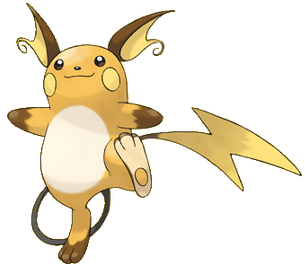

 Pokémaniacal