Fairy Pokémon

So.  How ‘bout that new element, huh?

When Nintendo announced that there would be an eighteenth type in Generation VI, I was one of the Pokémon fans who were neither excited and joyful about it nor annoyed and upset (there are, at the last count, seventeen of us in the world, one of whom is quite old and could die any minute).  Before X and Y were announced people used to ask me sometimes what new type I would add if I could, expecting that of course I would add one or more if I had the chance, and naturally I was difficult with them because I enjoy being difficult, and I was minimalist because I enjoy being minimalist, and I would say “well, actually, there’s one or two that could stand to be taken out…” and if pressed I would babble a bit about having a ‘Holy’ type or some such, although my heart wasn’t exactly in it.  It’s not that I disliked the idea; I just had a different view of how to do the things that a new type would do.  A new type means rebalancing the type chart – well, you can fiddle with the relationships of the existing types without adding new ones (though people might feel cheated by that).  A new type means new design opportunities – but really, what gaps were there in the existing set?  A new type means a new class of Pokémon, linking species that were previously disparate – is that good or bad?  In short, having a Fairy-type does all sorts of things that I probably would have chosen to do without it, but they’re done now, and Dragon and Steel no longer rule the universe, and there are probably lots of different new Pokémon that will happen now who wouldn’t have happened before, so let’s see what we can come up with to say about these critters.

Game Freak have rebalanced the type chart before, of course; they added Dark and Steel, way back when, because they wanted to break the stranglehold of the Psychic-types over the world of Red and Blue (apologies if this next part bores you; some of us old f%$#wits, of course, remember what Psychic-types were like in Red and Blue, but not everyone was there, so shut up and let them listen).  With their attacks resisted only by other Psychic Pokémon, vulnerable only to the pathetic Leech Life, Pin Missile and Twineedle, immune to Ghost attacks (i.e. Lick – Night Shade worked, but dealt static damage anyway) because of a mistake in the type chart, and thereby dominating over the poor Ghost/Poison Pokémon who were somehow supposed to counter them, Psychic was hands-down the best element in the game.  The addition of Pokémon who actually resisted their attacks changed all of that, and Psychic-types are now better known for supporting roles than for the devastating special attacker positions they tended to occupy in the first generation.  The fourth and fifth generations had a somewhat different situation going on: there were two types ruling the roost the way Psychic Pokémon once had – Dragon, because they had some of the most powerful attacks that could be relied upon (notably Outrage and Draco Meteor) and could only be resisted by one other element, and Steel, because they were that element (and also because they resisted literally two thirds of the type chart).  Thus we have Fairy Pokémon.  Fairy Pokémon, as I’m sure you’re all aware by now, are completely immune to Dragon attacks.  This spells disaster for Outrage, because it locks the user into using the same move again for two or three turns, it spells disaster for Dragons with Choice items, which have a similar effect and remain among the most popular ways of getting the biggest bang for your buck, and even Dragons who use neither are none too happy.  They now find themselves in a similar position to that Psychic Pokémon did in Gold and Silver, though admittedly not quite as serious: their near-perfect neutral coverage is now blemished, forcing them to confront the fact that, actually, their attacks hit for super-effective damage against very little (only other Dragon types, in fact).  Lesser Dragon-types like Druddigon and Altaria are going to be feeling that one for a while, but Pokémon like Dragonite and Hydreigon still enjoy the advantage of… y’know, being Dragonite and Hydreigon, with the attendant versatility, power and all-around magnificence, so they can come through just about anything smelling of roses, but now that the most terrifying thing about them can be wished away with the wave of a magic wand, their lives are going to get a lot more… interesting.

An aside on how the other types feel about all this, purely because it’s the only chance I’ll have to talk about that (and throughout all this, it’s also good to remember that the availability of Dazzling Gleam via TM adds a completely new trick to the repertoires of a lot of Pokémon who can now stand up to Dragon-types).  Steel-types didn’t come through the changes entirely unscathed – they lost two of their resistances, to Dark and Ghost, which is important because there were so few types that did even neutral damage to Steel before, much less super-effective, that many Pokémon found they were utterly incapable even of learning anything Steel-types didn’t resist, through no fault of their own.  Steel also got a huge bonus, though – they’re one of the two elements that can hit hard against Fairy Pokémon (the other being Poison, which desperately needed the boost), a benefit which also comes with another bloody resistance, so honestly I think they probably win as much as they lose here.  I just want to point out, at this juncture, that no other type in the game has more than six resistances (the runner up, surprisingly, is Fire; Poison has five, and none of the others exceeds four).  Steel has ten, plus Poison immunity.  Just saying.  Meanwhile, Fighting loses out by being one of the elements resisted by Fairy-types, but I’m pretty sure they can take it; a lot of things resist Fighting attacks, but almost as many are weak against them.  For some reason, Game Freak also felt that Bug needed to suffer in the same way, which seems kind of unfair, given how awful an element Bug was already, but maybe they thought that Grass was feeling lonely being the only type resisted by seven others.  What I seem to be getting at is that I don’t think the type chart is now ‘fixed’ by any stretch of the imagination and that more aggressive changes would not have hurt, but this isn’t really what I’m supposed to be talking about.  Back to Fairies.

Most of the ways Fairy Pokémon interact with the other types make some sort of thematic sense.  The overpowering advantage against Dragon-types is controversial, but, well, what do dragons do in fairytales?  “Get slain,” seems to be the pattern.  Rarely does one find a terrible fire-breathing damsel who must be slain in order to rescue the pure and virtuous dragon, though I’m sure it would make a good story.  The posture of abject surrender which they adopt when facing Steel-types, likewise, makes sense – it is well-attested in European folklore that creatures of the Fey are repelled by cold iron (often any metal will do, but cold iron – iron forged by pure bludgeoning force, without the application of heat – seems to get the most consistent results).  Fire, similarly, is universally known for its ability to repel magical threats, while Fighting-types stand little chance against Fairies for much the same reason as they are defeated by Ghost- and Psychic-types; all the martial skill in the world just doesn’t help much against magic.  The remainder are trickier.  Fairies beat Dark-types, I suspect, by virtue of being associated with goodness and purity, where Dark Pokémon are connected with treachery and outright evil.  Weakness to Poison was obviously necessary for balance reasons but thematically, as far as I can tell, it’s probably something about purity and corruption, perhaps mixed with the idea that Fairies, being otherworldly and having their origins in a place without sickness or disease, are particularly vulnerable to these earthly difficulties.  I’m afraid on Bug they’ve lost me, which is doubly infuriating because resistance to Bug is probably the one thing about the Fairy-type that makes me wonder, from a purely mechanical perspective, just what on earth they were thinking.  Maybe because traditional fairies often have the ability to control insects, as mounts and the like…?  I’m not sure I buy it.  Honestly, the reverse, much more kindly to the poor Bug-types, could have been easily justified: fairies react to bugs with a girlish shriek in the tradition of Misty.  While I’m on the subject of unfairness, I also think this would have been a wonderful opportunity to give the downtrodden Normal-types some love by making them strong against Fairy Pokémon, on the grounds that they are normal, firmly rooted in the real world, and don’t care so much about magic (which I think is the same reason they’re immune to Ghost attacks) – but no; no-one cares about Normal-types.  Anyway, the sense we get here, overall, is that the type relationships of Fairy Pokémon mark them out as being representative of fairytale goodness in general, and all things bright and beautiful – although their relationships with Steel- and Fire-types might hint at a connection to older folklore in which fairies, elves and the like, while enchanting and beautiful, are also dangerous.

Before the Victorian authors (and to a lesser extent Shakespeare, most notably in A Midsummer Night’s Dream) got to them, fairies in European folklore were a curious mix of old Celtic nature gods and Christian ideas about demons.  Even more recent characters like J.M. Barrie’s Tinkerbell, who can be jealous, spiteful and possessive, don’t entirely leave this behind.  They’re not necessarily malevolent, but they come from a place where humans really don’t belong and can easily get lost.  They play tricks, they lie, cheat and steal, they dispense good luck and bad on a whim.  They steal children and raise them as fey, leaving stunted, dumb Changelings in their place.  They’re known to kidnap adults too at times, which can be great until they quite innocently forget that humans need to eat, or just don’t realize that we age.  Terry Pratchett said it best:

“Elves are wonderful.  They provoke wonder.  Elves are marvellous. They cause marvels.  Elves are fantastic.  They create fantasies.  Elves are glamorous.  They project glamour.  Elves are enchanting.  They weave enchantment.  Elves are terrific.  They beget terror.  The thing about words is that meanings can twist just like a snake, and if you want to find snakes look for them behind words that have changed their meaning.  No one ever said elves are nice.  Elves are bad.”

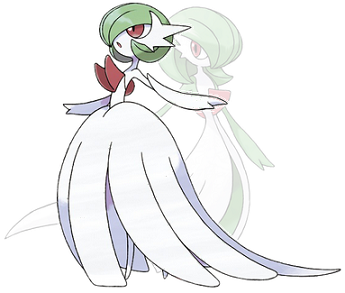
The kinds of Pokémon who have been awarded the Fairy-type so far seem to bear out a more standard ‘fairytale’ interpretation – I mean, really, how much more saccharine can you get than a literal sentient ball of candyfloss?  Like Puck or Tinkerbell, there are some mischievous ones in the bunch, like the famously unpredictable Clefairy or the cheeky Whimsicott, but mixed in with sweetness-and-light Togekiss, and loyal, pure Gardevoir.  Perhaps the only one who hints at the really dark side of the fey is Mawile, based on a treacherous Japanese monster.  In fairness, though, when we start getting further into that style of fairy, there’d be a lot of overlap with Dark in terms of what the type means… which brings me to the next question: does the Fairy type blaze such new ground that we needed it to accommodate new designs?

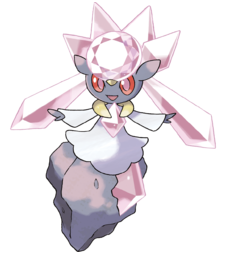
Jim the Editor is adamant that there are no Pokémon in X and Y or anywhere else that actually need a new type in order to express what they can do, and that there is no reason any hypothetical Fairy Pokémon you care to come up with would not be equally well served by some combination of Normal, Psychic, Dark and possibly Grass.  Ultimately there aren’t that many to account for because, of course, most of the Fairy-types that exist now are Pokémon who already had types or type combinations that served them well enough.  All we’re left to deal with are Flabébé and co. (Grass or Grass/Psychic), Aromatisse, Slurpuff and their associated spawn (and honestly, Normal has so much in it already that stuffing in perfume and candyfloss as well would hardly hurt it), Dedenne (who is just Pikachu again for the fifth time; face it), Carbink and Diancie, whatever their relationship is (pure Rock would work, actually, since Power Gem has established that gems and crystals fall under Rock, but Rock/Psychic would surely be fine too), Klefki (Steel/Psychic), Xerneas (why not Psychic, really?), and Sylveon, who was the first hint anyone got that there would be a new type – but be honest, if not for the fact that a Normal-type Eevee evolution would have been weird, is there anything about Sylveon that would have said to you “no; can’t be a Normal Pokémon”?  If all those other Pokémon had been part of the pre-release hype and Sylveon had been kept hidden, would you really have thought to yourself “gotta be a new type there”?  Perhaps the existence of the Fairy-type will stimulate the creation of more folklore-based Pokémon, who are often among my favourites.  On the other, perhaps it will only give us more pink fuzzballs.  I am uncertain.

The other question I’m left with is why certain other Pokémon are not Fairy-types, because I’ve always found that an equally useful way of thinking about what a type means and where its unity comes from.  Why isn’t Chansey a Fairy-type (aside from the fact that no-one wants Blissey running around with Dragon immunity)?  What do Wigglytuff and Azumarill have that she doesn’t?  Why should Gallade have remained Psychic/Fighting rather than switching to Fairy/Fighting?  Doesn’t his ‘chivalry’ thing fit right in with the fairytale theme, and isn’t it arguably more important than “I have MIND SWORDS”?  Personally, I also would have loved to see Snorunt and Glalie become Ice/Fairy, because they’re straight out of Japanese folklore just like Mawile, and because I’m fond of malevolent fairies.  Jim the Editor wants Tangela to be Grass/Fairy, because of its deceptive and tricky nature, Milotic to be Water/Fairy, because of her aura of serenity (and what’s more ‘fairytale’ than a magical lake with a beautiful fairy guardian?), and Rapidash to be Fire/Fairy, because… y’know, unicorn (although admittedly Rapidash lacks the purity-and-magic ideas associated with the unicorns of folklore and is more about fire and horsiness).  This might be a good place to return to Dragon-types, because Dragon is an element that is similarly difficult to pin down, for similar reasons – both are subsets of “Pokémon inspired by folklore,” and both represent a particular kind of creature with representatives of one sort or another in multiple cultures, ensuring that the names evoke a wide range of different ideas in the real world, and as a result, both have lines that are very difficult to draw.  I’m not sure anyone knows what a Dragon-type is anymore, living as we are in a world where Altaria and Dragalge are Dragons while Gyarados and Charizard are not.  The fact that there are Dragon and Fairy breeding groups, which overlap with their namesake types, but not exactly, makes life even more confusing.  Probably the best we can hope for is some vague thematic statement: both are magical creatures (more magical than most Pokémon, that is) with powers that place them above mere mortal concerns, Dragons being generally monstrous in nature, Fairies generally sweet and kind (or at least appearing to be), and superficially more human-like.

Fairy is hardly the only type with blurred edges – I’ve long contended that Ground melts into Normal on one side and Rock on the other, and I think everyone has one or two retypes they want to see happen.  It also isn’t going to create a neat balance between the types, though it’s certainly a valiant effort.  It mostly makes sense, but in some ways is very weird.  I don’t think it really needed to exist, but since ‘fairy’ Pokémon have been a legitimate classification for a long time now, it sort of makes sense, in a way, that we now finally have Fairy-with-a-capital-F Pokémon.  I guess ultimately that puts me right back where I started: it’s not good or bad; it’s just new.  One way or another, the game will never be the same again – which is exactly what we really want out of a new generation, isn’t it?

Would you consider fire type Pokémon to be bioluminescent, or is that classification only suitable for Pokémon equivalents of real world bioluminescent animals like Lanturn or Volbeat/Illumise?

Er… does it matter?

I sort of think the distinction is totally academic; to my knowledge, there are no real-world animals that just persist in a natural state of being on fire, so I’m not sure whether a real-world biologist, presented with a creature like that, would react by calling it ‘bioluminescent’ or by coming up with a new word altogether.  I mean… if I’m being called upon to settle a bet or an argument or something… OED says bioluminescence is “the biochemical emission of light by living organisms,“ and, well… fire is a chemical reaction, all right, so I guess I’d say "yes, they are.”

Hello! Since you enjoyed Twitch plays Pokemon, I’d like to recommend the music from Church of the Helix Choir. They have three different songs–Bloody Sunday, All Terrain Victory, and Praise the Helix Fossil, all great in my opinion… I get chills listening to them sometimes, it’s amazing how they turned a bunch of jokes into something so powerful with just music. Anyway, I hope all has been going well for you!

I’m not really a musical person (understatement of the year, any of my friends will tell you), and I don’t think music really affects me in the way it does most people, emotionally speaking – but yeah, these are pretty neat. I particularly like Bloody Sunday; very solemn, almost haunting.  One could almost use this whole endeavour as a case study in the creation of a religion – and only partially tongue-in-cheek, at that.  Faced with meaninglessness, we create meaning; faced with luck, good or bad, we ascribe it to divine providence… and, of course, faced with the utterly banal, we create art and beauty.  Again… neat.

Team Flare

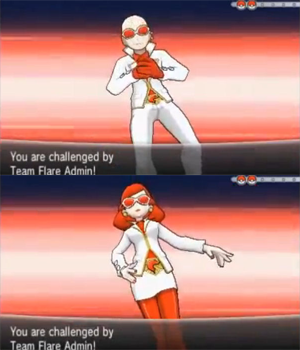
Team Flare grunts showing off their trademark poses and 'stylish' uniforms.

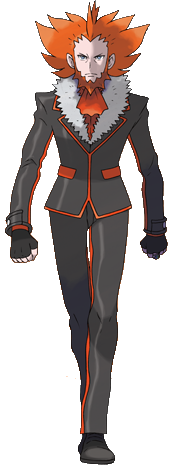
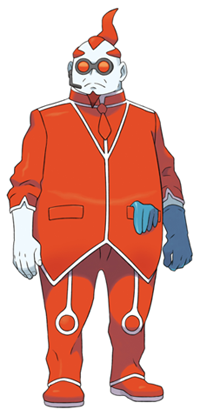
Just like I had to talk about Iris and Diantha because I’ve done all the other Champions before, I have to talk about Team Flare and Lysandre because I’ve done all the other bad guys before.  If you followed my playthrough journal of X version, you may have picked up that I have some rather strong opinions about Lysandre and his underlings, and the way the games portray them, so I think it makes sense now to take a deeper retrospective look at their involvement in the whole of the plot.  What do Team Flare really want, what makes them tick, and does Lysandre deserve our forgiveness?

Our first encounters with Lysandre are in Lumiose City, first in Professor Sycamore’s lab and then with Diantha in the Café Soleil.  Here we see the face Lysandre presents to the world: utterly dedicated to the preservation of beauty and the betterment of the world.  He speaks admiringly of Professor Sycamore’s brilliance as a scientist and Diantha’s ability as an actress to bring joy to millions, associating them and their careers with his own quest to build a beautiful world.  Even here, though, there are strong hints that he’s up to more than he lets on – on X, he declares that he wishes to “make this world unchanging and eternal so all beauty will last forever.”  In another game, I would not take such a clearly poetic sentiment seriously, but this is Pokémon, and Pokémon is not especially known for its subtlety.  On Y, he is far less circumspect about it: “I would end the world in an instant so that beauty never fades.”  Again, it’s probably meant to sound hyperbolic, but since ending the world is something that people have tried to do before in this series, that probably escaped many players; I played X, of course, but I find myself wondering how anyone could doubt that Lysandre was an enemy after hearing a line like the one he delivers on Y.  Ultimately, what he’s actually trying to do (on both versions) falls somewhere between the two – end the world of human civilisation in order to preserve what remains of the beauty of nature.  In addition to his potentially apocalyptic foreshadowing, I also noted in my entry on Diantha that this scene hints at some degree of superficiality (even sexism?) in Lysandre’s character – he focuses on Diantha’s physical beauty as the thing that makes her a good person and contributes to building a better world, considering that the loss of her own beauty with age would diminish her ability to make the world more beautiful too.  Much as he admires her devotion to making people happy, he downplays her ability to take action towards that goal and looks to her passive qualities – this represents an important flaw in his character that is going to recur later in the story.

 Xerosic, mastermind of the Expansion Suit and chief scientist of Team Flare.

Lysandre’s minions, in their first appearances in the Glittering Cave and outside Geosenge Town, display none of his semblance of nobility.  Their stated aim is to help and advance members of their own organisation, regardless of the cost to others (and to pursue the heights of fashion…).  The idea of “a more beautiful world” never comes up, even in the later dialogue of the five scientists who run the group’s more pedestrian activities while Lysandre is busy: Aliana, Bryony, Celosia, Mable and Xerosic.  It annoys me a little that there are so many of them, because it means that each of the four girls doesn’t get to do much, but they do have distinct personalities, which is nice.  Aliana, who supervises the attack on the Kalos Power Plant to gather electricity to power the Ultimate Weapon, seems to enjoy battling the most, and may be slightly unhinged.  Celosia and Bryony (who are together in both of their appearances – I unashamedly ship these two) are responsible for raiding the Pokéball factory in Laverre City to gain the Pokéballs necessary to catch many powerful Pokémon whose life energy will fuel the weapon; they seem detached, nerdy, and a little philosophical.  Finally, Mable, who goes after one such Pokémon, the Abomasnow in the Frost Cavern… well, frankly, Mable is a callous b!tch.  “Allow me to spell it out for you! It’s so Team Flare – and only Team Flare – can survive!” she declares as she torments the gentle Ice Pokémon.  “After all, why should we care about saving people who aren’t on our side?”  Xerosic’s appearance in the story’s climax in Geosenge Town establishes him as a man utterly without conscience or remorse, willing to activate the Ultimate Weapon and slaughter billions even against Lysandre’s orders (if the player wins Lysandre’s bet about the two buttons in Xerosic’s lab) simply for the joy of what he considers scientific achievement.  He also features, of course, in the little post-Elite Four Looker vignette as Emma’s employer and tutor, a position which he exploits heinously.  The message of his involvement in that story seems to be that even thoroughly evil people are capable of love and affection and that, even though those things cannot and should not absolve Xerosic of his actions as part of Team Flare, they still deserve recognition.  Also appearing in the Looker sequence is Malva of the Elite Four, apparently a member of Team Flare, who makes no secret of the fact that she despises you, but seems to hate Xerosic more for abandoning Team Flare’s grand mission in favour of petty crime.  Her dialogue in Elite Four rematches thereafter suggests that Malva has developed something of a grudging respect for the player’s strength, despite her intense hatred, and believes that the strength to force one’s beliefs upon the world is all that really matters in life.

 Whatever else may be said about them, I love the Team Flare Admins' ridiculous pimp outfits.

Interspersed with your actual encounters with Team Flare, a few more interviews with Lysandre himself take place, one in person with Professor Sycamore and a couple by Holo-Caster.  His speech and ideas remain grandiose throughout, and he encourages us to give thought to how we will use our power, but only when you see him in Lysandre Café do we receive more ominous hints about his plans – as with many Pokémon villains, the problem is in his absolutism, his willingness to divide all people in the world into “those who give and those who take” and declare all of the latter, most emphatically, “filth.”  This is the conversation that first suggests the existence of the Ultimate Weapon, and hints at Lysandre’s willingness to use it.  When he finally reveals his Team Flare allegiance to the world and explains his plans to wipe out the rest of humanity… well, it surprised me that he was willing to go so far for his “beautiful world,” but it’s not a total shock, put it that way.  His criteria for who gets to survive the imminent devastation are disheartening – “anyone who is a member of Team Flare, and no-one else,” which makes me question how well he really knows his members.  Would all of them really satisfy his idea of a person who will give and sacrifice to create a beautiful world?  Most are selfish, short-sighted and callous – exactly the kind of person you’d think Lysandre would normally deride as ‘filth’ – and they are able to enter his select group of followers not by proving that they will help to build and preserve a beautiful world, but by paying a truly mind-boggling membership fee.  The interesting thing is that, when we battle him for the first time in his lab beneath Lumiose City, Lysandre seems open to the possibility of letting the player join him and live in the new world.  More so than any other Pokémon villain, Lysandre is interested in our passion and the way we express our beliefs through battle – he’s a little like N that way.  Like N, he also seems almost like he might want a way out, like he might want to be stopped, on some level; he encourages us to fight him and his underlings, and is even willing to let us decide (after a fashion) whether the Ultimate Weapon will be activated.  In the end, though, Xerosic intervenes and we are forced to pursue Lysandre to Geosenge Town to confront him once more.

This is when we learn the dirty little secret, the part of his plan that disturbs even Lysandre: that there will be no place for Pokémon in his new world, not even those who belong to Team Flare.  Lysandre loves his Pokémon; his ability to harness Mega Evolution proves that, as Shauna observes.  In some ways his willingness to sacrifice them speaks to the strength of his convictions, but his reasoning is concerning.  As long as Pokémon exist, Lysandre believes, and as long as some people have Pokémon while others do not, people will use them to take more than their share and seize more power than they deserve.  Some of his research notes back in Lysandre Labs take the form of a broad sketch in anthropological terms of the genesis of inequality in civilisation (a problem that, in the real world, is one of the major areas of study in prehistoric archaeology), and place the impetus squarely with Pokémon – people who commanded Pokémon were able to amass wealth and influence, becoming great leaders.  He makes essentially the same point to us, far more briefly, in person.  The problem is that, despite all his love for his own Pokémon, he never considers that they might have a choice, or that their decisions might impact the way things turned out.  He thinks about the way their powers can be used, for good or ill, but not about how they will allow people to use them.  Remember what I said about the way Lysandre views Diantha as essentially passive?  He’s doing the same thing here.  He’s denying agency to Pokémon, who are clearly intelligent beings, and thinking about them as though they were little more than the extensions of their trainers’ will.  In short, by taking such a deterministic view of the effect Pokémon have on human society, he is committing one of the franchise’s cardinal sins: viewing Pokémon as tools.

 This man.  What a dick.  Seriously.

Lysandre reminds me – and many other people, I’m sure – very strongly of Cyrus (even sharing two Pokémon, Gyarados and Honchkrow, with his predecessor).  Both are acknowledged as intellectually brilliant, and their goals and beliefs are quite similar.  Both felt driven to crime by despair at the human condition and a belief that an ideal world could only be brought about by drastic and destructive means; Cyrus’s goal was to create a world without suffering – the problem was that he believed the ‘incomplete’ nature of the soul made suffering inevitable – while Lysandre wanted to create a utopia where the world’s resources were shared fairly and sustainably, but came to believe that the greed and laziness inherent in human nature made his vision impossible.  Both are charismatic leaders who command blind obedience, both have keen engineering skills, and both meet mysterious ends.  My trouble with Team Flare and Lysandre though, is that I think we’re supposed to have much more sympathy for them than I can muster.  No one ever asked us to like Cyrus.  The more generous amongst us might have appreciated a certain nobility in his desire to end all suffering, but there was never any question that he was Evil with a capital E.  People regularly ask us to like Lysandre, from Professors to rivals to random townspeople – largely because, unlike the cold and emotionless Cyrus, Lysandre actually cares, and seems to feel genuine remorse even as he continues to work towards his goals.  He seems like he’s meant to be a tragic figure, but having seen so little of his famed philanthropy, I find it difficult to empathise.  In some ways, I think, Lysandre is even worse than Cyrus, because Cyrus’ decisions and actions were very impersonal.  Cyrus felt that life itself was fundamentally broken; killing everyone wasn’t exactly part of his goals, but he felt it was a reasonable sacrifice to make for the chance to create a perfect universe.  Lysandre, on the other hand, just unilaterally decided that most of the people in the world deserved to die for wasting the planet’s limited resources.  As for Team Flare – well, they may not have been pleasant people, but at least Team Galactic and Team Plasma were genuinely in the dark about the true extent of their leaders’ motives (even one of the Galactic admins, Saturn, had no idea Cyrus was trying to destroy the universe and become a god).  Team Flare seem to have known all along what havoc their master was planning – they regularly speak of their desire to create a beautiful word, just for them, and as far as we see no-one abandons Lysandre in shock when he announces his plan to all of Kalos – yet even at the end, Malva is able to claim with a straight face that she did what she thought was right.

I keep coming back to Serena’s words in the battle with her on Victory Road, because I think they encapsulate what the writers intended us to take from this story, and how far that is from what I actually took from it: “Lysandre chose only Team Flare.  You and I chose everyone but Team Flare.  But since our positions forced our hands, you can’t really say any of us were right.  So maybe if both sides have something to say, it’s best to meet halfway.”  Well, okay; that would have been fair enough if we had met Lysandre ten years ago and he had been saying “we need to move Kalos in a more socialist direction and commit ourselves to sustainability.”  Unfortunately, it seems pretty clear that even by the time we first meet him he has already gone off the deep end and is merely hiding it, so that his position is actually “I have no choice but to kill all of you, and your pets.”  How exactly does one “meet halfway” with that?  As far as I can make out, the writers were trying really hard to make Lysandre a tragic and morally ambiguous villain, and even thought they had succeeded, but we get little opportunity to see his positive traits for ourselves, are given the chance to understand his descent into evil only in retrospect, and are eventually asked to sympathise with a man who tried to destroy everyone we have ever loved for the ‘greater good’… of himself and his band of thugs.

Honestly, I think there’s only one way now to achieve the aims the writers actually had in mind for Team Flare and Lysandre: the next sixth generation game has to be a prequel.

Speaking of fairy type, if they ever remake the 2nd generation games again, or just reintroduce Whitney in some way, what do you think they’ll do to Whitney’s team? Do you think they’ll acknowledge that a normal-type specialist has a pure fairy on her team, or will they either replace clefairy or miltank with a normal or fairy type respectfully? Or will they just give up and make her one of the only gym leaders with more than one type preference?

Well, I can’t really speak for what they will do, mostly since I don’t think they’ll remake the second generation games again.  I can talk about what I think they should do, or what would do – which is to say “f*ck it” because what Whitney likes are “cute Pokémon” and Normal and Fairy both have those in abundance.  It’s not like she’d be the first major opponent to look outside her speciality; Sabrina has a Venomoth, Candice has a Medicham, Volkner has an Ambipom and an Octillery, the Striaton triplets all have Lillipup, and several Elite Four members are all over the place.  They could even reference the fact that Clefairy was once thought to be a Normal-type until Fairy Pokémon became better-understood.

Also, there’s a fourth possibility you haven’t mentioned – make Whitney a Fairy-type specialist, keep Miltank as a lone Normal-type and give her a different signature Pokémon, like Clefable.  Why not?

Reading your reviews of Unova Pokemon, I notice you condemned quite a few of them for tricks they didn’t have when you wrote the article, but obtained later. For example- Braviary was damned for a lack of Roost, which he got through BW2 tutors and XY TMs, and Genesect partially because Techno Blast was an inferior Flamethrower/ Thunderbolt/whatever, while it is now more accurate and more powerful than Thunder, Fire Blast, etc. Would you think about reconsidering these Pokemon?

It sounds like a lot of work.  Someone should totally do that.

Champions of the Pokémon League, Part 8: Diantha

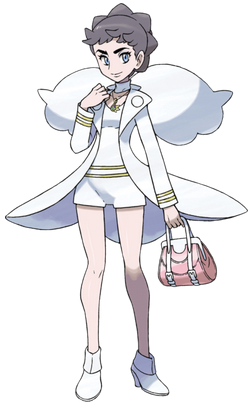
Diantha in her angel-winged white coat.  Note the jewelled necklace - that's her Digivice.

Glamorous but relatable, ethereal but down-to-earth, the Kalosian Champion, Diantha, is everything you want in an actress – but how does she stack up as a Pokémon League Champion?  She certainly has the look down, with an extravagant costume reminiscent of angel wings, and more importantly she also has the right kind of attitude to Pokémon and training.  Sadly – and I may as well be up front about this – the story of X and Y doesn’t give Diantha very much of an opportunity to do anything, something that was rather a disappointment to me.  Still, she gets a few good lines, and when you get her into a battle she’s the equal of any of her predecessors, so let’s take a look at her and see what makes this Champion tick.

We first meet Diantha in Lumiose City at the Café Soleil, and this scene is probably her most interesting because she has the opportunity to speak directly to Lysandre and set up a compelling argument against his beliefs – even here, the game doesn’t let her have many lines, but she makes them count.  Lysandre puts to Diantha the question of whether, as an actress, she would prefer to stay young forever, since it is her duty to inspire people with her beauty.  He clearly expects the answer ‘yes,’ but Diantha finds the question bizarre – being forever young would mean playing the same kinds of roles forever, but she views change and age as essential parts of the experience of human life, and eagerly anticipates the variety of more mature characters she will play as she grows older.  Their conversation betrays a certain narrowness and superficiality on Lysandre’s part; despite his comment that Diantha’s great contribution consists in “[moving] the multitudes with her excellent acting,” it seems clear that he regards her physical beauty as the most important aspect of her craft – to him, Diantha really is just a pretty face.  Her second appearance makes it clear that Diantha herself has a very different understanding of what she does.  We meet her again in Coumarine City, where she is talking with Professor Sycamore at the monorail station.  Diantha offers some comments on Mega Evolution, suggesting that perhaps the reason it seems to be limited to Kalos is because it has something to do with the legendary Pokémon of the region (if Professor Sycamore is correct in his eventual conclusion that Mega Stones were evolutionary stones irradiated with the energy of the Ultimate Weapon three thousand years ago, she’s not far off – although Xerneas and Yveltal don’t seem to have been directly involved with the weapon’s first use, they command similar powers).  More interesting from a characterisation perspective, though, is what she talks about after he leaves.  Sycamore had mentioned the bonds between trainer and Pokémon as a critical component of Mega Evolution, and Diantha makes an interesting comparison with the way she approaches acting: she sees it as an exercise in empathy.  In order to enjoy a role and play it effectively, Diantha says, she needs to put herself in her character’s shoes and understand what they have in common.  She also believes in taking the same approach to interacting with both people and Pokémon.  Essentially, the reason she’s both a successful actress and a great Pokémon trainer is because she’s figured out that the two professions share a key skill – empathy – and made it a part of her general approach to life.

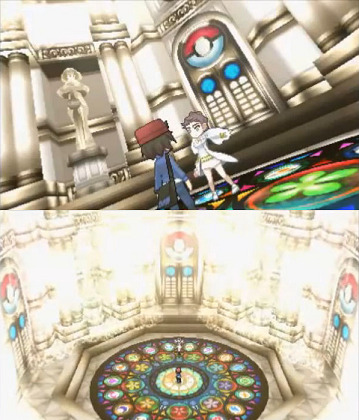
 Diantha's Radiant Chamber, in all its stained-glass glory, seems intended to be 'heavenly' in its appearance, like her costume.

And that… is the last we see of her.  Diantha doesn’t take any further part in the storyline of X and Y until your troubles with Team Flare are all over and you reach the cathedral of the Elite Four.  Realistically enough, she seems to have almost forgotten you herself by this point, but quickly realises that she does know who you are and what you’ve done for Kalos after all – which brings us to the battle.  Like Blue and Cynthia, Diantha is very hard to pin down to a preferred Pokémon type or battling style.  She appears to favour Rock- and Dragon-types, with two of each on her team, but her signature Pokémon, the strongest in her line-up, whose physical appearance is recalled in the flaring white skirts of her coat, is a Fairy/Psychic dual-type, Gardevoir.  In Hawlucha, her opener, Diantha has a strong and fast physical attacker with excellent type coverage thanks to Flying Press, Hawlucha’s idiosyncratic signature move, while Tyrantrum adds a sledgehammer to her tool kit.  Aurorus provides Reflect and Light Screen support, though with two double-weaknesses it may not last long enough to set up more than one.  Goodra is a resilient special tank with a wide variety of powerful attacks.  Gourgeist is surprisingly tough and can hit almost anything for super-effective damage by adding the Ghost type to Pokémon with Trick-or-Treat.  Last, but most definitely not least, is Gardevoir, who proves that Diantha can put her money where her mouth is when it comes to empathy and bonding with her Pokémon – by using her Mega Charm to Digivolve Gardevoir, Diantha can turn her partner into as great a threat as the whole of the rest of her team put together (as I learned to my cost when I first challenged her and won with my Venusaur’s last three hit points).  Mega Gardevoir’s Moonblast and Psychic attacks are phenomenal, more powerful than anything a Champion has brought to bear against us before, and without a Steel-type to resist her primary attacks she is one of the most dangerous single opponents the games have ever produced.  Ironically, Diantha’s greatest vulnerability is probably to Fairy Pokémon, since she has three Pokémon that are weak to their attacks, none that resist them, and only one super-effective attack to hit back with (Hawlucha’s Poison Jab); she also has great difficulty with Ice- and Steel-types.  Still, her weak points are certainly less easy to exploit than those of predecessors like Water-type master Wallace and the closeted Flying-type specialist Lance, making her a solid end-game challenge.

 Diantha's partner, Mega Gardevoir.

(Of course, if you’ve been using the Exp. Share consistently throughout the game Diantha is probably a walk in the park, but hey, who’s counting?)

The variety of Pokémon we see on Diantha’s team – in terms of not only their types and skills but their personalities and dispositions – may be intended to recall her desire for variety in her career and her life.  Partly I’m just saying this because I can’t find any other sort of theme to link her team together, but it seems to me that a wide variety of popular film genres have Pokémon representatives on her team; she has action (Hawlucha), horror (Gourgeist), family/comedy (Goodra and Aurorus), disaster (Tyrantrum) and, of course, romance (Gardevoir) all covered.  Perhaps that’s entirely in my head and the designers just wanted to give her a diverse bag of the new Pokémon the sixth generation has to offer, but it makes sense, given Diantha’s stated interest in playing a variety of roles, that she might have acted in many different genres, possibly meeting many different Pokémon in the process.

 The recently-revealed legendary Pokémon, Diancie, whom I'm bringing up because I know someone else will if I don't.  A lot of people speculate about a connection between Diantha and Diancie, but I don't believe there is any, because the similarity between their names doesn't exist in Japanese, where Diantha's name is Carnet, and because it makes as much sense for the design of her coat to be based on Gardevoir as on Diancie.

One last thing that’s worth mentioning about Diantha is her reappearance in the Café Soleil after the end of the game.  Diantha here offers you the opportunity to trade for a Ralts holding the Gardevoirite Mega Stone, so that you can raise a Mega Gardevoir of your very own.  This is not in itself particularly interesting; what is noteworthy is that she actually takes the time to think about how the Pokémon involved in this trade feel about it – something I can’t recall any other character in the games ever doing (although, granted, most in-game trades are with random NPCs who have no other discernable purpose in life).  “We Trainers all feel a bit nervous when trading Pokémon,” she comments as the trade begins, “but I’m sure it’s nothing compared to how the Pokémon must feel!”  When the switch has been completed, she even takes a moment to address the Pokémon you’ve given her directly, asking “was it a bit shocking to be traded?” and promising to care for it to the best of her ability.  A tiny detail at the very end of the game, but one that once again demonstrates that Diantha really does know what she’s talking about when it comes to empathy and consistently makes an honest effort to understand the perspectives of her Pokémon on their lives together.

On some level Diantha’s non-existent involvement in the Team Flare crisis makes sense, since she’s very clear that she’s only a Pokémon trainer “in [her] off time” – acting is her real career, and for all her power, she’s not really a ‘saving the world’ kind of girl.  Still, I find her remoteness from the actual plot as disappointing as I did Iris’s, and I don’t think Diantha even gets as much screen time (ironically) as Iris did in Black and White.  Having said that, she makes a good effort to stay relevant in the time she does get – and I can always hope for more in any future games.  Though she never gets the chance to be a hero, through her dialogue she does manage to establish herself as a role model for Kalos’ trainers and a champion of a worldview opposite to Team Flare’s.  Lysandre wants to put the beauty of the world on a pedestal and keep it from changing for all time, but Diantha wants to engage with and understand beauty, and prefers to embrace change, for better or worse, which, ultimately, is what the central conflict of X and Y is about.

SkarmorySilver asks:

I see you liked my pitohui Pokemon, thanks! Which leads me to this question: I remember you said you were tired of bird Pokemon (among other generic templates) being repeated with each generation. That said, if you HAD to design a “common bird” (without any cop-outs like using a previous gen bird, for example), what would be the result? Would you have picked something different from a songbird, for example?

What have we had so far?

Pidgey isn’t so much a pigeon as a composite ‘generic bird,’ [EDIT: in fact it’s more probably a cedar waxwing, a medium-sized North American songbird] similarly Spearow is a composite ‘generic raptor’ and pretty clearly not a sparrow.  Aside from those, we’ve had an owl, a swallow, a starling, an actual pigeon who eventually winds up as a pheasant, and a robin who winds up as a peregrine falcon.  With the exception of Hoothoot and Noctowl, all fit into the same basic battle role as fast physical attackers (with… varying degrees of success).  With the exception of Fletchinder and Talonflame, all are Normal/Flying.  Now, if I understand the prompt you’re giving me, the requirement here is for an early-game Pokémon based on a bird without any particularly remarkable traits, initially Normal/Flying but not necessarily all the way?

I want a frickin’ ptarmigan.

Ptarmigans, for those unfamiliar with the name, are hardy little alpine- and tundra-adapted birds related to chickens, pheasants and quails.  Probably their most interesting feature is that their feet and toes are covered in feathers, unusually for birds – part of their cold adaptation.  Let’s play with that and have them evolve into Ice-types with ice crystal feathers on their feet, for performing a sort of ice-kick attack parallel to Blaze Kick (I’m sure some other Pokémon would love to share it).  While real ptarmigans hibernate in burrows during the winter, these guys hibernate in summer and emerge when the weather starts to cool down again.  They can fly, but aren’t great at it, and don’t generally like to travel long distances that way.

Wikipedia also informs me that the rock ptarmigan is known in Japan as the raichou – thunder bird (rai being the same word that appears in, e.g., Raichu and Raikou), which is a wonderful excuse to have it randomly learn a couple of Electric attacks as it levels and confuse everyone who isn’t in on the joke.

I kinda want the final form to be called Ptarmagnicant, but I’m worried that’s too long (2 letters longer than Fletchinder, who has the longest English name of any Pokémon), and I have no ideas on the smaller forms.  Suggestions?