Zygarde

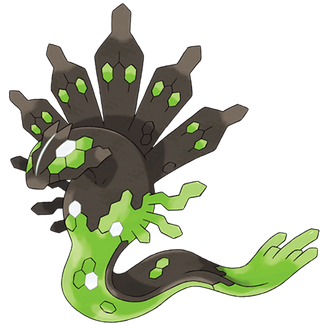
Zygarde.

I’m down to the last few legendary Pokémon now (well, the last few legendary Pokémon… and Carbink, whom I’m still intending to do together with Diancie on account of their weird relationship).  By necessity, these final four entries are going to be… more than a little speculative.  There’s still a lot that we don’t know about Zygarde and Diancie, and heck, I don’t think we’re even supposed to know that Hoopa and Volcanion exist yet (I mean, we’ve all known about them for months, but no one dares tell Game Freak that, because it would hurt their feelings and they might cry, which would be awkward).  I may have to make up a lot of stuff.  Should be fun.  Anyway, let’s do Zygarde.

I already spoke at some length in Xerneas’ and Yveltal’s entry about my reasons for being generally dismissive of the Norse mythology interpretation of this triad that’s become popular.  Still, I suppose it’s worth quickly going back over my objections as they apply to Zygarde specifically.  Zygarde, the great serpent of order, the internet would have us believe, is likely based at least partially on either the dragon Nidhoggr, the world serpent Jormungandr, or both.  Certainly Nidhoggr makes a decent parallel, as a giant snake who lives underground; what I don’t like about this is that both of these creatures are very much on the side of chaos and destruction in the Old Norse cosmology, which doesn’t seem at all appropriate for the role that Game Freak appear to have in mind for Zygarde in whatever conflicts are yet to come.  This role actually bothers me for other reasons as well – mainly, it seems almost too obvious.  The Pokédex calls Zygarde the ‘Order Pokémon,’ and credits it with a “secret power” which it uses to protect the Kalosian ecosystem from disruption.  Meanwhile, on the gameplay side of things, the mechanics of the Aura Break ability (which we’ll talk about later) seem intended to let Zygarde nullify the most dangerous powers of its two trio-mates.  The analogy with Rayquaza’s Air Lock, which likewise nullifies the effects of Drought and Drizzle, should be obvious, and at that point it seems like Zygarde’s cosmological role is likely to be parallel too – a balancing force between Xerneas’ influence on life in Kalos and Yveltal’s influence on death, presumably coming into play to resolve whatever bastardry Lysandre attempts next.  This makes a lot of sense.  It’s kind of intuitively obvious to most of us why Kyogre and Groudon need to be kept in balance, but it’s not so immediately clear why we would want to balance Xerneas and Yveltal, who seem almost like “good and evil” – one of the themes X and Y deal with, though, particularly X and particularly through Diantha’s dialogue, is the idea that change, age and death are all parts of life.  The reference to Zygarde as a protector of Kalos’ ecosystem also works well here – life, spreading without limit and unchecked by death or decay, would consume resources at an exponential rate and ultimately destroy itself, which is more or less what Lysandre believes is happening to humanity already.  The whole thing could very easily be spun as a more nuanced and philosophical version of the same story we were originally told in Ruby and Sapphire… to which I would have no objection, if not for the fact that we are about to get remakes of Ruby and Sapphire anyway.  If I were Game Freak, I would want to do something very different with Zygarde.

Probably the way I would spin Zygarde’s involvement in Z Version (assuming that is what they call it; after Black and White 2 I’m not prepared to rule out the possibility of another curveball) would be to have Lysandre know about Zygarde from the start and make it the main goal of Team Flare’s campaign.  Lysandre might well believe that Zygarde, as a Pokémon who values order and balance in the ecosystem of Kalos, could potentially be won over to his side – after all, what Lysandre sees in X and Y is an ecosystem thrown out of balance by the reckless consumption of humans.  What Maxie and Archie do by accident in Emerald is instead Lysandre’s whole gameplan: summon Zygarde by provoking a big enough fight between Yveltal and Xerneas that the serpent feels compelled to intervene.  After that, even once the player is able to calm down the other legendary Pokémon, Zygarde still goes on a rampage because it’s been convinced by Lysandre that human civilisation is the real imbalance.  At this stage, we could go one of two ways.  The first is to have Zygarde abandon Lysandre and take matters entirely into its own… er… coils, I suppose, immediately destroying Team Flare and working its way towards Lumiose City but leaving Geosenge Town and Shalour City largely untouched, apparently in accordance with its own understanding of what constitutes ‘harmony’ in Kalos.  The plot from there involves convincing Lysandre that modern civilisation shouldn’t be given up on, and him going on to earn his redemption by helping to show Zygarde the same thing.  The other way I could see this going is for Zygarde and Lysandre to keep working in unison, Lysandre becoming visibly more irrational as events unfold and Zygarde being corrupted by his influence as well, until they can be defeated and convinced that destroying humanity and filling the gap with new life isn’t the way to achieve harmony.  I’m not sure which of those two I like better; at the moment though I think probably the first.

 The last underwhelming third member of a legendary triad...

Much like Kyurem in Black and White, Zygarde seems to have been left out in the cold a little bit when you compare him with the other two members of its triad, the almighty Xerneas and Yveltal.  The most obvious reason for this is that, while Xerneas and Yveltal enjoy broadly applicable and extremely powerful passive abilities – Fairy Aura and Dark Aura, which give major damage bonuses to their already strong primary attacks – Zygarde is lumped with the decidedly underwhelming Aura Break.  Aura Break reverses the effects of all other ‘Aura’ abilities… and there are only two of those, Xerneas’ and Yveltal’s, so if you happen to be fighting an opponent who is not Xerneas or Yveltal, it just doesn’t do anything.  Even if you are, well, frankly Xerneas still murders Zygarde with Moonblast, in spite of the damage penalty imposed by the reversed Fairy Aura, and Yveltal is still in with a chance too thanks to his immunity to Ground attacks and the excessive healing provided by Oblivion Wing (which isn’t weakened by Aura Break).  What else can Zygarde do?  Well, something with legendary stats can’t be that bad; Zygarde is a perfectly solid physical attacker by almost anyone’s standards, with pretty good high-power type coverage from Earthquake and Outrage, Stone Edge for backup, and even a strong priority move in Extremespeed.  Its stats also allow it to choose comfortably between very aggressive strategies with Dragon Dance to boost its power and more defensive ones with Glare (which is 100% accurate as of X and Y and thus unambiguously better than Thunder Wave, which can be blocked be Ground-types – Zygarde is also only the seventh Pokémon to get it, by the way) or Coil.  As is by now tradition, Zygarde gets a signature move too: Land’s Wrath.  It’s a bit of an odd one, in that it doesn’t appear to be all that good at first glance.  In fact, in a single battle, it’s strictly worse than Earthquake; they’re both physical Ground-type attacks, and they have the same accuracy and PP, but Land’s Wrath does a little bit less damage.  Like so many of X and Y’s signature moves and abilities, it only really has potential in doubles, where it acts as a ‘party-friendly’ version of Earthquake – which is kind of a big deal, since most Ground-types, if you want to avoid the possibility of friendly fire, don’t actually have any good alternative, or even any tolerable one.  Still, there’s no way this competes with the amazing healing provided by Oblivion Wing or the ridiculousness that is Power Herb Geomancy.

Just comparing Zygarde to Xerneas and Yveltal, it seems almost certain that there’s more to it than we have yet seen.  Giratina in Platinum was given a vastly expanded role in both the plot and the backstory, along with a new form and new powers.  Kyurem in Black and White 2 got a whole new subsystem entirely unique to him, the unprecedented ability to fuse with another Pokémon and thus become one of the most powerful Pokémon in existence (well, in terms of raw stats, anyway), surpassed only by Arceus and, as of X and Y, both variants of Mega Mewtwo.  There were also a couple of new signature moves; they were and are total garbage, but hey, it’s the thought that counts, right?  These perks also came with an important place in the story’s mythology as a ‘remnant’ or ‘fragment’ of the original dragon that gave rise to both Zekrom and Reshiram.  More to the point, like Black and White’s ‘ruined’ Kyurem, Zygarde has noticeably lower stats than the other two Pokémon who seem clearly intended to make up a trinity with him.  Considering that Rayquaza is getting a Mega form in Alpha Sapphire and Omega Ruby, and that Groudon and Kyogre too are expecting a new toy in the form of this ‘primal’ nonsense, whatever that means, I would, frankly, be utterly floored if it turned out that Game Freak didn’t have something extremely dramatic planned for Zygarde’s eventual involvement with the plot of Generation VI.  Exactly how that will happen, I wouldn’t like to guess, though I imagine Zygarde’s physical form will change quite a bit (maybe it will become the first sixth-generation Pokémon to get a Mega evolution [EDIT: the SECOND, after Diancie.  Herp derp.]).  As far as mechanical changes go, higher stats are practically a given, and I wouldn’t be surprised to see its ability upgraded, maybe to something that just nullifies all other abilities, or weakens all Fairy and Dark attacks around Zygarde, not just Xerneas’ and Yveltal’s.  There are also two unused moves lurking in the game’s coding, in the same way as Kyurem’s Freeze Shock and Ice Burn were before the release of Black and White 2 – Thousand Arrows and Thousand Waves, both Ground attacks with the same power as Land’s Wrath.  Thousand Arrows, apparently, can hit Flying and Levitating Pokémon despite being a Ground attack, and also knocks them to the ground in the same way as Smack Down; Thousand Waves, on the other hand, can trap the Pokémon it hits (for one turn?  Until the user leaves play?  Not sure).  Those probably belong to Zygarde, and the fact that there are two of them could suggest that there are options involved in whatever power-up Zygarde will receive – possibly, like Kyurem, two different forms, each one associated in some way with one of the other two members of Zygarde’s triad.  Thousand Arrows would certainly do a number on Yveltal, so maybe each move is supposed to help it defeat one of the others?  Anything more than that is hard to say.

There was a lot you could say about Kyurem long before Black and White 2 were actually announced (and indeed I did), if you were willing to think about how exactly he could work with the Yin-Yang thing that Reshiram and Zekrom were apparently doing and how a third dragon would fit into what we knew about their origins.  There isn’t, as far as I can see, any similar big tip-off for Zygarde (perhaps partly because the internet’s dominant interpretation for his design is one that has me utterly unconvinced).  I’m perfectly fine with this.  I’ve liked generation VI so far, and despite my usual cynicism about their abilities I’m confident that Game Freak have something interesting in mind for the serpent of order – and it’s the mystery that makes it worth the wait.
Noibat and Noivern

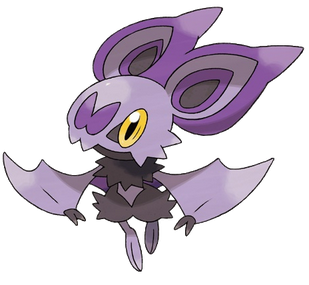
Noibat.

What would Pokémon be without bats?

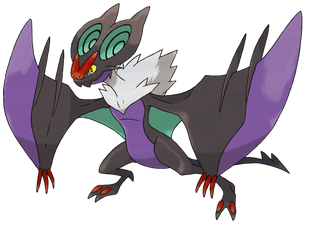
Well, at the moment I’m picturing a pristine world of peace and harmony where everything is sweetness and light and nothing painful ever happens, but maybe it’s just a tiny bit unfair to blame all the world’s economic, social, military and ideological strife on Zubat.  Only a tiny bit, mind you.  Like it or (more likely) not, Zubat and Golbat have been fixtures of the Pokémon games since the beginning, their combination of high speed, confusion-inducing attacks making them incredibly and infuriatingly effective at harassing Pokémon trainers travelling through caves.  They appeared in practically every cave of every Pokémon game up until Black and White, when Game Freak were so traumatised by their absence that they had to create Woobat and Swoobat to keep us from suffocating in the horror of a batless existence.  In Kalos, the Pokémon region with by far the greatest biodiversity we’ve yet seen, Zubat and Woobat are both back – there’s no need for a Pokémon to fill their role as bloodsucking nuisances.  Maybe this made Game Freak excited about the possibility of a designing a bat who’s not an awful blight on the world, because they went and gave us Noibat and Noivern – giant dragon-bats with a mean streak a mile wide and a voice like dynamite in a thunderstorm.  That’s a new one.

Admittedly, bats with sonic powers is… not exactly a fresh idea, although in fairness it’s something of an obvious and logical route to take, and whereas Zubat and Woobat mainly have sonic powers as a form of navigation like real bats do, Noibat and Noivern weaponise it – fittingly enough, seeing as they belong to the Dragon type, the element of unbridled destructive power.  Sound can do surprisingly nasty things to physical objects if its frequency matches the ‘natural’ or ‘resonance’ frequency of the system it’s acting on; vibrations induced by the sound stack up with natural vibrations in the material, storing more and more energy until something ridiculous happens – we’ve all heard of singers who can shatter wine glasses by wailing at precisely the right pitch (the same pitch produced by the glass itself when struck).  The somewhat more sobering equivalent is the violent shaking or even total collapse of huge bridges and towers (most famously the first Tacoma Narrows bridge in the northwest United States) due to resonance created by wind, the engines of vehicles, or even (in one particularly memorable case in downtown Seoul) a group of seventeen middle-aged Koreans performing aerobics to the rhythm of 1990 Eurodance hit The Power – which is my private imagining of what Noivern and Exploud’s Boomburst technique sounds like, and now yours too.  Making effective use of such attacks to, for instance, pulverise boulders implies that Pokémon with sonic attacks, including Noivern, possess not only extremely loud voices but also tremendous range and flexibility – destructive, but also finely tuned and precise.  This is exactly what Noivern is; the Pokédex describes her as an opportunistic ambush hunter, swooping down from the night sky to snatch up and carry off the unwary.  With no need for light to see by, Noivern can move and hunt in total darkness – this is a frightening Pokémon.  Noibat, by contrast, is more than a little on the derpy side, and more interested in defending herself with nauseating ultrasonic pulses than in blowing apart rocks with resonant sound waves or stalking unsuspecting prey as a lethal hunter of the night.  Are we surprised, though?  A traditional trait of Dragon-types is their tendency to be less-than-inspiring in their infancy, and then transform dramatically when they evolve.  Noibat is phenomenally useless, with a base stat total just barely higher than Combee’s, and she stays that way until as high as level 48, when she abruptly becomes the unholy terror that is Noivern.  It’s not quite a Magikarp-to-Gyarados metamorphosis, but it’s a pretty impressive change, and entirely in keeping with what we should expect.

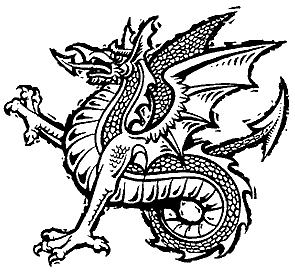
 A typical heraldic wyvern.

To continue with what makes these Pokémon dragons, the name Noivern, which keeps the –vern ending through Japanese, English and French, seems pretty clearly meant to reference the word ‘wyvern.’  This is a term for a dragon-like creature whose exact shape and powers vary, though it’s used most often and most consistently in heraldry, and the common thread seems to be that wyverns have serpentine lower bodies and only two legs, while dragons tend to have four (they also tend to have spiked or barbed tails not unlike Noivern’s, though western heraldic dragons regularly have these too).  Significantly, Noivern is the only winged Dragon Pokémon apart from Altaria with only two other limbs – the others (Dragonite, Flygon, and so on) have both arms and legs as well as wings, but Noivern’s wings are arms, like a real bat’s.  It makes sense – although the typical depiction leaves much to be desired from an anatomical standpoint, the leathery wings seen on most modern European dragons are commonly described as ‘bat-like,’ and it’s hard to imagine what else could have been the original inspiration for wings in that style (illustrated Mediaeval bestiaries actually seem to have no shortage of dragons with feathery birds’ wings as well, but the leathery ‘bat-like’ style is common too).  In a way, Noivern brings that full circle.  It’s probably no coincidence that she is, at present, the only Flying dual-type in the game who’s listed as Flying first and something else second – mechanically it makes no difference how a Pokémon’s types are ordered, but it sometimes seems like Game Freak intend to place emphasis on the primary type; consider Aggron (Steel/Rock) and Bastiodon (Rock/Steel), for instance.  This follows on from Tornadus, the first straight Flying-type, in generation V, and might indicate that they’re still putting serious thought into what they think Flying should be and how they want to treat it as a type.  For Noivern, the implication seems to be that they want the emphasis of the design to be on her “flying animal” elements rather than her “mythical reptile” elements – she’s a bat with draconic features, not a bat-like dragon.  Comparisons to pterosaurs are perhaps inevitable, though it’s hard to say whether any resemblance is intentional – take a bat and add reptilian features, and you’re bound to get something that recalls popular depictions of real winged reptiles.  It certainly adds another layer of badass to what’s going on here, though.

Noivern is built for speed.  She enjoys a cool little niche as the fastest Dragon Pokémon in the game by a significant margin, leaving even the Eon Twins in the dust – a niche that she pays for by having less raw strength than most of the other top-tier Dragons.  With a special attack score that’s good, but not brilliant, Noivern needs to rely on powerful techniques to make up the shortfall.  Luckily, she’s a Dragon-type, and Dragon-types, by definition, get to learn Pokémon’s great kill-it-now button, Draco Meteor.  Hurricane doesn’t hurt either, although its accuracy leaves much to be desired unless you’re using Noivern on a rain team – likewise Focus Blast (which can’t even get help from the weather).  Another helpful option is Noivern’s almost-signature move (she shares it with Exploud, Chatot and, for some reason, Swellow), Boomburst, a catastrophic blast of sound intended to level anything that isn’t resistant to Normal attacks.  This move has its problems – because it doesn’t get Noivern’s same-type attack bonus, Hurricane and Draco Meteor are both stronger; Normal is also a bad offensive type at the best of times.  On the other hand, it’s 100% accurate and doesn’t cut your special attack in half the way Draco Meteor does.  It’s probably worth noting that Boomburst is a sonic attack, which means that it can’t touch Pokémon with the Soundproof ability (not that this is likely to come up, since arguably the only Pokémon with Soundproof who doesn’t have a better option is Electrode), and more importantly that it can bypass Substitutes.  However, this isn’t really a big deal for Noivern since she can do that anyway with the Infiltrator ability, which also lets her bypass Reflect and Light Screen, and her other choices are less than inspiring (checking opponents’ items with Frisk, or avoiding allies’ area attacks in double and triple battles with Telepathy).  Since Noivern is extremely fast already but lags behind some of the other Dragons in power, the natural item choice for her is Choice Specs, to wring every last drop of power you can out of that special attack stat.  As always, this makes perfect sense with Draco Meteor, since they’re both options that like you to switch often, and it also fits well with another of Noivern’s cool toys, U-Turn – with the free switches it offers, it’s very easy to get a sense for what your opponent’s go-to answer to Noivern is likely to be, and how you might anticipate it in future, mitigating the inflexibility caused by your Choice item.

Noivern.


That’s the basics of what Noivern does.  The frills include a couple of ways to seriously mess with defence-, setup- and support-oriented Pokémon.  Noivern is one of the fastest Pokémon in the game to learn Taunt, behind maybe a dozen others, several of them high-tier legendary Pokémon, making her extremely efficient at blocking support techniques – obviously you’ll want to forgo the power of Choice Specs if you pick this technique.  The alternative that does work with Choice Specs for a similar goal is Switcheroo, which is an absolute pain to get onto her because it comes from Malamar, via Crawdaunt, via Archeops (which… is certainly among the stranger lineages out there, courtesy of Archeops’ somewhat incongruous membership in the Water 3 family).  It’s a tried-and-tested way of crippling supporters, though – make use of your Choice item as you normally would until you see a Pokémon who would absolutely hate to be locked into a single attack, then make the switch and stick them with your painfully restrictive spectacles.  Less aggressive versions of Noivern may enjoy the healing offered by Roost, while Dark Pulse and Flamethrower sacrifice power but win her some nice coverage (Flamethrower in particular provides a more reliable alternative to Focus Blast for dealing with Steel-types).  Air Slash, similarly, is there if you dislike the poor natural accuracy of Hurricane, but the difference in power is so great that it’s almost not worth it, particularly given that Noivern needs all the power she can get.  Finally, I think it deserves mention that Noivern can learn Super Fang, because it’s quite an unusual move.  She’s not really the kind of Pokémon that jumps to mind when you think of Super Fang – the ability to chop a foe’s health in half works wonders for stuff like Pachirisu, but Noivern can do that to a lot of stuff anyway.  Still, it’s an extremely nasty surprise for any Fairy- or Steel-type planning to soak a Draco Meteor, and deserves to be added to Switcheroo and Taunt on the list of reasons why you can’t necessarily ignore Noivern just because you have a special wall like Blissey or Umbreon or whatever.

Some Pokémon are just so badass it becomes difficult not to like them, and Noivern is one of these.  Her heavy influence from a real modern animal gives her a very different feel to most Dragon-types, making her ability to inspire fear and awe that much more real as well.  Where Golbat and Crobat are sinister and Swoobat is… kinda weird and dorky… Noivern is just downright terrifying, and yet another reason not to wander around Kalos alone at night.  The whole “quick and stealthy hunter” thing is also something we haven’t seen from a Dragon-type before.  She may not quite live up to her appearance in battles with a prepared and trained opponent, just a little short of oomph, but foes nonetheless underestimate her at their peril.  This one… yeah, this one works.

I was thinking about phantom force and other two-turned attacks ever since the Phantump and Trevenant article, and I’ve been thinking of a way that could improve all of them and make them much more useful in competitive circles. Instead of these moves being two-turned, how about having the move preparation have high priority, and the move execution have low priority, making them less predictable, and allowing them to dodge moves like they’re supposed to. So, a fair change, or too powerful?

So… as far as I can see, this actually makes Pokémon with Dig, Fly, Phantom Force and the like unbeatable except by Pokémon with (positive or negative) priority attacks of their own, or some kind of recoil ability like Ferrothorn’s Iron Barbs.  Step 1: Fly.  You automatically move first; you don’t get hit unless your opponent has Mach Punch or whatever and is also faster than you.  Step 2: Come down.  You automatically move second; you don’t get hit unless your opponent has something really weird like Vital Throw.  Step 3: Fly again.  You still don’t get hit.  Step 4: ???  Step 5: Profit!  Your opponent has plenty of free turns in there to switch in whatever they like to resist and counter your attacks, but who cares?  You can just pull the exactly same bull$#!t on that Pokémon unless it has a priority attack, or is outright immune (and even that just creates a stalemate).

Anonymous asks:

How do you feel about a “Luck” stat being added, something that can contribute a small boost to critical hits, dodge chance at no evasion stacks, possibly a side effect that works like the move Endure, you get a small chance that an attack that would KO your Pokemon will leave it with 1 HP, but only if it has more than 1 HP. The percent chances of these things would be determined by your opponent’s luck, and could be given to weaker Pokemon like Farfetch’d and Furret

For the most part, I think my reaction to this would be basically analogous to what I said here about the idea of making accuracy and evasion into concrete, trainable stats rather than just bonuses and penalties.  More to the point, I’m not sure the effect on Pokémon who would receive high Luck stats would be terribly beneficial, overall – it would encourage a perception of them as Pokémon best suited to inferior players who value luck over skill, and perhaps ultimately lead to even greater marginalisation than they experience now.  Luck is always a tricky thing to play with in games of skill and strategy – the possibility of calculated risks for greater payoff is an interesting concept that can make games more varied, but adding too many luck-based elements just makes every move a risk, and then you lose the whole point.  It’s… awkward.

i was looking into x&y’s animation sprites in detail, and I think they give away a lot more about pokemon than the previous generations, what do you think of this? I love how archeops looks like it’s struggling to fly, how water pokemon look like actually being in water (eelektross looks hypnoticing) and how pokemon stand by, it shows a bit of their personalities imo (standing there, swaying, dancing…)

I love these.  Earlier battle animations did a lot to show off the Pokémon’s personality to a greater extent than static sprites and art, but the constant movement and attack animations of X and Y are so much more fluid and expressive that there’s just no comparison.  You mention Eelektross, whose possession of the Levitate ability just makes so much more sense now that we can visualise him that way; I’m also a huge fan of the way Blastoise levels his cannons to fire, Inkay and Malamar spin and rotate, Espurr and Meowstic lift their ears when using special attacks, or Flying Pokémon in general make wide swoops and dives.  Some of them aren’t great – like Salamence just kinda… hangs there in the air, not bothering to flap his wings like most Flying Pokémon do… which looks a bit odd.  Xatu also can’t help but look a bit ungainly in flight. For the most part though, I think the animations are well done and help the atmosphere a lot.

Do you see pokemon continuing in making new regions or will Game Freak take a break and add some variety to their usual such as past history of the older regions or the future.

Well, my standard answer to this kind of question is that I expect Game Freak to continue doing what’s been proven to work in the past unless they explicitly tell us otherwise.  Things like the basic format of the game are part of their tried-and-tested recipe for success, and although I might like them to do something different, I kinda doubt they will.

Pumpkaboo and Gourgeist

Pumpkaboo.

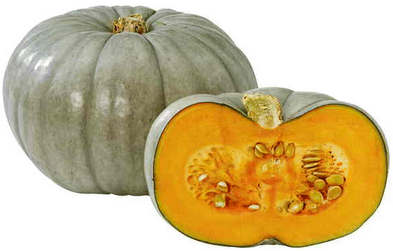
So, this may come as a bit of a shock to the Americans in the audience, but Halloween is not really a big deal in New Zealand, and certainly not for young adults; it’s normally just primary school children who get in on it.  We also don’t really do jack’o’lanterns, maybe because the whole principle of a jack’o’lantern is based on the fact that pumpkins are in season in autumn and for us October is in spring (then again, we use all the traditional winter imagery for our summer Christmases, so meh).  We actually don’t normally use the right sort of pumpkins anyway – ours have thin, grey skin – so, in my formative experiences, the orange ones that you use to make jack’o’lanterns are, like, the cartoon version of what a pumpkin looks like.  Of course, now that I actually live in America I just have to deal with it, along with everything else about this silly backwards little country, but it’s okay because seeing great big stacks of these bright orange things piled up all over supermarkets in October is absolutely hilarious to me and none of my friends here understand why.

Yes, this is NECESSARY BACKGROUND to understanding Pumpkaboo and Gourgeist.

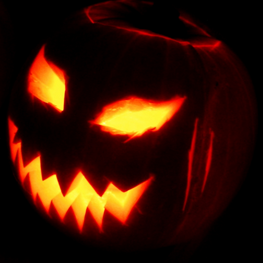
 See, when you say 'pumpkin' I think of this.

Even to me, the cultural link between pumpkins and ghosts or spirits, via Halloween and the jack’o’lantern, is obvious enough.  Halloween is basically the Christian holy day All Hallows’ Eve – the last night on earth for the souls of all the people who died during the previous year, who might seize this last chance to cause havoc in the mortal world.  Traditionally, All Hallows’ Eve is a time to pray for these wandering souls, and to be especially wary of supernatural disturbances.  Like a lot of Christian festivals, elements of the tradition are also built on older pagan festivals at the same time of the year – in particular, the Gaelic harvest festival Samhain (which is not pronounced “Samhain,” because it is Gaelic), another time when spirits and fey supposedly had greater freedom to act in this world.  Exactly where jack’o’lanterns come from, whether they have anything to do with Samhain, and how they became part of the Christian tradition is not entirely clear because there are so many different explanations floating around.  The term “jack’o’lantern” was once another name for the will-o’-the-wisp, the mysterious floating lights seen by travellers in swampy areas and given a wide variety of mythological interpretations all around the world.  They’re commonly thought to be ghosts or spirits, and are often credited with leading travellers astray; probably the most likely scientific explanation for the phenomenon is the spontaneous combustion (or possibly phosphorescence) of gasses given off by decaying organic matter.  Hard to say how this eventually translated into the hollowed pumpkins you see at Halloween, though they’re probably something to do with warding off those marauding spirits – or else with leading the way for souls leaving the world on All Hallows’ Eve.  The Halloween jack’o’lantern has its own neat little origin story as well, which describes a character called ‘Stingy Jack.’  In life, Jack was a drunken blacksmith whose debauched lifestyle attracted the attention of the Devil himself, who came to claim Jack’s soul.  Jack was able to trick the Devil somehow (accounts vary, some kind of bet may have been involved), using a crucifix to trap him, and made a deal to release him in exchange for being spared condemnation to Hell.  Unfortunately, Jack’s plethora of sins ensured that he would never be allowed into Heaven either, and so his spirit was doomed to wander the mortal world for eternity, warmed only by a piece of the fires of Hell thrown at him by the Devil, which he keeps in a hollowed out turnip or pumpkin to make sure it doesn’t go out.

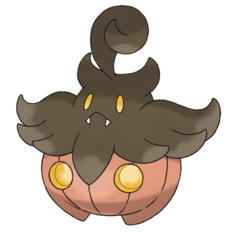
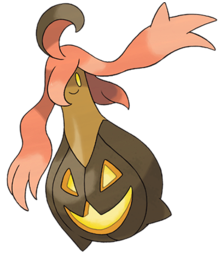
So how does all that relate to Pumpkaboo and Gourgeist?  Well, surprisingly closely, as it happens.  Much like Stingy Jack, Pumpkaboo is said to be a lost soul unable to leave the mortal world – and, although she can’t find her own way, she can lead other spirits to where they belong, like the prayers of worshippers on All Hallows’ Eve and some interpretations of the jack’o’lantern.  Their restless wandering on dark nights also recalls the belief that Halloween marks a time of unusual supernatural activity – and, of course, the related modern activity of trick-or-treating.  Pumpkaboo has little vampire fangs and a sort of mantle that you could liken to either bat wings or a dark cloak, maybe alluding again to the concept of dressing up as something menacing (common enough in the animal kingdom, after a fashion).  Gourgeist mixes it up with the full carved jack’o’lantern face on her belly and… “hairlike arms” that sprout from her head?  I’m… not totally sure I get that one; maybe they’re supposed to look like flickering flames or something?  Apparently, though, Gourgeist wraps up her prey in these arms and “sings joyfully” as it suffers, presumably from some sort of life-draining attack like Pain Split, or just from the general ethereal chill of her spectral touch.  Either way… bit of a sadist, I guess.  Her song, we also know, curses anyone who hears it, so being sung a creepily happy song by the Gourgeist who’s sapping your life away is probably not going to make you feel any better (odd that she can’t learn Sing or Perish Song; those seem like they should have been no-brainers).  I’m not sure where the singing comes from, although Gourgeist’s French name, Banshitrouye, contains a reference to the banshee, the wailing death spirit of Irish folklore, so maybe she’s one of the influences in there (would also go some way towards explaining the long hair).  The final thing that deserves mentioning here is that Pumpkaboo and Gourgeist have a weird little gimmick.  Like real pumpkins, they come in many different sizes (this isn’t immediately obvious in the game, although the largest ones do have a much deeper cry)… and, again like real pumpkins, the biggest ones are huge.  Has anyone ever looked at the actual size measurements given for these things?  The small, average and large sizes for Gourgeist range from 9.5 to 14 kilograms – and then there’s the super size Gourgeist, who is more than twice as heavy at 39 kilograms and is almost as tall as I am (like most Pokémon, she’s ludicrously light for her size, but in Gourgeist’s case that might actually make sense since her body is probably hollow).  That’s a hell of a jack’o’lantern!  Suddenly I’m not sure I feel safe wandering around Kalos’ route 16 at night…

Gourgeist.


As long as we’re talking about sizes, I may as well take the opportunity to make a graceful transition into how Gourgeist works mechanically, because her size does impact that: smaller Gourgeist are much faster, but larger ones are tougher and stronger.  A super-sized Gourgeist has pretty solid-looking stats for a physical tank, while a small-sized one seems more support-oriented, with her reasonably good speed and passable defences; you can also pick one of the two intermediate sizes if you feel like striking a balance between those extremes.  Gourgeist unfortunately lacks the more powerful Grass-type physical moves like Wood Hammer and Power Whip, meaning that Seed Bomb is the way to go; she also doesn’t have a wide selection of coverage moves (…Rock Slide.  She has Rock Slide), and there are no strong Ghost-type physical attacks, so in general it’s just very difficult for her to leverage her decent-to-good attack stat.  Because her special attack is rubbish and she doesn’t get Shadow Claw, her choices for Ghost attacks are Shadow Sneak and Phantom Force.  Even super-Gourgeist doesn’t have the power to do a lot of damage with Shadow Sneak, particularly as you’re likely to be investing the most effort in her defences, although I suppose the priority is nice on such a slow Pokémon.  Phantom Force, as I mentioned last time with Trevenant, is really not a good move to be stuck with, but as we’ve already established, Gourgeist really has to scrape the barrel for physical attacks.  Besides, thanks to Ghost’s excellent neutral coverage, it’s arguably not as bad as being stuck with, say, Fly or… *shudder* Skull Bash, and you can use it to stall for time with Leech Seed and Will’o’Wisp.  I mean… you could also do that with Protect and not be locked into your next move… but whatevs.  Those moves – Leech Seed and Will’o’Wisp – are staples for pretty much any size of Gourgeist, in lieu of more concrete offensive options… which brings us to the rather unfortunate point that most of what Gourgeist can do is very similar to what Trevenant can do – good physical defences, Leech Seed and Will’o’Wisp are some of her main selling points, and her abilities aren’t as useful for that role as Trevenant’s, who can get more efficient healing than what Leech Seed and Pain Split can provide (although Gourgeist is admittedly much tougher, physically).  Insomnia for sleep immunity: woo.  Frisk to snoop on enemies’ item choices: useful information, but not a huge help to Gourgeist herself.  Pickup to recycle items used by other Pokémon: kinda useful in doubles with appropriate planning but otherwise just silly.  So, what does Gourgeist have that Trevenant doesn’t?

I gotta admit, these things are pretty creepy when they're lit up at night...


Light Screen for covering her weaker special defence is worth note, particularly in combination with the protection from physical attacks offered by Will’o’Wisp and her naturally tough body.  Trick is normally a dangerous choice for tankish or support-oriented Pokémon because Tricking yourself into bagging a Choice item will do you more harm than good and it’s more difficult for you to carry items that will screw up your opponent in the first place – however, I mention it anyway because Gourgeist’s best ability is probably Frisk and knowing in advance what your target’s item is makes Trick a bit more interesting, if nothing else.  Explosion kinda stopped being worth it when Black and White cut its damage in half, but it’s there, and the idea of blowing yourself up and taking the enemy with you does have a certain je ne sais quoi.  Because Gourgeist is a jack’o’lantern, she has access to a small number of Fire attacks; unfortunately, most of them are special ones, but Flame Charge might be worth consideration on one of the larger, more powerful sizes to compensate for her poor speed, if you’re going to defy all logic and try to build some kind of godawful physical sweeper Gourgeist for some reason.  Small Gourgeist is one of the faster Pokémon in the game with the ability to use Destiny Bond, a move which really only makes sense on a fast Pokémon – she’s no Mega Gengar, that’s for sure, but I guess Gourgeist might catch an enemy off guard with a bit of luck.  Finally, there’s her fun little signature move, Trick or Treat, which makes more sense than Trevenant’s Forest’s Curse because the type it adds to the target (Ghost) is one that Gourgeist can deal super-effective damage to (though not, it must be said, very well), but is probably still more useful for helping a doubles partner score an unexpected knockout than for anything Gourgeist herself can do with it.  Trick or Treat also does bizarre and painful things to physical tanks who like to use Curse, since Curse is just a radically different move when used by a Ghost Pokémon.  This is much too specific an application to be useful.  However, it is hilarious.

Maybe judging them in comparison to Phantump and Trevenant is uncharitable to Pumpkaboo and Gourgeist – they can’t help but seem like very light, silly designs alongside them, and despite Gourgeist actually having superior stats to Trevenant she has surprisingly little else to recommend her, with their shared Ghost/Grass type combination making the comparison all too obvious (if she had been set up as a special attacker, I think it might have worked much better… ah, well, c’est la vie).  The designs are pretty fun though, I guess, and Gourgeist’s creepy songs and grasping hands are disturbing in a very different way to the more obvious bowel-evacuating terror that is Trevenant.  I don’t know if I think they’re bad, they’re just… very obviously not as good as the other ones – an unfortunate position for a Pokémon to be in.

There was a question about Girafarig in the past and you mentioned it getting a unique ability, I made one that might be interesting. The name is Duality and it gives Girafarig 2 forms, Mind form – giraffe head, and Power form – other head. He starts in Mind and gets +30% special attack and speed, Power he gets +30% attack and defense. Using Special moves makes it Mind and Physical moves makes it Power, for example, using Crunch: “Girafarig rears its second head! Girafarig uses Crunch!”

It has more recently been pointed out to me that, contrary to my initial assumptions, Girafarig’s Pokédex entry on Crystal version seems to imply it’s her auxiliary rear head that is responsible for her psychic powers, not her main head – so maybe flip those two around, with the ‘power’ form referring to the dominant giraffe head.  That minor point aside, though, I think I like the basic idea, because it expresses the uniqueness of how her bifurcated nature affects her fighting style much more clearly than anything she’s got at the moment.  I would point out that, assuming you intend this to work more or less like Aegislash’s stances, you are effectively giving Girafarig a no-questions-asked +30% to both attack stats, and I’m not sure whether that’s exactly what you intended.  Depending on exactly how you choose to do her effort training, this translates into an effective increase from 80 base attack and 90 base special attack (which is nothing special) to about 118 base attack and 132 special attack (which is f&%#ing terrifying).  Having said that, she’s still pretty fragile and not all that fast (though she does get Agility), doesn’t have any really powerful attacks, and is saddled with a rather poor offensive type combination, so I don’t think we’re necessarily looking at broken levels of power here – just dangerous.

Myself, I think I might go with something other than plain bonuses to different stats for the two forms – keep the switching mechanism, where physical moves shift her into ‘power’ stance and special ones shift her into ‘mind’ stance, but maybe make the benefits things that emphasise the way the two work together?  Maybe ending her turn in one stance boosts the attack stat associated with the other, for instance?  As long as she’s in ‘power’ stance, her second head is constantly storing energy, while as long as she’s in ‘mind’ stance, her main head is building up its own focus.  Something like that might be more interesting.

So it looks like no one asked questions. Here is one. Pokémon game mechanics can be seen questionable. Like the breeding mechanic and other things. I mean seriously allegations to cockfighting and eugenics.

Bear in mind that the time I receive a question and the time I answer it are not closely related, because I am a lazy little $#!t.

Anyway, your question – I see you’re new here; welcome to this blog!  You probably want to start with this thing, followed by this, this, this and all of these, and maybe some of these too.

In short: yes.  Yes they can.